The “$10 billion growth vector” behind the Nvidia stock thesis was sovereign AI: governments buying computing infrastructure to train and run artificial-intelligence systems using domestic data, languages and workforces.
That opportunity was real, but the original claim needs updating. The roughly $10 billion figure was Nvidia’s 2024 management estimate, not a separately reported business segment or guaranteed order book. Nvidia later described sovereign-AI revenue of more than $30 billion in fiscal 2026, showing that the category grew substantially. That does not, by itself, justify a 10-fold increase in the stock.
What the original 10-fold Nvidia thesis said
The thesis came from a June 2024 Forbes article. Nvidia’s share price was around $120 on a split-adjusted basis after the company’s 10-for-1 stock split. The article presented an optimistic scenario in which the stock could eventually reach about $1,200 by 2026.
The calculation was not based only on Nvidia’s established cloud and enterprise customers. It focused on a newer source of demand: governments building “sovereign AI” capacity. Countries wanted local data centers, high-performance computing, domestic AI models and less dependence on foreign technology providers.
#1 Best Overall

- NVIDIA Volta GV100 Architecture — 4,608 CUDA Cores, 640 1st-Gen Tensor Cores delivering 14 TFLOPS FP32 and 112 TFLOPS deep learning performance for AI training, inference, HPC, and scientific computing workloads
- 32GB HBM2 ECC Memory — 900 GB/s Bandwidth — High-bandwidth memory on a 4096-bit bus with ECC error correction provides the memory capacity and throughput required for the largest AI models, simulations, and datasets
- PCIe 3.0 x16 Interface — 250W TDP — Standard PCIe Gen3 connectivity with passive cooling designed for enterprise rack server deployment in HPE ProLiant, Dell PowerEdge, and Supermicro platforms with adequate chassis airflow
- NVLink — Scale to 96GB Unified Memory — Connect two V100 GPUs via NVLink at 300 GB/s bi-directional bandwidth to scale GPU memory from 32GB to 96GB for larger AI training and HPC workloads
- Multi-Precision Computing — Supports FP64 (7 TFLOPS), FP32 (14 TFLOPS), FP16 (112 TFLOPS) and INT8 precision modes for flexible deployment across training, inference, and scientific simulation workloads
That distinction matters. Nvidia did not announce a separate $10 billion sovereign-AI division. The estimate referred to revenue associated with a customer category and was primarily embedded in the company’s broader Data Center business.
What sovereign AI means for Nvidia
Sovereign AI generally involves a country or government-backed organization developing AI infrastructure within its own jurisdiction. The spending can include far more than individual graphics processors.
| Part of the buildout | How Nvidia can participate |
|---|---|
| Compute | Data-center GPUs and CPUs for training and inference |
| Networking | High-speed interconnects that link thousands of processors |
| Complete systems | Integrated servers, racks and AI factory platforms |
| Software | CUDA, AI libraries, model tools and enterprise support |
| Domestic ecosystems | Partnerships with governments, telecom providers, cloud companies and universities |
This can be strategically attractive to governments that want local control over sensitive information, national-language models and critical infrastructure. It can also create customers outside the small group of U.S.-based hyperscalers that has driven much of the AI hardware boom.
The $10 billion estimate is now outdated
Nvidia’s later disclosures indicate that sovereign AI became materially larger than the 2024 estimate. On its fiscal-2026 earnings call, management described sovereign-AI revenue as exceeding $30 billion for the year, more than triple the previous year’s level. In the first quarter of fiscal 2027, Nvidia said sovereign revenue increased more than 80% year over year, with its AI infrastructure deployed across nearly 40 countries.
Recommended Free Tools
These figures make sovereign AI a credible growth category, but they should be interpreted carefully:
- It is not a reported segment. Nvidia’s formal revenue tables do not isolate sovereign AI as a standalone line item.
- The category overlaps with other customers. A government-backed AI factory, national cloud provider or telecom operator may also be classified within Nvidia’s broader Data Center customer groups.
- Revenue is not the same as profit. Hardware mix, supply costs, system complexity and pricing determine how much earnings Nvidia keeps.
- Management commentary is not a guaranteed order book. Projects can be delayed, resized or canceled.
How large is a further 10-fold stock gain?
The original article’s $1,200 scenario was split-adjusted. It did not imply that Nvidia had to return to a pre-split price of $12,000.
Rank #2
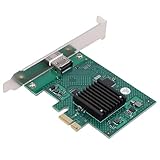
- HIGH COMPATIBILITY: The graphics card supports multiple displays and panels with a maximum resolution of 1920x1440, making it compatible with a wide range of systems for diverse applications.
- QUICK ROTATION: With the ability to quickly rotate screen images at 90°, 180°, and 270°, this graphics card enhances versatility in display orientation for improved user experience and flexibility.
- POWERFUL 2D GRAPHICS ACCELERATION: Equipped with a robust 2D graphics accelerator, the card supports various graphic processing functions, ensuring efficient performance for demanding applications.
- VERSATILE APPLICATION: This accelerator card supports video display layers, making it ideal for a variety of applications, including industrial computers, POS systems, ensuring reliable performance across different fields.
- WIDE OPERATING TEMPERATURE RANGE: Designed for reliable operation in harsh environments, the card functions effectively within a wide temperature range of -40°C to +85°C, ensuring durability and stability in challenging conditions.
At the latest available quote in the supplied data, Nvidia traded at $223.96 with a market capitalization of approximately $5.46 trillion. A further 10-fold increase from that price would mean:
| Measure | Approximate result |
|---|---|
| Share price | $2,239.60 |
| Implied market capitalization | $54.6 trillion |
| Assumption | No material change in share count |
A $54.6 trillion valuation would be an extraordinary outcome. It would require much more than $10 billion of incremental revenue. Investors would need to believe that Nvidia can keep growing rapidly, preserve very high margins, defend its software ecosystem and command a premium valuation for many years.
Crashes, No Sound, or Screen Glitches?
Random freezes, missing sound and display glitches usually trace back to one bad driver. Find and replace yours safely.Free scan · under a minutePC Slower Than It Used to Be?
A free scan shows the junk files, broken settings and background clutter dragging Windows down - then fixes them in one click.Free scan · Windows 10 & 11Nvidia’s operating growth is already much bigger than the original thesis
Nvidia reported fiscal-2026 revenue of $215.9 billion, up 65% year over year. Full-year Data Center revenue reached $193.7 billion, up 68%. For the quarter ended April 26, 2026, total revenue was $81.6 billion, up 85%, while Data Center revenue was $75.2 billion, up 92%.
Those figures demonstrate that Nvidia no longer needs sovereign AI to be a meaningful company. The question for shareholders is whether this enormous base can continue expanding at rates that support the current valuation and any further appreciation.
The product opportunity has also broadened. Nvidia’s current infrastructure proposition includes CPUs, GPUs, networking, storage, software and complete AI systems. Its Data Center reporting now distinguishes between hyperscale customers and ACIE, a category covering AI clouds, industrial and enterprise customers, and AI factories across industries and countries.
Nvidia’s Vera Rubin platform represents another change from the 2024 discussion. Nvidia says Rubin can reduce inference-token costs by as much as 10 times compared with Blackwell. That is a company performance claim, not a guaranteed reduction in customers’ total costs or a direct forecast for Nvidia’s earnings. Still, lower inference costs could expand the number of economically viable AI applications and increase demand for computing capacity.
What’s actually slowing this PC down?
Pick the symptom - the matching free tool is one click away.
Rank #3

- Powered by the NVIDIA Blackwell architecture and DLSS 4. System Requirements: Minimum 850W PSU with 16-pin 12V-2x6 (12VHPWR) connector required. Verify before purchasing. OC mode: 2685 MHz/ Default mode: 2655 MHz (Boost Clock)
- SFF-Ready enthusiast GeForce card compatible with small-form-factor builds
- Axial-tech fans feature a smaller fan hub that facilitates longer blades and a barrier ring that increases downward air pressure
- Vapor chamber ensures efficient heat transfer for lower GPU temps
- Phase-change GPU thermal pad helps ensure optimal heat transfer, lowering GPU temperatures for enhanced performance and reliability
Why sovereign AI could keep growing
Several forces support the category:
- Data residency: Governments and regulated industries may prefer sensitive data to remain within national borders.
- Language coverage: Countries can fund models optimized for local languages and cultural context.
- Strategic independence: Domestic infrastructure reduces reliance on a small number of foreign cloud and technology providers.
- Public-sector applications: AI projects can target defense, healthcare, education, public administration and scientific research.
- National investment: Governments may subsidize data centers or partner with local companies to accelerate adoption.
These projects can also sell Nvidia more of the infrastructure stack instead of only discrete accelerators. A large national AI facility may require networking, systems engineering, software and long-term support alongside GPUs.
Independent reader supportYour contribution helps us test, update, and keep practical guides available for everyone.The risks that could break the 10-fold argument
Customer concentration
Nvidia remains exposed to a small number of very large buyers. In fiscal 2026, one direct customer represented 22% of total revenue and another represented 14%. Large customers can delay or change purchases, often with limited notice. Government projects may diversify demand over time, but they do not eliminate concentration risk immediately.
Export controls
U.S. restrictions on advanced computing exports remain a major uncertainty. Nvidia said it was effectively foreclosed from China’s data-center compute market at the end of fiscal 2026 and warned that restrictions had helped competitors strengthen their ecosystems. The company also recorded a $4.5 billion fiscal-2026 charge related to H20 excess inventory and purchase obligations after export restrictions affected China sales.
Competition and customer-built chips
AMD, Huawei and Intel compete with Nvidia, while major cloud companies continue developing their own AI hardware. Customers may decide that custom chips offer lower costs or better control for specific workloads. Nvidia’s advantage depends not only on chip performance but also on CUDA, networking, developer tools, availability and the speed of new product introductions.
Supply constraints
Nvidia relies on outside companies for manufacturing and key components. TSMC and Samsung produce wafers, while SK Hynix, Micron and Samsung supply memory. External contractors handle assembly, testing and packaging. A shortage at any important point in that chain can limit shipments even when customer demand is strong.
Margins may contract
Rapid revenue growth does not guarantee expanding profitability. Nvidia’s fiscal-2026 gross margin was 71.1%, down from 75.0% in fiscal 2025. More complete systems, competitive pricing, product transitions and supply costs can pressure margins even as sales rise.
Rank #4

- Four Mini DisplayPort 1.2 Connectors
- The NVIDIA Quadra K1200 offers incredible 3D application performance in a compact footprint.
- 3-Year Warranty
What investors should monitor
Anyone evaluating the sovereign-AI thesis should track evidence rather than rely on the headline number. Useful indicators include:
- Data Center revenue growth and the split between hyperscale and ACIE customers.
- Management’s reported sovereign-AI revenue, while remembering that it is not a separately audited segment.
- Gross margin and operating-income growth, not revenue alone.
- Large-customer concentration and changes in receivables or inventory.
- Government project announcements that identify funding, deployment schedules and Nvidia’s actual role.
- Export-control changes affecting China and other international markets.
- Competitive benchmarks for Nvidia’s latest platforms against AMD, custom cloud chips and other alternatives.
Can Nvidia stock still rise 10-fold?
It is possible to construct a long-range bull case, but the original $10 billion figure cannot support that conclusion by itself. A 10-fold return from the latest quoted price would imply a company worth roughly $55 trillion, requiring exceptional growth over a very long period and a valuation that remains unusually high.
Sovereign AI strengthens Nvidia’s growth story because it expands the customer base and turns AI infrastructure into a national priority. The later increase from an estimated $10 billion in 2024 to more than $30 billion in fiscal 2026 shows genuine execution in the category. But the investment case still depends on total earnings, margins, competition, regulation, supply and valuation—not on sovereign AI revenue in isolation.
FAQ
What was Nvidia’s $10 billion growth vector?
It was sovereign AI: government and government-backed customers building domestic AI computing infrastructure, models and data ecosystems. The approximately $10 billion figure was a 2024 management estimate, not a separately reported Nvidia segment.
Was Nvidia’s $1,200 price target split-adjusted?
Yes. Nvidia’s 10-for-1 stock split was effective June 7, 2024, with split-adjusted trading beginning June 10. The roughly $1,200 scenario referred to the post-split share price, not a pre-split $12,000 target.
How much sovereign-AI revenue does Nvidia report now?
Nvidia later described sovereign-AI revenue as more than $30 billion in fiscal 2026 and said it rose more than 80% year over year in the first quarter of fiscal 2027. The company does not report sovereign AI as a standalone GAAP segment.
Quick wins for a faster PC:
Scan for outdated or missing drivers - takes under a minuteDriver Scan →Clear out junk files and repair common Windows errorsFree Scan →Does sovereign AI make a 10-fold Nvidia gain likely?
No. It is a substantial growth opportunity, but a 10-fold gain from the latest quoted price would imply a market capitalization near $54.6 trillion. That outcome would require sustained company-wide growth, strong margins and a premium valuation for many years.
The Bottom Line
Sovereign AI was a legitimate new Nvidia growth vector, and it has grown far beyond the original approximately $10 billion estimate. However, that figure never guaranteed a 10-fold stock gain. At the latest quoted price, another 10-fold move would imply a market value near $55 trillion, so the claim should be treated as a highly speculative long-term scenario rather than a forecast supported by one revenue category.
Quick Recap
Product prices and availability are accurate as of the date/time indicated and are subject to change. Any price and availability information displayed on Amazon at the time of purchase will apply.




