What’s actually slowing this PC down?
Pick the symptom - the matching free tool is one click away.
Nordic Semiconductor announced on June 24, 2025, that it had acquired Memfault, its long-time cloud-platform partner. The plan is to bring Memfault’s device monitoring, diagnostics, fleet management and over-the-air (OTA) update capabilities into Nordic’s broader product portfolio and nRF Cloud. The deal could give Nordic customers a more integrated way to operate connected devices after sale, but the announcement does not establish that every integration is already available or that the combined platform suits every device maker.
What Nordic acquired—and what it has announced
Nordic Semiconductor acquired Memfault Inc., a cloud platform for managing connected products at scale. Nordic described Memfault as a long-term partner and said it intends to integrate Memfault’s capabilities across its product portfolio and into nRF Cloud. The announcement frames this as a move from supplying semiconductor hardware toward offering a broader hardware, software, tools and cloud-services platform. Nordic’s acquisition announcement does not disclose the purchase price, detailed deal structure, employee-retention terms or closing conditions. A reported $120 million price should not be treated as confirmed on the basis of that announcement.
Nordic calls its intended offering a complete “chip-to-cloud” platform. That is the company’s strategic description, not independent proof that the combined service already delivers seamless support for every device, architecture or workflow. The announcement also does not establish that the platform replaces a customer’s application back end, identity system, mobile app, data pipeline or manufacturing tools.
What Memfault does
Memfault is not just an OTA update service. Its product combines cloud-based visibility into device fleets with tools for finding and addressing problems across a product’s life in the field. Memfault’s product and pricing page lists performance monitoring, debugging and diagnostics, log management and analytics, product analytics, and OTA updates.
#1 Best Overall

- COMPATIBILITY: Development board supporting multiple wireless protocols including Bluetooth
- Thread, Matter, Zigbee, ANT, and NFC at 2.4GHz frequency
- PROCESSOR: Features the advanced nRF54L15 transceiver chip from Nordic Semiconductor for reliable wireless communications
- WIRELESS STANDARDS: Implements IEEE 802.15.4 protocol support for Matter, Thread, and Zigbee networking applications
- DEVELOPMENT PLATFORM: Comprehensive evaluation board designed for testing and prototyping wireless connectivity solutions
- Observability and performance monitoring: See device health and behavior across deployed fleets.
- Diagnostics and debugging: Investigate faults and firmware issues reported by devices in the field.
- Log management and analytics: Collect and analyze operational information to help identify patterns and failures.
- Device and fleet operations: Organize and monitor deployed devices, including through cohorts and device attributes shown in the pricing comparison.
- OTA updates: Manage firmware update workflows and, where included or purchased, update delivery.
These functions matter because diagnosing a problem on a shipped device is different from debugging a development board at a desk. A fleet platform can help teams see which devices are affected, assess a fix and coordinate a rollout—but the product maker still owns firmware quality, security decisions and release discipline.
What “chip-to-cloud” means in practice
In Nordic’s framing, “chip-to-cloud” links several layers of a connected product’s lifecycle:
- Chip: Nordic’s low-power wireless SoCs, cellular IoT products and related hardware.
- Firmware and development tools: Device software, connectivity components, SDKs and development environments used to build the product.
- Cloud connection: Connectivity and service management through nRF Cloud and related services.
- Fleet operations: Monitoring, diagnostics, device grouping and update deployment for products already in the field.
- Lifecycle management: Using field information to maintain and improve the product after it ships.
The strategic value is the possibility of fewer disconnected handoffs between silicon, firmware and cloud operations. Nordic says it plans to integrate Memfault across its portfolio and into nRF Cloud; that is a roadmap commitment, not confirmation that every product and workflow has already been integrated. Product makers will generally still need to operate their own application services and make decisions about data, identity, access, security and customer-facing features.
Why the acquisition matters to Nordic and Memfault
Nordic’s strategic case
Semiconductor suppliers typically have a strong relationship with customers during product design, but a chip sale alone does not provide a continuing view of how deployed devices perform. A cloud and fleet-operations layer could extend Nordic’s relationship into deployment and maintenance. It could also give customers a more coordinated route from Nordic hardware to device diagnostics and updates, and offer Nordic a broader way to differentiate its products.
Rank #2
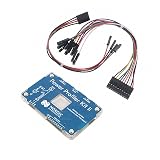
- POWER MONITORING: Professional-grade current monitoring and power management evaluation board for precise power consumption analysis
- COMPATIBILITY: Designed specifically for Nordic Semiconductor development and testing applications
- MEASUREMENT CAPABILITIES: Enables real-time current measurement and power profiling for embedded system development
- DATA ANALYSIS: Features comprehensive power consumption data collection and visualization capabilities
- DEVELOPMENT TOOL: Essential evaluation board for optimizing power efficiency in embedded system projects and prototypes
Nordic presents the deal as a move toward becoming a complete solution partner, and connects it to software-defined products, edge AI and evolving security expectations. Those are strategic aims, not evidence that the acquisition has already raised revenue, improved margins, reduced customer costs or delivered regulatory compliance.
Memfault’s strategic case
Joining Nordic could give Memfault access to a large hardware customer base and resources for deeper integration with Nordic products. At the same time, Memfault had customers using non-Nordic hardware. Nordic said it would continue supporting those customers regardless of hardware choice. That is an important stated commitment, but it does not guarantee identical integration depth, pricing or long-term investment for every hardware platform.
What Nordic customers may gain—and what to weigh
For a team already building on Nordic silicon, a more closely connected device-to-cloud toolchain could reduce the effort of evaluating and maintaining separate vendors. It may help teams move from prototype to production with fewer integration tasks and give firmware engineers better tools for investigating field issues and coordinating updates. Nordic describes the expected benefits in its announcement; customers should treat reductions in development time or operating cost as outcomes to measure in their own deployment, not guaranteed results.
There are trade-offs. The deepest integrations may favor Nordic hardware, and consolidating more of the stack with one supplier can increase dependency. Existing internal telemetry or cloud systems may overlap with nRF Cloud or Memfault. Data volume, retention, support and OTA delivery can affect total cost. If a company later changes chip vendors, proprietary device identity, update formats, telemetry schemas or operational workflows may make migration more difficult.
Windows Errors? Fix Them Before They Spread
Repair common Windows errors and clear accumulated junk for a smoother, more stable PC - no reinstall needed.Free scan · no reinstallCrashes, No Sound, or Screen Glitches?
Random freezes, missing sound and display glitches usually trace back to one bad driver. Find and replace yours safely.Free scan · under a minuteRank #3

- Development Platform: nRF52833-DK evaluation board designed for prototyping and testing Bluetooth
- BLE, Thread, and Zigbee applications using the nRF52833 SoC
- Wireless Connectivity: Supports multiple protocols including Bluetooth
- (BLE), 802.15.4 (Thread, Zigbee) operating at 2.4GHz frequency for versatile wireless development
- Integrated Antenna: Features PCB trace antenna built directly on-board for immediate testing and development without requiring external antenna components
What existing Memfault customers should verify
Nordic says existing Memfault customers will continue to receive support, including those using non-Nordic hardware, and promises continued investment in hardware integration, device management and advanced AI capabilities. The acquisition announcement does not answer several practical questions that can determine whether a customer’s deployment remains a good fit:
- Whether existing contracts, pricing, plan names and support arrangements are changing.
- Whether APIs, SDKs, dashboards and export formats will remain compatible.
- Whether non-Nordic hardware will remain a first-class use case, and whether Nordic hardware will receive exclusive features or different commercial terms.
- Whether data residency, retention, deletion, compliance or service-level commitments are changing.
- How Memfault is positioned alongside nRF Cloud, and what migration paths are offered.
Teams with a long product lifecycle should request written answers about support scope and roadmap rather than assume that a general continuity pledge guarantees feature parity indefinitely.
Pricing signals—and what the figures do not settle
Memfault’s pricing page, as observed on August 18, 2026, shows a free-per-month Developer plan for up to 10 development devices, with pay-as-you-go pricing beyond 10 development and/or production devices. It lists Growth at $3,495 per month and Scale at $6,695 per month, with custom pricing for Enterprise. The current comparison shows up to 50,000 registered devices for Growth and 250,000 for Scale. These are pricing-page figures, subject to change; the page repeats plan tables and displays inconsistent limits in different sections, so confirm the actual configuration with Memfault before relying on a plan comparison.
The comparison also signals differences in active-device allowances, data-retention periods, user counts, supported product architectures and chip integrations, fleet and architecture limits, cohorts, device attributes, metrics, alerts, SSO and support. It shows 30, 45 and 60 days of heartbeat/session retention across Growth, Scale and Enterprise respectively, and 10, 25 and 50 users across those tiers. Those listed limits should be checked against the offer for the customer’s actual use case.
The Tool Desk
Outbyte Driver Updater FREEScan for outdated or missing drivers - takes under a minuteDriver Scan →Outbyte PC Repair FREEClear out junk files and repair common Windows errorsFree Scan →Rank #4

- DEVELOPMENT BOARD: Nordic Semiconductor NRF52-DK development and evaluation board designed for wireless applications and prototyping
- WIRELESS CAPABILITIES: Features Bluetooth
- (BLE) and ANT protocol support with 2.4GHz operation frequency for versatile connectivity options
- PROCESSOR OPTIONS: Compatible with both nRF52810 and nRF52832 transceivers, offering flexibility for different project requirements
- NFC SUPPORT: Includes Near Field Communication (NFC) capabilities, expanding potential use cases and application scenarios
OTA management and delivery are marked optional in the pricing comparison. Do not assume that the displayed subscription price includes every update-delivery, bandwidth, storage, data-volume, support or integration cost. Ask how the vendor counts registered, reporting and monthly active devices, and model expected telemetry, retention and update volumes.
OTA updates help operations; they do not secure a product by themselves
An OTA service can support firmware artifact handling, device targeting, cohort-based or staged rollouts, version tracking and update monitoring. Memfault’s pricing comparison lists staged rollouts and delta updates in lower tiers, while marking OTA management and delivery as optional. The announcement’s use of “secure OTA” should not be read as a guarantee that any particular product deployment is secure by default.
Product security also depends on decisions and controls outside the cloud update dashboard: hardware root of trust, secure boot, firmware signing, key provisioning and rotation, administrator access, anti-rollback protections, recovery after power loss, manufacturing procedures and a product-specific threat model. A rollout platform cannot make an unsafe firmware image safe; release gates, health metrics and pause criteria still need to be designed and used by the product team.
Nordic connects the deal to evolving security requirements and the EU Cyber Resilience Act. The acquisition itself does not establish that a customer’s product complies with that regulation or any other law. Compliance depends on the product, its risk controls and the manufacturer’s obligations.
Quick wins for a faster PC:
Fix the driver behind crashes, sound loss and screen glitchesFind Drivers →Clear out junk files and repair common Windows errorsFree Scan →Scan for outdated or missing drivers - takes under a minuteDriver Scan →Best Value

- VERSATILE CONNECTIVITY: Supports both Bluetooth
- And IEEE 802.15.4 protocols (Thread, Zigbee) for comprehensive wireless development capabilities
- DEVELOPMENT PLATFORM: Complete development kit for nRF5340 System-on-Chip applications with integrated debugging and programming capabilities
- DUAL-CORE ARCHITECTURE: Features both application and network processing cores for enhanced wireless development flexibility
- WIRELESS PROTOCOLS: Designed for 2.4GHz wireless applications including Bluetooth Low Energy and 802.15.4-based protocols
What non-Nordic hardware users should establish
Nordic’s announcement says Memfault customers will continue to be supported regardless of hardware choice. For a buyer, “support” can mean different things: a platform may technically work with a device stack, have a maintained SDK or reference implementation, receive direct integration support, or be a future investment priority. Those are not interchangeable.
Ask the vendor to confirm support for the specific MCU, RTOS, Linux environment, bootloader, modem and connectivity stack in the product. Request the same clarity on feature access, pricing, support response and roadmap for Nordic and non-Nordic devices. If hardware neutrality is a strategic requirement, include exportability and an exit plan in the evaluation rather than relying on a general compatibility statement.
Buy an integrated platform or build the stack?
The right comparison is total cost of ownership, not subscription price alone. A managed platform can reduce the initial engineering burden and provide a supported path to observability and OTA workflows. Building internally can offer more control over data architecture, retention, custom workflows, regional deployment and long-term portability, but the company must develop and operate those capabilities itself.
| Approach | Potential strengths | Costs and risks to assess |
|---|---|---|
| Integrated platform | Faster initial deployment; fewer integrations to maintain; standardized fleet operations; access to vendor support and established diagnostics and update workflows. | Subscription and usage fees; possible hardware or architecture limits; dependency on vendor APIs and workflows; potential overlap with existing systems. |
| In-house stack | Greater control over data, retention, workflows and deployment architecture; easier alignment with existing enterprise systems; more control over portability. | Engineering labor; cloud infrastructure; security operations; incident response; ongoing maintenance and support; responsibility for migration and reliability. |
A useful model is: total cost of ownership = engineering labor + cloud infrastructure + security operations + incident response + support + migration risk + platform fees. Estimate it at the expected fleet size and telemetry rate, not just for a prototype.
Recommended Free Tools
Questions to take into a Nordic/Memfault evaluation
- Which features are included in nRF Cloud, and which require separately priced Memfault services?
- Is the Developer plan available for non-Nordic hardware, and do prices or features differ by hardware vendor?
- Exactly what counts as a registered device, reporting device, monthly active device and monitored chip?
- Are OTA delivery bandwidth, storage or other update costs charged separately?
- Which MCU, RTOS, Linux, Android and cellular configurations are supported, and at what integration level?
- What is the migration path for existing Memfault customers? Are APIs, SDKs, dashboards and export formats changing?
- Can customers export raw telemetry and device history? What are the retention, region, residency and deletion policies?
- What happens to customers that move away from Nordic hardware?
- What service-level commitments apply to OTA delivery and fleet management?
- How are signing keys, tenant separation and administrator permissions handled?
- What rollback, anti-rollback and interrupted-update recovery mechanisms are supported for the customer’s device?
- Which capabilities are generally available today and which remain roadmap items?
How to assess alternatives
Memfault is one option among platforms that address different parts of device operations. The right comparison depends on device class, cloud environment, deployment model and whether the priority is embedded observability, OTA, or broader fleet management.
| Platform | Consider it when | Trade-off to check |
|---|---|---|
| Mender | You want OTA updates and device lifecycle management, particularly for embedded Linux and broader fleet operations. | Check whether its OTA-oriented strengths fit a product that needs deeply integrated MCU observability tied to Nordic silicon. Current pricing should be confirmed at Mender’s pricing page. |
| balena | You manage fleets of Linux-based edge devices, especially containerized deployments. | It is not a natural fit for an ultra-low-power MCU device without a Linux userspace. See balena’s pricing page for current commercial terms. |
| AWS IoT Device Management | Your organization already uses AWS and wants device registry, provisioning, fleet operations and integration with AWS services. | Assess the architecture and service integration your team must operate compared with a specialized embedded diagnostics workflow. See AWS IoT Device Management pricing. |
| Azure Device Update for IoT Hub | Your organization is standardized on Azure and needs OTA updates integrated with IoT Hub. | Check whether it covers the embedded observability and low-power wireless integration needs of the product. See Azure IoT Hub pricing. |
Alternative vendors’ prices and current feature limits should be verified directly; the listed pricing pages are not a basis for a like-for-like cost comparison. Compare hardware neutrality, MCU versus Linux support, OTA inclusion, fleet definitions, retention and telemetry limits, rollout controls, regions, access controls, export options, deployment model, support and migration effort.
What the acquisition means for investors and the IoT market
The transaction reflects a wider semiconductor-industry push toward software-defined products, cloud-connected fleets, security tooling and recurring services alongside hardware. If customers adopt an integrated platform, it could deepen a supplier’s role after chips ship. But the announcement alone cannot show whether Nordic will generate meaningful recurring revenue, improve margins, retain more customers or earn a higher valuation from the deal. Those outcomes require subsequent financial disclosures and operating evidence.
Quick Recap
Product prices and availability are accurate as of the date/time indicated and are subject to change. Any price and availability information displayed on Amazon at the time of purchase will apply.
Do these 3 things before closing this tab:
1Scan for outdated or missing drivers - takes under a minute2Clear out junk files and repair common Windows errors3Fix the driver behind crashes, sound loss and screen glitches



