Free tools Windows power users keep installed
One-click scans. No signup required.
Elliott Hill’s challenge is to turn Nike’s sport-led product and marketplace reset into sustained demand and profitable growth. The company’s FY2026 results show some progress in wholesale and North America, but continued weakness in Nike Direct, Greater China, EMEA and Converse. Its latest operating-model announcement adds a major organizational change to the work; it does not show that the turnaround has succeeded.
What Nike’s FY2026 results show
NIKE, Inc.’s fiscal 2026 ended May 31, 2026. The company reported $46.4 billion in revenue for the year: flat year over year on a reported basis and down 2% after adjusting for currency movements. That difference matters when judging performance across regions, but neither figure alone explains how uneven results were by channel and brand.
| Measure | FY2026 result | What it indicates |
|---|---|---|
| NIKE, Inc. revenue | $46.4 billion; flat reported and down 2% currency-neutral year over year | Little change in reported revenue, with a decline after adjusting for currency. |
| Wholesale revenue | $27.5 billion; up 6% reported and 4% currency-neutral year over year | Wholesale was the stronger of Nike’s two principal sales channels. |
| Nike Direct revenue | $17.7 billion; down 6% reported and 8% currency-neutral year over year | Direct sales remained a drag despite Nike’s investment in its owned consumer channels. |
| Nike Brand revenue | $45.2 billion; up 1% reported and down 1% currency-neutral year over year | Growth in North America was offset principally by declines in Greater China and EMEA. |
| Converse revenue | $1.2 billion; down 31% reported and 32% currency-neutral year over year | The decline was much steeper than the Nike Brand’s overall performance. |
| Gross margin | 42.9%, up 20 basis points year over year | The annual change was modest compared with the fourth-quarter increase, which had a substantial unusual benefit. |
| Inventory | $7.5 billion as of May 31, 2026, flat year over year | The year-end inventory balance was unchanged from the prior year. |
These are NIKE, Inc. figures from its FY2026 results release; reported and currency-neutral growth rates use the company’s stated measures. The split points to a difficult balancing act: Nike needs wholesale partners to help sell product while improving the appeal and economics of its own digital and retail channels.
Why the channel, region and brand splits matter
Wholesale improved while Direct weakened
Wholesale growth is a constructive sign for marketplace relationships, but it does not resolve the Direct problem. Within Nike Direct, Nike Brand Digital fell 12% for FY2026 and sales at Nike-owned stores fell 4%, according to the company’s Form 10-K. Digital performance is particularly relevant to Nike’s stated ambition to build direct consumer connections, but the results do not establish why customers shifted or whether a change in channel mix will persist.
Quick wins for a faster PC:
Clear out junk files and repair common Windows errorsFree Scan →Scan for outdated or missing drivers - takes under a minuteDriver Scan →#1 Best Overall
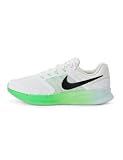
- Mesh on upper adds breathability.
- Flywire cables provide a supportive feel when you tighten the laces.
- Plush foam midsole cushions each step.
- Grooves on the rubber outsole help your foot move naturally.
- DR2695-114
North America could not offset every regional decline
Nike Brand’s year-over-year growth came from North America, while Greater China and EMEA were principal offsets. The Form 10-K describes Greater China as facing lower store traffic, elevated promotional activity and higher marketplace inventory, with negative effects on revenue and profitability. Nike also identifies currency, geopolitical conditions, tax regulation and changing tariff policies as factors that could affect demand and results. The company does not provide evidence here that a single regional fix will address all of those pressures.
Converse is a separate recovery challenge
Converse’s sharp annual decline makes the company-wide headline less representative of the pressures facing each brand. Nike describes Converse as being in a strategic reset and expects negative effects from Converse to continue through FY2027. The scale of the decline is disclosed; the materials do not independently establish how quickly the reset will restore demand.
Rank #2

- Mesh on upper adds breathability.
- Foam midsole delivers a soft ride.
- Flex grooves create a cushioned effect for your run.
- Waffle outsole is a made of a durable, flexible material that helps keep you on the move.
- HM9594-004
Fourth-quarter earnings need a tariff caveat
In Q4 FY2026, NIKE, Inc. reported $11.0 billion in revenue, down 1% reported and 4% currency-neutral year over year. Wholesale was $6.6 billion, up 4% reported; Direct was $4.1 billion, down 7%. Nike Brand Digital declined 12% in the quarter, and Converse revenue fell 32% reported. The quarterly pattern therefore remained uneven even as wholesale grew.
Q4 gross margin was 49.2%, up 890 basis points, and diluted earnings per share (EPS) was $0.72. Those headline improvements are not a clean measure of recurring operating progress: Nike’s results release said the margin increase included an approximately 900-basis-point benefit from the expected recovery of IEEPA tariffs, and $0.52 of Q4 diluted EPS related to that expected recovery. The Form 10-K says Nike recognized a $986 million benefit in FY2026 and had received substantially all of the remaining receivable after year end. These are company-reported figures, and the tariff recovery should be distinguished from earnings generated by ordinary product demand and operations.
Rank #3
- Mesh on upper adds breathability.
- Foam midsole delivers a soft ride.
- Flex grooves create a cushioned effect for your run.
- Waffle outsole is a made of a durable, flexible material that helps keep you on the move.
- HM9594-004
What Hill is trying to change
Nike’s Form 10-K identifies product, distribution and brand actions as parts of the response. The company’s long-term strategy is to lead with sport, create innovative products it considers “must-have,” build consumer connections and deliver experiences through digital platforms and physical retail. Those are Nike’s stated aims, not proof that shoppers will respond.
Product and inventory
- Accelerate product innovation and manage the product portfolio, including reducing supply of certain footwear to rebalance it.
- Use markdowns and wholesale discounts to reduce inventory and make room for new product.
Marketplace and retail
- Reinvest in wholesale distribution.
- Reposition Nike Brand Digital as a full-price platform.
- Improve product presentation in physical retail.
Demand creation
- Increase investment in demand creation, brand marketing and sports marketing.
These moves involve trade-offs. Discounts can help clear stock but may weigh on realized prices; limiting supply can make room for new assortments but depends on getting product choices right. A stronger sport connection is also a strategy to earn consumer attention, not a result that can be assumed from marketing activity alone. Nike says its business segments are at different stages of the work and that Greater China and Converse will take longer.
Rank #4

- Mesh on upper adds breathability.
- Foam midsole delivers a soft ride.
- Flex grooves create a cushioned effect for your run.
- Waffle outsole is a made of a durable, flexible material that helps keep you on the move.
- HM9594-001
Pace adds an operating-model change, not a demonstrated turnaround
On October 1, 2026, Nike announced Pace, an operating-model initiative intended to scale what the company calls its Sport Offense. Nike says the work is not a new strategy or a reaction to one quarter. The announcement describes four priorities:
- Modernize the supply chain.
- Organize the company into three geographies: Americas, APGC (Asia Pacific and Greater China), and EMEA.
- Establish a Bengaluru campus.
- Change how work is organized and address the workforce.
Nike expects teams to move into the new formation in FY2028. The company says decisions about roles affected by Pace will begin in calendar 2027 or later and cautions that its financial estimates could materially change. Those dates and estimates describe a plan still in execution, not evidence of realized savings or improved results.
Best Value

- The mesh upper offers a comfortable, breathable feel.
- The foam midsole delivers intuitive cushioning through comfort-focused rocker geometry.
- The outsole has an intuitive Nike design and flex grooves in the forefoot that create a comfortable and cushioned effect as you run.
- Touch points at the heel and tongue create a natural feel as you take the shoes on and off.
- HJ9198-002
The management reset also has earlier context: in May 2025, Nike said leadership of Consumer and Sport, Marketing, and Product Creation would be divided among distinct areas reporting directly to Hill. The later Pace announcement is the more current description of planned operating-model changes. Nike’s Form 10-K identifies Hill as president and CEO since 2024; he joined Nike in 1988 and previously led Consumer and Marketplace before retiring in 2020.
The tests that will show whether the reset is working
Nike’s disclosures establish the scale and distribution of its reported results, and they explain the actions management says it is taking. They do not independently establish the likelihood of success, provide a full competitor comparison or settle the investment case. For assessing execution, the most useful tests are whether Nike can:
- Translate sport-led product development into sustained demand, rather than relying on discounts to move inventory.
- Improve Nike Direct and digital performance while maintaining healthier wholesale relationships.
- Stabilize demand and profitability in Greater China and EMEA and make progress in Converse, the areas Nike itself says will take longer.
- Show that Pace’s organizational and supply-chain changes deliver operating improvements after teams move into the new formation.
- Separate recurring operating trends from unusual items such as the tariff recovery when judging earnings quality.
At Nike’s September 2025 annual meeting, CFO Matthew Friend said: “While tariffs represent a new and meaningful cost headwind to NIKE, our highest priority continues to be reigniting brand momentum through sport and repositioning our business in the marketplace.” That comment described the situation at that meeting; the FY2026 filing later recorded the expected IEEPA recovery benefit. The chronology underlines why both the business’s underlying execution and the source of reported earnings changes matter.
Hill’s challenge is not simply to post a stronger quarter. He has to make product relevance, channel health and regional recovery reinforce one another, while Pace and other organizational changes are carried out. FY2026 offers signs of progress, but the persistent weaknesses and the still-unfinished operating changes leave the outcome unresolved.
Recommended Free Tools
Quick Recap
Product prices and availability are accurate as of the date/time indicated and are subject to change. Any price and availability information displayed on Amazon at the time of purchase will apply.




