Amazon Prime Day is over, and Netflix does not discount its subscription for the event. The 2026 U.S. sale ran June 23–26, so its advertised prices are historical—not offers you can assume are still available. What Prime Day can do is make hardware upgrades cheaper: a better streaming player, TV, sound system, or home network can improve how Netflix looks, sounds, or runs. Use the 73 ideas below as a decision map, then verify today’s price and compatibility before buying.
Amazon’s 2026 preview advertised discounts of up to 50% on Fire TV Stick 4K Plus and up to 40% on Fire TV Stick 4K Max during the event; those were sale-period offers, not current prices. Amazon’s event announcement confirms Prime Day ended June 26. This guide focuses on upgrades that can make sense after the sale, too.
Find the upgrade that fixes your problem
Start with the bottleneck, not the deal badge. An external player can make a sluggish TV interface more responsive, but it cannot improve a dim screen. A router cannot fix unclear dialogue, and a 4K television alone does not guarantee Netflix streams in 4K.
| If your problem is… | Usually the best first upgrade | Avoid buying first |
|---|---|---|
| Apps are slow or unsupported | An external streaming player that supports your Netflix plan | A new TV, if the existing screen still looks good |
| Your TV is 1080p and you want 4K | A 4K TV, then confirm the Netflix plan and playback setup | A 4K streaming stick by itself |
| The picture looks dim or washed out | Room-light adjustments, picture calibration, or a better TV | A faster streaming player |
| Dialogue is hard to hear | A dialogue-focused soundbar or compatible TV headphones | A new router |
| Buffering affects rooms far from the router | Test Ethernet or router placement; consider mesh Wi-Fi if coverage is the issue | A new TV |
| Netflix works, but navigation is frustrating | A more responsive player or a better remote | A second streaming subscription |
| Netflix does not offer 4K playback | Check plan, title, device, playback setting, HDMI chain, and connection | An HDMI cable alone |
| You need a second-room setup | A budget player compatible with that room’s TV and plan | A premium player if basic playback is all you need |
| You want surround sound | An Atmos-capable audio chain, after checking every component | A soundbar chosen on its Atmos label alone |
73 ways to upgrade Netflix viewing
These are upgrade types, not 73 separate verified deals or model recommendations. A sale is worth considering only if the item solves a real problem, works with your equipment, and costs less than a comparable option after coupons and any required membership.
#1 Best Overall

- HD streaming made simple: With America’s number 1 TV streaming platform,* exploring popular apps—plus tons of free movies, shows, and live TV—is as easy as it is fun. *Based on hours streamed—Hypothesis Group
- Compact without compromises: The sleek design of Roku Streaming Stick won’t block neighboring HDMI ports, and it even powers from your TV alone, plugging into the back and staying out of sight. No wall outlet, no extra cords, no clutter.
- No more juggling remotes: Power up your TV, adjust the volume, and control your Roku device with one remote. Use your voice to quickly search, play entertainment, and more.
- Shows on the go: Take your TV to-go when traveling—without needing to log into someone else’s device.
- TV, simplified: With setup that only takes minutes, a simple-to-navigate Home Screen, and an uncluttered remote control that does all you need—Roku makes it easier to watch the TV you love.
Streaming devices: 12 ideas
- Replace a lagging built-in TV app. An external player can refresh navigation without replacing a good panel. Check that Netflix supports the exact model and software.
- Choose an HD streaming stick for a 1080p TV. It is a sensible second-room option when the screen cannot display 4K.
- Choose a 4K player for a 4K TV. It may unlock 4K playback only when the plan, title, connection, and display chain also qualify.
- Consider a premium player for a sluggish interface. Pay more only if interface speed, remote quality, or ecosystem features matter to you.
- Add a second player for another room. Verify that the room’s TV has the right HDMI input and that your household’s plan supports your viewing needs.
- Get a remote with a Netflix shortcut. It improves access, not picture quality; check that the button’s function can be changed or that you will use it.
- Replace a player that no longer gets useful updates. Check the exact model, not just the brand, and confirm current Netflix support.
- Match the player to your plan. Some older devices cannot run Netflix’s ad-supported experience because their software cannot be updated sufficiently. See Netflix’s device guidance for the ad-supported plan.
- Use a Fire TV player if Alexa and Amazon integration suit you. Fire TV offers several tiers and broad app support, but its interface promotes Amazon content. Model and operating-system generation matter; consult Amazon’s Fire TV OS overview.
- Choose Roku if you prefer a straightforward interface. Confirm the exact model’s resolution and HDR support; Roku features vary by device.
- Consider Google TV Streamer for a Google-centered home. Check current device specifications, remote features, and the interface before buying.
- Consider Apple TV 4K for an Apple household. It can suit people who value Apple integration, but is often excessive for basic Netflix on an inexpensive 1080p TV. Netflix’s Apple TV guidance covers supported playback requirements.
Televisions: 15 ideas
- Replace an old 1080p set with a 4K TV if you want a higher-resolution display and will use a Netflix plan that includes UHD.
- Look for HDR support only alongside suitable brightness and contrast; an HDR label by itself does not promise a striking picture.
- Consider OLED if deep blacks and contrast are priorities and the room suits the set’s brightness and reflection performance.
- Consider Mini-LED or QLED models if brightness and a bright-room picture are priorities; compare individual models rather than relying on category names.
- Choose a conventional LED TV when price and screen size matter more than premium contrast features.
- Buy a smaller bedroom TV when the existing screen is inconvenient or lacks supported apps, rather than paying for unused living-room features.
- Size a living-room TV to viewing distance and room layout, not the discount percentage.
- Choose a Fire TV model if Amazon’s interface and voice control fit your household; compare the panel and software as carefully as the built-in platform.
- Choose a Roku TV if you want Roku’s interface built into the screen and prefer not to add a player.
- Choose a Google TV model if you use Google services and like its recommendations and voice tools.
- Upgrade to OLED for a premium contrast-focused screen only if its price and room conditions make sense.
- Look at bright-room Mini-LED options where sunlight or ambient light makes a dim display hard to watch.
- Get a gaming-oriented TV that also streams Netflix if you will use its gaming features; do not pay extra for unused gaming specifications.
- Use a portable or secondary TV for a location where a full-size replacement is impractical, after checking app support and connectivity.
- Replace a TV with poor built-in software, not necessarily a poor panel. If the screen is still good, an external player may be the cheaper fix.
Soundbars, speakers, and headphones: 12 ideas
- Add an entry-level soundbar when the TV’s speakers are weak and you want clearer, fuller sound.
- Choose dialogue-enhancing sound if voices are hard to understand; check whether the bar offers dialogue mode or a center channel.
- Consider a bar with a wireless subwoofer if you want stronger bass and have room for the subwoofer.
- Buy an Atmos soundbar only for a compatible setup. Netflix, the title, plan, device, TV, soundbar or receiver, and connection method must all support Dolby Atmos. Netflix says select titles can stream in Atmos on supported devices; see its playback requirements.
- Build an AV receiver and speaker setup if you want a more flexible surround system and can manage the equipment and wiring.
- Use Bluetooth headphones for late-night viewing, after checking TV pairing and possible audio delay.
- Consider dedicated wireless TV headphones if you need independent volume control or a more reliable connection than ordinary Bluetooth.
- Check HDMI ARC or eARC before buying a soundbar that relies on it; the TV and bar both need the appropriate connection.
- Use optical audio with an older TV if it lacks ARC/eARC and the soundbar supports optical input.
- Check whether the TV remote controls the soundbar to avoid adding another remote.
- Choose a subwoofer size and placement suited to the room rather than buying a larger package by default.
- Use a receiver and speakers when you want to upgrade individual components over time, understanding that setup is more involved than a soundbar.
Networking and connectivity: 10 ideas
- Move the router before replacing it. A more central, open location can improve coverage without a new purchase.
- Test Ethernet between the router and player where practical; a wired link can help isolate Wi-Fi problems.
- Add a mesh Wi-Fi system when tests show weak coverage in several rooms, not just one device problem.
- Replace a router only after checking that the router is the bottleneck and that it works with your ISP service.
- Check whether your ISP permits a replacement modem and whether it supports your service tier before buying one.
- Consider a Wi-Fi 6 or newer router if other household devices and coverage needs justify it; a newer Wi-Fi label alone does not cure slow broadband.
- Use an Ethernet adapter if your player lacks a built-in wired port and supports the adapter.
- Check your broadband plan and data cap before increasing video quality or adding more simultaneous viewing.
- Replace an HDMI cable only when the current one fails or cannot carry the needed signal. A more expensive cable does not improve Netflix picture quality when the existing one works.
- Use a compatible HDMI switch if you have more devices than TV inputs; ensure it supports the video format and HDCP requirements your setup needs.
Remotes and control: 8 ideas
- Buy a backlit remote if you often watch in a dark room.
- Use a universal remote when one controller can reliably operate your TV and audio equipment.
- Choose a voice remote if voice search is easier than typing with arrow keys; check supported services and voice assistant.
- Replace a worn or unreliable remote with the exact compatible model before buying a new player.
- Use an HDMI-CEC-compatible control setup to reduce remote switching, after confirming settings on each device.
- Label a shared remote or simplify its button layout for guests and household members.
- Consider a remote with accessible buttons if small or crowded controls are difficult to use.
- Skip a new remote if the real issue is the TV’s slow interface or a failing player.
Mounts, cables, power, and organization: 8 ideas
- Mount a streaming stick behind the TV only if the HDMI connection remains accessible and Wi-Fi reception is not impaired.
- Use a TV wall mount suited to the screen’s size, weight, wall, and desired viewing angle.
- Choose a swivel mount if viewers watch from different positions and the wall or stand supports the mount.
- Add cable-management clips or sleeves to reduce clutter without making cables inaccessible.
- Use a surge protector with enough outlets and a suitable rating for the equipment; it does not improve streaming performance.
- Consider a TV stand if it provides stable support and enough space for a soundbar or components.
- Replace a damaged or under-specced HDMI cable when troubleshooting shows it is the signal-chain problem.
- Check the player’s power requirements and use its recommended adapter rather than assuming a TV USB port supplies enough power.
Lighting, comfort, and accessibility: 5 ideas
- Add bias lighting behind the TV if it makes viewing more comfortable for you; it does not change the streamed image.
- Reduce glare with curtains or blinds before replacing a screen that looks washed out in daylight.
- Use captions and subtitle settings when dialogue clarity or accessibility is the issue; these are account and app settings, not hardware deals.
- Try a compatible Bluetooth transmitter for headphones only after checking the TV’s audio output, transmitter compatibility, and latency.
- Adjust seating and viewing angle if the image looks different from where you sit, especially on displays with limited viewing angles.
Subscription and account management: 3 ideas
- Check that your Netflix plan matches your desired resolution. Netflix’s plan and device information is at its plans and supported devices page; do not assume an upgrade in hardware changes your plan.
- Review playback quality and data use before paying for faster service or higher-resolution hardware. Netflix estimates up to 7 GB per hour for UHD under its High setting; its data-use guidance explains the controls.
- Review billing and plan management before changing an account billed through a cable, mobile, or other partner. Netflix notes that partner billing can require changes through that partner; see plan-change guidance.
Check the full compatibility chain before buying
- Plan: Confirm that the Netflix plan supports the resolution and features you want. Plan names and prices can change; check Netflix’s current U.S. sign-up flow rather than relying on an old price list.
- Title: The specific show or film must be available in the format you want.
- Display: Confirm native resolution, HDR format, refresh requirements, and the actual panel quality.
- Player and software: Verify the exact model and current Netflix support, including ad-supported-plan compatibility if relevant.
- HDMI path: The TV port, cable, switch, receiver, and soundbar must support the required signal and HDCP version.
- Audio: Atmos requires compatible Netflix content, plan, player, TV, audio equipment, and connection method.
- Network: Netflix recommends at least 15 Mbps for 4K/UHD playback. Its speed guidance and best-quality troubleshooting steps explain the requirements.
- Billing: Partner-billed accounts may have separate plan-change procedures.
Netflix’s 4K guidance also calls for a compatible plan and device, suitable playback settings, and a stable connection. On supported Roku devices, Netflix documents this display path: Roku Home menu > Settings > Display > 4K UHD TV. The TV must be a 2014-or-newer 4K set capable of 60 Hz, and the HDMI port must support HDCP 2.2 or later. Set Netflix playback quality to Auto or High. See Netflix’s Roku 4K guidance.
If 4K still does not appear
- Confirm the plan and whether the title is offered in 4K.
- Check the Netflix playback-quality setting and connection speed.
- Check the TV input and HDCP support, then test without a receiver or HDMI switch if possible.
- Confirm that the player and each link in the HDMI chain support the desired resolution and HDR format.
- Update device software and confirm the TV is receiving a native 4K stream rather than upscaling HD.
Choose hardware by budget, not by badge
These ranges are shopping filters, not recommendations or guaranteed sale prices. Prices vary by model, seller, and time. The best value is the least expensive compatible fix for your specific bottleneck.
Rank #2

- Advanced 4K streaming - Elevate your entertainment with the next generation of our best-selling 4K stick, with improved streaming performance optimized for 4K TVs.
- The newest Fire TV experience (2026) – Our biggest update to Fire TV has a new, modern design that gets you to your entertainment fast. Browse dedicated content categories, pin more of your favorite apps, and get personalized recommendations from Alexa+. Spend less time scrolling, and more time watching.
- Cloud gaming, no console required – Stream Call of Duty: Black Ops 7, Hogwarts Legacy, Outer Worlds 2, Ninja Gaiden 4, and hundreds of games on your Fire TV Stick 4K Select with Xbox Game Pass and Luna via cloud gaming. Xbox Game Pass subscription and compatible controller required. Each sold separately.
- Smarter picks with Alexa+ – Getting to what you love has never been easier. Press the voice remote button and talk naturally to find what to watch across your apps, manage your smart home, or dive into virtually any topic.
- Wi-Fi 6 support - Enjoy smooth 4K streaming, even when other devices are connected to your router.
| Budget range | Potential fit | Check before spending |
|---|---|---|
| Under $30 | Remote, cable-management item, or a genuinely needed cable | Compatibility and whether the existing equipment already works |
| $30–$75 | Basic streaming player, remote, or small connectivity accessory | Resolution, current software support, and ad-supported-plan compatibility |
| $75–$200 | Higher-tier player, entry-level soundbar, or networking upgrade | Whether the screen, audio chain, or network is actually the problem |
| $200–$500 | More capable audio system, mesh Wi-Fi, or a budget 4K television | Room needs, return policy, exact model, and total setup cost |
| $500 and above | Premium TV, OLED or Mini-LED display, or fuller audio setup | Panel performance and long-term fit matter more than a Prime Day label |
Verify whether a deal is worth buying
Prime Day 2026 ended June 26, 2026. The announced discounts on Fire TV Stick 4K Plus and 4K Max were tied to that event, so check the product page for today’s actual price. Amazon says many product pages can show up to 365 days of price-history insights; use that where available, but compare the exact model and bundle.
- Check the displayed price and coupon box, then compare the identical model number elsewhere.
- Review price history where Amazon provides it; distinguish a genuine reduction from an ordinary sale price.
- Check the seller, delivery date, return terms, and warranty.
- Compare bundles against the standalone product; do not pay extra for accessories you will not use.
- Compare the current manufacturer price and total cost, including any required adapter or accessory.
- If considering Prime membership only for a discount, compare the membership cost with the savings. Amazon’s 2026 announcement cited a $7.49 monthly or $69 annual Prime for Young Adults option for eligible customers; that is not the standard Prime price. Check current eligibility and pricing at Amazon Prime.
Netflix sign-up is separate from Prime Day. To start an account, go to netflix.com/signup, choose a plan, enter an email and password, add a payment method, and sign in on a supported device. Netflix says plans can be changed or canceled online, with partner-billed exceptions described in its sign-up and account guidance. On a TV, open Netflix and choose Sign in; if offered, scan the QR code and tap Sign in to TV on your phone. Netflix also documents this process for supported TVs and players at its TV sign-in page.
What’s actually slowing this PC down?
Pick the symptom - the matching free tool is one click away.
Rank #3

- The Google TV Streamer (4K) delivers your favorite entertainment quickly, easily, and personalized to you[1,2]
- HDMI 2.1 cable required (sold separately)
- See movies and TV shows from all your services right from your home screen[2]; and find new things to watch with tailored recommendations for everyone in your home based on their interests and viewing habits
- Watch live TV and access over 800 free channels from Pluto TV, Tubi, and more[3]; if you find an interesting show or movie on your TV, mobile app, or Google search, you can easily add it to your watchlist, so it’s ready when you are[2]
- Up to 4K HDR with Dolby Vision delivers captivating, true-to-life detail[4]; and you can connect speakers that support Dolby Atmos for more immersive 3D sound
For casting or mirroring, support varies by phone, adapter, cable, and receiving device. Netflix’s casting and mirroring guidance explains the limitations; do not buy an accessory on the assumption that every combination works.
Quick Recap
Best Value

- 4K streaming made simple:With America’s number 1 TV streaming platform,* exploring popular apps—plus tons of free movies, shows, and live TV—is as easy as it is fun. *Based on hours streamed—Hypothesis Group
- 4K picture quality: With Roku Streaming Stick Plus, watch your favorites with brilliant 4K picture and vivid HDR color.
- Compact without compromises: Our sleek design won’t block neighboring HDMI ports, and it even powers from your TV alone, plugging into the back and staying out of sight. No wall outlet, no extra cords, no clutter.
- No more juggling remotes: Power up your TV, adjust the volume, and control your Roku device with one remote. Use your voice to quickly search, play entertainment, and more.
- Shows on the go: Take your TV to-go when traveling—without needing to log into someone else’s device.
Rank #4
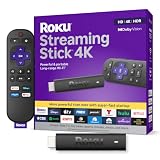
- Stunning 4K and Dolby Vision streaming made simple: With America’s number 1 TV streaming platform,* exploring popular apps—plus tons of free movies, shows, and live TV—is as easy as it is fun. *Based on hours streamed—Hypothesis Group
- Breathtaking picture quality: Stunningly sharp 4K picture brings out rich detail in your entertainment with four times the resolution of HD. Watch as colors pop off your screen and enjoy lifelike clarity with Dolby Vision and HDR10+.
- Seamless streaming for any room: With Roku Streaming Stick 4K, watch your favorite entertainment on any TV in the house, even in rooms farther from your router thanks to the long-range Wi-Fi receiver.
- Shows on the go: Take your TV to-go when traveling—without needing to log into someone else’s device.
- Compact without compromises: Our sleek design won’t block neighboring HDMI ports, so you can switch from streaming to gaming with ease. Plus, it’s designed to stay hidden behind your TV, keeping wires neatly out of sight
Product prices and availability are accurate as of the date/time indicated and are subject to change. Any price and availability information displayed on Amazon at the time of purchase will apply.




