The Tool Desk
Outbyte Driver Updater FREEFix the driver behind crashes, sound loss and screen glitchesFind Drivers →Outbyte PC Repair FREEClear out junk files and repair common Windows errorsFree Scan →The available records document several expensive auction sales of Mozart’s autograph manuscripts and letters, including a £880,000 result Sotheby’s reported in 1990. They do not establish a reliable, comparable ranking of the eight most expensive Mozart possessions. These sales concern objects Mozart wrote, not a complete inventory of things he owned.
Why there is no verified top eight
The documented auction records are a collection of notable sales, not a definitive ranking. They mix complete musical works, a cadenza, manuscript fragments and letters, sold in different years and currencies. Some reported amounts are hammer prices; others are described as prices realized or simply as sums an object “sold for.” Those figures are not directly interchangeable.


Nor does authorship alone establish that Mozart personally owned every manuscript or letter. The safer description is “Mozart autograph”: an object in his handwriting. The examples below are documented high-value sales, not proof that these were his eight most expensive possessions.
Documented high-value Mozart autograph sales
| Sale year | Object | Reported result | What the source establishes |
|---|---|---|---|
| 1990 | Autograph manuscript of the Fantasia and Sonata in C minor, K.475 and K.457 | £880,000 | Sotheby’s says the manuscript sold on 21 November 1990 and calls it the highest auction price for a single Mozart work in that catalogue description. That is a historical claim, not a verified current world record. Sotheby’s |
| 2017 | Autograph cadenza for the Sinfonia Concertante, K.364 | £423,000 | Sotheby’s reports the sale and notes that only this separately written cadenza survives from Mozart’s autograph of the work. Sotheby’s |
| Not established in the accessible catalogue text | Working draft for piano duet, K.357/500a | £355,750 | A Christie’s search-result record gives this realized price; the catalogue page confirms a six-page autograph manuscript but does not show the price in the page text accessed. The sale year is not established here. Christie’s describes it as a late working draft dated by Alan Tyson to 1791, breaking off after 161 bars and containing frequent erasures. Christie’s |
| 2023 | Autograph letter to Baroness von Waldstätten | £226,800 | Christie’s and Rare Book Hub report the realized price. The letter is identified as addressed to the baroness and dated shortly before 4 August 1782. Christie’s · Rare Book Hub |
| 2017 | Autograph letter to Mozart’s father | $260,000; approximately £203,000 at the time | Antiques Trade Gazette reports the Christie’s New York sale in June 2017. The sterling amount is the publication’s approximate conversion, not a separate sale price. Antiques Trade Gazette |
| 2023 | Autograph letter to a person described in a trade report as an unidentified love interest | £180,000 | Antiques Trade Gazette reports the result and called it the third-highest auction price for a Mozart letter at the time of publication. This is a trade-publication account, not an auction-house result page. Antiques Trade Gazette |
| 2022 | Opening 15 bars of the Andante from the Serenade in D major, K.185 | £100,000 hammer price | Antiques Trade Gazette reports the Christie’s London hammer amount. It is not a fee-inclusive total. Antiques Trade Gazette |
How to compare the reported prices
The table preserves each source’s currency and description rather than converting or treating all results as equivalent. In particular, the £100,000 figure is explicitly a hammer price, while the $260,000 sale has a separate approximate sterling conversion reported at the time. The sources do not establish a consistent fee basis across all the other amounts.
What’s actually slowing this PC down?
Pick the symptom - the matching free tool is one click away.
Object type matters too: a complete manuscript, a surviving fragment, a separately written cadenza and a private letter are different categories. The 1990 Sotheby’s description refers to a “single work,” while the broader examples here include letters and fragments. A single all-time ranking would therefore require more comparable records and consistent price definitions.
Independent reader supportYour contribution helps us test, update, and keep practical guides available for everyone.Why Mozart autographs can be historically significant
A manuscript’s importance can turn on more than the music or words it contains. For the K.357/500a draft, Christie’s describes erasures and an unfinished passage, details that reveal the document as working material rather than a polished printed score. For the K.364 cadenza, Sotheby’s notes that the separately written passage is the only surviving part of Mozart’s autograph of the work.
Rank #2
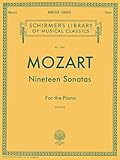
- 320 Pages
- Editor: Richard Epstein
- Composer: Wolfgang Amadeus Mozart
- Publisher : G. Schirmer
- Softcover
Provenance can also add context. Sotheby’s account of Mozart’s K.164 minuets traces ownership through his sister Nannerl, his son Franz Xavier, Joséphine de Baroni-Cavalcabò, Stefan Zweig and later collectors. It says Mozart’s widow Constanze retained manuscripts after his death and sold many to publisher J. A. André around 1799–1800. That history illustrates how a manuscript might pass through family and collectors; it does not make the K.164 manuscript one of the sale results listed above. Sotheby’s
Quick Recap
Best Value

- Used Book in Good Condition
Rank #4
Rank #3
Product prices and availability are accurate as of the date/time indicated and are subject to change. Any price and availability information displayed on Amazon at the time of purchase will apply.
Recommended Free Tools




