Micron’s operating results are exceptionally strong, but the evidence available here does not establish that its shares are “dirt cheap.” Whether MU is a buy depends on the share price investors pay for earnings that are being boosted by unusually high memory prices—and on how much of that profitability can last.
How fast is Micron growing?
Micron reported fiscal 2026 revenue of $133.19 billion, up from $37.38 billion in fiscal 2025. Fiscal fourth-quarter revenue alone was $54.23 billion, compared with $11.32 billion in the year-earlier quarter. The figures come from the company’s September 30, 2026 fiscal Q4 and full-year earnings release.


| Micron measure | Fiscal 2026 result | Context |
|---|---|---|
| Revenue | $133.19 billion | Fiscal 2025 revenue was $37.38 billion; Micron, September 30, 2026 earnings release. |
| GAAP net income and diluted EPS | $84.97 billion; $74.33 | Company-reported GAAP results; Micron, September 30, 2026 earnings release. |
| Non-GAAP net income and diluted EPS | $86.76 billion; $75.52 | Company-defined non-GAAP measures; Micron provides its definitions and reconciliation in the release. |
| Gross margin | 80.7% GAAP; 81.1% non-GAAP | Full fiscal year; Micron, September 30, 2026 earnings release. |
| Net capital expenditures and adjusted free cash flow | $27.37 billion; $62.31 billion | Adjusted free cash flow uses Micron’s own label and methodology; Micron, September 30, 2026 earnings release. |
| Cash, marketable investments, and restricted cash | $73.48 billion | Fiscal year-end balance; Micron, September 30, 2026 earnings release. |
These results show both the scale of the turnaround and the importance of keeping accounting measures distinct: GAAP and non-GAAP income are not interchangeable, and the latter is Micron’s adjusted measure. Strong cash generation and a large year-end cash balance provide financial flexibility, while the capital spending figure shows that maintaining and expanding manufacturing capacity takes substantial investment.
The next-quarter outlook is not a full-year forecast
For fiscal Q1 2027, Micron guided to revenue of $61.5 billion, plus or minus $1.5 billion, and non-GAAP diluted EPS of $38.15, plus or minus $1.00. This is company guidance for one quarter, not a forecast for all of fiscal 2027; multiplying it by four would be a scenario, not Micron’s full-year outlook.
What’s actually slowing this PC down?
Pick the symptom - the matching free tool is one click away.
#1 Best Overall
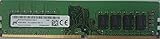
- Form factor: DDR4 DIMM
- Clock Speed: 3200MT/s PC4-25600 Pin: 288 | Memory Capacity: 16GB Latency: CL22
- Micron Part Number: MTA16ATF2G64AZ-3G2J1
- Compatible with 6th, 7th, 8th, 9th, 10th & 11th Generation Intel Processors. Also compatible with AMD Ryzen based processors.
- These modules are also compatible with desktops from all other manufacturers including DELL, Lenovo, MSI, Acer, Alienware and many more.
An Investing.com report published September 30 and updated October 1, 2026, cited analyst consensus of $56.77 billion in Q1 revenue and $36.02 in non-GAAP EPS. Those third-party estimates are a dated snapshot, not Micron guidance or a durable forecast. The company’s guidance midpoint is above that snapshot on both measures, but meeting guidance still depends on actual business conditions.
What is driving the earnings surge?
Memory prices are a central part of the explanation. Micron’s fiscal Q3 2026 Form 10-Q said higher average selling prices were the primary reason for revenue and gross-margin improvement, with bit shipments, product mix, and manufacturing-cost reductions also contributing. The filing described AI-related data-center demand as outpacing the industry’s ability to add supply.
The Q3 price and shipment figures help show how the cycle was working, but they are not Q4 figures: sequential DRAM sales rose 67%, as average selling prices increased in the low-60% range and bit shipments grew in the low single digits. NAND sales rose 99%, with average selling prices up in the mid-80% range and bit shipments up in the mid single digits. In both product categories, price increases were much larger than shipment growth.
Micron is not a single-product business. Its fiscal Q4 release reported revenue across four segments:
Recommended Free Tools
| Fiscal Q4 2026 segment | Revenue |
|---|---|
| Cloud Memory | $16.283 billion |
| Core Data Center | $18.002 billion |
| Mobile and Client | $13.114 billion |
| Automotive and Embedded | $6.824 billion |
Micron sells DRAM, NAND, and NOR products into data-center, cloud, mobile and client, automotive, and embedded markets. The segment figures show that exposure is broader than AI data centers alone, while differing segment margins mean revenue is not equally profitable across the company.
Why the memory cycle could turn
Micron’s fiscal Q3 filing describes a two-sided supply risk. It says high-bandwidth memory (HBM) uses more wafers and cleanroom space per bit than conventional DRAM made on the same technology node. If HBM demand weakens and manufacturers shift capacity back toward conventional DRAM, the extra supply could put pressure on DRAM prices and margins.
The opposite problem is also possible: Micron may be unable to increase output quickly enough to meet demand. The company identifies cleanroom capacity, technology ramps, product cycles, and customer requirements as constraints. New capacity and manufacturing execution therefore matter alongside AI demand; demand growth by itself does not guarantee that Micron can ship more product profitably or on schedule.
- Prices versus shipments: Watch whether selling prices remain strong and whether bit shipments also grow, rather than treating price-driven revenue growth as evidence of equivalent unit growth.
- HBM demand versus supply response: Strong demand can support pricing, but a change in HBM needs or capacity allocation could alter the supply balance for other memory products.
- Margins versus a more normal cycle: Today’s reported margins are exceptionally high. If prices retreat, earnings could fall faster than revenue because the current profitability depends heavily on favorable pricing.
- Customer commitments versus durability: Agreements may improve visibility, but they are not independent proof that current demand or margins will persist.
- Investment versus cash generation: Capacity expansion may support future sales, but it requires capital and carries execution risk.
Customer concentration is another factor to monitor, with care not to confuse periods: Micron’s Q3 2026 Form 10-Q said one customer represented 10% of total revenue in the first nine months of fiscal 2026, versus 16% in the comparable 2025 period. That filing does not establish the full-year Q4 concentration figure.
The Tool Desk
Outbyte Driver Updater FREEScan for outdated or missing drivers - takes under a minuteDriver Scan →Outbyte PC Repair FREERepair Windows errors before they cause bigger problemsFix Now →Does the evidence show that MU is cheap?
No date-matched October 5, 2026 closing share price or market capitalization is established here, so a current price-to-earnings ratio cannot be calculated responsibly. A low multiple based on peak-cycle earnings can make a cyclical company appear inexpensive even when profits are unusually elevated. The phrase “dirt cheap” therefore needs a sourced share price and a clearly identified earnings denominator before it can be treated as a valuation conclusion.
Rank #4

- Speeds up to 3200 MT/s and faster data rates are expected to be available as DDR4 technology matures
- Reduce power consumption by up to 40% and extend battery life
- Faster burst access speeds for improved sequential data throughput
- High Performance DDR4 laptop Memory designed for PC enthusiasts and gamers
- ECC Type = Non-ECC, Form Factor = SODIMM, Pin Count = 260-pin, PC Speed = PC4-25600, Voltage = 1.2V, Rank and Configuration = 1Rx16
A useful valuation check should compare at least three earnings frames:
- Trailing reported earnings: Use Micron’s fiscal 2026 GAAP or non-GAAP diluted EPS, labeling which one. This shows what the company just earned, but it captures the current high-price environment.
- Forward earnings: Use a dated analyst estimate or company outlook, and state whether the figure is GAAP or non-GAAP. The Q1 FY27 guidance and the Investing.com consensus snapshot are for one quarter only, not full-year estimates.
- Normalized or down-cycle earnings: Test a lower-profit scenario in which memory prices and gross margins recede. This is an assumption, not a company forecast, but it helps show how dependent a valuation is on present conditions.
For any multiple, identify the quote date, share-price source, and whether market capitalization is based on basic or diluted shares, then divide by a comparable earnings estimate. Annualizing the Q1 guidance may illustrate a run-rate case, but it should not stand in for a forecast: it assumes the quarter’s conditions persist and does not account for changes in price, mix, shipments, or costs.
Independent reader supportYour contribution helps us test, update, and keep practical guides available for everyone.What is the case for buying—and the case for waiting?
| Potentially bullish evidence | What could weaken the case |
|---|---|
| Fiscal 2026 revenue, earnings, margins, and cash generation rose sharply, and Q1 FY27 guidance calls for a further increase in quarterly revenue and non-GAAP EPS. | Much of the recent improvement is tied to sharply higher selling prices. A downturn in prices could make trailing earnings a poor guide to future profit. |
| Micron says AI-led demand has outpaced supply, and management says strategic customer agreements increase its confidence in performance durability. | Those statements are management’s view. Weaker HBM demand, capacity shifts, or changing customer needs could affect the balance of supply and demand. |
| The company is investing in technology, products, and manufacturing, while reporting substantial adjusted free cash flow and year-end cash. | Expanding capacity is capital-intensive, and cleanroom availability, technology ramps, and execution can limit output or raise risk. |
On September 30, 2026, Micron CEO and chairman Sanjay Mehrotra said, “Micron delivered record fiscal 2026 results, and we expect an even stronger fiscal 2027.” He also said strategic customer agreements provide “added confidence in the durability of Micron’s financial performance.” These are useful indicators of management’s outlook, not independent confirmation that peak pricing or margins will endure.
Free tools Windows power users keep installed
One-click scans. No signup required.
The operating case is clearly strong; the investment case still turns on valuation and the durability of earnings. An investor who believes memory prices and margins will remain elevated may reach a different conclusion from one who values Micron on lower, normalized profits. Without a verified share price and a down-cycle earnings comparison, the evidence supports neither the “dirt cheap” label nor a definitive buy call.
Quick Recap
Product prices and availability are accurate as of the date/time indicated and are subject to change. Any price and availability information displayed on Amazon at the time of purchase will apply.




