Meta says its planned Project Waterworth subsea cable system will span more than 50,000 kilometers, reach five major continents and support the growing data demands of AI and its other services. That is longer than Earth’s roughly 40,000-kilometer circumference—but it describes the combined length of routes across several oceans, not a cable looping around the planet. The company has named the United States, India, Brazil and South Africa among the regions it plans to connect; the complete route, final cost and operating terms have not been disclosed.
What Project Waterworth is—and what it is not
Meta announced Project Waterworth on February 14, 2025, as a planned, long-distance subsea fiber-optic cable project. Subsea telecommunications cables carry data through optical fibers laid on or buried beneath the ocean floor. Meta says these cables carry more than 95% of intercontinental traffic across the world’s oceans; that figure is Meta’s estimate, not an independently established statistic in the company’s announcement.

Waterworth is a cable system, not an undersea power line or a physical computer for AI. A system can include main cable routes, branches, repeaters that regenerate optical signals, coastal landing stations, power-feeding equipment and terrestrial links to data centers and other networks. A fiber pair is a paired set of optical fibers used for communication in both directions.
Meta describes Waterworth as a multi-billion-dollar, multi-year investment and says it will exceed 50,000 kilometers when complete. The company calls it the world’s longest subsea cable project once completed, not a system already in operation. Meta’s announcement provides the project’s main design and reach claims.
Do these 3 things before closing this tab:
1Repair Windows errors before they cause bigger problems2Scan for outdated or missing drivers - takes under a minute3Clear out junk files and repair common Windows errors#1 Best Overall
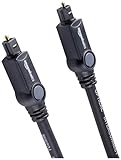
- Please REMOVE the end protective caps before using the cable.
- IN THE BOX: 6-foot digital optical audio Toslink cable.
- CLEAR AUDIO: Multi-channel, fiber-optic digital audio output; corrosion resistant gold-plated connectors and buffer tubing for optimal signal transfer.
- DURABLE: Lightweight, flexible cable with a rugged PVC exterior and removable rubber tips that protect the cable when not plugged in; remove before using.
- CONNECTS DEVICES: Quickly connects a sound bar, CD player, Blu-Ray player, game console, or other device to an audio system or TV.
Why the length exceeds Earth’s circumference
Earth’s circumference is approximately 40,000 kilometers. A planned route length of more than 50,000 kilometers is therefore about one-quarter longer. The comparison is about the total cable deployed across multiple ocean routes; it does not mean the system forms a closed ring around Earth.
Subsea routes are not simply drawn as straight lines between cities. Engineers must account for seabed terrain, geological hazards, existing infrastructure, fishing and shipping activity, national waters, maritime permissions and other security or regulatory constraints. Those considerations can make a practical route longer while helping it avoid hazards or create useful connections between regions.
Which regions are confirmed, and what route remains uncertain?
Meta has named the United States, India, Brazil and South Africa as key regions for Waterworth and says the system will reach five major continents. Its announcement does not give a complete final route or identify every landing station. A landing station is the coastal facility where a submarine cable connects to terrestrial networks.
Earlier reporting described a preliminary route linking the U.S. East Coast with India through the South Atlantic and Indian Ocean, then continuing toward the U.S. West Coast through Australia. That is reported route information, not a final route confirmed in Meta’s announcement. TechCrunch’s earlier report also carried the reported cost estimate discussed below.
India is a significant part of Meta’s stated rationale: the company points to the country’s growing digital economy and says Waterworth could help accelerate connectivity and technology development there. That is a corporate objective, not a guarantee of a particular economic effect or consumer benefit.
How a subsea cable can support AI
AI systems depend on more than processors. Data-center clusters exchange model data, user requests, software updates, telemetry, stored information and other traffic. Subsea cables provide high-capacity links between regions, connecting data centers and network locations across oceans.
Rank #2

- 217-Core Fiber Optic Cable for Superior Performance**: Composed of 217 fiber optic cores, this cable minimizes light attenuation even when bent, ensuring reliable light signal transmission from your camera's built-in flash to the strobe—just like a durable firework fuse cord but designed for underwater photography. Perfect for avoiding signal loss during your dives.
- Universal Compatibility for Underwater Gear**: Works seamlessly with all Sea & Sea housings, Olympus strobes, Nauticam housings, and various diving waterproof cases. Features a universal connector that fits setups like PT059, MF2 backscatter, and more, making it a versatile choice for different underwater camera systems.
- Durable Construction & Optimal Length**: With a max length of 150cm (60 inches), it offers flexible positioning for your strobe. Made with PMMA core, fluorinated polymer clad, and a black PE jacket (2200μm diameter), it’s resistant to bending, physical impact, and distortion—built to handle the harsh underwater environment.
- High-Quality with Exceptional Value**: Praised by customers as "as good as OEM," this fiber optic cable delivers reliable performance (attenuation ≤0.6 dB/m, tensile strength ≥80 N) for both casual and serious divers. It combines top-notch quality with great value, making it a smart choice for your underwater photography needs.
- Easy to Use, Long-Lasting & backed by 2-Year Warranty**: Simple to install and remove while staying securely in place. Many users have relied on it for over a year, withstanding regular use. What's more, it comes with a 2-year warranty—if you encounter any issues, contact us. Whether as a primary cable or a spare for your underwater setup, it’s a trustworthy solution that gets the job done.
- Bandwidth is the amount of data a link can carry over time. More available capacity can help accommodate growing traffic and reduce congestion on constrained routes.
- Latency is the time data takes to travel between endpoints. A cable can add capacity without reducing the physical travel time; a longer route can even have greater latency than a shorter one.
- Resilience is the ability to keep traffic moving when a route or component fails. Additional routes can provide alternatives, depending on how networks are connected and traffic is rerouted.
- Compute capacity comes from processors and data centers. Waterworth supplies network infrastructure; it does not itself add GPUs, build data centers or train AI models.
Meta says Waterworth will create three new oceanic corridors with abundant, high-speed connectivity intended to support AI innovation. The company has not published enough detail to establish that those corridors correspond to exactly three wholly independent physical cables. Nor has it announced a Waterworth capacity figure in terabits per second or demonstrated a particular improvement in AI response times.
AI is a major reason Meta gives for investing in more capacity, but the cable is not described as carrying only AI traffic. It can support the wider mix of social-media, video, messaging, cloud-connected and other network traffic that uses Meta’s infrastructure.
What’s actually slowing this PC down?
Pick the symptom - the matching free tool is one click away.
What is distinctive about the planned engineering?
Twenty-four fiber pairs
Meta says Waterworth will use 24 fiber pairs, compared with the 8-to-16-pair configurations it describes as typical of other new systems. More fiber pairs can increase potential system capacity, but the pair count alone does not reveal total throughput. Optical transmission technology, wavelengths, modulation and coding, repeaters, power limits, equipment at each end, route length and capacity allocated to branches all affect what a system can carry. Meta has not stated Waterworth’s final capacity in terabits per second.
Deep-water routing and targeted burial
Meta says the system will maximize deep-water cable routes at depths of up to 7,000 meters and use enhanced burial techniques in high-risk fault areas, particularly in shallow coastal waters. Burial and careful route selection can reduce exposure to anchors and fishing activity, but no route is immune to damage.
Deep-sea systems can still be affected by earthquakes, submarine landslides, seabed instability, installation errors, equipment faults and interactions with other infrastructure. Subsea cables also depend on repeaters and power-feeding equipment over long distances, so a fault need not be a visible break in the fiber itself. Meta’s engineering overview of subsea cable construction discusses the challenges involved in building these systems.
Why Meta is investing in cable infrastructure
Meta says it has invested in more than 20 subsea cables over the past decade. Waterworth represents a larger, more integrated piece of that network strategy. Owning or helping develop infrastructure can give a company more influence over capacity planning, route choices and connections between its data centers and network points of presence—locations where networks exchange traffic.
Crashes, No Sound, or Screen Glitches?
Random freezes, missing sound and display glitches usually trace back to one bad driver. Find and replace yours safely.Free scan · under a minutePC Slower Than It Used to Be?
A free scan shows the junk files, broken settings and background clutter dragging Windows down - then fixes them in one click.Free scan · Windows 10 & 11Additional routes can also reduce reliance on capacity controlled by third parties and provide alternatives when a cable is congested or damaged. Those advantages are not automatic: they depend on how routes connect to terrestrial networks, whether traffic can be rerouted, and what capacity is actually available at each landing point.
Meta’s broader portfolio includes systems such as 2Africa, Bifrost, Echo and Apricot, as well as Candle, an announced Asia-Pacific project. The portfolio shows that Waterworth is part of a wider network buildout, not a standalone replacement for every other route. Meta says Candle is planned as an 8,000-kilometer, 24-fiber-pair system for 2028. For comparison, Meta describes the core 2Africa system as 45,000 kilometers, with its Pearls extension forming part of the full system. These lengths are not necessarily like-for-like measures of a single cable: published totals may include systems, extensions or branches. Meta’s Candle and Asia-Pacific update and its 2Africa update provide that context.
Cost, completion date and what is still unknown
Meta’s official description is “multi-billion dollar”; it has not published a precise Waterworth budget. TechCrunch reported in November 2024, citing sources close to the company, that the project could exceed $10 billion. That is a reported estimate, not an official Meta cost.
Meta announced Waterworth in February 2025. In an October 2025 update, the company continued to describe it as expected to reach five continents, including Asia, “by the end of the decade.” That is a broad target rather than a precise operational date. The available official descriptions do not establish that the full system is complete or operational.
Important details have not been made public in the cited announcements:
- The complete final route and list of landing stations.
- The final system capacity and detailed physical configuration.
- The project’s final cost and construction schedule beyond the broad target.
- Whether, and on what terms, other carriers or network operators will be able to buy capacity.
Who could use Waterworth—and would consumers pay less?
Meta says the project will improve connectivity for its services and the regions it plans to connect. Its announcement does not say that Waterworth will be open-access or that consumers will be able to buy capacity directly from Meta. Open-access terminology used for another system, such as 2Africa, should not be assumed to apply to Waterworth.
Rank #4

- Pet-Proof Armored Cable for Everyday Reliability — Designed with a stainless steel armored tube and LSZH jacket, this SC/APC to SC/APC single mode cable resists crushing, bending, and even pet chewing. Perfect for homes with active pets, tight conduits, or wall pass-throughs where standard fiber easily fails.
- Stable OS2 Performance for Smooth Home Internet — Using G657A1 or G657A2 bend-insensitive fiber, this single mode OS2 jumper delivers stronger FTTH stability in tight bends and corners, with low insertion loss and excellent return loss for streaming, gaming, remote work and smart-home devices.
- FTTH-Friendly for Clean Home Network Upgrades — Ideal for relocating fiber equipment from the basement to the living room, improving Wi-Fi coverage, or extending a fiber run through a weak-signal area. Supports Verizon Fios, AT&T BGW320 All‑Fi Hub Fiber, Google Fiber, and other SC/APC-based FTTH systems.
- Plug-and-Play Fiber Connectivity — Installer-approved for residential and light commercial use, this armored SC/APC cable works instantly with ONTs, media panels and rack systems — no setup, no tools, no compatibility problems.
- Bonus SC/APC Coupler & Zip Ties for Hassle-Free Setup — Includes a matching SC/APC coupler for quick line extensions or equipment relocation, plus zip ties for neat routing along baseboards, inside cabinets, or behind entertainment centers. No extra accessories needed — cleaner installs from day one.
Meta could use the system for its own services and internal network traffic. Telecom operators or other network partners might benefit if capacity is made available to them, but the public terms have not been announced. People who use online services could benefit indirectly if added capacity or route diversity improves service availability or reduces congestion on relevant paths.
None of those possibilities establishes that Waterworth will lower consumer internet bills or make every AI service faster. Outcomes depend on local providers, terrestrial backhaul, peering and routing arrangements, where computing capacity is located, congestion and commercial agreements. A cable landing in a country does not mean local networks or customers automatically receive all of its capacity.
Recommended Free Tools
Risks and limits of a private global cable
Large subsea projects require capital, construction vessels, equipment, coordination across jurisdictions and approvals for routes and landing sites. Geopolitical and regulatory reviews can affect where a cable may land or how quickly it can be built. A fault can require a repair ship to locate, recover and splice the cable before redeployment; weather, permits and maritime restrictions can extend the process.
Building more routes can improve resilience, but concentrating more traffic on infrastructure controlled by a small number of large companies can create a different kind of dependency. Waterworth’s ownership structure, access terms and detailed redundancy design have not been publicly specified in the cited announcements, so its net effect on market concentration and third-party resilience is not yet clear.
The project’s practical impact will depend on its eventual route, connections to terrestrial networks and data centers, capacity allocation and repair arrangements—not just the total kilometers of cable laid.
Quick Recap
Product prices and availability are accurate as of the date/time indicated and are subject to change. Any price and availability information displayed on Amazon at the time of purchase will apply.
Free tools Windows power users keep installed
One-click scans. No signup required.




