A webinar works best as more than a live presentation: it is a campaign that educates a specific audience, creates useful engagement signals, and produces content people can use after the broadcast. Plan the topic, promotion, follow-up, and reuse before choosing a platform or building slides. Then judge the result by audience fit and meaningful next steps—not registration or attendance alone.
What webinar content marketing means
Webinar content marketing uses live, simulive (a recorded session presented at a scheduled time, sometimes with live interaction), or on-demand webinars to teach an audience and support a broader marketing goal. A well-designed webinar can build authority, address complex questions, support sales conversations, create reusable material, and reveal what prospects care about.

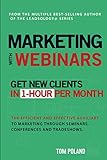


It can serve several disciplines, but their aims differ:
- Event marketing focuses on the attendee experience and participation.
- Lead generation focuses on registrations and form completion.
- Content marketing focuses on useful education and distribution that continues after the event.
- Demand generation connects engagement to account fit, intent, pipeline, and revenue.
Choose the primary aim first; it determines what to teach, whom to invite, what to measure, and what follow-up makes sense.
#1 Best Overall
Decide whether a webinar is the right format
Webinars are a good fit when people benefit from seeing a process, hearing multiple perspectives, asking questions, or learning from a credible expert. They can also help teams address recurring objections at scale, especially when a product or service takes explanation before a buying decision.
Consider another format—or fix the underlying strategy—if the topic is simple enough for a short article, there is no realistic way to reach the intended audience, or the event is being used to compensate for unclear positioning. A sales presentation with little educational value can damage trust. A webinar without permission to record and reuse speakers’ contributions, or without a workable privacy and accessibility plan, can create avoidable problems.
Before committing, check that you have a defined audience, a useful promise, a qualified speaker, a distribution route, and a relevant next step. If any is missing, resolve it before investing in production.
Choose a topic with a clear audience and outcome
Start with a recurring audience problem that connects to a business priority and that your team can credibly help solve. Draw ideas from customer conversations, support questions, sales objections, search and social interest, and conversations with partners. A strong topic also has a natural next step: a template, deeper resource, consultation, product workflow, or follow-on session.
Useful topic structures include:
- Outcome: “How to Reduce [Problem] Without [Common Trade-off]”
- Framework: “The [Number]-Step Framework for [Outcome]”
- Research: “What [Audience] Should Know About [Trend or Data]”
- Comparison: “[Approach A] vs. [Approach B]: Which Fits [Use Case]?”
- Live teardown: “We Audit Three [Assets or Workflows] and Show What to Fix”
- Customer proof: “How [Customer Type] Improved [Metric]”
- Implementation: “From Strategy to Workflow: Building [System] in 30 Days”
Avoid titles so broad that people cannot tell whether the session is for them, such as “The Future of Marketing.” The title and registration page should make clear who the webinar serves, what problem it addresses, what attendees will learn, and why attending live is worthwhile. Validate the promise with a few people from the target audience before building the session.
Pick a format that supports the learning goal
| Format | Best for | Common risk |
|---|---|---|
| Educational presentation | Frameworks, tutorials, research, and category education | Becoming a one-way lecture |
| Panel | Multiple perspectives, emerging topics, and guest-led reach | Repetitive answers or weak moderation |
| Interview | Expert stories, customer cases, and executive insight | Depending too heavily on interviewer preparation |
| Product demonstration | High-intent audiences and technical workflows | Feeling like a sales demo rather than useful teaching |
| Workshop | Exercises, audits, templates, and implementation | Requiring more preparation and participant support |
| Live Q&A or office hours | Customers, communities, and objection handling | Running short of questions without prepared prompts |
| Simulive or evergreen | Repeat delivery, global audiences, and nurture programs | Feeling impersonal if recording or interaction is not clearly explained |
Choose the simplest format that delivers the promised outcome. A demonstration or workshop may need more rehearsal and technical preparation than a short expert interview; a panel needs a moderator who can prevent overlap and keep discussion useful.
Set one primary goal and measurable KPIs
Write a planning statement before drafting the agenda: “For [audience], we will use [format] to help them achieve [outcome], and we will judge success by [primary KPI] rather than attendance alone.” Select a primary goal—such as target-account engagement, qualified registrations, customer onboarding, or a reusable video asset—and keep secondary goals limited.
Rank #2
- Awareness: relevant new-audience reach, partner participation, or subsequent branded engagement.
- Demand: qualified registrations, target-account participation, sales-accepted follow-up, or opportunities created.
- Customer education: onboarding progress, feature adoption, fewer repeated support questions, or expansion engagement.
- Content production: a useful replay, edited clips, an article, or a resource hub that reaches people beyond the live audience.
Track performance across stages rather than treating one number as the result:
- Before the event: landing-page visits, registration conversion, source, cost per registration, and fit indicators such as role, company, or industry.
- During the event: live attendance, watch time, drop-off, questions, poll and chat participation, CTA clicks, and meeting or download requests.
- After the event: replay activity, email clicks, marketing-qualified leads, sales acceptance, opportunities, pipeline influence, and attributed or assisted revenue.
Registrations are not attendees; attendance is not qualification; qualification is not pipeline. Pipeline influence does not by itself mean the webinar sourced revenue. Report replay activity separately from live attendance, and define what counts as an attendee and an engaged lead in your own reporting.
Benchmarks are directional because platforms use different audiences, periods, formats, and definitions. GoToWebinar’s benchmark article reports a 44% average marketing-webinar attendance rate, while Livestorm reports 46% across its platform data; Zoom’s statistics article cites a 49% live-attendance benchmark. These figures are not a universal target or a like-for-like comparison. See GoToWebinar’s benchmark context, Livestorm’s statistics, and Zoom’s webinar statistics.
Registration timing also varies by dataset. GoToWebinar reports 59% of registrations in the week before an event and 17% on the event day; Livestorm reports 35% in the final three days and 15% on the same day in its later benchmark. Keep promotion open through the start, but do not forecast from one vendor’s figures as if they apply to every audience. Sources: GoToWebinar and Livestorm’s 2026 benchmark report.
Build a session people want to finish
For a 45–60-minute session, give the audience a clear path from problem to application. Adjust the timing to the topic rather than forcing every subject into an hour. GoToWebinar reports that 67% of registrations in its benchmark were for 60-minute webinars and that live Q&A appeared in 78% of marketing webinars in its dataset; those findings are context, not a format rule. Source: GoToWebinar’s benchmark article.
- Opening and promise (2–5 minutes): identify the intended audience and outcome, set expectations, and explain how to submit questions.
- Context (5–10 minutes): define the problem and terminology, show why it matters, and establish the cost of inaction where relevant.
- Core teaching (20–30 minutes): deliver a framework, process, demonstration, or case study with concrete examples and uncluttered slides.
- Application (5–10 minutes): give attendees a checklist, template, workflow, or worked example they can use.
- Q&A (10–15 minutes): prepare seed questions, address objections and edge cases, and repeat questions aloud so the recording makes sense.
- CTA and close (2–5 minutes): offer one relevant next step and explain what will happen after someone takes it.
Design slides to support the explanation rather than carry a script. Use examples to make abstract advice tangible, and avoid introducing an offer unrelated to the session’s promise.
Prepare speakers, moderator, and production
Agree on speaker roles, handoffs, learning objectives, approved claims and examples, and a time budget for each section. Rehearse the full transition sequence, check names and pronunciations, and decide how questions outside the speakers’ expertise will be handled. If the session includes a product demonstration, prepare a fallback recording or screenshots in case the live workflow fails.
The moderator should keep answers relevant and concise, connect audience questions to the central problem, surface unanswered questions for later follow-up, and protect time for the close. Give speakers a private communication channel during the broadcast, designate a backup host, and confirm recording, likeness, and reuse permissions in advance.
Accessibility and compliance need to be part of production planning: check captions and transcript quality, use readable high-contrast slides, verbally describe important visuals, and make downloadable materials accessible. Explain recording and data use clearly. Privacy, email, and other legal requirements vary by jurisdiction and audience, so a general checklist is not a substitute for applicable advice.
What’s actually slowing this PC down?
Pick the symptom - the matching free tool is one click away.
Create a registration page that sets expectations
The page should answer the questions a prospective attendee needs to decide whether to register:
- A specific title and outcome-oriented subtitle.
- Date, time zone, and expected duration.
- Speaker names, roles, and relevant credentials.
- Three to five concrete learning outcomes and a short agenda.
- Who the session is for and its format: live, simulive, or on-demand.
- Privacy and consent language, including what recording or follow-up to expect.
- One primary registration action, plus a calendar-add option and accessibility details where applicable.
Ask only for form information that will be used. Excessive fields add friction; too few may make it harder to assess fit. Use source tracking on major campaign links, and test the complete path from the promotion link through registration and into marketing automation or the CRM. Make the time zone unambiguous and do not promise more than the session can deliver.
Promote the event with audience fit in mind
Begin several weeks ahead when possible. Livestorm recommends starting at least two to three weeks before an event and using two to three email and social touchpoints. Promotion should continue close to the start: GoToWebinar identifies email as a major registration source in its benchmark and recommends more activity during the final week and on event day. These are directional vendor observations, not guaranteed channel results. Sources: Livestorm’s webinar report and GoToWebinar’s benchmark article.
| Timing | Work to complete |
|---|---|
| Four or more weeks before | Confirm the audience, promise, speakers, date, and distribution plan; publish the registration page; set up source tracking; brief partners and speakers; schedule email and social promotion. |
| Two to three weeks before | Send the first invitation, publish a useful related post or article, and ask speakers and partners to share a personalized invitation focused on a takeaway. |
| One week before | Remind non-registrants, share a speaker quote, clip, or preview, answer “what will I learn?” objections, confirm speaker availability, and review registration fit and sources. |
| Day before and day of | Send joining details and reminders, verify calendar information and links, keep registration open until the start, and make the live benefit clear. |
Use the channels that can reach the right people: house email, speaker and employee networks, partner or community newsletters, organic and paid social, relevant resource pages, customer or product dashboards, sales outreach to target accounts, and retargeting. Each message should give a reason to attend—not merely announce a date. Track source quality as well as volume; a large number of poorly matched sign-ups can obscure whether the topic is reaching likely buyers or useful learners.
Free tools Windows power users keep installed
One-click scans. No signup required.
Run an engaging live session and prepare for failure
Use interactions when they help teach or reveal a useful audience distinction: an early experience-level poll, questions throughout, a live teardown, an audience choice between examples, or a worksheet. A CTA should appear when the content makes its relevance clear. Avoid poll questions without a purpose, constant prompts that interrupt concentration, and activities that are difficult on mobile. Confirm that the selected platform supports the interaction and moderation you need. GoToWebinar’s benchmark describes high use of live Q&A but relatively low poll use in its dataset, a reminder to design interaction deliberately rather than rely on questions alone. Source: GoToWebinar.
Before going live, test the joining link, slides, audio, video, captions, recording, and CTA destinations. Have a backup host, local recording, downloaded slides, an alternate presentation file, speaker contact numbers, a secondary internet option where possible, and a prewritten message for an interruption. Agree on a fallback meeting room or replay plan. If a speaker cancels, a co-host, recorded segment, customer story, or moderated Q&A can preserve the session’s core value; update attendee communications to match the actual format.
Follow up based on what people did
Send the replay and promised materials promptly, thank attendees, and ask one concise feedback question. Record attendance and engagement data before it is lost. Then segment at least by attendance and intent: engaged attendees, attendees who left early, registrants who did not attend, replay viewers, question submitters, CTA clickers, target-account contacts, and low-fit contacts.
Match the next message to the person’s behavior. A no-show may need the replay; a highly engaged attendee who clicked for a meeting may warrant direct sales follow-up; someone who watched only a replay may need a useful summary or related resource. Do not send every registrant the same generic sales message. Include unanswered questions, a relevant case study, a worksheet, or another session when it genuinely helps, and monitor unsubscribes and complaints alongside clicks and conversions.
Do these 3 things before closing this tab:
1Repair Windows errors before they cause bigger problems2Scan for outdated or missing drivers - takes under a minute3Clear out junk files and repair common Windows errorsTurn one webinar into a durable content system
The recording is a source asset, not the whole content strategy. With appropriate permissions, a session can yield a full replay, edited video, short clips, an audio episode, an article, a question-led FAQ, slides, quote graphics, social posts, an email sequence, a sales brief, customer FAQs, a newsletter item, a checklist, and ideas for future sessions.
Livestorm reports that in its 2024 report, 54% of marketers repurposed webinars into long- and short-form video and 45% turned transcripts into blog articles. These are vendor-reported survey findings, not universal rates. Source: Livestorm’s webinar report.
- Record clean audio and video, and make a searchable transcript.
- Mark timestamps for clear explanations, useful examples, objections, and quotable moments.
- Edit the full replay, then cut short clips that retain enough context to make sense on their own.
- Use audience questions to develop FAQ content and identify gaps for future education.
- Write an article that adds structure and examples; do not simply publish a raw transcript full of filler and spoken-context references.
- Link each derivative asset to the replay or the next relevant action, then measure its reach and conversions separately.
Search visibility is not automatic: a recording or transcript must still meet the searcher’s need and be presented on a useful, technically sound page. Review AI-generated transcripts, summaries, and clips for factual errors, confidential information, unsupported claims, and permission issues before publication.
Independent reader supportYour contribution helps us test, update, and keep practical guides available for everyone.Choose webinar software around your use case
Compare attendee capacity, registration and consent controls, promotion workflows, engagement, production needs, replay handling, CRM synchronization, account-level reporting, and total cost. Check whether limits apply to registrations, live attendees, monthly viewers, hosts, or active events; a platform that broadcasts well may still be weak for attribution or follow-up. Do not buy for an average attendance figure alone: consider peak demand, growth, recurring sessions, and global access.
Outdated Drivers Are Slowing You Down
One free scan finds every outdated or missing driver and matches the right update for your exact hardware.Free scan · exact hardware matchPC Slower Than It Used to Be?
A free scan shows the junk files, broken settings and background clutter dragging Windows down - then fixes them in one click.Free scan · Windows 10 & 11Capabilities and pricing change. The following vendor details were checked on August 18, 2026; confirm current availability, plan level, geography, and price with the vendor before buying.
| Platform | Potential fit | Details to verify |
|---|---|---|
| Zoom Webinars | Teams already using Zoom that need familiar live delivery and standard engagement. | Its product page lists registration, chat, reactions, polls, Q&A, recordings, smart chapters, performance reports, and marketing-tool connections. Zoom’s comparison article showed a price signal of $690 per year for up to 500 attendees for standard Webinars and $114.99 per month for up to 500 attendees for Webinars Plus; verify package and billing at checkout. Sources: Zoom’s comparison and Zoom’s event pricing page. |
| GoTo Webinar | Recurring professional webinars, training, and organizations seeking established reminders and reporting workflows. | The page lists Reach, Elevate, and Complete, with participant limits up to 500, 1,000, and 3,000 respectively. Pricing was not stated in the retrieved official page text; confirm current plan limits and price directly. |
| Livestorm | Browser-based attendance, registration, CRM integrations, automated email, and webinar-to-on-demand workflows. | Zoom’s comparison article showed a price signal of $99 per month for up to 100 attendees; verify the current plan and limit with Livestorm. Its 2026 report describes proprietary 2025 data covering 33,786 sessions, 3,199 organizations, and 7,062,572 registrations—not a market-wide sample. Sources: Zoom’s comparison and Livestorm’s 2026 benchmark report. |
| ON24 | Enterprise demand generation needing branded experiences, integrations, engagement analytics, and content performance reporting. | ON24 describes 30-plus integrations and request-based pricing. Confirm configuration, implementation, and reporting scope with the vendor. |
| BigMarker | Organizations needing configurable live and on-demand webinars, interactive tools, integrations, and larger event capabilities. | Pricing is request-based on the official page; confirm which tier includes the integrations, analytics, registration features, and AI content tools you need. |
| Demio, Crowdcast, WebinarJam, or eWebinar | Potential alternatives for different host, funnel, community, or evergreen needs. | Zoom’s comparison article listed starting-price signals, but confirm current pricing and whether charges are per host, event, attendee, active webinar, or month before comparing. Source: Zoom’s comparison. |
For a small team running occasional sessions, simple registration and reliable delivery may be enough. Enterprise teams may need CRM synchronization, account-level reporting, personalization, and support. If recorded or evergreen delivery is central, assess how transparently the platform identifies the format and enables meaningful interaction. Compare total costs and the specific workflow you need rather than relying on a universal “best platform” label.
Diagnose common webinar problems
Few registrations
A vague promise, late promotion, weak distribution, excessive form friction, or a poorly matched audience can all suppress sign-ups. Narrow the topic, state a practical takeaway, bring in a credible guest or distribution partner, and invite relevant customers or prospects directly. Keep promotion active as the event approaches.
Many registrations, few live attendees
Check reminder delivery, calendar handling, time-zone clarity, source quality, and whether registrants expected a replay rather than a live session. Make the live benefit explicit, and compare attendance by acquisition source and audience segment instead of treating all sign-ups alike.
Recommended Free Tools
Good attendance, few qualified actions
Look for a mismatch between the educational promise and the offer, an irrelevant CTA, weak timing, or generic sales follow-up. Define the next step before creating the content, connect it naturally to the lesson, and measure clicks and downstream outcomes separately.
High engagement, poor lead quality
Interaction is not purchase intent. Tighten targeting, make the intended audience explicit, and add a small number of qualification fields that the team will actually use. Assess fit separately from engagement.
Technical interruption or a speaker cancellation
Use the backup host, local recording, alternate connection or room, prepared interruption message, and fallback content planned before broadcast. Update registrants promptly if the session format or schedule changes.
Quick Recap
Use a launch checklist
- Before promotion: Set the audience, outcome, primary KPI, format, CTA, speakers, date, and reuse permissions.
- Before registration opens: Publish a clear landing page, check consent and accessibility information, add source tracking, and test the CRM path.
- During promotion: Coordinate email, speaker, partner, social, and sales distribution; review audience fit and source quality.
- Before broadcast: Rehearse handoffs, test links and equipment, confirm captions and recording, and prepare technical and speaker contingencies.
- After broadcast: Send the replay and resources, segment follow-up, log outcomes, and create edited derivative assets.
- At reporting: Separate live from replay performance, registrations from attendance, engagement from qualification, and pipeline influence from sourced revenue.
Product prices and availability are accurate as of the date/time indicated and are subject to change. Any price and availability information displayed on Amazon at the time of purchase will apply.
Quick wins for a faster PC:
Clear out junk files and repair common Windows errorsFree Scan →Fix the driver behind crashes, sound loss and screen glitchesFind Drivers →



