Quick wins for a faster PC:
Clear out junk files and repair common Windows errorsFree Scan →Scan for outdated or missing drivers - takes under a minuteDriver Scan →Repair Windows errors before they cause bigger problemsFix Now →Disinflation means prices are still rising, but more slowly; deflation means the overall price level is falling. The distinction is about whether the inflation rate is slowing or has turned negative. A short-lived drop in an index is not, by itself, proof of persistent, economy-wide deflation: breadth, duration, cause and expectations all matter.
What is the difference between deflation and disinflation?
Inflation measures how quickly a broad price index changes over time. Disinflation is a decline in that rate while the index continues to rise. Deflation is a sustained decline in an aggregate price measure, such as a consumer price index or the GDP deflator. The IMF’s discussion of deflation emphasizes that the definition concerns an aggregate measure, not isolated price cuts in a few products or sectors: IMF, “Deflation: Determinants, Risks, and Policy Options”.
| Term | What happens to the inflation rate? | What happens to the overall price level? |
|---|---|---|
| Inflation | Positive | Rises |
| Disinflation | Falls, but remains positive | Continues rising, more slowly |
| Deflation | Negative over a sustained period | Falls |
For example, if inflation slows from 6% to 3%, prices are still increasing, just at a slower pace. If the inflation rate is below zero, the measured price level has declined over the period—but whether that represents an entrenched deflation process depends on what is falling and for how long.
Does a negative inflation reading automatically mean deflation?
No. A negative reading means the measured index fell over the period being reported. It does not establish that prices are falling broadly and persistently across the economy. Seasonal changes, lower energy or import prices, and temporary adjustments can pull an index down for a time. The European Central Bank’s explanation distinguishes a negative price change from the wider economic conditions and expectations that can make deflation self-reinforcing: ECB, José Manuel González-Páramo, November 25, 2008.
Recommended Free Tools
#1 Best Overall

- Profitability calculations; cash flow function Calculates NPV and IRR for uneven cash flows
- Time-value-of-money and Amortization keys solve problems including: pension calculations, loans, mortgages, etc.
- Ideal calculator for students, managers and statisticians
- Built-in functionality : List-based one- and two-variable statistics with four regression options: linear, logarithmic, exponential and power
- The BA II Plus calculator is approved for use on the following professional exams: Chartered Financial Analyst exam. GARP Financial Risk Manager (FRM) exam. Certified Management Accountants exam
To assess what a negative reading means, consider:
- Breadth: Are declines widespread across the basket, or concentrated in a few volatile categories?
- Duration: Is this a brief movement or a persistent decline? There is no universal number of months that settles every case.
- Cause: Did prices fall because supply improved, or because weak demand forced sellers to keep cutting prices?
- Expectations: Do households and businesses expect prices to keep falling?
Why prices fall—and why the cause matters
Lower costs or improved supply
Productivity gains, lower input costs or cheaper imports can restrain prices. Such changes may improve purchasing power or real incomes rather than signal collapsing demand. The ECB notes that disinflation can stem from cost-saving supply developments and improvements in terms of trade, while also cautioning that negative demand shocks can accompany it: ECB, “Disinflation and deflation in the euro area,” September 25, 2009.
Weak aggregate demand
When households and businesses cut spending broadly, firms may have to reduce prices repeatedly to attract buyers. In a November 21, 2002 speech, then Federal Reserve Board Chair Ben S. Bernanke described deflation as “in almost all cases a side effect of a collapse of aggregate demand—a drop in spending so severe that producers must cut prices on an ongoing basis in order to find buyers”: Federal Reserve speech, November 21, 2002.
Rank #2
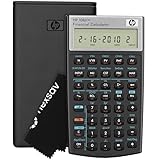
- HP 10BII+ FOR STUDENTS & PROFESSIONALS – This HP calculator is built for business, finance, accounting, and statistics courses. Perfect for learners and professionals who need to solve common financial problems quickly without memorizing formulas or relying on spreadsheets.
- 100+ FUNCTIONS FOR REAL WORLD MATH – Quickly solve time value of money, interest rates, loan payments, NPV, IRR, cash flows, and more. The 10bII+ also includes probability distributions for statistics courses—a feature not often found in financial calculators.
- ALGORITHMIC INPUT WITH DEDICATED KEYS – This high-school/college calculator uses algebraic and chain logic with minimal keystrokes. Layout appears the same as standard calculators for easy learning. Dedicated keys give quick access to commonly used financial and statistical functions
- APPROVED FOR MAJOR EXAMS – The HP 10bII+ algebra calculator is permitted for use on SAT, PSAT/NMSQT, and AP tests. An ideal statistics calculator and business calculator for school finance and accounting students preparing for class, coursework, or standardized exams.
- INCLUDES TRAVEL CASE, CLEANING CLOTH & BATTERIES– Slim, durable, and easy to keep on hand or store in a backpack or locker. Includes a protective case, cleaning cloth, and batteries so it’s ready out of the box. Large screen with clear contrast (non-backlit) is easy to read during exams or lectures.
The source of lower prices therefore matters: supply improvements can accompany stronger real purchasing power, while demand-driven and persistent declines can feed economic weakness.
How deflation can reinforce economic weakness
Persistent deflation is risky in part because expectations can turn a price decline into a feedback loop. If consumers expect goods to cost less later, they may postpone purchases; if businesses expect weaker sales, they may delay investment. Reduced spending can then put further downward pressure on prices. The ECB describes this mechanism and cites Japan’s experience in the 1990s as a well-known example—not as a forecast that every deflation episode will follow the same path: ECB, November 25, 2008.
Do these 3 things before closing this tab:
1Repair Windows errors before they cause bigger problems2Fix the driver behind crashes, sound loss and screen glitches3Clear out junk files and repair common Windows errorsRank #3

- Sold as 1 Each.
- Ideal for students and professionals. Over 100 built-in functions including probability distributions.
- Intuitive keyboard layout with minimal keystrokes required for many common functions.
- Easy-to-read display with adjustable contrast and on-screen labels.
- Permitted for use on SAT, PSAT/NMSQT and College Board AP tests.
- Debt becomes harder to repay in real terms. If the money owed stays fixed while prices and incomes fall, the debt takes a larger share of borrowers’ purchasing power or income. Unexpected deflation is especially problematic for fixed nominal debts.
- Wage adjustment can be difficult. If wages do not fall as quickly as prices or demand, employers may respond by reducing hiring or jobs.
- Interest-rate cuts have less room to work. When nominal rates are already near zero, central banks have less scope to stimulate demand through conventional rate reductions. If expected inflation turns negative, real interest rates can remain higher than desired even with nominal rates near zero. The Federal Reserve outlines these concerns in its historical overview: Federal Reserve, “Monetary Policy Report to the Congress”.
These risks depend on the episode’s persistence, expectations, debt exposure and policy options; a brief price decline is not equivalent to a self-reinforcing deflation cycle.
Independent reader supportYour contribution helps us test, update, and keep practical guides available for everyone.A practical way to tell which term fits
- Check the overall price index, not one item. A sale or drop in a single category is not economy-wide deflation.
- Check the direction of the index. If it still rises but at a slower rate, that is disinflation. If it falls, the reported rate is negative.
- Check whether the decline persists and is broad. A brief or narrow decline may reflect a temporary adjustment; persistence across the aggregate measure raises greater concern.
- Look for the driver. Lower costs or improved supply have different implications from widespread demand weakness.
- Consider expectations and balance sheets. Expectations of further price falls, large fixed debts and limited room for rate cuts increase the stakes.
For a technical treatment of causes, risks and policy choices, see the IMF’s 2003 Occasional Paper, Deflation: Determinants, Risks, and Policy Options.
Quick Recap
Best Value

- PROFESSIONAL FINANCIAL CALCULATOR : Built-in TVM, IRR, NPV. Engineered for business analysts, real estate investors, accountants, and finance students.
- ADVANCED CASH FLOW & AMORTIZATION : Execute time value of money, break-even analysis, depreciation schedules, and bond pricing. Trusted for professional exam prep", MBA coursework, and banking certifications.
- CATIGA CF-300 : Flip-open hard case with a snap-close design for a secure fit. Compact and portable: designed for daily professional use in office, classroom, or on-site.
- ALL-IN-ONE FOR PROFESSIONALS : From NPV/IRR for real estate analysis to statistical calculations for business analysts. Handles probability, linear regression, and complex financial formulas.
- MORTGAGE, LOAN & INVESTMENT CALCULATOR : Covers bond pricing, loan amortization, investment analysis, and exam-level computations. Your go-to accounting calculator, business calculator, and real estate calculator in one device.
Rank #4
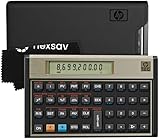
- HP 12C: INDUSTRY STANDARD SINCE 1981 – Trusted by professionals in real estate, banking, and finance for over 40 years. The HP 12C finance calculator remains the go-to tool for fast and accurate calculations in high-stakes business environments.
- 120+ FUNCTIONS FOR FINANCIAL ANALYSIS – Calculate loan amortization, bond pricing, mortgage payments, NPV, IRR, depreciation, and more with this large calculator. Built-in business and statistical functions allow you to perform complex calculations in just a few keystrokes.
- RPN ENTRY FOR FASTER WORKFLOWS – Reverse Polish Notation (RPN) allows for efficient data entry with fewer keystrokes and no formulas. This RPN calculator is perfect for a mortgage payment calculator, accounting calculator, business calculator, or real estate calculator for desktop.
- PROGRAMMABLE FOR REPEAT TASKS – The HP12C desk calculator stores custom keystroke sequences for repeated use. This large calculator supports up to 20 cash flows for IRR/NPV analysis, modeling investment scenarios, projecting returns, and automating routine calculations.
- INCLUDES CLEANING CLOTH, CASE & BATTERIES – Compact design fits easily on a desk or crowded table area. Includes a protective carrying case, cleaning cloth, and comes with pre-installed batteries so it's ready to use out of the box. A great choice for home finances, business professionals, and accountants.
Product prices and availability are accurate as of the date/time indicated and are subject to change. Any price and availability information displayed on Amazon at the time of purchase will apply.




