Isaac Adams’s approach, as described in a March 20, 2025 TechTimes profile, is to use automation to support trading decisions while keeping human oversight in the risk process. The profile says FN Capital developed FAST AI and tests strategies before launch; those are company and profile claims, not independent proof of performance or protection from losses. Understanding that distinction—and the controls a trading service can explain—is more useful than treating “AI” as a measure of safety.
What the TechTimes profile says about Isaac Adams and FAST AI
The TechTimes profile published March 20, 2025 identifies Adams as FN Capital’s co-founder and CEO and describes him as leading the creation of FAST AI, the company’s proprietary trading system. According to the profile, FAST AI draws on live economic information, order patterns, and market sentiment. It also says company experts monitor the system and can adjust it or intervene.


The profile reports that FN Capital checks strategies against historical data and worst-case scenarios and uses manual reviews before launch. These descriptions explain the approach the company says it takes; the sources available here do not provide independent technical documentation, audited performance, or evidence that these measures prevent losses.
How the company describes its risk tools
In a July 7, 2025 FN Capital article, the company describes DART (Dynamic Algorithmic Risk Tool) as analyzing market conditions and adjusting trade sizes or stop-losses. A separate FN Capital guide describes adjustments to position sizing, stop-loss orders, and exposure. These are vendor descriptions; independent validation of DART’s operation or results is not established by those sources.
#1 Best Overall
For a reader assessing any automated trading service, the useful question is not simply whether it has a named risk tool. Ask what inputs and limits the tool uses, what happens when a limit is reached, who can intervene, and what evidence supports the provider’s claims. A stop-loss or exposure control can be part of a risk process, but it is not proof that losses cannot exceed expectations or that a strategy will be profitable.
Why automation does not eliminate trading risk
Automation can apply programmed rules consistently and quickly, but it does not remove the risks of the strategy, the market, software, execution, or operations. A system can behave as designed and still lose money if its assumptions fail or prices move unfavorably. Errors, outages, unexpected order behavior, or a mismatch between a strategy and the market can also matter. No trading bot should be described as risk-free, and there is no verified, authoritative success rate in the sources cited here that can be applied to algorithmic trading generally.
Adams’s stated view in the TechTimes profile is that AI should support rather than replace judgment. The profile attributes to him the statements, “At FN Capital, we believe AI should enhance decision-making, not replace it,” and “Automation should be leveraged for efficiency while ensuring human oversight remains central to risk management.” It also quotes him saying, “A common misconception is that AI should operate without human intervention,” and “However, sustainable success comes from the combination of AI precision and human intuition.” These are quotations as attributed by TechTimes; they are not independently confirmed here.
What features Adams’s profile presents as future ideas
The profile describes three potential directions—real-time sentiment analysis across news, social media, and economic reports; cross-market correlation models; and blockchain-based trade verification—as ideas or plans discussed in March 2025. They should not be read as confirmed current FAST AI features.
Free tools Windows power users keep installed
One-click scans. No signup required.
What U.S. market-access rules do—and do not—cover
SEC Rule 15c3-5 provides a concrete example of formal controls, but its scope is narrower than “all trading bots.” The SEC says it applies to broker-dealers with market access to U.S. securities exchanges or alternative trading systems. Those covered firms must maintain documented risk-management controls and supervisory procedures reasonably designed to limit financial exposure and support applicable regulatory compliance. The SEC’s Rule 15c3-5 FAQ and rule overview describe controls such as preset credit or capital thresholds, checks for erroneous or duplicative orders, restrictions on unauthorized access and prohibited securities, and immediate post-trade execution reporting. Covered firms must also review their market-access activity regularly, including an annual review.
This is not a blanket certification of a trading algorithm or software vendor, nor a universal legal standard for every retail bot, forex service, or asset class. The SEC’s 2020 report to Congress on algorithmic trading supplies broader U.S. market and regulatory context, but does not establish a general performance figure for algorithmic trading.
Independent reader supportYour contribution helps us test, update, and keep practical guides available for everyone.How to evaluate a trading bot platform
Before committing money, look for specific, answerable disclosures rather than relying on labels such as “AI,” “proprietary,” or “risk-managed.” The following are practical evaluation questions, not a claim that the SEC prescribes this complete checklist:
- Strategy and evidence: Can the provider explain the strategy at a level that lets you understand its assumptions? What historical periods, market conditions, and worst-case scenarios were tested, and are results independently audited or otherwise verifiable?
- Limits and failure handling: Are there stated limits on order size, position size, and total exposure? What happens when a limit is reached, an order is rejected, or the platform loses a data connection?
- Monitoring and escalation: Is there live monitoring? Who can pause or override trading, and how are customers told about a material interruption or change?
- Markets and jurisdiction: Which instruments and markets does the service actually trade? Identify the provider’s legal role and jurisdiction, and do not assume U.S. securities rules apply to a service trading something else.
- Operational dependencies and costs: What accounts, broker connections, data feeds, or connectivity must remain available? Understand the fees and any consequences of downtime or disconnection.
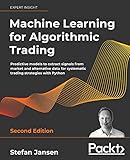
If the provider cannot clearly explain how the system is tested, what safeguards exist, and what those safeguards cannot guarantee, treat performance claims cautiously. A book on algorithmic trading can help you learn about strategy design, testing, and risk management, but reading material or automation does not guarantee returns.
What’s actually slowing this PC down?
Pick the symptom - the matching free tool is one click away.
Quick Recap
Product prices and availability are accurate as of the date/time indicated and are subject to change. Any price and availability information displayed on Amazon at the time of purchase will apply.




