Not in the simple, blanket sense. On August 6, 2025, President Donald Trump said companies manufacturing—or committed to manufacturing—chips in the United States would avoid a proposed semiconductor tariff of approximately 100%. Apple was the leading example after announcing an additional $100 billion in U.S. investment, raising its stated four-year commitment to $600 billion.
That statement was a public promise of favorable treatment, not by itself a completed customs exemption. The formal semiconductor action identified in the available record, issued January 14, 2026, imposed a 25% duty on a narrower category of advanced-computing chips and certain derivatives, while excluding specified products and end uses. It does not clearly name Apple as the beneficiary of a permanent, company-specific waiver.
As an Amazon Associate I earn from qualifying purchases.
The short answer: Apple received a political assurance, not a clearly documented blanket waiver
The phrase “Apple is exempt from semiconductor tariffs because it invested in the U.S.” compresses several different events into one claim.
Do these 3 things before closing this tab:
1Fix the driver behind crashes, sound loss and screen glitches2Clear out junk files and repair common Windows errors3Scan for outdated or missing drivers - takes under a minute- Political commitment: Trump said companies building or committed to building semiconductor capacity in the United States would not pay the proposed approximately 100% tariff.
- Apple’s investment announcement: Apple announced an additional $100 billion commitment, taking its stated four-year U.S. commitment to $600 billion.
- Formal tariff rule: The January 14, 2026 proclamation created a 25% tariff on specified advanced-computing chips and derivative products—not all semiconductors and not all Apple products.
- Documented Apple-specific waiver: The official materials identified for this article do not establish a permanent blanket exemption covering every semiconductor imported by Apple or every finished Apple device.
The most accurate conclusion is that Apple was publicly promised preferential treatment under the proposed broader tariff because of its U.S. commitments. Whether a particular Apple-related import is actually subject to duty depends on the product, tariff classification, country of origin, entry date, importing entity and, where relevant, documented end use.
#1 Best Overall

- BUILT FOR COLLEGE. AND BEYOND — MacBook Air with the M5 chip packs blazing speed and powerful AI capabilities into an incredibly portable design. And with up to 18 hours of battery life,* this thin and light powerhouse is ready to take on almost any major, just about anywhere.
- TEAR THROUGH TOUGH ASSIGNMENTS — With its faster CPU and unified memory, the M5 chip delivers even more performance and fluidity across apps, making multitasking and creative workflows smooth and responsive. A powerful Neural Engine and next-generation GPU with Neural Accelerators give you a powerful platform for AI.
- MAKE QUICK WORK OF YOUR TO-DO LIST — Apple Intelligence helps you write, express yourself, and get things done effortlessly — whether it’s for school or everyday life. With groundbreaking privacy protections, it gives you peace of mind that no one else can access your data — not even Apple.*
- UP TO 18 HOURS OF BATTERY LIFE — MacBook Air delivers incredible battery life with amazing performance, so you can power through a full day of classes without worrying about plugging in.
- A BRILLIANT 13.6-INCH DISPLAY* — The gorgeous Liquid Retina display on MacBook Air supports 1 billion colors, making photos and videos pop with rich contrast and sharp detail, and text appears supercrisp. So everything — from class presentations to movies to games — looks truly stunning.
The Associated Press reported that Trump made the August announcement while appearing with Apple CEO Tim Cook. The timing linked Apple’s new investment pledge to the promised treatment, but the public remarks were not the same thing as a customs ruling.
What Trump said on August 6, 2025
Trump said the United States would impose an approximately 100% tariff on imported chips and semiconductors. He also said companies already manufacturing chips in the United States—or that had committed to build in the country—would not be charged the tariff.
Apple was an obvious example because Cook was present and Apple had just announced an additional $100 billion in U.S. investment. Trump’s wording established an eligibility principle: domestic production or a firm commitment to domestic production could qualify a company for favorable treatment.
Recommended Free Tools
It did not, standing alone, provide the details normally needed to determine a customs obligation. It did not specify every covered tariff code, define the treatment of finished electronics, identify an implementing agency process, or publish an Apple-specific waiver.
What Apple’s $600 billion commitment includes
Apple’s announced figure is a stated four-year U.S. investment commitment, not a $600 billion payment to the federal government or a single semiconductor-factory investment.
Rank #2

- BUILT FOR COLLEGE. AND BEYOND — MacBook Air with the M5 chip packs blazing speed and powerful AI capabilities into an incredibly portable design. And with up to 18 hours of battery life,* this thin and light powerhouse is ready to take on almost any major, just about anywhere.
- TEAR THROUGH TOUGH ASSIGNMENTS — With its faster CPU and unified memory, the M5 chip delivers even more performance and fluidity across apps, making multitasking and creative workflows smooth and responsive. A powerful Neural Engine and next-generation GPU with Neural Accelerators give you a powerful platform for AI.
- MAKE QUICK WORK OF YOUR TO-DO LIST — Apple Intelligence helps you write, express yourself, and get things done effortlessly — whether it’s for school or everyday life. With groundbreaking privacy protections, it gives you peace of mind that no one else can access your data — not even Apple.*
- UP TO 18 HOURS OF BATTERY LIFE — MacBook Air delivers incredible battery life with amazing performance, so you can power through a full day of classes without worrying about plugging in.
- A BRILLIANT 13.6-INCH DISPLAY* — The gorgeous Liquid Retina display on MacBook Air supports 1 billion colors, making photos and videos pop with rich contrast and sharp detail, and text appears supercrisp. So everything — from class presentations to movies to games — looks truly stunning.
According to Apple’s August 2025 announcement, the plan includes its new American Manufacturing Program, expanded domestic production of critical components, supplier manufacturing, workforce training and technology development.
The semiconductor-related work includes collaboration with GlobalFoundries involving wireless technologies and advanced power-management components. Those projects support U.S. capacity in parts of Apple’s supply chain, but they should not be described as proof that all Apple-designed chips—or all chips used in Apple products—are fabricated domestically.
Apple later announced additional activity:
- In March 2026, Apple announced new partners and semiconductor-process work connected to the American Manufacturing Program at GlobalFoundries’ facility in Malta, New York. See Apple’s partner-expansion announcement.
- In July 2026, Apple announced a multiyear agreement with Broadcom expected to exceed $30 billion. The arrangement is expected to support production of more than 15 billion U.S.-made chips, alongside a $1.5 billion Broadcom capital-expenditure expansion in Fort Collins, Colorado. See Apple’s Broadcom announcement.
The Broadcom agreement is substantial evidence of further U.S. chip-production commitments tied to Apple’s supply chain. It still does not establish that Apple has moved its entire semiconductor supply chain to the United States.
What the formal January 2026 tariff rule says
On January 14, 2026, the White House issued a proclamation under Section 232 of the Trade Expansion Act of 1962. The action imposed a 25% ad valorem duty on specified covered advanced-computing chips and certain derivative products. The duty applied to qualifying entries on or after January 15, 2026.
The rule is materially narrower than the approximately 100% tariff Trump discussed in August 2025. It does not impose a 25% duty on every semiconductor imported into the United States.
Rank #3

- BUILT FOR COLLEGE. AND BEYOND — MacBook Air with the M5 chip packs blazing speed and powerful AI capabilities into an incredibly portable design. And with up to 18 hours of battery life,* this thin and light powerhouse is ready to take on almost any major, just about anywhere.
- TEAR THROUGH TOUGH ASSIGNMENTS — With its faster CPU and unified memory, the M5 chip delivers even more performance and fluidity across apps, making multitasking and creative workflows smooth and responsive. A powerful Neural Engine and next-generation GPU with Neural Accelerators give you a powerful platform for AI.
- MAKE QUICK WORK OF YOUR TO-DO LIST — Apple Intelligence helps you write, express yourself, and get things done effortlessly — whether it’s for school or everyday life. With groundbreaking privacy protections, it gives you peace of mind that no one else can access your data — not even Apple.*
- UP TO 18 HOURS OF BATTERY LIFE — MacBook Air delivers incredible battery life with amazing performance, so you can power through a full day of classes without worrying about plugging in.
- A BRILLIANT 15.3-INCH DISPLAY* — The gorgeous Liquid Retina display on MacBook Air supports 1 billion colors, making photos and videos pop with rich contrast and sharp detail, and text appears supercrisp. So everything — from class presentations to movies to games — looks truly stunning.
The proclamation also excludes several categories and uses, including:
- U.S. data-center buildout;
- U.S. repairs and replacements;
- U.S. research and development;
- U.S. startups;
- non-data-center consumer applications;
- non-data-center civil-industrial applications;
- U.S. public-sector applications; and
- other uses determined to strengthen the U.S. technology supply chain or domestic semiconductor-derivative manufacturing.
Read the full January 2026 proclamation for the covered products and exclusions. The White House also published a fact sheet on the advanced-computing chip action.
Is the January tariff the same policy Trump discussed with Apple?
No. The two announcements should not be treated as interchangeable.
| Date | Event | What it established |
|---|---|---|
| April 2025 | Clarification of reciprocal-tariff exceptions | Semiconductors were identified among products excepted from that separate reciprocal-tariff framework. This was not proof of an Apple-specific investment deal. |
| August 6, 2025 | Trump’s Oval Office remarks | A proposed approximately 100% chip tariff and a stated exception for companies making, or committed to making, chips in the United States. |
| January 14, 2026 | Section 232 proclamation | A formal 25% duty on specified advanced-computing chips and derivatives, with product- and use-based exclusions. |
The April clarification can be found on the White House website. It concerned a different tariff framework from the later semiconductor action.
Does this mean iPhones, Macs and iPads are tariff-free?
No automatic conclusion follows.
A semiconductor tariff, a tariff on semiconductor manufacturing equipment, a tariff on a derivative product and a tariff on a finished consumer electronic device are different questions. A finished iPhone, Mac, iPad or Apple Watch may be affected by rules involving its own tariff classification, country of origin, components and entry circumstances.
Quick wins for a faster PC:
Repair Windows errors before they cause bigger problemsFix Now →Fix the driver behind crashes, sound loss and screen glitchesFind Drivers →Rank #4
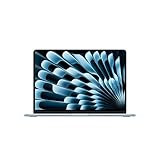
- BUILT FOR COLLEGE. AND BEYOND — MacBook Air with the M5 chip packs blazing speed and powerful AI capabilities into an incredibly portable design. And with up to 18 hours of battery life,* this thin and light powerhouse is ready to take on almost any major, just about anywhere.
- TEAR THROUGH TOUGH ASSIGNMENTS — With its faster CPU and unified memory, the M5 chip delivers even more performance and fluidity across apps, making multitasking and creative workflows smooth and responsive. A powerful Neural Engine and next-generation GPU with Neural Accelerators give you a powerful platform for AI.
- MAKE QUICK WORK OF YOUR TO-DO LIST — Apple Intelligence helps you write, express yourself, and get things done effortlessly — whether it’s for school or everyday life. With groundbreaking privacy protections, it gives you peace of mind that no one else can access your data — not even Apple.*
- UP TO 18 HOURS OF BATTERY LIFE — MacBook Air delivers incredible battery life with amazing performance, so you can power through a full day of classes without worrying about plugging in.
- A BRILLIANT 13.6-INCH DISPLAY* — The gorgeous Liquid Retina display on MacBook Air supports 1 billion colors, making photos and videos pop with rich contrast and sharp detail, and text appears supercrisp. So everything — from class presentations to movies to games — looks truly stunning.
The January proclamation’s exclusion for certain non-data-center consumer applications is an end-use provision for covered products. It is not a statement that every iPhone, Mac, iPad or Apple Watch is categorically exempt from every U.S. tariff.
Other duties may also matter, including tariffs on non-semiconductor components, country-specific measures, reciprocal or emergency tariffs and rules applying to finished devices. Determining the actual treatment of a shipment generally requires the relevant HTSUS classification, importer information, country of origin, entry date and supporting end-use documentation.
“Exempt” can mean several different things
For readers following Apple’s finances or supply chain, these distinctions matter:
- Exempt
- A product is within the general scope of a tariff but receives a specific exclusion.
- Not covered
- The tariff applies only to a defined product category, and the item falls outside that category.
- End-use exclusion
- A covered product avoids the duty because its documented use qualifies under the rule.
- Preferential treatment or offset
- A company may receive reduced or offsetting treatment under an agreement or administrative program.
- Political assurance
- A public statement signals intended treatment without itself functioning as a complete customs waiver.
Apple’s August 2025 situation most clearly fits the last category based on the public statement. The January proclamation also discussed a possible tariff-offset or preferential-treatment program to encourage investment in U.S. semiconductor production. The available official material does not establish that Apple received a finalized, company-specific offset agreement.
Could Apple’s investment protect consumers from higher prices?
It could reduce one potential cost, but it does not guarantee lower prices.
Best Value

- BUILT FOR COLLEGE. AND BEYOND — MacBook Air with the M5 chip packs blazing speed and powerful AI capabilities into an incredibly portable design. And with up to 18 hours of battery life,* this thin and light powerhouse is ready to take on almost any major, just about anywhere.
- TEAR THROUGH TOUGH ASSIGNMENTS — With its faster CPU and unified memory, the M5 chip delivers even more performance and fluidity across apps, making multitasking and creative workflows smooth and responsive. A powerful Neural Engine and next-generation GPU with Neural Accelerators give you a powerful platform for AI.
- MAKE QUICK WORK OF YOUR TO-DO LIST — Apple Intelligence helps you write, express yourself, and get things done effortlessly — whether it’s for school or everyday life. With groundbreaking privacy protections, it gives you peace of mind that no one else can access your data — not even Apple.*
- UP TO 18 HOURS OF BATTERY LIFE — MacBook Air delivers incredible battery life with amazing performance, so you can power through a full day of classes without worrying about plugging in.
- A BRILLIANT 13.6-INCH DISPLAY* — The gorgeous Liquid Retina display on MacBook Air supports 1 billion colors, making photos and videos pop with rich contrast and sharp detail, and text appears supercrisp. So everything — from class presentations to movies to games — looks truly stunning.
If qualifying Apple-related chips avoid a duty, Apple or its suppliers may avoid that particular import expense. But the final price of an iPhone or other device also reflects manufacturing, labor, logistics, components, currency movements, research and development, distribution and Apple’s pricing decisions.
Domestic production can also be more expensive than overseas production during the transition. Apple may absorb added costs, renegotiate with suppliers, change sourcing, alter product margins or pass some costs to customers. A tariff exemption on one component therefore cannot be translated into a precise retail-price saving without product-level sourcing and pricing information.
For investors, the commitments may improve supply-chain resilience and expand U.S. supplier capacity, but they also represent a long-term execution challenge. The announced spending spans suppliers, facilities, workforce development and technology—not only chips—and the announcements do not show that every Apple product will be assembled or sourced domestically.
Free tools Windows power users keep installed
One-click scans. No signup required.
What if Apple does not complete its commitments?
The policy could theoretically make preferential treatment conditional on meeting investment or production commitments. That would depend on the terms of any future agreement or implementing rules.
However, the materials identified here do not establish specific enforcement terms, deadlines, clawbacks or penalties applying to Apple. It would be inaccurate to say that Apple will automatically lose a tariff exemption unless an official document creates that condition.
How to read future headlines about Apple and tariffs
- Check whether the story refers to a proposal or a final rule. A presidential remark is not necessarily a customs instruction.
- Identify the product. A chip, derivative product, manufacturing machine and finished iPhone can fall under different rules.
- Look for the tariff code and effective date. The duty may depend on the HTSUS classification and when the shipment entered the country.
- Check the end use. Some exclusions apply because of how a covered item is used, not because Apple is the importer.
- Separate Apple’s commitment from completed production. A supplier agreement or planned facility expands capacity but does not prove that all Apple chips are made in the United States.
- Look for an actual implementing document. A Federal Register notice, customs guidance, Commerce Department action or named agreement would be stronger evidence of a company-specific waiver than a public promise.
Bottom line for Apple customers and investors
Apple’s U.S. investment commitments clearly helped it become the public example of the administration’s proposed investment-based semiconductor-tariff exception. Trump said companies building or committed to building chips in the United States would avoid the proposed approximately 100% tariff.
But the formal rule later identified in the record is different: a 25% tariff on specified advanced-computing chips and derivatives, effective for qualifying entries from January 15, 2026, with several product- and end-use exclusions. It does not clearly document a blanket Apple exemption covering all imported chips or finished Apple devices.
Apple’s $600 billion commitment, its GlobalFoundries work and its later Broadcom agreement represent significant U.S. manufacturing and supply-chain investments. They may reduce exposure to some future duties, but they do not by themselves guarantee tariff-free iPhones or lower retail prices.
Quick Recap
Product prices and availability are accurate as of the date/time indicated and are subject to change. Any price and availability information displayed on Amazon at the time of purchase will apply.




