Quick wins for a faster PC:
Fix the driver behind crashes, sound loss and screen glitchesFind Drivers →Repair Windows errors before they cause bigger problemsFix Now →Iron Mountain’s “data bunkers” are secure data-center spaces inside a former limestone mine in Boyers, Pennsylvania—not a standard consumer product or a guarantee that a site is invulnerable. In a 2013 tour, the company described how it could tailor space for tenants. The operation is now marketed as WPA-1, offering colocation from cabinets to dedicated data halls alongside records and media storage.
What the 2013 article covered
Data Center Knowledge published “Data Bunkers: Iron Mountain’s Built-to-Suit Bunkers” on July 30, 2013. It was a short video-tour article, not a comprehensive engineering assessment or customer case study. Iron Mountain executive Nicholas Salimbene discussed the company’s underground facility and how it could create customized data-center space for tenants. The coverage showed the built-to-suit proposition; it did not establish that every tenant received a uniquely constructed, hardened private bunker.
The phrase “data bunker” is descriptive, not a technical standard. Boyers is a former limestone mine adapted for secure storage and data-center operations, rather than simply a decommissioned military bunker. An earlier overview, “Iron Mountain Is Taking the Data Center Underground,” covered the company’s underground strategy.
How records protection led to digital infrastructure
Iron Mountain’s business began with the protection and storage of physical records. Extending that business-continuity logic to digital information meant providing services for backup, archiving and disaster recovery, as well as colocation. The Boyers campus brings physical records and media preservation together with digital infrastructure, but those are distinct services: an archive vault is not automatically a server hall suitable for every workload.
Recommended Free Tools
#1 Best Overall

- Value NAS with RAID for centralized storage and backup for all your devices. Check out the LS 700 for enhanced features, cloud capabilities, macOS 26, and up to 7x faster performance than the LS 200.
- Connect the LinkStation to your router and enjoy shared network storage for your devices. The NAS is compatible with Windows and macOS*, and Buffalo's US-based support is on-hand 24/7 for installation walkthroughs. *Only for macOS 15 (Sequoia) and earlier. For macOS 26, check out our LS 700 series.
- Subscription-Free Personal Cloud – Store, back up, and manage all your videos, music, and photos and access them anytime without paying any monthly fees.
- Storage Purpose-Built for Data Security – A NAS designed to keep your data safe, the LS200 features a closed system to reduce vulnerabilities from 3rd party apps and SSL encryption for secure file transfers.
- Back Up Multiple Computers & Devices – NAS Navigator management utility and PC backup software included. NAS Navigator 2 for macOS 15 and earlier. You can set up automated backups of data on your computers.
One historical example was a partnership with HP to help healthcare organizations store and protect medical images. The service used protected, replicated copies in underground facilities in Western Pennsylvania and Missouri. It combined managed archiving and disaster recovery; it was not the equivalent of today’s hyperscale public cloud. See Iron Mountain’s 2008 announcement, plus contemporary coverage from ITN Online and Axis Imaging News.
Inside The Underground at Boyers
The facility is in Boyers, Butler County, north of Pittsburgh, in a former limestone mine about 220 feet underground, according to Iron Mountain’s Pennsylvania location page. The broader campus includes data centers, records storage, media archives and digital services. Its current data-center brand is WPA-1.
Iron Mountain’s public pages do not give one consistent set of facility figures. The Pennsylvania location page lists 330,000 square feet of data-center space, 15.5 MW of existing power capacity and a 315-acre campus. A separate data-center-branded page lists 333,000 square feet, 40 MW of total potential capacity and a 200-acre campus. These figures should not be collapsed into a single claim: existing power is not the same as potential capacity, and acreage may reflect different campus boundaries or page definitions. Iron Mountain’s government data-center page also lists 15.5 MW. Buyers should confirm current definitions and capacity for the specific deployment.
Rank #2

- IronWolf internal hard drives are the ideal solution for up to 8-bay, multi-user NAS environments craving powerhouse performance.date transfer rate:6.0 gigabits_per_second
- Store more and work faster with a NAS-optimized hard drive providing 8TB and cache of up to 256MB
- Purpose built for NAS enclosures, IronWolf delivers less wear and tear, little to no noise/vibration, no lags or down time, increased file-sharing performance, and much more
- Easily monitor the health of drives using the integrated IronWolf Health Management system and enjoy long-term reliability with 1M hours MTBF
- Three-year limited product warranty protection plan and three year Rescue Data Recovery Services included
Cooling figures also vary. Iron Mountain’s Pennsylvania page describes a 100-acre underground reservoir, while its WPA-1 solution guide describes a 35-acre reservoir. The company presents geothermal or reservoir-based cooling as an advantage of the mine environment, but these public figures do not establish a current PUE or a specific energy saving. The system is engineered cooling, not simply free air conditioning: pumps, controls and backup systems still matter.
Outdated Drivers Are Slowing You Down
One free scan finds every outdated or missing driver and matches the right update for your exact hardware.Free scan · exact hardware matchWindows Errors? Fix Them Before They Spread
Repair common Windows errors and clear accumulated junk for a smoother, more stable PC - no reinstall needed.Free scan · no reinstallWhat “built-to-suit” means for a tenant
In this context, built-to-suit means Iron Mountain supplies and operates data-center infrastructure and can tailor a customer’s deployment to its requirements. A customer does not necessarily own the mine or receive a private bunker. The available formats range from standard colocation to larger, more dedicated environments.
| Format | What it generally provides |
|---|---|
| Cabinet | Space for customer equipment in a shared data-center environment. |
| Cage | A physically enclosed area for a customer’s equipment within a larger facility. |
| Private suite | A dedicated room or area for a customer deployment. |
| Dedicated data hall | A larger dedicated environment for a customer’s infrastructure. |
| Build-to-suit | A tailored data-center solution whose scope depends on the customer’s requirements and agreement. |
Requirements that may shape a deployment include power density, redundancy, cooling, security zones, physical access, connectivity, disaster-recovery architecture and compliance scope. Iron Mountain describes customized solutions, but that does not mean every request can be met or that every environment is built from scratch. Its WPA-1 page outlines current formats, while its colocation overview describes the broader service range.
Rank #3

- Get enhanced features, cloud capabilities, MacOS 26 compatibility, and up to 7x faster performance than LS 200.
- Connect the LinkStation to your router and enjoy shared network storage for all your devices. The NAS is compatible with Windows and MacOS 26, and Buffalo's US-based support is on-hand 24/7 for installation walkthroughs.
- Subscription-Free Personal Cloud – Store, back up, and manage all your videos, music, and photos and access them anytime without paying any monthly fees.
- Storage Purpose-Built for Data Security – A NAS designed to keep your data safe, the LS700 features a closed system to reduce vulnerabilities from 3rd party apps and SSL encryption for secure file transfers.
- Back Up Multiple Computers & Devices – NAS Navigator management utility and PC backup software included. You can set up automated backups of data on your computers.
What an underground site can—and cannot—do
Being underground can reduce exposure to some surface hazards and support physical security, but it does not remove the dependencies that make a data center work. Iron Mountain describes controlled entry, monitoring and security procedures, and points to the mine’s stable environment and cooling resources. The practical value depends on the specific systems, their maintenance and the customer’s recovery design.
| Feature | Potential practical benefit | What it does not settle |
|---|---|---|
| Underground location | Can reduce exposure to some severe weather and surface-level hazards. | Does not eliminate regional emergencies, power loss, network outages or all site-specific risks. |
| Controlled access | Can add layers of physical security and monitoring. | Does not guarantee that every threat is prevented or that a tenant’s own controls are adequate. |
| Mine environment and reservoir cooling | May reduce the cooling burden compared with some above-ground designs. | Still depends on engineered cooling, pumps, controls and redundancy; no current PUE is established by the cited public figures. |
| Large underground campus | Offers room for data-center and information-protection operations. | Does not by itself prove available power, expansion timing or suitability for a specific high-density deployment. |
| Location near Pittsburgh | Provides a regional site outside the city’s dense core. | Travel, roads, staff access and regional infrastructure still matter during an emergency. |
A facility can have strong physical protections and still depend on utility feeds, UPS systems, generators, fuel logistics, fiber routes, carriers and skilled staff. Mine-specific risks such as water management, fire and smoke movement, ventilation, maintenance access and evacuation also require site-level engineering. Marketing terms such as “nuke-proof” or “catastrophe-proof” should not be treated as engineering guarantees; a buyer needs the applicable technical specifications and evidence for the actual threat scenario.
Nor does the site alone create geographic redundancy. If an organization’s primary systems and recovery environment are both exposed to the same regional outage, a hardened building may not solve the central continuity problem. A resilient design generally considers a second independent region, separate network paths and tested recovery procedures.
Rank #4
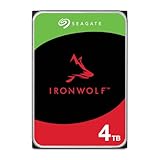
- IronWolf internal hard drives are the ideal solution for up to 8-bay, multi-user NAS environments craving powerhouse performance
- Store more and work faster with a NAS-optimized hard drive providing ultra-high capacity up to 16TB and cache of up to 256MB
- Purpose built for NAS enclosures, IronWolf delivers less wear and tear, little to no noise/vibration, no lags or down time, increased file-sharing performance, and much more
- Easily monitor the health of drives using the integrated IronWolf Health Management system and enjoy long-term reliability with 1M hours MTBF
- Three-year limited warranty protection plan included and three year Rescue Data Recovery Services included
What WPA-1 offers now
Iron Mountain currently markets WPA-1 for colocation and customized data-center deployments, from cabinets to cages, private suites and dedicated halls. Its Pennsylvania page describes A/B power feeds, N+1 power and cooling, 24/7/365 monitoring, Smart Hands support, cross-connects, cloud backup and recovery, migration services, redundant meet-me rooms and fiber entry points, and more than 10 connectivity providers. These are provider-stated service descriptions; a buyer should confirm which features apply to the contracted space.
Iron Mountain also lists compliance support or programs including NIST 800-53, FedRAMP, SOC 2 Type II, PCI DSS, HIPAA and ISO standards. A secure facility does not automatically make a customer’s workload compliant. The relevant audit reports, certifications, control scope, service boundaries and authorization level must match the specific service and use case.
The public sales pages direct prospective customers to request a custom quote rather than displaying a general commercial rate card. A federal schedule lists example WPA-1 configurations, including cabinets at 4.99 kW, 8.64 kW and 14.40 kW, and a 20 kW federal cage, with A/B circuit details. Those are government schedule line items, not necessarily current commercial prices or quotes for private buyers. The schedule describes recurring monthly and non-recurring charges, including possible space preparation, power-circuit installation and setup. See the GSA schedule and request current pricing and scope directly.
What’s actually slowing this PC down?
Pick the symptom - the matching free tool is one click away.
Best Value
- Get enhanced features, cloud capabilities, MacOS 26 compatibility, and up to 7x faster performance than LS 200.
- Connect the LinkStation to your router and enjoy shared network storage for all your devices. The NAS is compatible with Windows and MacOS 26, and Buffalo's US-based support is on-hand 24/7 for installation walkthroughs.
- Subscription-Free Personal Cloud – Store, back up, and manage all your videos, music, and photos and access them anytime without paying any monthly fees.
- Storage Purpose-Built for Data Security – A NAS designed to keep your data safe, the LS700 features a closed system to reduce vulnerabilities from 3rd party apps and SSL encryption for secure file transfers.
- Back Up Multiple Computers & Devices – NAS Navigator management utility and PC backup software included. You can set up automated backups of data on your computers.
For a visual sense of the site, Iron Mountain published a WPA-1 360-degree virtual tour on January 20, 2025.
Who may find WPA-1 useful
The facility may suit organizations that value physical security, business continuity or custody of physical media alongside digital infrastructure. Potential users include government agencies and contractors, financial institutions, healthcare organizations, media and archival operations, and enterprises seeking a disaster-recovery location or outsourced data-center environment.
- It may fit a business that wants colocation without building and operating its own facility.
- It may serve as one component of a tested recovery plan, rather than the whole plan.
- It may be less attractive when low-latency access to a dense urban exchange, easy technician access or a hyperscale cloud region is the primary need.
- Cloud-native workloads may be better served by multi-region cloud recovery if physical custody of equipment or media is not required.
Other underground data-center concepts have appeared in historical coverage, including Cavern Technologies, SpringNet Underground, the InfoBunker and Westlin. Their current availability, ownership and specifications are not established here; these names are historical comparators, not current recommendations. The historical overview is in Data Center Knowledge’s coverage of Iron Mountain’s cooling approach.
Questions to ask before signing
- Is the proposed deployment standardized colocation or a genuinely dedicated build-to-suit environment? Which construction and installation costs are one-time charges?
- Which protections come from the mine itself, and which depend on active systems such as generators, pumps, cooling and monitoring?
- What happens during a prolonged regional power outage? What is the generator and fuel-resupply plan?
- Are fiber routes physically diverse, or do multiple carriers share the same route or entrance?
- What are the customer’s access hours, escort rules, loading procedures and emergency-access arrangements?
- Which certifications and audit reports cover the exact cage, suite, service and processing activity? What remains the customer’s responsibility?
- Are backup, replication, migration and recovery testing included, or must the customer supply and contract for them separately?
- Do the quoted power and cooling support the workload’s current and future density, including any GPU or liquid-cooling requirement?
- Are the quoted capacity figures installed capacity for the relevant space, planned capacity or campus-level potential?
- How will physical records and digital systems be governed, including custody, access and exit or equipment-removal procedures?
- Does the recovery design use a second region with independent power, network paths and regional risk?
Historical reporting also cited Marriott leasing 12,500 square feet for a disaster-recovery hot site; that 2008 example does not establish current tenancy. See the original coverage.
Do these 3 things before closing this tab:
1Fix the driver behind crashes, sound loss and screen glitches2Clear out junk files and repair common Windows errors3Scan for outdated or missing drivers - takes under a minuteQuick Recap
Product prices and availability are accurate as of the date/time indicated and are subject to change. Any price and availability information displayed on Amazon at the time of purchase will apply.




