What’s actually slowing this PC down?
Pick the symptom - the matching free tool is one click away.
India’s private defence companies are gaining ground, especially in exports, but they remain a minority of domestic production. The latest government figures cited here put their share of production at 23% in FY 2024–25; in the previous financial year, private firms accounted for 62% of defence export receipts. Those figures measure different things, so neither by itself shows that private firms dominate India’s defence industry.
How much of India’s defence production comes from private companies?
India recorded defence production of ₹1.54 lakh crore in FY 2024–25, and private companies supplied 23% of that output, up from 21% in FY 2023–24, according to a Government of India backgrounder published on 20 November 2025. The production total is a record in that government account; the private-sector share indicates gradual expansion, not a transfer of dominance from public producers.
For comparison, PRS Legislative Research reported that public-sector entities made up around 80% of domestic defence production through FY 2023–24. The figures refer to different periods and sources: the PRS figure is a rounded historical ownership breakdown, while the government’s 23% is the private share for the following financial year. They should not be treated as a single, precisely reconciled series.
The ₹1.54 lakh crore production figure and 23% private share are reported in the Press Information Bureau’s FY 2024–25 summary; the earlier public-sector breakdown is in PRS’s 2025–26 Defence demand-for-grants analysis.
The Tool Desk
Outbyte Driver Updater FREEFix the driver behind crashes, sound loss and screen glitchesFind Drivers →Outbyte PC Repair FREERepair Windows errors before they cause bigger problemsFix Now →#1 Best Overall

- QUICK SNAP-FIT ASSEMBLY — No glue, no mess: every precision-engineered piece clicks firmly into place so builders of all skill levels may complete their A-10 Thunderbolt II Warthog in one satisfying session without extra tools or adhesives.
- AUTHENTIC WARBIRD DETAIL — Faithfully recreates the iconic twin-engine, straight-wing attack jet with raised panel lines, movable control surfaces, and characteristic GAU-8 cannon nose for a display-ready replica straight out of the box.
- STEM-FRIENDLY BUILDING EXPERIENCE — The numbered part system and illustrated step-by-step guide introduce basic aerospace engineering concepts, supporting spatial reasoning and fine-motor development for builders ages 8 and up.
- DURABLE ABS CONSTRUCTION — High-impact ABS plastic parts resist warping and breakage, ensuring the finished model withstands shelf display, light handling, and proud show-and-tell moments for years to come.
- GREAT VALUE GIFT UNDER $25 — Thoughtfully packaged and priced at $21.99, this building set makes an ideal birthday, holiday, or any-occasion gift for aviation fans, military history enthusiasts, and hobbyist model builders alike.
Are private Indian defence companies driving exports?
In FY 2023–24, private companies exported defence goods worth ₹13,119 crore, or 62% of India’s total defence exports of ₹21,083 crore, according to PRS. That is a substantial share of export receipts for that year, and it supports the view that private firms have become important exporters.
It does not mean private companies supplied 62% of India’s defence production. The 62% figure is an export-receipts share for FY 2023–24; the 23% figure is a production share for FY 2024–25. They have different denominators and cover different years. The government separately reported total defence exports of ₹23,622 crore in FY 2024–25, but the cited summary does not give a private-sector share for that year.
Rank #2

- 1/35 scale kit
- Includes driver figure in relaxed sitting pose
- Decals for five vehicles
Private-sector export value and share for FY 2023–24 come from the PRS analysis. The ₹23,622 crore aggregate for FY 2024–25 is from the government’s November 2025 backgrounder.
What do the figures say about India’s global position?
Domestic export growth can be meaningful while the country remains a small player in the global arms market. PRS, citing SIPRI, reported that India accounted for 0.2% of global arms-export volume over 2016–2023. This is a volume measure, not export revenue, so it cannot be compared directly with rupee-denominated Indian export receipts or the private sector’s percentage of those receipts. The statistic is reproduced second-hand in PRS’s analysis.
Rank #3
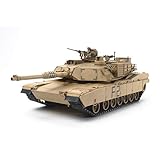
- 1/48 scale plastic model assembly kit. Length: 205mm, width: 77mm.
- Anti-slip surface details molded into the main sections of the model.
- Assembly type tracks feature straight sections for a highly realistic finish.
- Kit includes a weight for creating a heavy feel model.
- 2 marking options are included to recreate U.S. Army 3rd Armored Cavalry Regiment M1A2s from 2003 in the Iraq War.
Together, these measures point to uneven progress: private firms have a large role in the cited FY 2023–24 export receipts, yet public producers still account for most domestic production, and India’s cited share of global arms-export volume is small.
What are the government’s targets—and what has actually been achieved?
The government has set targets of ₹3 lakh crore in defence production and ₹50,000 crore in defence exports by 2029. These are goals, not recorded outcomes. The latest results cited here are ₹1.54 lakh crore in production and ₹23,622 crore in total exports in FY 2024–25; the government’s summary does not establish how much of either total came from private companies in that year.
Rank #4
![ACA12127 1:35 Academy USMC AH-1Z Cobra 'Shark Mouth' [Model Building KIT]](https://m.media-amazon.com/images/I/51n+69EWuVL._SL160_.jpg)
- This is a plastic model kit. Assembly and painting is required.
- Paint and glue is NOT included.
- Contains parts to build one of each model.
The same official backgrounder reports that total defence exports rose to ₹23,622 crore in FY 2024–25, but a comparison with the 2029 target should be understood as progress toward an ambition, not proof that the target will be met. The targets and FY 2024–25 totals are set out in the Press Information Bureau summary.
Independent reader supportYour contribution helps us test, update, and keep practical guides available for everyone.How is policy intended to support private participation?
The Ministry of Defence’s 2025 policy summary describes the Defence Acquisition Procedure (DAP) 2020 as prioritising indigenous acquisition and encouraging participation by private companies, startups and micro, small and medium enterprises, including through the iDEX initiative. It describes the Defence Procurement Manual (DPM) 2025 as taking effect on 1 November 2025, setting standard procedures for revenue procurement and including provisions related to industry-facing innovation and indigenisation.
Best Value

- Experience the legendary F-14 Tomcat through a highly detailed model designed for aviation collectors and hobby enthusiasts. The finished model becomes a striking desktop or showcase centerpiece.
- This 3D puzzle is designed for beginner-level assembly enthusiasts, offering an immersive hands-on building experience that helps cultivate patience, concentration, and mechanical problem-solving skills.
- This product is manufactured using high-quality, environmentally friendly plastic and employs an ultra-fine etching process to ensure durability, structural precision, and realistic aircraft details.
- Encourages understanding of aircraft engineering concepts while improving hand-eye coordination and spatial thinking through engaging mechanical assembly.
- Ideal gift for childs, engineers, collectors, model builders, and puzzle lovers for birthdays, Children’s Day, Christmas, or special hobby occasions.
These policies describe the framework and its stated direction; they do not, by themselves, show that every provision has been implemented successfully or that a particular company has secured an order because of it. The Ministry’s 2025 policy summary outlines the measures.
What should still temper expectations?
- Public-sector dominance in production: A 23% private share in FY 2024–25 leaves most measured domestic output outside private companies.
- Export and production shares are not interchangeable: The private-sector export majority in FY 2023–24 is evidence of export activity, not evidence that private firms make most of India’s defence equipment.
- Global reach remains limited on the cited measure: India’s 0.2% share of global arms-export volume for 2016–2023 puts domestic gains in perspective.
- Industry-wide execution challenges remain relevant: PRS notes earlier quality issues in ordnance-factory products and concerns about procurement speed. The quality example concerns ordnance-factory products; it is not evidence of quality problems among private companies.
Defence exports also operate within an authorisation process. The Department of Defence Production’s Defence Exports Promotion portal lists standard operating procedures and information on export authorisations, parts and components, and end-user certificates. The portal describes the regulatory process; it does not establish a particular company’s approval status or export timeline.
Quick Recap
Product prices and availability are accurate as of the date/time indicated and are subject to change. Any price and availability information displayed on Amazon at the time of purchase will apply.




