Validate a consumer brand idea by testing whether a clearly defined group of customers will choose the offer at a price that can cover its costs—then decide whether the evidence and your personal finances justify a bigger commitment. You can do much of this while keeping your job: start with low-cost research, test a basic offer with likely buyers, and model the economics before scaling.
What counts as validation?
Validation is evidence that a specific customer wants a specific offer and may buy it at a sustainable price. A polished name, positive reactions from friends, or a large social-media following does not establish that on its own. As Tim Berry puts the key test in an October 23, 2018 SBA article: “Do people want what I intend to sell? Enough people? At a price high enough to allow you to cover costs and expenses and sustain your business?” (SBA).



For a consumer brand, that means testing both customer demand and the practical ability to deliver the product. The right evidence depends on the product: a prototype may be necessary for one idea, while another can first be tested through conversations or a simple offer. No single sales count, revenue figure, survey size, or savings runway establishes that it is safe for every founder to leave a job.
How to validate the idea in stages
1. Define the buyer, need, and offer
Write a one-sentence description of who the product is for, what need or desire it addresses, and what benefit it promises. Be specific enough that you can identify people who plausibly fit the customer profile. Test the offer—not just a broad brand concept, logo, or packaging idea—so responses tell you something about the product customers would actually consider buying.
2. Check demand, competitors, and the market context
Use both secondary research and direct customer research. The SBA recommends examining demand, market size, economic and demographic conditions, location, market saturation, and what customers pay for alternatives (SBA market research and competitive analysis). These checks help distinguish a large category from a viable opening for your particular product.
List comparable products and record their prices, strengths, weaknesses, and apparent audience. Review them as a customer would; desk research can include product reviews, social posts, annual reports, press releases, and media coverage, as Business.gov.uk advises in its guide to testing and validating a business idea. Look for a credible difference customers value, not just a feature you personally prefer. Note where the competitors sell and how their offers are presented, since price and channel shape the alternatives a buyer will compare.
Rank #2
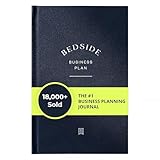
- TURN IDEAS INTO REALITY – Feeling stuck with your idea and not sure where to start? This guided journal helps you write a complete business plan so you can gain clarity and move forward with confidence as an entrepreneur.
- SIMPLE DAILY PRACTICE – 13 guided journaling sections with over 100+ business planning prompts. Make this business planner part of your routine to build momentum and work toward your business goals in just 5 minutes a day.
- BUSINESS PLANNER FOR ENTREPRENEURS – Use this guided journal to define your vision, understand your customers, evaluate competitors, plan expenses, and create a clear roadmap for launching your business.
- PERSONAL GROWTH – Designed as a personal growth workbook to help you reconnect with your purpose, prioritize well-being, and build a business plan centered around meaningful impact.
- PREMIUM ECO-FRIENDLY JOURNAL – Crafted with 100% FSC-certified recycled paper, a recycled cardboard cover, and wrapped in luxurious linen. This entrepreneur planner blends sustainability with thoughtful design.
3. Talk to people who resemble your intended customers
Use interviews, questionnaires, or surveys to learn what prospective buyers need, what they currently buy, and what alternatives they have tried. Recruit people beyond friends and family; their encouragement can be genuine without being evidence of broader demand. Ask about behavior rather than relying on hypothetical enthusiasm: what they bought, how they chose it, what they paid, and what remains unsatisfactory.
Do not treat compliments or “I would buy that” as equivalent to a purchase. Government guidance supports direct research and testing with actual users, but does not prescribe a universal sample size that proves a market exists. Judge the relevance of the people you reached and the strength of their actions, not just the number of responses (SBA; SBA; Business.gov.uk).
4. Test the core offer with a small, budgeted experiment
If customers need to experience the product to assess it, make a prototype or minimum viable product (MVP): a basic version that tests the offer’s essential value. Set a spending cap before building it, put it in front of likely users, and observe what they do as well as what they say. Use the results to revise the product or offer. An MVP can be developed part time alongside paid work, according to Business.gov.uk; SBA guidance likewise recommends testing a prototype with actual customers (Business.gov.uk; SBA).
Choose the smallest test that can answer the next important question. A test should make clear what you are trying to learn—such as whether buyers understand the benefit, prefer one version, or accept a proposed price—and what result would lead you to change course. Avoid committing heavily to inventory, production, or branding before you have evidence relevant to those decisions.
5. Check the economics before increasing your commitment
Estimate the price customers may pay, variable costs per unit, fixed costs, and the expenses of selling and delivering the product. Include costs that are easy to overlook, such as fulfillment and channel expenses, and consider whether sourcing, production, equipment, staff, or other operating requirements make the plan feasible. Use supplier and channel estimates where available, and mark uncertain inputs rather than presenting them as facts.
The SBA’s unit break-even formula is:
Break-even units = fixed costs ÷ (selling price per unit − variable cost per unit)
Do these 3 things before closing this tab:
1Clear out junk files and repair common Windows errors2Scan for outdated or missing drivers - takes under a minute3Repair Windows errors before they cause bigger problemsFor example, if fixed costs are $6,000, the selling price is $30 per unit, and variable costs are $18 per unit, the calculation is 6,000 ÷ (30 − 18) = 500 units to cover those fixed costs. This is an illustration of the formula, not a forecast or a claim about typical brand costs. The result depends on the inputs and does not establish that customers will buy that volume. The SBA describes its startup-cost and break-even calculations as estimates, not guarantees of accounting or financing outcomes (SBA startup-cost guidance).
Independent reader supportYour contribution helps us test, update, and keep practical guides available for everyone.How to judge the strength of your evidence
Compare tests or brand concepts by the quality of evidence and the commitment required for the next step. A useful decision record can include:
- Customer fit: Did responses come from people who match the intended buyer, or mostly from friends and general audiences?
- Observed behavior: Did people try the product or make a meaningful purchase commitment, or only express interest?
- Problem and distinction: Does the offer address a need customers recognize, and can they explain why it differs from alternatives?
- Price and economics: Is the proposed price plausible alongside competitor prices, variable costs, fixed costs, and break-even volume?
- Delivery feasibility: Can you source, produce, and fulfill the offer under the assumptions in your plan?
- Cost and reversibility: What time and money does the next test require, and can you run it while employed?
There is no certainty before launch: the SBA advises entrepreneurs to keep asking and testing as they learn. A weak result may mean the concept needs a different customer, offer, or price; it may also be a reason to stop spending on that version. Record what the test actually showed and what it could not establish, then choose the next experiment accordingly (SBA).
How to decide whether to quit your job
Use two separate tests: whether the business has enough evidence to merit greater commitment, and whether leaving paid work fits your personal finances and obligations. Product interest alone does not answer the second question. Consider your regular expenses, dependents or other obligations, available resources, and tolerance for income uncertainty alongside the business’s costs and plausible sales scenarios.
Free tools Windows power users keep installed
One-click scans. No signup required.
Before deciding, write down the evidence milestones that would justify moving to the next stage and the personal financial conditions you would require before giving up employment income. Make the assumptions explicit—for example, what sales, margins, and delivery costs you expect, and how those figures connect to your household needs. These are founder-specific decision rules, not universal thresholds. If the next useful test is affordable and reversible while you remain employed, keeping that income can let you gather more evidence without making the career decision prematurely.
Quick Recap
Product prices and availability are accurate as of the date/time indicated and are subject to change. Any price and availability information displayed on Amazon at the time of purchase will apply.




