Recommended Free Tools
Track serial numbers by assigning each unit a unique identity, marking or attaching that identity so it can be read on the line, and recording the events and component relationships that build its history. Start by deciding what must be traceable—individual devices, production lots, components, or all three—then align identifiers, capture points, and data exchange with your suppliers and customers.
Choose what level of identity you need
A serial number identifies an individual instance. A product identifier identifies a product type or class, while a lot or batch number groups items made or handled together. The right choice depends on the traceability question: whether you need to retrieve the history of one device, investigate a production group, or simply identify the product type.
GS1 describes instance-level identification using a GTIN plus a serial ID. Unique-unit tracking gives you more precise histories, but requires more marking and recordkeeping than class- or lot-level identification. Define the level for each product, component, material, and process rather than assuming every item needs the same granularity.
Define the traceability scope and rules
Write down which products, assemblies, parts, components, materials, processes, locations, and handoffs need to be covered. Decide whether the objective is factory process history, supplier provenance, post-shipment tracing, or a combination. Include rework, scrap, and movement between sites if those events matter to the history you need to retrieve.
PC Slower Than It Used to Be?
A free scan shows the junk files, broken settings and background clutter dragging Windows down - then fixes them in one click.Free scan · Windows 10 & 11Outdated Drivers Are Slowing You Down
One free scan finds every outdated or missing driver and matches the right update for your exact hardware.Free scan · exact hardware match#1 Best Overall
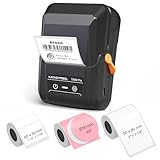
- For Home and Small Business: Prints 3/4" - 2" wide labels; ideal for home organization (storage bins, bottle, jar, food container, etc.), small business (address, product info, QR Code, barcode, brand logo, etc.), or school and office supplies (name tag, folder, documentation, etc.)
- Versatile App Editing Function: Easily add images from your phone, tablet or PC; customize your labels with 30+ fonts, 50+ frames, and 660+ icons; all free to use
- Enhanced Image Quality: The App delivers precise image processing capabilities, resulting in a high-resolution and clear output; enhanced aesthetic appeal, formality, and richness
- Easy to Use: The APP is completely free, requires no registration; features auto label size recognition; no ink or toner needed; create labels quickly and easily
- Versatile Label Compatiblity: Compatible with square, round, address, cable, jewelry and file labels, to meet all your needs; ensuring a perfect fit for any project; keeps everything neat and tidy
IPC-1782 is the electronics-sector traceability reference among the standards described here. The Global Electronics Association (IPC) says it establishes minimum manufacturing and supply-chain traceability requirements based on perceived risk agreed between user and supplier, and covers internal traceability as well as external movement. Its scope includes products, processes, assemblies, parts, components, and equipment as defined by the parties. The standard describes four levels for materials and processes; levels may correlate with IPC product classes or market-specific categories. See the IPC-1782 description and verify the current catalog status before adopting a specific revision.
The DLA ASSIST catalog record identifies IPC-1782B as active, with an adoption date of 16 April 2026 and a next review due date of 15 April 2031. That status can change; check the DLA ASSIST record when planning implementation.
Set identifier ownership and representation
Decide who allocates identifiers, how uniqueness is maintained across products and sites, how an identifier is represented on the product, and how records connect a part to its assembly and finished device. Specify how duplicate assignments are detected and what happens when a unit is reworked, replaced, or scrapped.
Rank #2

- 【No Brand Lock-in】 No RFID chips, no brand lock-in. Use any standard thermal label rolls you like. Say goodbye to expensive proprietary paper and enjoy the freedom to choose affordable options.
- 【2" Printing for Business & Home】 The CLABEL 221B supports a wider range of 25mm-50mm (0.98-2Inch). Perfect for small business needs. Generate scannable barcodes, address labels, price tags, and jewelry labels. One printer for retail, bakery, warehouse, and office organization
- 【NO Learning Curve – Easy Setup】 Open, connect, print. Our "Clabel trade" App offers quick Bluetooth connection in seconds. Access hundreds of creative templates, icons, and fonts without extra cost. Supports Excel batch printing and image-to-text — making professional labeling effortless.
- 【Durable, Sharp & Smudge Quality】 Our matched thermal labels are waterproof, oil-proof, and highly resistant to friction or scratches. Whether used in a busy kitchen, or a high-traffic retail shelf, your stickers will stay sharp and without tearing
- 【Bluetooth Connection】 Our printer supports Bluetooth connection with Android and iOS smartphones. It does not support iPad. For computer connection, please use USB cable.
When multiple organizations or systems will exchange records, agree on identifier keys and formats rather than assigning incompatible meanings to the same field. GS1 provides a framework for class-, lot-, and instance-level identification, including a GTIN paired with a serial ID for a serialized trade item. Its traceability overview explains the identification and carrier options.
Choose a carrier that works on the product and line
The identifier must be physically marked or otherwise attached to the item, and reliably captured where relevant events occur. A barcode can encode identifiers and attributes such as serial and batch or lot numbers. EPC/RFID is another way to carry serialized identity. No carrier is best for every electronics workflow.
| Option | Useful considerations |
|---|---|
| 1D barcode | Check payload needs, available marking area, scan orientation, and partner equipment. |
| 2D barcode, such as GS1 DataMatrix | GS1 notes that 2D barcodes can carry more data than 1D codes in a smaller physical area; confirm that the code can be marked and read reliably on the actual part. |
| EPC/RFID | Consider whether non-line-of-sight or rapid bulk reading suits the workflow, then validate tag performance on the product materials and around equipment. |
Compare marking durability, label area, material and cleanliness constraints, heat or chemical exposure, scan angle and distance, line speed, data payload, and supplier or customer requirements. GS1 describes both barcode and EPC/RFID approaches in its traceability guidance and barcode overview. Test the complete mark-or-tag and reader combination in production conditions before committing to it.
Rank #3

- Lightning Speed: Transform your labeling efficiency with this professional thermal label printer, delivering an impressive 93 labels per minute at crystal-clear 300 dpi resolution - perfect for high-volume shipping and business needs
- Dual-Color Innovation: Elevate your labeling with Brother Genuine technology that enables both black and red printing capabilities, allowing you to create eye-catching labels that command attention and enhance your professional branding
- Versatile Applications: Dominate your organization needs with this powerful label maker machine, perfect for creating professional shipping labels, file folders, name badges, and postage labels - streamlining your business operations
- Advanced Integration: Experience seamless connectivity with Windows and Mac systems, featuring Brother Genuine Plug & Label technology that enables instant printing from Microsoft Word, Excel, and Outlook without additional software installation
- Professional Design: Maximize productivity with the built-in auto-cutter for precise label finishing, compatible with Brother Genuine DK pre-sized labels and continuous-length tapes up to 3 ft long for custom banners and signage
Record events and relationships, not just serials
A list of serial numbers cannot explain how a unit was made or where it went. For each relevant process event, associate the identity with the event time, location, process or business step, status, and relationships to inputs and outputs. Link components to assemblies, assemblies to finished devices, and cases or pallets to the items they contain where those relationships matter.
GS1 EPCIS is designed to share traceability events within and across organizations. GS1 describes it as enabling the “what, when, where, why and how” of products and other assets, including status, location, movement, chain of custody, aggregation, and sensor information. EPCIS/CBV 2.0 supports JSON/JSON-LD and REST API capabilities. See the EPCIS & CBV overview.
Connect factory records to partner exchange
Plan how an operator or system will retrieve a unit’s history by serial number, and which records suppliers or customers need to exchange. Agree on identifiers, event definitions, interfaces, access, and retention before building integrations. IPC-2591 CFX is a separate electronics factory communication standard; it should not be conflated with EPCIS, which is for interoperable traceability event sharing.
Rank #4
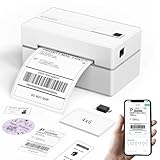
- Bluetooth Wireless Connection: KNAON Bluetooth shipping label printer enables wireless printing. For Mobile users, download the 'FlashLabel Pro' app from APP Store or Google Play for printing. Also, supports Windows and macOS, and can directly connect to the printer by downloading the 'FlashLabel Pro' App. Windows 7 or later computers can also print via Bluetooth by installing the latest advanced driver. Note: All devices CANNOT be connected directly to Bluetooth, and must be used through the 'FlashLabel Pro' app.
- USB Cable Connectivity: This printer ensures seamless USB connectivity with macOS, Windows (7 and above), ChromeOS, and Linux. KNAON printer features a built-in USB drive preloaded with drivers and tutorial videos for a fast and hassle-free setup. For ChromeOS, need to install 'FlashLabel' extension to your Google Chrome.
- Versatile DIY Labeling Options: KNAON Thermal Shipping Label Printer offers a vast selection of pre-designed templates, including 3,000+ templates, 5,000+ icons, and 100+ fonts available in the app. Designed for both professional and personal use, it supports various thermal paper sizes, ensuring effortless customization for all your labeling needs. Ideal for printing DIY shipping labels, barcode labels, thank-you labels, mailing labels, name tags, price tags, and various small thermal labels.
- Seamless Multi-Platform Compatibility: This Bluetooth shipping label printer works effortlessly with all major platforms, including Amazon, eBay, Shopify, USPS, UPS, Etsy, PayPal, Poshmark, DHL, and more, ensuring smooth and efficient label printing. (Note: Save the logistics label as a PDF file on the shipping platforms, then import it into the 'FlashLabel Pro' app for printing).
- Portable & Stylish Design: KNAON multi-function thermal label printer offers user-friendly operation in a compact design. Its perfect size (7.17 x 3.9 x 3.43 inches) makes it simple to store anywhere. With a fast printing speed of up to 180 mm/s and support for paper widths from 1.5 to 4.2 inches. The package also includes 10 test printing papers to get you started right away.
Keep the job of machine-to-machine factory communication distinct from supply-chain event exchange. Your architecture may use different standards or systems for these purposes, with agreed links between their records. IPC describes IPC-2591 CFX separately from IPC-1782 traceability.
Validate the workflow before relying on it
Run a production-environment validation that follows units through the actual marking, reading, and recordkeeping steps. There is no single test protocol established here, so define acceptance criteria around your product, line, and risk.
- Check that marks or tags remain readable across the full process, including relevant heat, cleaning, handling, or chemical exposure.
- Verify that every capture binds to the correct unit, component, and assembly relationship.
- Exercise duplicate, missing, rework, replacement, and scrap cases and confirm that records remain understandable.
- Test partner handoffs and retrieval: can the intended user find the correct history from the identifier they receive?
Match tools to the implementation
An industrial barcode label printer and compatible stock, or a 2D barcode scanner, may support a barcode workflow. Choose equipment by matching print method, substrate, symbologies, interfaces, and scan performance to the product and line; validate print quality and read reliability on the actual parts. RFID tags and readers may fit workflows needing non-line-of-sight or bulk capture, but suitability depends on tag performance with the specific materials and equipment. No particular vendor, model, or factory suitability rating is established by the standards guidance cited above.
Quick Recap
Product prices and availability are accurate as of the date/time indicated and are subject to change. Any price and availability information displayed on Amazon at the time of purchase will apply.




