In the United States, “trading commodities online” usually means placing futures orders through a regulated intermediary—not buying the commodity itself. Before opening an account, learn how the product works, check the firm’s registration, and decide whether you can afford the potential loss. Futures can be volatile, and losses may exceed the money you deposit.
What does it mean to trade commodities online?
Commodities include goods such as energy products, metals, and agricultural products. Online access does not make them a single kind of investment: you might trade a futures contract, buy an exchange-traded product (ETP), or purchase and hold a physical commodity. Those choices differ in ownership, costs, risks, and how closely their value follows a commodity’s price. This guide focuses on U.S. markets; rules, eligibility, taxes, and available products can differ elsewhere.


A futures contract is an agreement to buy or sell a specified quantity at an agreed price on a future date. It has a set expiration and may be settled in cash or require delivery, depending on the contract. Holding a futures contract does not mean owning the underlying commodity. See the Investor.gov overview of commodities and the CFTC’s futures market basics.
Commercial and institutional producers and consumers often use futures to hedge against price changes; other participants speculate on prices. Futures are not simply an online way to buy a commodity at today’s price and put it away.
Do these 3 things before closing this tab:
1Clear out junk files and repair common Windows errors2Fix the driver behind crashes, sound loss and screen glitches3Repair Windows errors before they cause bigger problemsCompare the main ways to get commodity exposure
| Route | What you hold | Key terms and risks to check |
|---|---|---|
| Futures | A standardized contract for a specified quantity and future date; it does not confer ownership of the underlying commodity. CFTC | Contract size, expiration, margin, and cash-settlement or delivery terms. Losses may exceed your initial investment. Most positions are closed before delivery, but the contract’s actual terms still matter. CFTC |
| Options on futures | An option buyer has the right, but not the obligation, to buy or sell a futures contract at a specified price and date. CFTC | Understand the option’s terms and the futures contract it relates to. The CFTC describes futures and options speculation as volatile, complex, and risky. CFTC |
| Commodity ETPs or funds | An interest in a product that may hold physical commodities, derivatives, or a combination; some are commodity pools. CFTC | Read the product’s prospectus or disclosure document for holdings, strategy, flexibility, fees, and risks. Futures-based products hold contracts that expire and may roll them, so their returns can diverge from spot-price moves over time. CFTC |
| Physical commodity | The actual metal or other good, rather than a futures contract or fund interest. | Ownership, storage, and the market context differ from futures and securities markets. Research those differences before buying; physical ownership is not risk-free. CFTC |
An ETP’s exchange-traded format does not make it equivalent to owning a commodity or to a conventional stock ETF. Its actual holdings and strategy determine its behavior. For a futures-based fund, contract expirations and rolling positions can affect performance independently of spot-price movements; review the CFTC’s commodity ETP and fund advisory.
Understand the risks before opening a futures account
The CFTC calls speculative futures and options trading “a volatile, complex and risky venture that is rarely suitable for individual investors or ‘retail customers’.” Futures use margin, so the cash required to open a position may be much smaller than the value of the contract. That leverage can magnify losses: you can lose all the money in your account and may be required to pay more than you initially invested. Futures accounts are not insured. Read the broker’s required risk disclosure and the contract specifications before trading. CFTC: Basics of Futures Trading
- Know the contract: Identify its unit size, expiration, settlement or delivery terms, and margin requirements. Consider what an adverse price move could mean for your account.
- Use only money you can afford to lose: The CFTC advises considering your experience, goals, financial resources, and how much you could lose beyond your initial investment. Do not trade with money needed for essential expenses. CFTC
- Be skeptical of hype: Treat high-return promises and anonymous online tips with caution. The CFTC warns against trading based on internet hype and says research has shown that the majority of individual speculators lose money after commissions; it does not give a percentage in that advisory. CFTC advisory
How to start trading commodities online: a practical sequence
- Choose the kind of exposure you mean. Decide whether you want to study futures, options on futures, an ETP or fund, or physical ownership. Compare what you would hold, its costs, and how it could behave; do not assume these routes track a commodity in the same way.
- Study the exact product. For a futures contract, find its unit size, expiration, margin, and delivery or cash-settlement terms. For an ETP or fund, review its prospectus or disclosure document, holdings, strategy, fees, and risks. The CFTC explains the key futures terms in its contract basics and discusses fund structures and rolling in its commodity ETP advisory.
- Check the intermediary before sending money. Individuals commonly access futures through a futures commission merchant (FCM) or an introducing broker (IB). Verify the firm and relevant professionals through official CFTC and National Futures Association registration resources. An IB may transmit orders to an FCM but is not permitted to accept your funds. The CFTC explains intermediary roles and account considerations in Understand Your Contractual Obligations; Investor.gov also points readers to registration checks in its commodities overview.
- Ask for the full cost picture. Request the applicable fees and expenses, including how the account is handled. Costs reduce returns, so compare the terms for the product and service you would actually use. The CFTC advises customers to ask about fees in its account-obligations guidance.
- Read disclosures and assess your capacity for loss. For futures, review the required risk disclosure and make sure you understand how a loss can exceed the initial funds you commit. Consider whether the exposure fits your goals, experience, and financial resources before deciding to proceed.
- Practice only as practice. If the broker offers a simulator, ask whether it uses live market data. Simulated trading can help you learn the mechanics, but it does not establish that a strategy will be profitable with real money. The CFTC recommends asking about simulators in its internet-hype advisory.
What to verify about a broker or intermediary
In the U.S., do not choose an intermediary solely because it has an easy-to-use website or advertises commodity access. Before funding an account, confirm that the firm and relevant professionals are registered as applicable, understand which entity holds customer funds and handles the account, and review the disclosures and charges. CFTC guidance explains that firms and individuals handling customer funds or providing futures advice must register as applicable. Start with the CFTC’s guidance on contractual obligations and its futures basics.
Do not treat registration as an endorsement of a particular trading strategy or a guarantee against loss. Account eligibility and product access depend on the intermediary and jurisdiction; the U.S.-focused guidance here does not establish requirements for other countries.
Rank #3
Where to learn the basics
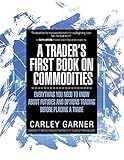
For a structured introduction to futures-market concepts, Scott Irwin’s Economics of Futures Trading page describes the book as foundational reading for students of commodity futures markets. It is background material, not a promise of trading success.
Quick Recap
Best Value
Product prices and availability are accurate as of the date/time indicated and are subject to change. Any price and availability information displayed on Amazon at the time of purchase will apply.




