Free tools Windows power users keep installed
One-click scans. No signup required.
To start a self-service laundry business, first verify demand in the neighborhood you want to serve, then build a site-specific financial plan before signing a lease or ordering equipment. The six steps below take you from market research through opening and day-to-day management. Costs, permits, utility capacity, and financing depend on the particular location and project, so there is no reliable one-size-fits-all startup budget or permit checklist.
1. Validate the local market and choose a service concept
A laundromat’s prospects depend on the customers and competition around a particular site—not on a national average. Decide whom you expect to serve and what kind of self-service experience you intend to offer before comparing locations.
Define the customer and service
Consider who lives, works, or travels within practical reach of the proposed store and what laundry options they already have. Your concept might emphasize convenient access, a range of machine sizes, a comfortable place to wait, or another locally relevant need. Treat these as hypotheses to test, not as proof of demand.
Map nearby alternatives and look for unmet needs
Visit competing laundromats and record their locations, hours, machine mix, prices, condition, payment options, and customer experience. Look for patterns: Are certain machine sizes scarce? Are competitors hard to reach without a car? Do customers appear to have limited access to machines at busy times? Do not assume that one visible weakness means a profitable opportunity; check whether enough potential customers share the need.
#1 Best Overall

- Tough Action for Tough Stains: Our top load clothes washer features a Triple Action Impeller to tackle your toughest loads in three powerful ways: Spraying Action to attack dirt from every angle with a concentrated detergent mix, Wash Basket Action to move the wash basket back and forth, and Impeller Action to move clothes in a circular pattern
- More Laundry, Less Time: Our high-efficiency top load washer features Express Wash to clean small loads in just 30 minutes (based on a 3-lb load, default cycle setting), and Accela Wash to clean full-size loads up to 51% faster (compared to a standard 8-lb load, normal cycle, warm wash temp, extra heavy soil setting) - so you spend less time doing laundry
- Wash Your Way: Features 10 wash cycles to custom wash your loads including Heavy Duty, Whites, Towels, Delicates, and Express Cycles. Select from 4 temperature options and rinse with Extra Rinse to help protect sensitive skin. Soft Close lid has tempered glass and won’t slam shut
- Easy to Operate: Use the intuitive light-touch controls to select the load and cycle options that match the fabric types in each load. Plus, the convenient LED lights provide time remaining and cycle status information
- Reduce and Save: Energy savings includes Cold Clean which cleans gently & completely while using up to 90% less energy (when compared to the normal cycle, default settings, 8-lb load)
The U.S. Small Business Administration (SBA) recommends examining demand, market size, income and employment indicators, customer location, market saturation, and competitor pricing. Use those prompts to organize neighborhood-level research rather than substitute broad national claims for it.
2. Build a business plan and test the numbers
Write down what the store will offer, whom it will serve, how it will operate, who will manage it, and what you know about the prospective location. Then build a financial model around actual quotes and site-specific assumptions. SBA planning guidance recommends estimating costs, assessing break-even, and using the plan to support financing discussions.
Separate startup spending from recurring expenses
List one-time or project costs separately from costs that recur. Possible categories include:
- One-time and opening costs: washers and dryers, delivery and installation, construction or buildout, utility work, permits and fees that apply, professional services, initial supplies, and opening marketing.
- Recurring costs: rent and other occupancy charges, water, sewer, electricity and gas, insurance, payroll if applicable, cleaning and supplies, repairs and maintenance, payment processing, marketing, and loan payments.
Confirm which costs apply to your project and when they are due. Quotes, utility requirements, local fees, lease terms, and equipment choices can change the budget substantially. The available evidence does not establish a dependable universal laundromat startup-cost total.
Rank #2
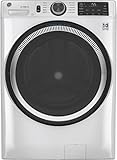
- Large 4.8 Cu. Ft. Capacity : Wash more in fewer loads—perfect for families and busy households with heavy laundry demands.
- UltraFresh Vent System with OdorBlock: Helps eliminate excess moisture after each wash cycle, keeping your washer interior fresh between uses.
- Built-In WiFi with SmartHQ App Integration: Remotely control your washer from your phone—start, stop, monitor, and receive alerts anytime, anywhere.
- Quick Wash Cycle (20 Minutes): Perfect for lightly soiled clothes, this cycle delivers a fast and efficient clean when time is limited.
- Time Saver Mode (35 Minutes): Enjoy a full, deep clean in just 35 minutes—ideal for mixed loads on busy days.
Calculate break-even and test scenarios
Estimate monthly fixed costs, then compare them with the contribution each sale makes after its variable costs. A simplified break-even calculation is fixed costs ÷ contribution margin ratio, where the ratio is the share of revenue left after variable costs. For a laundromat, build assumptions from the machines, prices, expected usage, utility costs, and other expenses for the proposed site; do not treat an assumed usage rate as a proven forecast.
Test what happens if opening is delayed, costs rise, customer usage is lower than expected, or financing payments are higher than planned. Include enough working capital to cover the period before the business reaches its expected operating level. If the model only works under the most optimistic assumptions, revisit the site, project scope, or financing before committing.
3. Choose and verify the site before committing
A promising address must work for customers and for the building. Compare sites against the same criteria, and make lease or purchase decisions conditional on confirming feasibility wherever possible.
Compare candidate locations
| Factor | What to check |
|---|---|
| Customer demand and access | Who is nearby, how they would reach the store, visibility, and whether the concept meets a locally observed need. |
| Competition | Nearby laundromats, their prices and machine mix, and any unmet customer needs you can substantiate. |
| Occupancy cost | Rent and other lease obligations against the financial model, including the cost of delays or required improvements. |
| Zoning and approvals | Whether the intended use is allowed and which local requirements apply; confirm with the relevant authorities. |
| Building and utilities | Whether the space can accommodate the planned machines and the required water, drainage, electrical, gas, and exhaust systems. |
Check the building and local rules
Do not assume a retail space is ready for laundry equipment. Ask qualified professionals to assess the building and the proposed utility loads, connections, ventilation, and construction needs. Laundry equipment planning can involve coordinated electrical, plumbing, gas, exhaust, and water work. Verify zoning and local requirements with the authorities responsible for the specific property and project before relying on a broker’s, landlord’s, or vendor’s assurance.
Rank #3

- More Laundry, Less Time: Our high-efficiency front load washer features Express Wash to clean small loads in just 25 minutes (based on a 3-lb load, express cycle), and Accela Wash to clean full-size loads up to 26% faster (compared to using a standard 8-lb load, normal cycle, warm wash temp, extra heavy soil setting) - so you spend less time doing laundry
- Tackle Tough Stains: Use the Steam Treat option to remove everyday stains with the strong cleaning power of steam
- Wash Your Way: Features 12 wash cycles to custom wash your loads including Kids Wear, Whites, Delicates, and Express Wash. Select from 5 temperature options and rinse with Extra Rinse to help protect sensitive skin
- Easy to Operate: Use the intuitive light-touch controls to select the load and cycle options that match the fabric types in each load. Plus, the convenient LED lights provides time remaining and cycle status information
- Reduce and Save: Energy Savings includes Cold Clean which cleans gently & completely while using up to 90% less energy (when compared to the normal cycle, default settings, 8-lb load). ENERGY STAR certified to help save money on your utility bills
4. Set up the business, secure approvals, and arrange capital
Once a site appears feasible, plan the business setup and approvals around its location and proposed work. Requirements and fees vary by jurisdiction and activity; confirm them rather than relying on a generic list.
Handle business formation and compliance
Choose a legal and tax structure with advice from qualified professionals if needed, and register the business as required. Ask the relevant state and local authorities which rules apply to your planned use. Depending on the property and project, you may need to investigate zoning, building, fire, plumbing, tax, and other approvals. This is not a universal checklist: the applicable rules must be confirmed for the actual site.
Match financing to the project
Use the business plan, site-specific estimates, and cash-flow scenarios to assemble a financing package. Compare potential financing by total cost, eligibility, collateral, repayment period, and permitted uses—not just by the initial payment. SBA 7(a) financing may support eligible uses such as real estate, equipment, or inventory, but availability, borrower eligibility, terms, and permitted uses must be checked with the SBA and participating lenders. The available information does not support ranking lenders or quoting current rates.
Independent reader supportYour contribution helps us test, update, and keep practical guides available for everyone.5. Design the store and choose equipment
Commercial washers and dryers are a major part of the project, but choosing machines is not simply a matter of buying the largest capacity or the most units that fit. Match the equipment mix and layout to local customer needs, the site, the utility plan, budget, and the experience you intend to provide.
Rank #4
- Tough Action for Tough Stains: Our top load clothes washer features a Triple Action Agitator to tackle your toughest loads in three powerful ways: Spraying Action to attack dirt from every angle with a concentrated detergent mix, Wash Basket Action to move the wash basket back and forth, and Agitator Action to move clothes in a circular pattern
- More Laundry, Less Time: Our high-efficiency top load washer features Express Wash to clean small loads in just 28 minutes (based on a 3-lb load, default cycle setting), and Accela Wash to clean full-size loads up to 51% faster (compared to a standard 8-lb load, normal cycle, warm wash temp, extra heavy soil setting) - so you spend less time doing laundry
- Wash Your Way: Features 10 wash cycles to custom wash your loads including Heavy Duty, Whites, Towels, Delicates, and Express Cycles. Select from 4 temperature options and rinse with Extra Rinse to help protect sensitive skin. Soft Close lid has tempered glass and won’t slam shut
- Easy to Operate: Use the intuitive light-touch controls to select the load and cycle options that match the fabric types in each load. Plus, the convenient LED lights provides time remaining and cycle status information
- Reduce and Save: Energy savings includes Cold Clean which cleans gently & completely while using up to 90% less energy (when compared to the normal cycle, default settings, 8-lb load). Remove shipping bolts from unit prior to install.
Compare equipment on the full ownership picture
| Comparison point | Questions to ask |
|---|---|
| Capacity mix and throughput | Which machine sizes suit the customers you identified, and how will the mix support expected usage without overcrowding the space? |
| Water and energy use | What do comparable specifications say about consumption, and what would that mean for this site’s utility costs? |
| Installation and utilities | What connections, ventilation, clearances, and building work does each model require? |
| Service and warranty | What coverage, response times, parts availability, and maintenance support are offered in your area, and what exclusions apply? |
| Payments and lifecycle cost | Will the payment system fit the business plan? What are the purchase, installation, operating, service, and expected replacement costs over time? |
Ask distributors for a proposed layout, model-specific utility schedules, installation details, warranty terms, service coverage, parts support, and maintenance requirements. Compare these details for the actual site; vendor claims about efficiency or profitability are not independent proof of business performance.
Plan for customers and movement through the store
Leave room for customers to move between machines, sort and fold laundry, and reach payment or support areas. Review circulation and folding space alongside the equipment layout, not after the machine count is fixed. Laundrylux lists supplier product ranges of 18–80 lb washer and dryer capacities and 100–450 G extraction speeds. These are ranges reported by the equipment supplier, not a recommendation for every store or evidence of a particular business result.
6. Prepare to open and manage operations
Before opening, confirm that the store is ready to serve customers and that you can monitor its performance. The right routines will depend on the site, equipment, payment setup, and whether you hire staff; there is no established universal staffing plan or opening checklist.
Test the store before serving customers
- Run the installed machines and check that their cycles, water and other utility connections, and controls work as intended.
- Test each payment method and the process customers will use if a transaction or machine fails.
- Set routines for cleaning, safety checks, preventive maintenance, repairs, and customer support.
- Set initial prices and a process for reviewing them against costs, usage, and local competition.
- Prepare local marketing that explains the store’s location, hours, services, and payment options.
Track performance and adjust
Monitor revenue, machine usage, utility bills, repairs, payroll if applicable, and debt service against the financial plan. Review whether actual usage and costs match the assumptions used to justify the site and equipment. Keep maintenance and service contacts available, and investigate recurring breakdowns or unusually high costs before they undermine the operating plan. Commercial providers may offer installation, maintenance, parts, repair, or financing services, but confirm coverage, eligibility, and terms directly with each provider.
Do these 3 things before closing this tab:
1Clear out junk files and repair common Windows errors2Scan for outdated or missing drivers - takes under a minute3Repair Windows errors before they cause bigger problemsQuick Recap
Product prices and availability are accurate as of the date/time indicated and are subject to change. Any price and availability information displayed on Amazon at the time of purchase will apply.




