To start a point-of-sale (POS) business, first decide what you will sell or do: resell hardware, implement and support existing POS software, build software, or refer merchants to payment providers. Those models have different startup costs, vendor dependencies, support workloads, and ways of earning revenue. This guide focuses on starting in the United States; registration, taxes, permits, payment-provider availability, and costs vary by state and locality.
A POS system combines hardware and software to process transactions. Your business may provide the whole system or only one part of it, so define the offer and customer before buying equipment or committing to a platform.
1. Choose a POS business model and a specific customer
Pick the role your company will play in a merchant’s payment setup. You can combine roles, but each added service brings its own vendor relationships and obligations. The trade-offs below are planning considerations, not measured cost or revenue estimates.
| Model | What you provide | Startup and operating considerations |
|---|---|---|
| Hardware sales or resale | POS devices, peripherals, or compatible bundles | May require inventory, product sourcing, delivery, returns handling, and technical support. Revenue depends on sales; compatibility and vendor supply are important dependencies. |
| Software implementation and support | Configuration, installation, staff training, integrations, and ongoing help for an existing POS platform | Can avoid building a platform or holding device inventory, but requires platform knowledge and capacity to handle merchant support. |
| POS software development | A POS application or platform, potentially with integrations to hardware and payment services | Requires development and maintenance capability. You also take on ongoing product, security, compatibility, and support responsibilities. |
| Payment-provider referral or agency | Introductions or sales support for payment-processing providers | Depends on provider terms, eligibility, territory, and the quality of merchant acquisition. Confirm current terms directly; availability is not established here. |
Choose one merchant segment and one problem to solve—for example, helping a particular type of retailer set up a compatible checkout workflow. A narrow offer makes it easier to identify required features, potential customers, and the support you must provide.
Free tools Windows power users keep installed
One-click scans. No signup required.
#1 Best Overall

- Use the, easy-to-use, and customizable POS to get started.
- Accept contactless payments, chip cards, Apple Pay, and Google Pay from anywhere, with improved connectivity, extended battery life, and enhanced security. Pay one low rate for every tap or dip.
- No long-term commitments or contracts, no monthly fees- and with offline payments, keep taking payments for up to 24 hours.
- Safely and securely accepts payments anywhere. Plus, get data security, 24/7 fraud prevention, and payment-dispute management at no extra cost.
- Use the, easy-to-use, and customizable POS to get started.
2. Validate demand and understand competitors
Before committing to inventory, development, or a provider relationship, find out whether your intended customers want the service and what they currently use. The U.S. Small Business Administration recommends market research to assess opportunity, competitors, and competitive advantage.
- Talk with prospective merchants in your chosen segment about their checkout workflow, current tools, pain points, and buying process.
- Compare the solutions they already use, including what is included in the price, how setup works, and who provides support.
- Test a specific offer—such as a paid setup or support package—rather than assuming interest in a broad “POS solution.”
- Record what you can verify and what remains uncertain; do not present an unverified market size or demand estimate as fact.
3. Write the business and operating plan
Use the plan to show how the offer will work in practice, not just what the product is. The SBA describes a business plan as a roadmap for structuring, running, and growing a company.
- Offer: Define what is included, what is excluded, and whether hardware, software, payment setup, installation, training, or ongoing support is part of the service.
- Customer acquisition: Identify how you will reach the target merchants and how you will evaluate whether outreach is producing qualified leads.
- Fulfillment: Map ordering, configuration, installation, migration, training, and handoff. Note which steps depend on third parties.
- Support: Set expectations for support channels, availability, escalation, and responsibility when a device, platform, or payment service fails.
- Revenue: Identify the actual sources—such as hardware sales, implementation fees, support contracts, software subscriptions, or partner arrangements—and verify the terms for any third-party revenue.
4. Estimate startup costs and arrange funding
Build a budget from quotes for your own location and business model instead of relying on a generic POS-startup cost figure. The SBA notes that expenses such as wages, rent, insurance, utilities, and license fees vary by location.
Rank #2

- With Square Terminal, you can ring up sales, accept payments, and print receipts, all with one device. Use it at the counter or ring up customers anywhere in your store.
- Accept all major credit and debit cards and pay one low rate with no hidden fees and no long-term contracts.
- Process chip cards in just two seconds.
- Get your money as soon as the next business day.
- Use it cordlessly with the built-in battery, designed to last all day.
List one-time setup costs separately from recurring operating costs. Depending on your model, investigate software development or subscriptions, demonstration or installation hardware, inventory, training, insurance, staff, support tools, and marketing. Include the cost of returns, replacement devices, and time spent troubleshooting if those are part of your offer.
The Tool Desk
Outbyte PC Repair FREERepair Windows errors before they cause bigger problemsFix Now →Outbyte Driver Updater FREEFix the driver behind crashes, sound loss and screen glitchesFind Drivers →Estimate how much cash is needed before revenue arrives, then compare funding options against the amount and timing of the need. Keep assumptions visible: distinguish a vendor quote from an estimate, and do not treat a possible partner payment or future subscription income as guaranteed funding.
5. Choose a structure, register, and check local requirements
Your business structure can affect taxes, registration, paperwork, and personal liability. Requirements depend on where you operate and what activities you undertake, so use the SBA’s launch guidance as a starting point and confirm obligations with the relevant federal, state, and local authorities or a qualified adviser.
Rank #3

- With Square Handheld, you can accept payments, take tableside orders, or scan barcodes anywhere. With a slim design and comfortable grip, the POS is easy to carry in your palm or pocket. Square Handheld is designed to withstand water splashes and dust. Add an optional protective case for accidental drops. A long-lasting battery and offline payments let you keep selling.
- Slim, pocketable, and lightweight so you can accept payments wherever your customers are.
- Take tableside orders, bust lines, or use the built-in barcode scanner, all with one sleek device.
- A battery that can power through your shift and offline payments let you keep selling, even if your internet is down.
- Accept all major credit and debit cards and pay one simple rate with no hidden fees and no long-term contracts required.
Check which registrations, tax identifiers, permits, or licenses apply to your specific business and locations. Selling devices, providing services, developing software, and arranging payment relationships may raise different questions. Do not assume one entity type or a universal checklist is right for every founder.
6. Set up business banking and compare payment relationships
Keep business funds separate and arrange an account that can receive settlements. The SBA notes that payment arrangements still need a business checking account for funds to be deposited. Your own business also needs suitable banking; a merchant customer’s settlement setup is a separate matter.
Do these 3 things before closing this tab:
1Clear out junk files and repair common Windows errors2Scan for outdated or missing drivers - takes under a minute3Repair Windows errors before they cause bigger problemsWhen deciding how to support merchants accepting payments, compare the arrangement rather than relying on a headline rate. The SBA describes merchant-services accounts and payment processors as options, while Mastercard’s small-business guidance also covers payment acceptance. Fees and features depend on the provider and agreement.
Rank #4
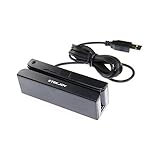
- USB interface, keyboard emulation, no need to install software to read, configuration software for changing settings available.
- Read data from all 3 tracks, high and low coercivity cards, ISO7811, AAMVA, CA DMV and most magnetic card data formats.
- Work on Windows, Mac and other USB capable systems. Work with TXT, notepad, Word, Excel, POS systems and son on.
- Compact size, with 145cm USB cord, two 3mm-diameter screw holes for fixing at the bottom, a LED indicator light
- Perfect for POS, Banking, Loyalty, Access Control, ID verification and other applications.
| Comparison point | Merchant-services account | Bundled payment processor |
|---|---|---|
| Fees | Review the actual agreement, including applicable transaction, AVS, batch, or monthly-minimum fees. | Review the actual agreement and identify applicable transaction and other fees; do not assume all providers use the same fee structure. |
| What is included | Confirm separately which software, hardware, and support services are included. | Some processors bundle additional functionality; confirm what the specific provider includes. |
| Settlement | Confirm how funds are deposited and which business account is required. | Confirm settlement timing, account requirements, and how the arrangement works for the merchant. |
| Support and obligations | Check support responsibilities, agreement terms, and any applicable validation requirements. | Check support responsibilities, agreement terms, and any applicable validation requirements. |
Do not promise a provider relationship, pricing, or referral income until the provider confirms current availability, eligibility, territory, and terms for your business.
Independent reader supportYour contribution helps us test, update, and keep practical guides available for everyone.7. Select software and compatible hardware
Choose a platform and devices around the merchant’s workflow and your ability to configure and support them. Shopify’s POS launch checklist identifies barcode scanning, receipt printing, and cash acceptance as factors that can change hardware requirements. A generic bundle should not be assumed to work with every POS platform.
- List the checkout tasks the merchant needs: for example, scanning items, printing receipts, taking cash, or accepting card payments.
- Verify that each device is supported by the specific POS software and payment setup before recommending or purchasing it.
- Check connectivity, installation requirements, peripherals, and who will provide troubleshooting or replacement support.
- For a reseller, verify sourcing, warranty, returns, and availability before advertising a device or bundle.
Keep demonstrations representative of the intended configuration. A device that works with one platform, region, or payment arrangement may not be suitable for another.
Best Value

- Get your money as soon as the next business day.
- Get set up quickly with no long-term commitments. Download the Square Point of Sale app for free, create an account, and start taking payments anywhere.
- Run your business all in one place with the free Square Point of Sale app. Track your sales, manage inventory, accept tips, send receipts digitally, and more.
- Works with Apple devices with a Lightning connector.
8. Establish secure deployment and support procedures
Security is part of the service, not an optional add-on. PCI Security Standards Council (PCI SSC) merchant guidance says, “Buy and use only approved PIN entry devices at your points-of-sale.” It also advises merchants to avoid storing sensitive cardholder data, secure networks and systems, protect passwords, inspect devices for unauthorized tampering, and train staff.
PCI DSS scope depends on how a device is configured and used. PCI SSC explains that terminals involved in storing, processing, or transmitting account data are within the cardholder data environment and PCI DSS scope. Its FAQ describes payment terminals as physical devices that capture payment-card data to process transactions. Ask the merchant’s acquirer or payment brands what validation requirements apply to the actual setup; do not treat a general checklist as a compliance determination.
Use the Federal Trade Commission’s small-business cybersecurity guidance to inventory technology and services—including POS equipment and applications—and assess supplier-related risks. Assign ownership for device inspection, account access, updates, incident escalation, and vendor contacts in the deployment process.
9. Prepare launch, test the workflow, and find initial customers
Before a merchant goes live, document onboarding, installation, data migration where applicable, staff training, incident handling, and continuing support. Test the complete workflow using the merchant’s intended configuration: software, connected hardware, payment arrangement, and settlement account. Record who to contact when each part fails.
Shopify recommends beginning preparation at least four weeks before opening day for small-to-mid-size POS rollouts of five or fewer locations; its checklist calls for ordering hardware at least four weeks ahead, configuring the admin 2–3 weeks ahead, and setting up devices a week before. These are Shopify’s rollout timings for merchants using its POS checklist, not a universal schedule for launching a POS company or for larger deployments.
For your own first customers, start with a manageable number of deployments that your team can support well. Use each installation to improve the written checklist and clarify the boundaries between your responsibilities and those of the software, hardware, and payment providers. Do not expand the offer until you can deliver its promised setup and support reliably.
Quick Recap
Product prices and availability are accurate as of the date/time indicated and are subject to change. Any price and availability information displayed on Amazon at the time of purchase will apply.




