Free tools Windows power users keep installed
One-click scans. No signup required.
There is no single universal price for a sports collectible. Before you buy, identify the exact item, compare it with recent completed sales of genuinely similar items, and adjust your estimate for condition, authentication, fees, and how much comparable-sale evidence exists. The result is a defensible buying range—not an appraisal or a promise of resale value.
1. Identify exactly what is being sold
Small differences can make two collectibles poor comparisons. Before searching prices, photograph the item and transcribe its identifiers. PSA’s grading guidance likewise recommends identifying an item before researching its value.


As an Amazon Associate I earn from qualifying purchases.
- For a card: sport, player, year, manufacturer, set, card number, edition or parallel, serial numbering, and whether it is raw or graded. If graded, record the grading company, grade, and certification number.
- For an autograph: the signer, item signed, inscription if any, and the authenticator or certificate details. Determine what the documentation actually authenticates.
- For equipment or other memorabilia: the model or event, the specific claimed connection to a player or game, and the provenance or authentication that supports that claim.
- For tickets and unopened packs: record the event and date or the product, year, and configuration, as applicable.
Inspect both sides, labels, serial or certification numbers, and any provenance documents. Search with those identifiers, then compare the listing’s photographs and description against the item in hand. Do not blend different years, sets, variants, grades, signatures, or game-use claims into one comparison group.
Recommended Free Tools
2. Anchor your estimate in completed sales
A seller’s asking price shows what the seller hopes to receive, not what a buyer has paid. Use completed transactions as the primary market evidence. eBay’s Price Guide describes median sold prices, transaction details, and up to two years of historical sales data. PSA’s grading guidance also points users to sold or completed eBay results.
#1 Best Overall
- Search the exact identifiers and filter for sold or completed results where available.
- Open candidate sales and verify the match using the photographs and description—not just the title.
- Record the sale date, currency, condition or grade, authentication status, sale format, and visible shipping or buyer charges.
- Set aside sales that differ in a material way. If only a few close matches remain, report a wider, less certain range rather than treating a lone sale as the market price.
Prefer several recent, close matches. An old sale may be less informative than a newer one, and a sale in a different currency or market may not translate directly into your likely purchase cost.
3. Compare like with like
Use these checks to judge whether a sale belongs in your comparison set. A strong match aligns across most of them; a meaningful mismatch should either be excluded or treated as a reason to widen the range.
Rank #2
| Comparison factor | What to verify |
|---|---|
| Item or version | Same year, set, card number, variant, model, event, or other identifying version. |
| Sale timing and market | When and where the transaction occurred, and whether its currency is comparable to your buying market. |
| Condition or grade | Raw versus graded cards are different comparables. For graded items, compare the grading company and grade; for other objects, inspect condition and completeness. |
| Authentication and provenance | Whether an autograph or game-use claim was independently authenticated, and whether the documents cover the specific claim being made. |
| Sale format and costs | Whether it was an auction or fixed-price transaction and what shipping or buyer charges are visible. Add the costs that affect your own total. |
| Evidence quality | How many relevant sales you found and how tightly their prices cluster. A thin or widely spread set supports less confidence. |
Independent authentication or grading can help buyers evaluate collectibles, but it does not make unlike items comparable. eBay’s authentication and grading information explains that items may be reviewed and that items experts find inaccurately represented may be removed.
4. Cross-check with a specialist guide
A guide can help confirm that your sold-sale range is plausible, especially for categories with established reference data. PSA’s Price Guide covers sports cards, autographs, unopened packs, tickets, professional model bats, and graded baseballs. Its current page says it includes over 400,000 prices and notable public auction sales; the page does not date that count, so treat it as a description of the guide rather than a dated market statistic.
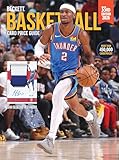
PSA cautions that general commons pricing is approximate for cards with average population attributes. More broadly, a guide entry is a reference point, not evidence that your particular item will sell for that amount. Beckett lists print magazines and books as well as online guides in its help resources; if you use a printed guide, choose a current, relevant edition and give greater weight to recent transactions.
5. Set a maximum total price, not just a target item price
Turn the comparable sales into a range, then decide what you are willing to pay after accounting for the costs of this transaction. Include visible shipping and buyer charges, and consider any other costs that apply to your purchase. Do not assume the midpoint of the range is an appraisal, a guaranteed resale price, or the right offer for every buyer.
Rank #4
Before committing, review the seller’s history, return terms, photographs, and authenticity claims, along with the protections available through the marketplace. eBay’s Sports Collectibles Buying Guide puts the responsibility plainly: “It is up to you to research the item you are interested in and any information about its authenticity before you place a bid or buy an item.”
6. Know when to seek independent help
For a high-value purchase, consider independent authentication when the item’s value depends on a signature, grading, or claimed game use. Authentication addresses whether the claim is supported; it does not by itself establish a market price. For insurance documentation or another formal need, an appraisal is different from an informal buying estimate. PSA describes its appraisal services as a way to document value for insurance.
Best Value
Without a specific item, location, currency, condition, and listing, no single estimate is possible. Market prices, sold-data coverage, and service offerings can change, so use the method with current transactions and treat the resulting range according to the strength of its evidence.
Quick Recap
Product prices and availability are accurate as of the date/time indicated and are subject to change. Any price and availability information displayed on Amazon at the time of purchase will apply.




