Do these 3 things before closing this tab:
1Fix the driver behind crashes, sound loss and screen glitches2Clear out junk files and repair common Windows errors3Scan for outdated or missing drivers - takes under a minuteYou can create and publish a custom GPT in the ChatGPT Store, but “sell” is an important qualification. OpenAI’s current public documentation describes publishing and discovery—not a generally available system where every creator sets a price, charges for individual GPT access, or offers native subscriptions.
OpenAI has announced a usage-based builder-earnings program, but eligibility, availability, rates, and payouts are not documented as universal. Treat any Store income as uncertain unless OpenAI has specifically invited your account and provided current terms. For most creators, the practical business model is to use a public GPT to attract customers for consulting, courses, templates, software, or an API-powered product.

As an Amazon Associate I earn from qualifying purchases.
This guide explains how to build the GPT, pass the public-publishing requirements, test it responsibly, and choose a monetization model that does not depend on guaranteed Store payouts.
Can you sell a GPT directly in the ChatGPT Store?
The ChatGPT Store is primarily a discovery and distribution channel. You can publish a GPT publicly so people can find and use it inside ChatGPT, but OpenAI’s current public documentation does not establish a standard feature for creator-set prices, paid downloads, checkout, or recurring billing for an individual Store GPT. See OpenAI’s current GPT publishing guidance.
#1 Best Overall
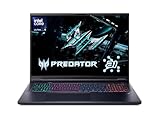
- Desktop-Level Performance, Anywhere: Get legendary gaming performance with the Intel Core Ultra 9 275HX processor, delivering ultra-smooth gameplay and future-ready AI (Up to 13 NPU TOPS). Offload tasks like background removal and audio optimization to the NPU for seamless streaming and gaming, while Intel Application Optimization enhances performance on classic titles.
- Game-Changing Realism: Powered by NVIDIA Blackwell architecture, GeForce RTX 5070 Ti Laptop GPU unlocks the game changing realism of full ray tracing. Equipped with a massive level of 992 AI TOPS horsepower, the RTX 50 Series enables new experiences and next-level graphics fidelity. Experience cinematic quality visuals at unprecedented speed with fourth-gen RT Cores and breakthrough neural rendering technologies accelerated with fifth-gen Tensor Cores.
- Supreme Speed. Superior Visuals. Powered by AI: DLSS is a revolutionary suite of neural rendering technologies that uses AI to boost FPS, reduce latency, and improve image quality. DLSS 4 brings a new Multi Frame Generation and enhanced Ray Reconstruction and Super Resolution, powered by GeForce RTX 50 Series GPUs and fifth-generation Tensor Cores.
- The Ultimate in Ray Tracing and AI: NVIDIA RTX is the most advanced platform for full ray tracing and neural rendering technologies that are revolutionizing the ways we play and create. Over 700 games and applications use RTX to deliver realistic graphics and incredibly fast performance with cutting-edge AI features like DLSS Multi Frame Generation.
- Immersive Depth and Detail: At 18 inches with a 16:10 aspect ratio, the pristine WQXGA screen offering vibrant colors with up to 100% DCI-P3 operates at a fast 240Hz refresh and 3ms overdrive response time. Alongside the suite of features from NVIDIA G-SYNC and NVIDIA Advanced Optimus, you're guaranteed that whatever's on-screen is a distinct viewing delight.
OpenAI announced a builder-revenue program in January 2024, saying builders would be paid based on GPT usage or engagement, initially beginning with U.S. builders. That announcement did not provide a universal rate card or guarantee participation. A later OpenAI Community discussion described the program as limited, but it is secondary information rather than a current universal rule.
The accurate business assumption is therefore:
- Publishing: making your GPT publicly discoverable and usable inside ChatGPT.
- Possible Store earnings: available only if OpenAI has invited or otherwise made your account eligible under current terms.
- Direct sales: not documented as a generally available paid-listing feature.
- Surrounding revenue: sales of services, education, templates, software, or other products connected to the GPT.
Do not build a personal-income plan around Store payouts unless you have confirmed eligibility and payment terms directly with OpenAI.
What you need before creating a GPT
According to OpenAI’s GPT Builder documentation, creating or editing GPTs requires a paid ChatGPT subscription, subject to plan availability and workspace permissions. Public GPTs can be used by signed-in users, but creation and editing may be restricted on managed accounts.
PC Slower Than It Used to Be?
A free scan shows the junk files, broken settings and background clutter dragging Windows down - then fixes them in one click.Free scan · Windows 10 & 11Crashes, No Sound, or Screen Glitches?
Random freezes, missing sound and display glitches usually trace back to one bad driver. Find and replace yours safely.Free scan · under a minuteBuild and edit on the web. OpenAI’s creation guidance says the full builder workflow is not available in the mobile apps. Start at Explore GPTs and select Create. Menu names and availability can vary by account, plan, workspace, and future interface changes.
Before opening the builder, prepare:
- A clearly defined target user.
- One repeatable problem or job to be done.
- Examples of the input users will provide.
- A useful, visible output.
- Reference files, if the GPT needs specialized information.
- A website or verified domain for your Builder Profile.
- A real privacy policy if the GPT will use public Actions.
- An external API or service only if live data or operations are genuinely necessary.
Choose a commercial use case
A commercially useful GPT should produce a specific outcome, not merely claim to be “an AI assistant.” Strong concepts include:
- A proposal or statement-of-work generator for a particular profession.
- A compliance checklist assistant for one defined business process.
- A lesson-planning assistant for a specific age group or subject.
- A real-estate listing and client-follow-up workflow.
- A specialized research or reporting assistant.
- A customer-support triage tool for a particular business.
- A calculator or estimator connected to authoritative business rules.
- A lead-generation GPT that introduces users to a consultation, course, templates, or software.
Weak concepts include a general-purpose chatbot, a thin wrapper around an ordinary ChatGPT prompt, or a product aimed at everyone. A GPT whose value depends on constantly changing facts is also risky if it has no reliable search, retrieval, or update method.
Write this brief first:
Target user:
Problem:
Input the user provides:
Output the GPT produces:
Why the result is better than a generic ChatGPT prompt:
What the user can buy next:
What the GPT must refuse or escalate:
The commercial value should come from saving time, reducing errors, producing a professional deliverable, applying a specialized method, or guiding a decision. “Uses AI” is not a customer benefit by itself.
The Tool Desk
Outbyte Driver Updater FREEScan for outdated or missing drivers - takes under a minuteDriver Scan →Outbyte PC Repair FREEClear out junk files and repair common Windows errorsFree Scan →How to create a custom GPT
1. Open the GPT editor
- Open ChatGPT on the web.
- Choose Explore GPTs in the sidebar or visit chatgpt.com/gpts.
- Select Create.
- Use the conversational Builder or configure the GPT directly.
2. Configure the identity
Give the GPT a specific, outcome-focused name. Its description should say who it is for, what it does, and what users can expect. Use an icon you have the right to use.
Conversation starters should show realistic, valuable tasks rather than vague prompts. For example:
Name: Freelance Proposal Architect

Description:
Creates client-ready freelance proposals from a project brief, including scope,
deliverables, assumptions, timeline, and pricing questions.

Conversation starters:
- Turn this client brief into a one-page proposal.
- Find missing information before I quote this project.
- Rewrite this scope so it prevents ambiguity.
These fields help visitors understand the GPT before they start using it, so avoid inflated claims such as “guaranteed results” or “the world’s best expert.”
3. Write the Instructions
Instructions control behavior, workflow, tone, boundaries, decision rules, and output format. Put these rules in Instructions—not in a reference document that the GPT may retrieve inconsistently.
Quick wins for a faster PC:
Scan for outdated or missing drivers - takes under a minuteDriver Scan →Repair Windows errors before they cause bigger problemsFix Now →Use headings, explicit steps, positive directions, and examples. A practical structure looks like this:
# Role
You are a proposal-writing assistant for independent creative professionals.

# Primary outcome
Help the user produce a clear, commercially realistic proposal.

# Workflow
1. Identify the client's objective.
2. Extract deliverables and exclusions.
3. Identify missing information.
4. Ask no more than five high-impact questions.
5. Draft the proposal.
6. Add assumptions and risks.
7. Offer a concise revision checklist.

# Output format
Use these headings:
- Objective
- Scope
- Deliverables
- Exclusions
- Timeline
- Assumptions
- Open questions
- Draft proposal

# Quality rules
- Never invent client facts, prices, legal terms, or deadlines.
- Mark assumptions clearly.
- Separate recommendations from confirmed information.
- If the request is outside freelance proposals, explain the limitation.

# Escalation
Recommend professional legal, tax, or financial advice when the user requests
binding legal interpretation, tax determination, or regulated financial advice.
For financial, legal, medical, employment, or safety-related use cases, define limitations and human-review steps. Do not market a GPT as a replacement for a licensed professional or promise a guaranteed outcome.
4. Upload Knowledge files
Knowledge supplies reference material such as manuals, process guides, terminology lists, product catalogs, handbooks, methodology documents, and sample outputs. OpenAI distinguishes Knowledge from Instructions: Knowledge is source material; Instructions are the behavioral rules that tell the GPT what to do with it.
OpenAI’s current guidance lists a limit of up to 20 files per GPT, with each file up to 512 MB. Supported formats and limits can change, and some file types may require Data Analysis capabilities.
Free tools Windows power users keep installed
One-click scans. No signup required.
For better results:
- Use clean, text-forward files.
- Remove obsolete versions and conflicting drafts.
- Give files clear names.
- Separate unrelated subjects into separate documents.
- Tell the GPT when to cite, quote, or identify a source file.
- Test questions whose answers appear in different files.
- Do not upload confidential customer information without understanding authorization, privacy, and retention implications.
Never rely on Knowledge files to enforce a business rule. Put the rule in Instructions and use Knowledge for the material the rule operates on.
Rank #3

- Intel Core i9 HX Power for Elite Gaming: Dominate demanding titles with the Intel Core i9-14900HX and its 24-core hybrid architecture, delivering fast load times, high FPS, and smooth multitasking.
- GeForce RTX 5070 With Ray Tracing & DLSS 4: Powered by NVIDIA Blackwell, the RTX 5070 delivers stronger ray tracing, higher FPS, faster AI upscaling, and more responsive gameplay—ideal for competitive and cinematic gaming.
- QHD 165Hz, 100% DCI-P3 for Ultra-Clear Combat: The QHD 165Hz display reveals more detail, reduces motion blur, and boosts visibility in fast-paced games while delivering richer, more accurate colors.
- Cooler Boost 5 for Sustained Performance: Dual fans and a 5-heat-pipe share-pipe design keep the CPU and GPU cool, maintaining stable frame rates during long gaming marathons.
- 4-Zone RGB Keyboard + Full Game-Ready Ports: Customize your setup with a 4-zone RGB keyboard and highlighted WASD keys. Includes USB-C Gen 2, HDMI up to 8K, multiple USB-A ports, RJ45, Wi-Fi 6E & Hi-Res Audio.
5. Enable only necessary capabilities
Depending on availability, a GPT may use built-in capabilities such as web search, image generation, or data analysis. It may also connect to external services through Apps or Actions.
Choose tools based on the product promise:
- Web search: current public information.
- Image generation: visual concepts or assets.
- Data analysis: calculations, spreadsheets, and structured files.
- Actions: external data retrieval or operations.
More capabilities mean more possible privacy issues, confusing behavior, and failure modes. OpenAI recommends tightening Instructions and adding examples before simply adding more tools.
6. Add Actions only when they create real differentiation
Actions are appropriate when the GPT must query or operate an external system—for example, checking inventory, looking up account information, creating a support ticket, querying a private database, or calculating a result through a business API.
Action setup requires API details, authentication where applicable, and an OpenAPI schema in JSON or YAML. OpenAI’s Actions documentation explains the configuration requirements.
A public Action must include a valid Privacy Policy URL. Do not use a placeholder. Your policy should explain what data the Action receives, why it receives it, how long data is retained, whether it is shared with subprocessors, how users can request deletion or support, and how to contact the operator.
Tell users when an external service is involved and what information will be sent. Users may need to approve an Action before it runs. OpenAI says relevant input may be transmitted to the third-party service, whose data practices OpenAI does not audit or control.
A GPT can use Apps or Actions, but not both at the same time. Action availability may also be limited by workspace settings, and the current Actions documentation says Pro mode does not support Actions.
Test the GPT before publishing
Use Preview to test tone, accuracy, retrieval, boundaries, and tool behavior. Test more than the ideal demonstration.
Rank #4

- Vibrant 15.6" FHD IPS Display: Experience stunning visuals on a large 15.6-inch Full HD (1920x1080) IPS screen. With narrow bezels and wide viewing angles, this laptop offers an immersive experience for streaming movies, online classes, or working on documents with crystal-clear detail
- Efficient Daily Performance: Powered by the Intel Celeron N4020 processor and 4GB LPDDR4 RAM, this notebook delivers reliable performance for web browsing, light multitasking, and school projects. The 128GB storage provides ample space for your essential files, photos, and apps
- Modern Connectivity & PD Fast Charge: Equipped with a versatile Type-C PD 45W port for fast charging and high-speed data transfer. Combined with Dual-Band AC WiFi and Bluetooth, you’ll enjoy a stable and fast internet connection for seamless video calls and cloud-based work
- Silent & Ultra-Portable Design: Featuring an advanced fanless cooling system, this laptop operates in total silence—perfect for libraries or late-night study sessions. Its sleek, lightweight body fits easily into backpacks, making it the ideal companion for students and commuters
- Ready for Work & Play: Pre-installed with Windows 11 Home, offering a secure and user-friendly interface. Includes a HD webcam and high-quality speakers for clear communication. A practical choice for online learning, remote work, or everyday entertainment
| Test type | Examples |
|---|---|
| Normal | Beginner wording, detailed requests, and the exact task the GPT is designed to solve. |
| Ambiguous | Short requests, missing information, and contradictory instructions. |
| Boundary | Out-of-scope questions, unsafe requests, and requests requiring professional judgment. |
| Knowledge | Answers found in different files, absent answers, and conflicting files. |
| Action | Failed calls, slow responses, malformed responses, authentication errors, and user approval. |
| Commercial | Useful first output within a minute, clear next steps, and no spammy or guaranteed claims. |
| Security | Attempts to reveal hidden Instructions or extract uploaded material. |
If answers are inconsistent, fix the problem in this order:
- Narrow the task.
- Rewrite Instructions as explicit steps.
- Add good and bad output examples.
- Define what happens when information is missing.
- Clean and reorganize Knowledge files.
- Retest with a fixed prompt set.
- Only then add or modify capabilities.
Meet the public-publishing requirements
Before publishing, complete the Builder Profile and resolve any review blockers. A profile may display your name, a website linked to a verified domain, and supported verified social profiles. Personal accounts may need billing or public-domain ownership verification.
Typical publishing steps are:
- Finish the GPT in the editor.
- Select Share or the applicable publishing control.
- Choose the public GPT Store option—not link-only sharing.
- Select a category if prompted.
- Review the public Builder Profile information.
- Confirm compliance with OpenAI policies and product requirements.
- Publish or submit for review.
A GPT shared as Anyone with the link will not appear in the Store. Public publishing can also be blocked by workspace restrictions, unsupported App connections, policy restrictions, incomplete verification, or a public Action without a valid Privacy Policy URL. OpenAI’s sharing and publishing documentation should be checked for account-specific requirements.
Recommended Free Tools
For commercial use, your Builder Profile is an important native trust surface. Link it to a concise website explaining the GPT, your expertise, support options, privacy practices, and the product or service users can purchase next.
Independent reader supportYour contribution helps us test, update, and keep practical guides available for everyone.How to make money around the GPT
1. Use it as a lead generator
Offer a genuinely useful first experience, then direct interested users to a consultation, audit, course, template library, newsletter, booking page, or product demonstration. The GPT should qualify or educate a prospect rather than repeatedly advertise.
2. Sell expertise and implementation
Businesses may pay for customization, Knowledge-base preparation, Action/API integration, workflow audits, staff training, maintenance, testing, or privacy and compliance reviews. In this model, the public GPT demonstrates your capability; the paid work is the surrounding service.
3. Connect an external service
An Action can send requests to an API that provides premium data access, calculations, document generation, workflow execution, or account-specific operations. The external service needs its own authentication, privacy documentation, monitoring, support, and billing. This is a software business—not passive income created by toggling on an Action.
What’s actually slowing this PC down?
Pick the symptom - the matching free tool is one click away.
4. Build an API-powered product
If you need recurring subscriptions, customer accounts, usage quotas, persistent data, team permissions, detailed analytics, a branded interface, or full control over checkout, an external website or application is usually the better product. OpenAI distinguishes GPTs that run inside ChatGPT from applications built with the OpenAI API.
Best Value

- Stunning 15.6" FHD IPS Display: Experience crisp 1920x1080 resolution on this 15.6 inch laptop with an IPS panel that delivers wide viewing angles and vivid colors. The narrow-bezel design maximizes screen real estate for comfortable viewing on this Win 11 laptop, whether you're studying or working.
- Celeron J4105 Processor & 256GB SSD: Powered by a reliable Celeron J4105 processor paired with 12GB DDR4 memory and a fast 256GB M.2 SSD. This laptop computer supports SSD expansion up to 2TB and TF card expansion up to 1TB, so your storage grows with your needs. Delivers smooth multitasking for daily productivity.
- AI-Powered Win 11 Laptop: Built-in AI features enhance your productivity with smart assistance for writing, summarizing, and task management. Pre-installed with Win 11 and includes Office 365 subscription. This student laptop is backed by 1-year warranty and 24/7 customer support.
- All-Day 7000mAh Battery & 180° Hinge: The high-capacity 7000mAh battery keeps this laptop powered through long classes or meetings. The 180-degree lay-flat hinge lets you share your screen effortlessly during presentations. This durable laptop computer adapts to your dynamic workflow.
- Versatile Connectivity Hub: Equipped with USB 3.2, Type-C, Mini HDMI, and 3.5mm audio jack to connect all your peripherals. Stay online anywhere with high-speed 5G WiFi and Bluetooth 4.2. This college laptop keeps you connected at home, in the library, or on the go.
An external checkout provider can sell access to that separate service, consultation, course, or digital product. Do not describe an externally paid funnel as native paid access to the Store GPT.
GPT Store or API app?
| Requirement | GPT Store GPT | API-powered product |
|---|---|---|
| Fast no-code launch | Strong | Weak to moderate |
| Discovery inside ChatGPT | Strong | Not included by default |
| Creator-controlled pricing | Not generally documented | Strong |
| Recurring subscriptions | Not native to the listing | Strong |
| Website embedding | Not the normal GPT model | Strong |
| Custom accounts and persistent data | Limited | Strong |
| External API connections | Possible through Actions | Strong |
| Store review dependency | Yes | No Store review, though other requirements apply |
| Product control and analytics | Limited | Stronger |
Choose a Store GPT for discovery, prototyping, credibility, and lead generation. Choose an API product when billing, accounts, persistent data, or a branded application is central. Many businesses can use both: the GPT attracts and educates users, while the external product handles paid service delivery.
Common problems and fixes
It was published but does not appear in the Store
- Confirm that you selected public Store publishing rather than link-only sharing.
- Check Builder Profile and domain verification.
- Confirm that your account and workspace allow public publishing.
- Remove or correct unsupported App connections.
- Add a valid Privacy Policy URL to every public Action.
- Check for policy or product-review restrictions.
It works privately but cannot be published
Common causes include a policy restriction, missing Action privacy policy, unsupported connection, workspace rule, or incomplete Builder Profile verification. Correct the issue and retry; if an appeal option is shown, follow the applicable process. Keeping the GPT private is also an option.
An Action does not run
Validate the OpenAPI schema, operation IDs, request fields, authentication, target-domain permissions, user approval, model-mode support, third-party availability, and response structure. Make failures legible: the GPT should tell the user whether the request was sent, what failed, and what to do next.
Users are trying to extract the prompt
Do not place credentials, private customer data, irreplaceable trade secrets, or security-sensitive logic in Instructions or Knowledge files. Assume user-facing behavior may be probed or inferred. For genuinely proprietary operations, move sensitive logic to an external service and expose only the necessary result through an Action. This reduces exposure; it does not guarantee secrecy.
You want to charge for membership
Do not assume the Store provides a creator-defined subscription gate. Use an external checkout and application architecture, or sell the service surrounding the GPT. Keep the distinction clear to customers.
Privacy, safety, and financial risk
Builders cannot view individual conversations users have with their GPTs. However, when Apps or Actions are involved, relevant input may be sent to a third party. Disclose this prominently and avoid encouraging users to submit sensitive personal, financial, health, employment, or customer information unless the data handling has been properly reviewed.
Do not use a GPT to promise guaranteed investment returns, loan approval, tax outcomes, legal results, medical diagnoses, or other regulated outcomes. Use human review and escalation for high-stakes decisions. OpenAI’s Commerce Policies also restrict fraudulent, deceptive, misleading, or unlawful commerce activity.
If your GPT or surrounding business earns money, keep records of revenue and expenses and obtain advice appropriate to your country and business structure. Tax treatment, reporting thresholds, sales taxes, and platform fees vary by jurisdiction; this article is not tax advice.
Launch checklist
- Clear target user.
- One primary job to be done.
- Specific Store name and accurate description.
- Four to six realistic conversation starters.
- Structured Instructions with boundaries and escalation.
- Clean, current Knowledge files.
- Preview testing completed.
- Boundary, refusal, privacy, and prompt-probing tests completed.
- Action schema and authentication validated, if applicable.
- Privacy Policy URL added for every public Action.
- Builder Profile and domain verification completed.
- Public publishing enabled.
- External offer and payment path tested.
- Support or contact page available.
- Version number and change log created.
For updates, save the draft and use Update to apply it to the published GPT. Keep a record of:
Version:
Date:
Changed:
Reason:
Tests run:
Known limitations:
Rollback decision:
Versioning matters especially when changing Actions, external APIs, pricing logic, legal language, or Knowledge files.
Do these 3 things before closing this tab:
1Scan for outdated or missing drivers - takes under a minute2Repair Windows errors before they cause bigger problems3Fix the driver behind crashes, sound loss and screen glitchesQuick Recap
Product prices and availability are accurate as of the date/time indicated and are subject to change. Any price and availability information displayed on Amazon at the time of purchase will apply.




