Recommended Free Tools
Zelle does not set one universal sending limit. Your bank or credit union sets the limit for your account. Check the amount shown in your banking app, then contact that financial institution to ask whether a temporary or permanent increase is available. Zelle itself generally cannot raise a bank-set limit.
Can you increase a Zelle limit?
Sometimes. The answer depends on your bank or credit union, account type, enrollment history, recipient, payment history, and fraud controls. Some institutions automatically increase limits over time, some calculate them dynamically, and others do not approve customer-requested increases.

As an Amazon Associate I earn from qualifying purchases.
Zelle’s official guidance says participating financial institutions determine customers’ sending and receiving limits. There is no Zelle-wide sending limit that applies to every user.
Free tools Windows power users keep installed
One-click scans. No signup required.
Because Zelle is primarily accessed through participating banks and credit unions, the institution where you use Zelle owns the account relationship and handles account-specific restrictions. Zelle’s standalone-app sending and receiving changes began on April 1, 2025; using an old standalone-app workflow is not a way around your bank’s limit.
#1 Best Overall
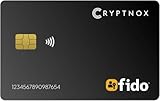
- FIDO2 CERTIFIED: FIDO Alliance Certified FIDO2 v2.1 and CTAP Level 1 for 2FA and MFA on Google Microsoft Apple GitHub login.gov AGOV SwissID and any WebAuthn service
- PASSKEY READY: Works as a hardware passkey for passwordless sign-in where the service enables it and as a U2F and WebAuthn security key everywhere else
- CERTIFIED SECURITY: NXP JCOP 4.5 secure element rated Common Criteria EAL6+ (augmented)
- TAP OR INSERT: Dual NFC ISO 14443 and contact ISO 7816 interface in an ID-1 format smart card that is passive and battery-free
- BUILT TO LAST: Passive smart card made in Switzerland designed by Swiss company Cryptnox and backed by a 2 year manufacturer warranty
How to request a higher Zelle limit
- Check the limit in your bank app. Open your bank or credit union’s app or website and select Zelle, Send Money, or the relevant Payments or Transfers section.
- Start the payment without submitting it. Select the recipient and enter the amount. Look for the maximum permitted amount, remaining allowance, or a warning that the payment exceeds your limit. Not every bank displays this information in the same place.
- Identify the type of restriction. Determine whether it is a per-transaction, daily, rolling 24-hour, weekly, monthly, recipient-specific, or transaction-count limit.
- Contact your bank securely. Use secure messaging, call the number on the back of your debit card, or ask for the institution’s payments department. Do not rely on a third-party service claiming to increase the limit.
- Ask for the exact option available. Ask whether the bank can approve a temporary or permanent increase, whether your account qualifies for a higher tier, and whether another transfer method is better for the amount.
- Confirm the terms. If an increase is approved, ask for the amount, expiration date, applicable recipient, and whether it changes your overall limit or only permits one transaction.
Calling the bank does not guarantee approval. The bank may decline the request, keep the current limit, apply a temporary exception, or direct you to ACH, a wire, or another payment method.
Questions to ask the bank
- “Can my Zelle sending limit be increased?”
- “Is this a daily, rolling-period, recipient, transaction-count, or fraud-related restriction?”
- “Is a temporary increase available for this specific payment?”
- “Does my account type qualify for a higher limit?”
- “Will my limit increase automatically after more account or recipient history?”
- “What bank-approved alternative can I use for this amount?”
Why your Zelle limit may be lower than expected
A lower limit does not necessarily mean anything is wrong with your account. Banks can apply several overlapping restrictions:
- New Zelle enrollment: Some banks use introductory limits that rise only after the profile has been enrolled for a certain period.
- New recipient: A recently added recipient may have a lower recipient-specific limit, particularly before the recipient has enrolled.
- Recipient not enrolled: The recipient’s status can affect whether the payment is permitted or how much can be sent.
- Recent profile changes: Changes to contact information, security settings, or account details can trigger temporary reductions.
- Used allowance: You may have reached a daily, rolling 24-hour, monthly, or transaction-count limit through earlier payments.
- Risk controls: An unusual amount, frequency, recipient, device, or payment pattern can cause a temporary security restriction.
- Account history: Banks may consider account tenure, online-banking history, payment history, and the specific account type.
- Consumer versus business account: Business accounts may have different limits, but eligibility and pricing vary by institution.
- Available balance: Insufficient available funds can also stop a payment. A balance problem and a limit warning may appear together, but they are different issues.
Does waiting increase the limit?
It can, but there is no universal timetable. Waiting may help if your bank uses an introductory enrollment tier, gradually increases limits for established recipients, or resets a rolling allowance after the applicable period. A bank’s risk system may also change the permitted amount after successful payment history.
What’s actually slowing this PC down?
Pick the symptom - the matching free tool is one click away.
Do not assume that every bank raises limits after a fixed number of days. For example, Bank of America publishes consumer tiers based on Zelle enrollment tenure, while Wells Fargo says limits can vary according to account, recipient, risk factors, and payment history without promising one schedule.
Bank-specific examples
These figures are examples from the named institutions, not nationwide Zelle limits. Policies can change, and the limit shown in your authenticated banking session controls your transaction.
Bank of America
Bank of America’s cited service agreement lists the following consumer limits based on Zelle enrollment tenure:
Rank #2

- BULK PROCUREMENT: 25 blank White PVC FIDO2-only NFC smart cards in a single SKU sized for enterprise IT rollouts and standardized workforce deployment
- HARDWARE 2FA AND MFA: Phishing-resistant FIDO2 v2.1 CTAP Level 1 credential for account login with passwordless sign-in where the service supports it
- DUAL INTERFACE: Tap over NFC (ISO 14443) or insert into a contact reader (ISO 7816) with no batteries and no charging required
- CERTIFIED SECURE ELEMENT: NXP JCOP 4.5 chip rated Common Criteria EAL6+ (augmented)
- SWISS MADE: White PVC smart cards with a customizable face manufactured in Switzerland and backed by a 2 year warranty
| Enrollment tenure | Daily limit | Monthly limit |
|---|---|---|
| 0–15 days | $500 and 10 transactions | $20,000 and 60 transactions |
| 16–30 days | $1,000 and 10 transactions | $20,000 and 60 transactions |
| 31–60 days | $2,000 and 10 transactions | $20,000 and 60 transactions |
| More than 60 days | $3,500 and 10 transactions | $20,000 and 60 transactions |
Bank of America also describes restrictions for unenrolled or newly added recipients and says some customers may see a temporary, recipient-specific increase during transfer setup. See the Bank of America service agreement for its current terms.
Wells Fargo
Wells Fargo says most consumer accounts can send up to $3,500 in a rolling 24-hour period and $20,000 in a rolling 30-day period. It also says limits can vary by account, recipient, payment history, and other risk factors, and that some customers may receive higher limits. Business-account limits may differ. See the Wells Fargo Zelle FAQs.
Chase
Chase does not present one universal public number on its referenced consumer page. It says the applicable limit is dynamically determined and displayed in Chase Mobile or Chase Online while the payment is being set up. Check the amount shown in your own Chase session rather than relying on a generic limit list.
These examples illustrate why outdated articles listing one fixed “Zelle limit” can be misleading. The relevant limit may depend on the bank, account, recipient, enrollment age, and time period.
Can splitting the payment bypass the limit?
Usually not reliably, and it is not a good way to evade a security control. Your bank may apply an aggregate limit across all recipients, a monthly or rolling-period limit, a transaction-count limit, or a recipient-specific cap. Several rapid attempts can also trigger additional fraud monitoring.
The Tool Desk
Outbyte Driver Updater FREEScan for outdated or missing drivers - takes under a minuteDriver Scan →Outbyte PC Repair FREEClear out junk files and repair common Windows errorsFree Scan →Do not repeatedly retry, split a payment deceptively, or use multiple accounts to get around a restriction. Ask the bank whether the payment should be sent through another transfer method instead.
What to use when Zelle will not allow the payment
For a larger or urgent payment, ask your bank which method is appropriate. Common alternatives include:
| Method | Typical advantage | Main drawback |
|---|---|---|
| ACH or bank transfer | Often suitable for larger amounts | May take longer and may be subject to cutoffs or holds |
| Wire transfer | Designed for larger or time-sensitive transfers | May involve fees and can be difficult to reverse |
| Cashier’s check | Useful for some purchases and formal payments | Requires obtaining and delivering a physical instrument |
| Personal check | Familiar and often inexpensive | The recipient may wait for clearance |
| Bill pay | Useful for established bills | Usually not ideal for urgent person-to-person payments |
Fees, delivery times, cutoff rules, and cancellation rights depend on the institution and method. A wire may be appropriate for a closing or other high-value transaction, while ACH may be more economical when timing is flexible. Do not change account types or open a business account solely to bypass a one-time Zelle limit unless it is appropriate for your real banking needs.
Who controls the sender’s limit?
The sender’s bank or credit union normally controls the sender-side limit. The recipient’s bank cannot usually increase the amount you are allowed to send. The recipient can make sure their eligible U.S. checking or savings account is correctly enrolled with their email address, U.S. mobile number, or Zelle tag, but that does not override your bank’s cap.
Payments to an already enrolled recipient may arrive within minutes under the relevant institutions’ policies and security checks, but a payment can still be delayed, declined, or held.
Independent reader supportYour contribution helps us test, update, and keep practical guides available for everyone.Important Zelle safety warnings
Never pay anyone to “unlock” or raise your Zelle limit. A person claiming to be Zelle support, a bank employee, or a third-party recovery service who requests money, login credentials, debit-card details, security answers, or a one-time passcode is displaying a major scam warning.
- Send Zelle only to people or businesses you know and trust.
- Verify the recipient’s email address, U.S. mobile number, or Zelle tag before confirming.
- Do not share online-banking credentials or one-time verification codes.
- Do not treat Zelle like a credit card: Zelle does not provide purchase protection.
- If you believe you were scammed, contact your bank immediately through an official phone number or authenticated app.
Zelle’s support guidance directs people who use Zelle through a bank app to contact that bank or credit union for payment-related help and scam reporting.
Rank #4

- Ultimate Quadruple-Layer Security & Anti-Theft Smart Device: This advanced steering wheel lock integrates four robust unlocking methods (fingerprint, password, IC card, key) and a powerful sound-light alarm, creating an intelligent, multi-faceted barrier that deters even the most determined thieves.
- Military-Grade Construction for Unmatched Physical Defense: Engineered with high-hardness carbon steel and a heavy-duty anti-theft bar, this car lock steering wheel device provides formidable resistance against sawing, prying, and impact, offering superior protection for your vehicle.
- Universal Fit & Effortless Operation for Daily Peace of Mind: Designed to fit 95% of steering wheels, it installs and removes in seconds. The included silicon sleeve ensures interior protection, making this anti theft steering wheel lock a convenient, non-damaging security solution.
- Newly Upgraded with Emergency Window Breaker & Worry-Free Power: Featuring an emergency tungsten window breaker for critical safety situations and a rechargeable battery for long-lasting, reliable performance, this device adds vital utility beyond standard car security.
- Premium, Deterrent Design That Visibly Protects Your Investment: Its high-strength steel construction and prominent bar across the steering wheel act as a powerful visual deterrent, proactively discouraging break-in attempts and safeguarding both your car and your safety.
Quick decision guide
- Daily or rolling limit reached: Wait for the applicable period to reset or ask the bank about ACH or a wire.
- New recipient: Confirm the recipient’s enrollment details and ask whether a recipient-specific introductory limit applies.
- New Zelle profile: Ask whether the bank uses an enrollment-tenure schedule.
- Temporary increase shown in the app: Use only the authenticated bank app or website and confirm whether the exception is one-time.
- Bank refuses an increase: Ask which alternative transfer method is intended for the amount.
- Large or urgent payment: Do not keep retrying Zelle; contact the bank before sending.
Frequently Asked Questions
Does Zelle itself raise sending limits?
Usually no. If you use Zelle through a bank or credit union, that institution determines your account’s limit and handles requests for changes.
Quick wins for a faster PC:
Fix the driver behind crashes, sound loss and screen glitchesFind Drivers →Clear out junk files and repair common Windows errorsFree Scan →Does a higher bank balance increase my Zelle limit?
Not necessarily. Available funds determine whether you can cover a payment, but the bank may impose a separate Zelle limit based on account, recipient, history, and risk factors.
Can I request a higher limit for only one payment?
Possibly. Some banks may offer a temporary or recipient-specific exception, but availability and terms are institution-specific.
Are Zelle limits daily or monthly?
They can be per transaction, daily, rolling 24-hour, weekly, monthly, recipient-specific, or based on transaction count. Check the limit displayed by your bank.
Can a business account send more through Zelle?
It may have different limits, but business eligibility, limits, and fees vary by institution. A business account should be used for a legitimate business purpose, not simply to evade a consumer-account restriction.
PC Slower Than It Used to Be?
A free scan shows the junk files, broken settings and background clutter dragging Windows down - then fixes them in one click.Free scan · Windows 10 & 11Outdated Drivers Are Slowing You Down
One free scan finds every outdated or missing driver and matches the right update for your exact hardware.Free scan · exact hardware matchCan I use the standalone Zelle app to get around my bank’s limit?
No. Standalone-app sending and receiving changes began April 1, 2025. They do not provide a workaround for a limit set by a participating bank or credit union.
Quick Recap
Product prices and availability are accurate as of the date/time indicated and are subject to change. Any price and availability information displayed on Amazon at the time of purchase will apply.




