If a client challenges a travel-time charge, check the signed agreement, approved work order and written approvals before debating whether the fee is “standard.” Compare those terms with your trip records and invoice, then explain the calculation calmly. Whether travel time is billable depends on what was agreed and on the relevant contract, jurisdiction, profession and work arrangement; there is no universal rate or entitlement.
First, identify what the client is disputing
“Travel charges” can mean time spent travelling, out-of-pocket expenses, or both. Separate them before responding. A client may accept reimbursing a train ticket but dispute the hours, or agree that time is billable while questioning the route or duration.


- Travel time: hours claimed, the rate applied, and the start-and-stop method.
- Expenses: items such as mileage, fares, parking or lodging, each with the relevant receipt or record.
- Approval: whether the trip and the applicable billing terms were approved in advance.
Check the agreement and trip records
Review the signed contract, proposal, work order and any written approval for the specific trip. Look for whether travel time is billable, the rate or fee, any minimum or cap, the timekeeping boundaries, and which expenses are reimbursable. Do not rely on an anecdote about what other consultants charge in place of the terms that govern your engagement.
Then compare the wording with the invoice and supporting records. A useful explanation identifies the date and destination, why the trip was requested, how travel time was measured, the hours and rate, and each expense. Keep travel hours distinct from time spent delivering the service.
Quick wins for a faster PC:
Fix the driver behind crashes, sound loss and screen glitchesFind Drivers →Clear out junk files and repair common Windows errorsFree Scan →Scan for outdated or missing drivers - takes under a minuteDriver Scan →#1 Best Overall
For US federal acquisition contracts, FAR 31.205-33 discusses the adequacy of consultant agreements, including the service description, estimated time, compensation rate and termination provisions, and calls for sufficient detail in consultant invoices and work records. That rule applies in its federal-contract context; it is not a universal rule for private clients.
Respond without escalating the disagreement
- Acknowledge the concern: “I understand the travel line was unexpected; let me show how I calculated it.”
- Point to the agreed basis: quote or attach the relevant contract or work-order term and any written approval. If the documents do not clearly cover travel time, say so rather than claiming they definitely require payment.
- Show the itemized calculation: list travel time and service time separately, identify the rate and time boundaries, and provide mileage records, receipts or tickets for expenses.
- Ask what specifically is disputed: is it approval, the hours, the rate, or an expense? A specific question makes it easier to check the facts and correct an error.
- Agree on a proportionate resolution: correct any mistake. If the charge was not clearly disclosed or approved, consider a one-time reduction or waiver, paired with a written rule for future trips. If clear terms were agreed in advance, calmly explain how the invoice follows them.
- Record the outcome: confirm any adjustment or agreed payment date in writing.
Choose a travel-billing approach for future work
Set out the method before travel is booked. The right choice depends on how predictable you want the client’s bill to be, how much working time travel displaces, and how your service is priced.
Rank #2

- EASY-TO-READ LCD DISPLAY: The 0.55-inch screen size, 8-digit LCD screen is clear and easy-to-read, making numbers clear and easily visible at a glance.
- DUAL POWER SOURCE: Operates on dual power (solar with battery backup requiring 1 product specific battery), so the calculator stays working reliably in any environment or lighting condition.
- FUNCTION KEYS: Features a 3-key independent memory, a percent key, a square root key, and automatic constants to make everyday math faster and less error-prone.
- PORTABLE & RESPONSIBLY BUILT: At just 4.25 x 2.1 inches and made with 50% recycled plastic, this calculator includes a protective, hard-shell case and nonslip rubber keys, making it easy to carry and built to last.
- WORKSPACE SOLUTIONS: Victor Technology offers a pocket simple calculator designed in black with a rubber enclosure material, built around everyday functionality and dependable performance to serve as a practical workspace tool.
| Approach | How it works | Trade-off to address |
|---|---|---|
| Full hourly rate | Bill approved travel hours at the service’s regular hourly rate. | Simple to calculate when travel displaces other billable work, but the total can be large. |
| Reduced hourly rate | Bill travel at a specified lower rate or percentage. | Can share the cost of transit time, but the contract must say when it applies and how the rate is calculated. |
| Flat trip fee | Charge a set amount for a defined trip or travel period. | Predictable for the client; define the distance or period covered and whether expenses are extra. |
| No separate time charge | Include short or local travel in a service rate, day rate or retainer. | Avoids a separate time line, but specify which expenses, if any, remain reimbursable. |
These are pricing options, not evidence of a market-wide norm. Zeitio, a commercial software publisher, describes these models and recommends separating travel time from expenses in records; its guidance is not a representative market survey. One SEC-filed Ocuphire consultant agreement states, “Travel time will be paid at 50% of the hourly rate.” That is an example of one organization’s contract language, not proof that 50% is customary or required. Ocuphire consultant agreement filed with the SEC.
Company policies can also vary by geography, distance and whether travel occurs during business hours. Talan’s published policy is one company’s approach; its thresholds should not be imported into a different engagement.
Put the travel rule in writing
Before the next trip, amend the agreement or work order so the client can see the cost basis before approving travel. Specify:
- whether travel time is billable and at what hourly, reduced or flat rate;
- any minimum, cap, included allowance or exclusion for ordinary commuting;
- where the travel clock starts and stops, and whether work performed en route counts differently;
- which expense categories are eligible, what documentation is needed, and any approval limits; and
- whether remote attendance is an alternative.
Advance approval and receipts matter especially for expenses, but one client’s policy does not dictate another’s. The UK Department for Work and Pensions says it reimburses necessary and reasonable business travel and accommodation costs for DWP work where the contract provides for reimbursement; its guidance calls for agreement to travel and documentary evidence such as receipts or tickets. Those are DWP-specific requirements, not a general rule for all clients. DWP Commercial Travel and Subsistence Policy.
Rank #4
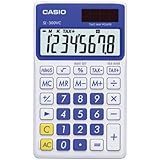
- Country Of Origin: China
- Product Type:Calculator
- Solar Powered
- 8-Digit Display Solar Wallet Calculator
- Big Display
If the contract is silent or ambiguous, the available facts do not establish that the client must pay the disputed time. Legal enforceability and worker travel-pay rules vary by jurisdiction and work arrangement; seek advice specific to those facts if the amount or relationship warrants it.
Quick Recap
Product prices and availability are accurate as of the date/time indicated and are subject to change. Any price and availability information displayed on Amazon at the time of purchase will apply.




