Before buying a preferred stock, verify the terms of its exact series in the latest prospectus and prospectus supplement, then assess whether its dividend conditions, priority, call terms, rate structure, issuer risk, and trading liquidity fit your needs. “Preferred” does not mean the dividend is guaranteed or that holders rank ahead of creditors.
Start with the exact security and its documents
Preferred-stock rights are specific to each series. Confirm the issuer, series name, ticker or depositary-share symbol, and the offering documents that apply to that security. A depositary share may represent only a fractional interest in an underlying preferred share. Do not assume two series from the same issuer have the same dividend, priority, call date, or voting rights.


Use the latest prospectus and any applicable supplement to establish the contract terms. A prospectus describes the issuer’s securities; it is not a recommendation to buy them.
Check how dividends work—and whether a missed payment can be lost
Write down the stated rate, the amount to which it applies, payment dates, and whether the rate is fixed or can reset. Then check whether dividends are cumulative or non-cumulative, whether the board must declare them, and whether legal, regulatory, or other conditions limit payment.
Outdated Drivers Are Slowing You Down
One free scan finds every outdated or missing driver and matches the right update for your exact hardware.Free scan · exact hardware matchPC Slower Than It Used to Be?
A free scan shows the junk files, broken settings and background clutter dragging Windows down - then fixes them in one click.Free scan · Windows 10 & 11#1 Best Overall
- Non-cumulative: If a dividend is not declared for a period, the holder may have no right to receive it later. An SEC-filed prospectus for a particular issuer explains that missed non-cumulative dividends need not be paid for that period, even if dividends are declared in the future.
- Cumulative: Unpaid dividends generally accrue as specified by the security’s terms. That does not ensure the issuer will have the ability to pay them.
A stated dividend rate is therefore not a guarantee of payment. “Cumulative” describes how missed dividends are treated under the contract; it does not remove issuer-payment risk.
Understand the security’s place in the capital structure
Find the liquidation preference and the series’ ranking relative to the issuer’s debt and other preferred securities. Check what the terms say about accrued dividends if the issuer is liquidated, and whether another preferred series has senior rights.
Preferred shares may have priority over common shares for specified distributions, but that priority does not put them ahead of creditors. Recovery depends on the issuer’s assets, liabilities, and the exact contractual ranking; the word “preferred” is not a promise that investors will recover their principal.
Measure call risk against the price you would pay
Look for the first date the issuer may redeem the shares, the redemption price, any premium, and any special circumstances that permit redemption. Compare the redemption price with the market price you would pay. If the shares trade above the price at which the issuer can call them, redemption could end expected income and leave you needing to reinvest at a lower yield.
Recommended Free Tools
A call date is not necessarily a date when redemption must occur. Read the conditions and calculate returns using the relevant call assumptions rather than treating the stated dividend rate as a guaranteed holding-period return.
Check fixed, floating, or reset-rate terms
For a fixed-rate security, consider how changes in market interest rates could affect its price. Fixed-income-like preferred shares can lose value when market rates rise, although price movements also depend on issuer credit and other market conditions.
Rank #4
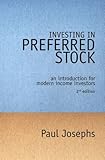
- Used Book in Good Condition
For a floating- or reset-rate security, identify the reset date, reference benchmark, spread, and any floor, cap, or other adjustment conditions. One SEC-filed Citigroup offering illustrates a fixed-to-floating structure in which a fixed initial period is followed by a rate tied to the five-year Treasury rate plus a spread. That is an example, not a standard term: check the formula for the actual series you are considering.
Assess issuer risk and trading conditions
Review the issuer’s financial condition and ability to meet its obligations. Credit ratings, when available, can be one input, but they are opinions and do not guarantee payment or principal recovery. Issuer deterioration can affect both the market price and the likelihood of distributions.
Also consider payment deferral or omission terms, interest-rate exposure, call and reinvestment risk, and liquidity. Preferred shares may be less liquid than common stock or government securities. Check current trading volume and bid-ask conditions for the specific security rather than assuming you can sell promptly at a fair price.
These factors interact: a high stated rate does not by itself compensate for weak payment capacity, an unfavorable call price, or difficulty selling. Current prices, yields, and liquidity change over time, so consult current market data before comparing specific securities.
Independent reader supportYour contribution helps us test, update, and keep practical guides available for everyone.Compare candidate series on the same terms
When evaluating more than one preferred stock, use the same checklist for each one. Avoid comparing stated dividend rates alone.
- Issuer and exact series; direct preferred share or depositary interest.
- Cumulative or non-cumulative dividends, declaration conditions, rate, and payment schedule.
- Fixed, floating, or reset structure, including benchmark and spread where applicable.
- Liquidation preference and ranking relative to debt and other preferred series.
- First call date, redemption price, call conditions, and price paid relative to that price.
- Issuer financial condition, available credit information, and payment risks.
- Current price, trading liquidity, and bid-ask spread.
Compare each security’s price with its liquidation preference and consider how an early call could affect the return. Any yield-to-call comparison depends on the purchase price and call assumptions; it is not a promised result.
Make the decision using the contract, not the label
Before placing an order, make sure you can explain when dividends are payable, what happens if they are missed, where the series ranks, and when and at what price the issuer can redeem it. Then decide whether the issuer risk, rate behavior, and ability to exit suit your circumstances. This framework is educational, not an issuer-specific buy or sell recommendation; preferred-stock terms and tax treatment vary, so check the documents and applicable tax guidance for your security and account.
Quick Recap
Product prices and availability are accurate as of the date/time indicated and are subject to change. Any price and availability information displayed on Amazon at the time of purchase will apply.




