The Tool Desk
Outbyte PC Repair FREEClear out junk files and repair common Windows errorsFree Scan →Outbyte Driver Updater FREEFix the driver behind crashes, sound loss and screen glitchesFind Drivers →For 2026, estimate the employee Social Security tax on a bonus or stock award by multiplying 6.2% by the part of the payment that fits under your remaining $184,500 Social Security wage base with that employer. Your remaining base is generally $184,500 minus your year-to-date Social Security wages from the same employer. The award’s type and taxable event determine whether, and when, it counts as Social Security wages.
Use this formula for the 2026 estimate
Estimated employee Social Security tax on the payment = 6.2% × the lesser of the payment’s Social Security wage amount or your remaining 2026 wage base with that employer.
As an Amazon Associate I earn from qualifying purchases.
To find the remaining wage base, subtract your year-to-date Social Security wages from that employer from $184,500. If the result is zero or less, the payment does not add employee Social Security tax under that employer’s wage-base calculation. If the payment is larger than the remaining base, only the portion that fits below the limit is subject to this tax.
The $184,500 limit and 6.2% employee rate apply to tax year 2026, according to IRS guidance. The calculation is for federal Social Security payroll tax, not state or local payroll taxes. It estimates the tax attributable to a particular payment; it does not determine your overall income-tax bill or settle every payroll question for your award.
#1 Best Overall

- LARGE EIGHT-DIGIT DISPLAY – Clear and easy-to-read 8-digit display, perfect for everyday calculations and ensuring accurate results in home or office settings.
- TAX & CURRENCY EXCHANGE FUNCTIONS – Effortlessly handle tax calculations and convert home currency to other currencies for easy financial management.
- GENERAL PURPOSE CALCULATOR – Ideal for a wide range of applications, from basic math to business and personal use, with memory keys for quick storage and recall.
- USER-FRIENDLY KEYBOARD – Easy-to-use layout, featuring square root, percent calculation, and simple functions that make it perfect for everyday tasks.
- COMPACT & PORTABLE DESIGN – Space-saving design that fits easily on any desk or in a briefcase, making it ideal for both home and office use.
Illustrative calculation
Suppose you have $180,000 in Social Security wages from an employer before receiving a $10,000 bonus in 2026. You have $4,500 of that employer’s wage base remaining: $184,500 − $180,000. The employee Social Security tax attributable to the bonus is $4,500 × 6.2%, or $279. The other $5,500 is above that employer’s annual wage base. This illustration assumes all $180,000 counts as Social Security wages and both amounts are paid by the same employer in 2026.
Find the wage amount and remaining limit before calculating
Do not estimate the taxable portion from your gross salary, total compensation, or the payment’s label alone. First identify the amount treated as Social Security wages, then check how much of the annual limit you have already used with the employer paying it. A bonus may be entirely covered, partly covered, or above the limit; the same is true of a stock award that counts as wages.
- Identify the employer and tax year. The annual limit applies separately in ordinary employment for each employer. Use the 2026 limit only for wages paid in 2026.
- Identify the award and the relevant event. For a bonus, that is generally the bonus payment. For stock compensation, it may be vesting, settlement, or option exercise depending on the award type and applicable rules.
- Determine the Social Security wage amount. Use the amount treated as Social Security wages for that payment, not automatically the award’s headline or grant-date value.
- Check year-to-date Social Security wages from that employer. Form W-2 box 3 reports Social Security wages for the year; payroll records can help you track them before year-end. Check the employer’s records and pay-period treatment if a number is unclear.
- Subtract that amount from $184,500. The result is the remaining 2026 wage base for that employer, but not less than zero for purposes of the estimate.
- Apply 6.2% to the smaller amount. Compare the award’s Social Security wage amount with the remaining base, and multiply the smaller figure by 0.062.
A simple worksheet is useful: write down the employer, payment date, award type, wage amount for the event, year-to-date Social Security wages immediately before payment, remaining base, and the resulting 6.2% deduction. Keep the worksheet with the pay statement so you can reconcile it to Form W-2 box 3 later. If payroll processes the payment in a different period than expected, redo the calculation using the period and wages payroll actually used.
Windows Errors? Fix Them Before They Spread
Repair common Windows errors and clear accumulated junk for a smoother, more stable PC - no reinstall needed.Free scan · no reinstallCrashes, No Sound, or Screen Glitches?
Random freezes, missing sound and display glitches usually trace back to one bad driver. Find and replace yours safely.Free scan · under a minuteIf your award is reported in a later payroll period than you expect, or your payroll records do not reconcile with your year-to-date total, ask payroll which amount it is using as Social Security wages. The calculation depends on that figure, not simply on the amount deposited into your account.
How bonuses affect Social Security tax
The IRS classifies bonuses as supplemental wages. That classification concerns payroll withholding methods; it does not create a special Social Security rate or exempt the bonus from Social Security tax. A bonus remains subject to Social Security, Medicare, and FUTA employment taxes under the applicable rules.
For qualifying separately identified supplemental wages, an employer may use a 22% flat federal income-tax withholding method when the employee’s supplemental wages paid by that employer during the calendar year do not exceed $1 million and the conditions for that method are met. That 22% is federal income-tax withholding—not the Social Security tax rate. Social Security remains 6.2% of covered employee wages up to the 2026 wage base.
Rank #2

- Profit margin calculation
- Quick and easy tax calculation
- Square root, sign change, and memory keys
- Attractive metallic design
- 12 digits
Withholding is a payroll prepayment, not necessarily your final federal income-tax liability. A bonus check may therefore show income-tax withholding that looks much larger than its Social Security deduction, or may have different withholding from regular wages. Do not use the income-tax withholding percentage to estimate the Social Security tax on the bonus.
Free tools Windows power users keep installed
One-click scans. No signup required.
The employer also pays a matching 6.2% Social Security tax on covered wages. That employer cost is not an additional deduction from your check and should not be added to your estimated employee tax. Your calculation concerns only the employee share.
Bonus examples at different wage levels
If year-to-date Social Security wages are $100,000 and the bonus is $5,000, the full $5,000 fits under the $184,500 limit. The estimated employee Social Security tax is $310. If year-to-date wages are $184,500 before a $5,000 bonus, the remaining base is zero and no additional employee Social Security tax applies to that bonus under that employer’s wage-base calculation. If year-to-date wages are $183,000 and the bonus is $5,000, only $1,500 is covered, producing a $93 estimate; the remaining $3,500 is above the annual base.
Identify the stock award before treating it as wages
“Stock award” can mean different arrangements, and the Social Security wage amount is not calculated the same way for all of them. Identify whether you have restricted shares, an RSU, a nonstatutory stock option, an incentive stock option, or an employee stock purchase plan option. Then determine the relevant vesting, settlement, or exercise event and the amount the IRS rules treat as wages.
| Award type | Relevant event or wage amount | Social Security treatment |
|---|---|---|
| Bonus | Bonus payment; use the amount treated as Social Security wages. | Supplemental wages remain subject to Social Security tax, subject to the remaining wage base. |
| Restricted shares | Generally, income inclusion occurs when service-related property becomes substantially vested; the amount is fair market value less what the employee paid. | Determine the wage amount at the applicable event and apply the remaining base. |
| RSU | Establish the award’s settlement and applicable wage event; award terms and facts matter. | Do not assume the grant date is the wage event. Apply the wage-base calculation to the amount treated as Social Security wages. |
| Nonstatutory stock option | At exercise, the spread is the fair market value of the stock received minus the amount paid for the option. | The IRS says the spread is reported in Form W-2 box 3 up to the Social Security wage-base limit. |
| Incentive stock option (ISO) | Option exercise or a later stock disposition; apply the statutory-option rules to the facts. | The IRS employer guide excludes remuneration from exercising an ISO, or from a disposition of stock acquired through exercise, from Social Security wages under its stated rules. |
| Employee stock purchase plan (ESPP) option | Option exercise or a later stock disposition; apply the statutory-option rules to the facts. | The IRS employer guide excludes remuneration from exercising an ESPP option, or from a disposition of stock acquired through exercise, from Social Security wages under its stated rules. |
The key comparison is not simply cash versus equity. Compare the award classification, the taxable event, the amount treated as wages, whether that amount is included in Social Security wages, and the remaining wage base with the employer. Two awards with the same market value can produce different Social Security results if their classifications or events differ.
Do these 3 things before closing this tab:
1Clear out junk files and repair common Windows errors2Fix the driver behind crashes, sound loss and screen glitches3Repair Windows errors before they cause bigger problemsNonstatutory options: use the exercise spread
For a nonstatutory option, the 2026 IRS employer guide describes the reportable amount as the excess of the stock’s fair market value at exercise over the amount paid for the option. The employer reports that amount in Form W-2 boxes 1, 3 (up to the Social Security wage-base limit), and 5, and in box 12 with code V. For your estimate, use the spread treated as wages and check how much of the employer’s wage base remains.
Rank #3
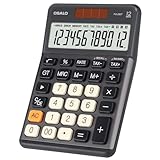
- 【Advanced Tax & Business Functions】Quickly set tax rates with dedicated TAX+/- keys and simplify budgeting via GT, MU, and memory keys (MRC/M+/M-). These tools enable seamless tax calculations and customizable rate settings for precise, tailored results—ideal for accountants, business owners, and professionals requiring accurate tax computations.
- 【Visualized Operation Symbol Display】When you would like to calculate the number, it will express the symbol (plus, subtract, multiply, or divide) on the screen. It can help you see the operation steps when you operate continuously.
- 【Efficient Dual Power System】The calculator uses high conversion rate solar panels, and solar power can be used in well-lit areas. At the same time, we provide a matching battery double safe uninterruptible power supply. The calculator will shut down automatically after 8 minutes without operation.
- 【Small Size, Large Display & Premium Build】It features a large LCD display with a 30° angled screen for clear visibility, paired with a high-grade metal panel and durable ABS buttons. The ergonomic button curvature aligns with natural finger movements, reducing errors and enhancing efficiency.
- 【Durable Construction and Portability】 Made of high-grade metal panel and durable ABS buttons, this 12-digit calculator is lightweight yet durable, capable of withstanding multiple impacts from desktop height. The large, clear LCD Display offers crisp, easy-to-read numbers, minimizing eye strain and ensuring professional-grade performance whether at home, in the office, or while traveling.
For example, if the exercise spread is $20,000 but only $8,000 remains in the employer’s wage base, the Social Security estimate is $496, not $1,240. The remaining $12,000 does not create additional Social Security tax for that employer once the 2026 limit is reached. This example assumes the full spread is the wage amount and that the exercise is processed by the same employer whose year-to-date wages you reviewed.
ISOs and ESPP options: do not substitute nonstatutory-option treatment
The IRS employer guide treats incentive stock options and employee stock purchase plan options differently. Under the guide’s stated rules, remuneration from exercising either kind of statutory option, or from disposing of stock acquired through exercise, is not included in Social Security wages. Do not apply the nonstatutory-option spread rule to an ISO or ESPP option just because both arrangements involve an option to buy stock. If you are uncertain which type your plan grants, check your award documents or ask the plan administrator or payroll department.
Restricted shares and RSUs: establish the taxable event
For service-related property that is nontransferable or subject to a substantial risk of forfeiture, the general rule in IRS Publication 525 is that income inclusion occurs when the property becomes substantially vested. The amount is its fair market value less anything the employee paid. That general restricted-property rule is not a reason to treat every RSU or stock award as if it had the same event or wage amount: identify whether the award is restricted shares or an RSU, and determine the applicable vesting or settlement event from the award facts.
Recommended Free Tools
Some qualifying employees and grants may meet the statutory conditions for a section 83(i) election. The election can defer federal income-tax recognition, but the IRS says it does not change Social Security, Medicare, or FUTA tax treatment. An 83(i) election therefore does not, by itself, defer FICA taxes or remove an otherwise applicable Social Security wage amount from the calculation. Confirm the award’s actual payroll treatment rather than assuming an election changed the Social Security event.
Separate Social Security from Medicare and income-tax withholding
Payroll deductions can include several federal taxes with different rates and limits. For 2026, the employee and employer Social Security rates are each 6.2%, and the Social Security wage base is $184,500. Medicare is 1.45% for the employee and 1.45% for the employer, with no wage base: the IRS states that all covered wages are subject to Medicare tax.
Additional Medicare Tax is a separate 0.9% employee tax, with no employer match. An employer begins withholding it when wages that employer pays to an employee exceed $200,000 during the calendar year, regardless of the employee’s filing status. That employer withholding trigger is not necessarily the employee’s final Additional Medicare Tax threshold: final liability depends on filing status and total Medicare wages.
Rank #4

- 【Pocket Size Calculator】This Pocket calculator weighs only 90 g and measures 13.5 x 9.8 x 2.3 cm,light and slim, which is only the size of the pocket.
- 【Visualized Operation Symbol Display】When you would like to calculate the number, it will express the symbol (plus, subtract, multiply or divide) on the screen. It can help you seeing the operation step when you operate continuously.
- 【Solar Power Calculator】The calculator uses high conversion rate solar panels,solar power can be used in well-lit areas.At the same time, we provide matching battery double safe uninterruptible power.The calculator will shut down automatically after 8 minutes without operation.
- 【ABS Engineering Plastic】This 12 digits calculadora is made of ABS high strength engineering plastics, light weight but durable. It can withstand the impact of falling on the height of the desktop for several times.
- 【30°Angled Desktop Calculator】 Screen of this desktop calculator is just opposite your sight, make all calculation easy to read. Separated big buttons, made of ABS plastic, match with your fingers’ curve, make your every press more accurate and work more efficient.
These distinctions matter when reviewing a bonus or equity paycheck. The Social Security amount can stop after the employer’s wage base is reached, while Medicare tax continues on covered wages. Federal income-tax withholding—such as a qualifying 22% supplemental-wage method—is another separate calculation. None of those withholding amounts, by itself, tells you the full final income-tax liability.
Multiple employers can change the year-end picture
The Social Security wage base is applied per employer in ordinary employment. If you work for more than one employer in 2026, each employer may withhold Social Security tax on wages it pays, up to the wage base under its own payroll calculation. Consequently, separate employers may each withhold tax even if your combined wages across employers exceed $184,500.
For a bonus or stock award, calculate the remaining base using wages from the employer paying that particular amount. Do not subtract wages from another employer when estimating that employer’s payroll calculation. An employee with multiple employers may be eligible to claim excess Social Security tax withheld on an individual return; the amount and filing procedure depend on the taxpayer’s records and circumstances.
For instance, wages of $150,000 from Employer A do not reduce the remaining base that Employer B calculates from its own payroll records. Employer B may therefore withhold Social Security tax until its wages reach $184,500, even though your combined wages have already passed that amount. Preserve each Form W-2 and pay record so any potential excess withholding can be reviewed accurately.
Common estimation mistakes
- Using the wrong year’s limit. The wage base changes by tax year. This article’s $184,500 limit and 6.2% rate are specifically for 2026.
- Applying 6.2% to the entire headline award. Use only the amount treated as Social Security wages and only the portion below the employer’s remaining base.
- Confusing box 1 with box 3. Federal income-tax wages in Form W-2 box 1 are not automatically the same as Social Security wages in box 3.
- Counting another employer’s wages. The ordinary wage-base calculation is per employer, so use the paying employer’s year-to-date Social Security wages.
- Treating every option as nonstatutory. ISOs and ESPP options have different Social Security treatment under the IRS employer guide.
- Assuming grant date equals taxable date. Restricted property and RSUs require identification of the applicable vesting or settlement event.
- Calling the 22% method a Social Security rate. It is a federal income-tax withholding method for qualifying supplemental wages.
- Adding the employer match to your deduction. The employer’s matching 6.2% is a separate employment-tax cost.
Check your estimate against payroll records
- Use Social Security wages, not just gross pay. Form W-2 box 3 is the year-end reference for Social Security wages; before the W-2 is issued, consult payroll records.
- Match the record to the employer. The remaining-base calculation uses year-to-date wages from the employer paying the bonus or award.
- Confirm the award classification. A nonstatutory option, ISO, ESPP option, restricted share, and RSU can have different events and Social Security treatment.
- Check the correct tax year. The $184,500 base and 6.2% employee rate in this article are for 2026, not a timeless figure.
- Ask payroll about differences. If the paycheck or Form W-2 does not match your calculation, ask how the employer identified the wage amount and applied the limit. A personal estimate cannot establish how a particular plan or payroll system handled an award.
Keep the award agreement, exercise or vesting confirmation, pay statement, and year-to-date wage record together. Those documents show which event occurred, what amount payroll treated as wages, and how much of the wage base was available. If payroll later corrects the wage amount, update the estimate and retain both the original and corrected records.
What’s actually slowing this PC down?
Pick the symptom - the matching free tool is one click away.
This method estimates federal employee Social Security tax based on the facts and IRS rules described here. It does not determine state or local payroll taxes, make an individualized tax determination, or replace review of your award plan and payroll records.
Best Value

- Keys That Feel Right: Smooth, well-spaced keys with natural resistance allow you to move quickly and confidently—no re-learning or finger fatigue.
- Sharp, Color-Coded Printing: Prints 2.5 lines per second in black for positive and red for negative values—quiet, crisp, and easy to read at a glance.
- Big, Bright Display You Can Trust: The 12-digit fluorescent screen is clear from any angle, so totals are easy to catch without squinting or second-guessing.
- Designed for Speed and Comfort: Ergonomic key shapes follow your fingers’ natural motion—helping you type faster and make fewer mistakes.
- Built to Last, Easy to Maintain: Our heavy-duty design withstands daily use, featuring standard ribbons and paper rolls that are simple to replace.
Frequently Asked Questions
How much Social Security tax will I pay on a 2026 bonus?
Multiply 6.2% by the lesser of the bonus amount treated as Social Security wages or your remaining $184,500 wage base with the employer paying the bonus. Subtract that employer’s year-to-date Social Security wages from $184,500 first. If no base remains, the bonus adds no employee Social Security tax under that employer’s calculation.
Is a bonus subject to Social Security tax?
Yes. The IRS classifies a bonus as supplemental wages, but supplemental status does not exempt it from Social Security tax or create a different Social Security rate. The employee rate remains 6.2% on covered wages up to the 2026 wage base.
Are RSUs subject to Social Security tax?
The answer depends on the RSU’s terms and the event payroll treats as wages. Establish the settlement or other applicable wage event and the amount included as Social Security wages, then apply the remaining wage-base calculation. Do not assume the grant date is the taxable event.
Quick wins for a faster PC:
Clear out junk files and repair common Windows errorsFree Scan →Scan for outdated or missing drivers - takes under a minuteDriver Scan →Repair Windows errors before they cause bigger problemsFix Now →Are incentive stock options subject to Social Security tax?
Under the IRS employer guide’s stated rules, remuneration from exercising an incentive stock option, or from disposing of stock acquired through that exercise, is not included in Social Security wages. Do not use nonstatutory-option treatment for an ISO.
What is the Social Security wage base for 2026?
The 2026 Social Security wage base is $184,500. Only covered wages up to that amount are subject to the 6.2% employee Social Security tax for a particular employer’s ordinary payroll calculation.
Does the 22% bonus withholding rate mean I pay 22% Social Security tax?
No. The 22% figure is a possible federal income-tax withholding method for qualifying separately identified supplemental wages when the employer’s conditions are met and the employee’s supplemental wages from that employer do not exceed $1 million. Social Security remains 6.2% up to the wage base.
Why is Social Security still withheld after I passed $184,500 in total wages?
The wage base is generally applied separately by employer. If you have multiple employers, each may withhold Social Security tax on its own wages up to $184,500, even when your combined wages exceed that amount. Keep all Forms W-2 and records because excess withholding may be relevant on your individual return.
Does a section 83(i) election defer Social Security tax on equity?
No. The election may defer federal income-tax recognition for qualifying employees and grants, but the IRS says it does not change Social Security, Medicare, or FUTA tax treatment. It does not, by itself, defer FICA taxes.
The Bottom Line
For 2026, start with the award’s actual Social Security wage amount, subtract the paying employer’s year-to-date Social Security wages from the $184,500 wage base, and multiply the smaller remaining amount by 6.2%. Confirm the award type and taxable event first—especially for options, restricted shares, and RSUs—and keep Social Security separate from Medicare and federal income-tax withholding.
Quick Recap
Product prices and availability are accurate as of the date/time indicated and are subject to change. Any price and availability information displayed on Amazon at the time of purchase will apply.




