Finishing a basement is worth the cost when the household will use the space often for years and the project can be completed without hiding moisture or code problems. It is not automatically a profitable resale investment: national studies report roughly 70% to 71% cost recovery, but local prices, scope, construction quality and buyer preferences can produce very different results. Make the decision with an itemized local estimate, a moisture inspection, confirmed permit requirements and nearby comparable sales—not a national average alone.
Start with the two values you are actually buying
A basement renovation has two separate payoffs. Use value is what the finished space contributes while you own the home: a family room, office, playroom, guest area, exercise space or storage that is easier to use. Resale recovery is the portion of the project cost that a future buyer may reflect in the sale price. Those numbers can differ substantially.
As an Amazon Associate I earn from qualifying purchases.
If you expect to remain in the home for many years and will use the room weekly, a project can be sensible even when the sale does not recover every dollar. If you plan to sell soon, personal enjoyment has less time to offset the unrecovered cost, so local comparable sales and a conservative resale estimate should carry more weight.
Do not assume below-grade space will be counted exactly like above-grade living area by an appraiser, assessor or buyer. Treatment depends on local rules, finished details and the particular property. Obtain property-specific advice before relying on a square-footage or tax assumption.
#1 Best Overall

- Semiconductor dehumidifiers use thermoelectric cooling to remove moisture from the air. They create a drier, more comfortable environment by reducing humidity and improving air quality.
- Our home dehumidifier features intelligent auto-shutoff, automatically powering down when the water tank is full. Set it and forget it, knowing your dehumidifier is working efficiently and safely, giving you true peace of mind.
- Our dehumidifier features a captivating 7-color ambient light, allowing you to bathe your room in a spectrum of soothing hues. Choose from a calming blue, energizing green, romantic red, and more – easily select the perfect color to create your desired atmosphere and enhance your living space. Dehumidify in style and set the perfect mood, every time.
- Sleep Mode creates the perfect sleep sanctuary. The dehumidifier's atmosphere lights automatically turn off, and noise fades to a whisper. Experience truly undisturbed dehumidification for a night of perfect rest.
- Elevate your home's comfort and style with our sleek and compact dehumidifier. Designed to seamlessly blend into any space, from the living room and bedroom to the bathroom, basement, and even your RV. Its modern aesthetics and space-saving footprint make it the perfect dehumidification solution for every corner of your home.
What finishing a basement can cost
NerdWallet reported an approximate $32,000 average for finishing a basement in an article updated February 26, 2026. Its reported range was about $2,800 to $100,000 or more. The spread reflects differences in materials, labor, permits, appliances and the work a particular basement needs; it is evidence of uncertainty, not a budget for your house. See the source at NerdWallet’s 2026 cost guide.
| Scope choice | Typical work to price | Financial question |
|---|---|---|
| Basic open finish | Moisture work if needed, framing, insulation, code-compliant electrical, lighting, walls, ceiling and durable flooring | Will the household use one flexible room often enough to justify the cost? |
| Partial finish | A finished zone while retaining utility, storage, mechanical or workshop areas | Can you capture most of the daily-use benefit with less expense and easier future access? |
| Expanded finish | Multiple rooms, extensive HVAC or electrical changes, upgraded windows, bathroom, bedroom or kitchenette | Will the added rooms be used, and do local code and market demand support the extra investment? |
Request each bid as a line-item estimate. Separate labor, materials, permits, design, moisture remediation, electrical, plumbing, HVAC, insulation, finishes, cleanup and allowances. An allowance is not a fixed price; ask what happens if the selected fixture or material costs more.
Use resale benchmarks correctly
NerdWallet’s 2026 summary of the 2025 Cost vs. Value Report describes roughly 70% cost recovery for a finished basement. Opendoor’s May 18, 2026 discussion of 2025 Cost vs. Value and NAR remodeling estimates reports about 71% national recovery and a wide regional spread. The figures are national benchmarks, not an appraisal or a promise about your sale. Sources: NerdWallet and Opendoor.
Use those percentages only as a rough planning reference. A local buyer may value a dry, bright recreation room differently from a basement divided into small rooms, and a market with abundant finished lower levels may reward the feature less than a market where such space is scarce. Condition, workmanship, ceiling height, natural light, access, heating and cooling, parking, neighborhood demand and the time of sale all matter.
Rank #2
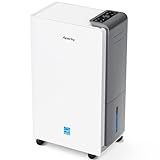
- 【ENERGY STAR 25 ≠ ENERGY STAR Most Efficient 2025】Don't fall for competitors' word games. With only 2.6% of ENERGY STAR models earning "Most Efficient 2025" title, these options are exceptionally rare on the market. RHEA-001 is one of the few to truly hold this top-tier certification. Many brands use misleading phrases like "Energy Star Efficient 25" or "Energy Star 25" to imply a standard they haven't met. Choosing them is a risk.With AEOCKY, you get verified performance and the peace of mind of authentic, top-tier efficiency.
- 【True ENERGY STAR Most Efficient 2025 Compressor Dehumidifier for homes (5500 sq.ft)】80 pint/day in the humid Mid-summer (95℉, 95%RH); 56 pint/day in the warm, damp basement (86℉, 80%RH)! Among all ENERGY STAR dehumidifiers, only an elite 2.6% earn the ENERGY STAR "Most Efficient 2025" certification. It is this top-tier capability that allows the RHEA-001 to completely outperform its competitors in both performance and energy efficiency.(Dehumidification capacity≠Water Tank Volume)
- 【Top-Rated Efficiency - Save More Energy】Breaking industry barriers, one of the first brands to achieve ENERGY STAR Most Efficient 2025. Compared to non-Energy Star inefficient products,RHEA-001 efficiency is increased by ≤50%, saving ≤1000 on electricity bills annually (running 24/7 year-round). Energy efficiency is the domain of absolute dominance for our RHEA-001. This relentless pursuit of technological innovation in efficiency is the ironclad moat that has established AEOCKY as the leading dehumidifier brand.
- 【Powered by Exceptional Core Components】AEOCKY utilizes Cutting-Edge High-Efficiency Rotor Compressor Pro+ to RHEA-001, whose core components evaporator and condenser adopt“3+2”structure with one more row than others. Never use aluminum tubes, we unswervingly use 7mm diameter high-tooth internal thread pure copper pipes.We also equipped with advanced blue hydrophilic aluminum foil, achieving breakthrough heat exchange efficiency meeting the most rigorous energy efficiency standards in history.
- 【Cutting-Edge Smart Humidity Control for Unprecedented Precision】Newly designed architecture breaks industry's decade-long lack of innovation, enabling it have high-performance chip. Millisecond-level dynamic detection keep humidity within ideal range,with full-stack proprietary humidity compensation algorithm ensuring RHEA-001 exceeds industry standard for humidity accuracy.Exclusive power-off memory function can be used with smart socket, automatically resuming function after power restoration, suitable for smart home or special area like RV.
Ask a local real-estate professional or appraiser to examine nearby homes with finished and unfinished basements. Treat an informal opinion as an estimate, not a guaranteed sale price. The comparison should use similar neighborhoods, lot and home sizes, condition, bedroom and bathroom counts, and recent sales whenever possible.
Step 1: Define the problem the basement must solve
Write the use case before looking at finishes. Identify who will use the space, how often, and for how many years. A room that solves an immediate shortage can have high personal value even if its resale contribution is uncertain.
- Family space: Decide whether the layout supports seating, play, media equipment and safe supervision.
- Home office: Check natural light, sound control, internet access, heating and a dedicated electrical circuit if needed.
- Guest or bedroom use: Confirm emergency egress, ceiling, heating, smoke and carbon-monoxide protection, and all local bedroom requirements before planning a sleeping room.
- Bathroom or kitchenette: Price plumbing routes, drainage, ventilation, waterproofing and permits separately; these additions can change the project category.
- Storage or hobby use: A moisture-safe, partially finished area may deliver the benefit without enclosing every wall or blocking mechanical equipment.
Estimate realistic use rather than aspirational use. Note expected hours per week, the number of years before a possible move and which household members will actually choose the basement over existing rooms.
Quick wins for a faster PC:
Clear out junk files and repair common Windows errorsFree Scan →Fix the driver behind crashes, sound loss and screen glitchesFind Drivers →Step 2: Make moisture a gate, not a finishing detail
Do not frame, insulate or drywall over an active moisture problem. The U.S. Department of Energy identifies two broad sources: water intrusion and condensation. Its Building America guidance states, “Adding insulation to a basement with existing moisture problems will only make them worse.” Review the technical guidance at the Department of Energy’s Building America Best Practices Series, Volume 12.
Rank #3

- Efficient 34 Pint Dehumidifier for 2,500 Sq. Ft: Enhance your living space with this powerful dehumidifier, it lowers humidity to 30% RH—more effective than standard 40% RH models. Designed to remove up to 34 pints of moisture daily (tested at 95°F/90% RH), striking the perfect balance between high efficiency and reliable performance. Ideal for basements, bedroom, bathroom, living rooms. It solves persistent dampness, muggy air, and stuffiness, transforming your home into a comfortable & healthier environment
- 4 Pre-Set Modes & Intelligent Humidity Control: Control your Home environment with 4 easy pre-set modes (DEHU/Dry/CONTI/Sleep), accessible via a simple tap. DEHU maintains ideal daily humidity; Dry Mode speeds up laundry drying on humid days; CONTI delivers non-stop dehumidification for basements. Sleep Mode ensures quiet rest; Intelligent humidity control function on DEHU mode: Automatically starts and stops based on preset humidity levels, maintaining a comfortable range at all times—saving you effort and electricity
- Two Drainage Options with Auto-Stop Protection: Choose from two convenient drainage options. 1.The 0.52-gallon tank (for occasional use) has a clear full indicator and auto-stop to prevent overflow and water damage. 2.For hands-free long-term use (ideal for basements), use the included 6.5 ft drain hose, This versatile design not only offers peace of mind for daily use but also excels in long-term humidity control, keeping your Basement fresh and dry!
- Quiet Experience and Portable Design: Operate quietly at 36 dB—softer than background noise—without disrupting sleep, work, or relaxation. This portable Dehumidifier (11.02*7.68*15.20 IN) has 360° caster wheels and hidden handles, letting you move it effortlessly between rooms with no heavy lifting, delivering fresh dry air wherever needed. It can easily fit into any decor and effortlessly match the furniture you already have. Savor the advantages of having a fashionable and very effective dehumidifier in your home
- Easy to Use & Intelligent Feature - This home dehumidifier features a smart touch screen for intuitive control, allowing you to easily customize humidity levels between 30%-80%, set a 24-hour timer, and switch modes with a single tap, while built-in auto-defrost ensures reliable performance in cold basements and storage areas, and the auto-restart function guarantees uninterrupted operation after power outages, delivering true set-and-forget convenience for year-round comfort
Warning signs to check
- Foundation cracks that leak, standing water or damp floors
- Damp walls, efflorescence or water marks
- Mildew, visible mold, musty odors or musty carpeting
- Wet or decaying wood, damp insulation or damaged finishes
- Recurring condensation or unusually high humidity
- Water that visibly drains from walls onto the floor
Document when the symptoms appear, including after storms or seasonal temperature changes. A dehumidifier can help control elevated humidity after the source is understood, but it does not repair leaks, standing water or failed drainage.
Correct the source in the right order
- Obtain an assessment from a qualified professional familiar with the building and local conditions when signs are present.
- Identify whether the cause is exterior water entry, plumbing, drainage, groundwater, air leakage, condensation or a combination.
- Repair water intrusion and drainage defects. If water visibly drains from walls onto the floor, DOE guidance calls for an interior drainage system before other steps.
- Air-seal relevant openings and allow the area to dry.
- Only then design insulation, framing and finishes appropriate for the basement’s moisture conditions.
Waterproofing or drainage work belongs in the estimate before cosmetic work. If a contractor proposes covering a damp wall without explaining the source and remedy, pause the project and seek another assessment.
Step 3: Set a scope that can be priced and inspected
Create a simple plan showing finished rooms, retained storage, mechanical equipment, access panels, doors, windows, outlets, lighting, supply and return registers, plumbing fixtures and emergency exits. Keep utility shutoffs, cleanouts, electrical panels, furnaces, water heaters and other service points accessible.
Recommended Free Tools
Compare scope deliberately
- Open room: Usually the simplest way to gain usable area while preserving flexibility.
- Partial finish: Separates a finished living zone from utility or storage space and can reduce the number of walls and doors.
- Bedroom: Adds egress, ventilation, smoke and carbon-monoxide, ceiling and other code questions that must be confirmed locally.
- Bathroom: Adds supply, waste, venting, waterproofing and fixture costs, plus inspection requirements.
- Kitchenette or wet bar: Adds plumbing, electrical and appliance decisions and may affect insurance or future maintenance.
Ask every contractor to price the same written scope. Require separate amounts for known work and allowances for selections not yet made. Ask what is excluded: engineering, asbestos or lead testing where relevant, structural repairs, utility upgrades, painting, flooring preparation, permits, inspections and disposal.
Rank #4

- 【80 Pint Capacity for Up to 5,000 Sq.Ft Spaces】Quickly removes excess moisture from basements, bathrooms, bedrooms, RVs, and other large living areas, delivering 80 pints per day (95°F, 90% RH).conditions. Designed as a powerful dehumidifier for basement, home, and large spaces, it helps eliminate damp air, condensation—and pet-related odors caused by excess humidity. Even during humid seasons, it works continuously to maintain a dry, comfortable, and healthier indoor environment.
- 【90° Auto Swing Airflow for Even Coverage】Distributes dry air evenly across the room, helping cover every corner and reduce uneven humidity levels. The 90° auto swing function enhances air circulation and drying efficiency, bringing a level of airflow distribution typically not available in standard models. It delivers balanced airflow without direct drafts, creating a more comfortable indoor environment.
- 【30%–80% Smart Humidity Control for Flexibility】 Unlike many standard dehumidifiers limited to a minimum of 40% RH, this unit can reach as low as 30%, offering a wider and more flexible control range. Engineered with advanced technology, it adapts to real-world conditions and maintains a stable, comfortable humidity level across different environments—including basements, bathrooms, bedrooms, closets, RVs, and other high-humidity areas.
- 【Energy Star Certified for Efficient Operation】Engineered for consistent, real-world performance, this ENERGY STAR certified dehumidifier delivers reliable results across everyday conditions—not just controlled test settings. It helps minimize unnecessary energy use while maintaining strong dehumidification efficiency, supporting lower operating costs over time.
- 【AI-Smart Protection System for Reliable Performance】Equipped with intelligent sensing technology, this dehumidifier detects frost buildup and abnormal operation in real time. It automatically activates auto defrost and overload protection to maintain stable performance and help prevent potential damage. With AI-assisted monitoring, it optimizes operation to reduce unnecessary energy use while ensuring reliable performance in low-temperature and extended-use environments.
Step 4: Confirm permits, inspections and safety rules
Permit and inspection requirements depend on the municipality, the existing construction and the planned use. Before signing a contract, contact the local building department and describe the work precisely: finishing walls and ceilings, adding circuits, changing HVAC, installing plumbing, creating a bedroom, altering windows or adding a bathroom.
- Ask which permits are required and who is responsible for obtaining them.
- Request the inspection sequence and whether rough electrical, plumbing, framing, insulation and final inspections apply.
- Confirm emergency egress dimensions and window-well requirements for any sleeping room or habitable area where local rules require them.
- Ask about ceiling height, stair handrails, fire separation, smoke and carbon-monoxide alarms, damp-location electrical rules, insulation and ventilation.
- Keep permit records, inspection approvals, plans, invoices and product warranties for future buyers and repairs.
National cost articles cannot substitute for this local confirmation. Do not represent an unpermitted room as code-compliant living area without advice from the authority having jurisdiction.
Independent reader supportYour contribution helps us test, update, and keep practical guides available for everyone.Step 5: Build a decision-quality budget
Use the contractor’s itemized estimate, then add costs that are easy to overlook: design, testing, temporary storage, moving belongings, upgraded electrical service, HVAC balancing, waterproofing, drainage, dehumidification, window wells, stair changes, access doors, sound control, cleanup and a contingency for concealed conditions. Keep the contingency visible rather than hiding it in a vague allowance.
What’s actually slowing this PC down?
Pick the symptom - the matching free tool is one click away.
Separate one-time construction cost from ongoing cost. A larger finished area may require more heating, cooling, dehumidification, cleaning, replacement flooring and future repairs. Include financing interest if you will borrow, and compare that cost with the years of expected use.
Best Value

- 【Reduce humidity - Enhance comfort】:Massive Capacity + Wide Coverage. This dehumidifier has dehumidification capacity ranging 45- 80 pints—outperforming standard units while covering 4,500 sq. ft. of living space. Great dehumidifier for basements, large house, garages, bedroom, bathroom and gyms where excess humidity triggers cause unpleasant odors and discomfort. The result? A noticeably drier, fresher, and more comfortable environment for your entire family.
- 【90° Adjustable Airflow for Targeted Drying】:Dehumidifier 90° adjustable outlet gives you precise control over where dry air goes—direct it into stuffy corners to eliminate trapped moisture, angle it upward to avoid direct skin contact, or point it straight at wet laundry for faster drying. With drying mode activated, this dehumidifier for bathroom becomes a powerful clothes‑After each shower or watering, it can effectively dry the towels and solve the problem of slippery floors.
- 【Library‑Level Quiet Operation】:At just 40 dB—quieter than a library—this unit lets you work, rest, or sleep without distraction. Great ideal choice among dehumidifiers for home use. The self‑developed rotary compressor saves 55% internal space for smoother airflow, while upgraded ventilation ducts minimize operational noise. One‑tap sleep mode further reduces sound to near‑silent levels, ensuring uninterrupted rest throughout the night.
- 【Smart Sensors with Auto Defrost & Overload Protection】: Dehumidifier built-in intelligence monitors coil frosting and system stress in real time. When risks are detected, the unit automatically activates defrost cycles and overload cutoffs—preventing breakdowns and extending component life. This makes it a reliable dehumidifier for basement, garages, and other high-humidity zones where continuous run-time is common.
- 【Energy Star Certified for Maximum Savings】: Meeting strict Energy Star standards, this efficient dehumidifier with drain hose option delivers powerful dehumidify while consuming minimal electricity. Reduced energy usage lowers your monthly bills and reduces wear on internal components—giving you long-term durability and immediate cost savings.
A simple personal break-even check
- Write the all-in project cost, including moisture work, permits, design, financing and contingency.
- Estimate the annual personal-use value: what comparable rental, office, recreation or storage space would cost you, adjusted for the fact that this is your own home.
- Multiply that annual value by the realistic years of use.
- Subtract expected ongoing operating and maintenance costs.
- Add a conservative, locally informed resale contribution only if a professional comparison supports it.
- Compare the result with alternatives such as a partial finish, moving to a larger home or leaving the basement unfinished.
This is a planning framework, not an appraisal. It prevents a national recovery percentage from being mistaken for your own break-even point.
Step 6: Compare the three practical choices
| Choice | Upfront commitment | Best fit | Main trade-off |
|---|---|---|---|
| Full finish | Highest; may include multiple rooms, plumbing and extensive systems work | Households with a clear, frequent use and a long ownership horizon | More cost, disruption, maintenance and potential code complexity |
| Partial finish | Moderate; concentrates money on the area used most | Owners wanting comfort while preserving storage, utilities and future flexibility | Less finished area and a less uniform presentation at resale |
| Moisture-safe improvement without full finish | Lower or staged; may include drainage, air sealing, lighting, paint or durable flooring where appropriate | Owners uncertain about use, budget or timing, or those addressing moisture first | Does not provide a finished living room and may require later work |
| Do nothing for now | No renovation outlay | Owners with low expected use, a short selling horizon or unresolved structural and moisture questions | Continues the current inconvenience and may defer necessary repairs |
Evaluate each choice on upfront and financing cost, personal use, moisture risk, maintenance, permits and inspections, local resale contribution, disruption and future repair access. A full finish is not automatically superior if it consumes money on rooms the household will rarely enter.
When a finished basement is more likely to make sense
- The basement is dry or the moisture source can be corrected with a documented plan.
- The household has a specific use that will occur regularly for several years.
- The layout, ceiling height, light, access and systems can support that use without disproportionate structural work.
- Comparable nearby homes show buyer demand for finished lower-level space.
- The budget includes permits, inspections, maintenance and a realistic contingency without endangering emergency savings or essential repairs.
- The owner can tolerate construction disruption and preserve access to utilities.
When postponing or scaling back is the safer choice
- There is active leaking, standing water, mold, decaying framing or recurring condensation with no diagnosed cause.
- The project depends on an optimistic sale price or an assumed dollar-for-dollar return.
- A contractor will not provide a written scope, permit responsibility or inspection plan.
- The finished rooms would be rarely used, while a partial finish would solve the actual problem.
- The work would consume funds needed for roof, foundation, electrical, plumbing or other essential repairs.
- You expect to sell soon and local comparable evidence does not show a meaningful buyer preference for finished basements.
Questions to ask contractors and local professionals
- What moisture evidence did you find, and what exact repair prevents recurrence?
- Which parts of the quote are fixed prices, allowances or exclusions?
- Who obtains each permit, schedules inspections and corrects failed work?
- How will future access to shutoffs, cleanouts, panels and mechanical equipment be maintained?
- What insulation and air-sealing approach is appropriate after the moisture issue is resolved?
- How will HVAC capacity, humidity and ventilation be handled?
- What emergency egress and fire-safety requirements apply to each proposed room?
- What warranty covers workmanship, waterproofing and installed equipment, and for how long?
- Can you provide references for comparable basement projects and proof of insurance?
For resale guidance, ask an appraiser or real-estate professional to identify recent comparable sales and explain how finished lower-level space was described and adjusted. For moisture or structural questions, use a qualified specialist rather than relying on a cosmetic contractor’s assurance.
A practical decision sequence
- Describe the household problem and the space’s expected use.
- Inspect for moisture and structural warning signs; stop the finish plan until active problems are diagnosed and corrected.
- Confirm local permits, inspections, egress and safety rules.
- Choose full, partial, staged or no finish before requesting bids.
- Obtain multiple itemized estimates based on the identical written scope.
- Compare the all-in cost with realistic years of use, ongoing expenses and local comparable sales.
- Review financing and emergency-reserve effects before committing.
- Sign only a contract that identifies scope, price structure, schedule, permits, inspections, change orders and warranty terms.
The decision is strongest when the basement solves a real household need, the building is made dry before it is enclosed, and the budget remains acceptable even if resale recovery is below the national benchmark.
Quick Recap
Product prices and availability are accurate as of the date/time indicated and are subject to change. Any price and availability information displayed on Amazon at the time of purchase will apply.




