What’s actually slowing this PC down?
Pick the symptom - the matching free tool is one click away.
A workable budget needs three things: your real take-home income, a complete list of expenses—including irregular bills—and a routine for comparing actual spending with the plan. Start with this formula:
Take-home income − planned expenses − minimum debt payments − savings and sinking funds − extra debt or goal contributions = amount remaining
As an Amazon Associate I earn from qualifying purchases.
A positive result gives you money to assign to goals or flexibility. A zero result can be a successful zero-based budget. A negative result means the plan must change; it is not a personal failure. The steps below will help you build a first-month budget, account for bill timing, choose a method that fits your situation, and keep the plan useful after the first month.
How to Create a Budget: Easy Ways to Manage Your Finances
What a budget is—and is not
A budget is a forward-looking plan for allocating money before you spend it. It connects the income you expect to receive with the bills, purchases, savings, debt payments, and goals you want that income to cover. Consumer.gov describes a budget as a written plan for how money will be spent each month and notes that it can help prevent running out of money, save for goals, and prepare for emergencies.
#1 Best Overall

- Effective Budget Plan Book – Take control of your finances with the SUNEE budget account book. This all-in-one budget planner allows you to plan and track your income, expenses, savings, and financial goals. Its intuitive layout and easy-to-use sections help you stay organized and make smart decisions to reach financial success. Our financial planner also included a comprehensive guidebook with valuable tips and instructions to help you get the most out of your budgeting planner.
- Full-Page Calendars – Each month’s full-page calendar provides plenty of space to track paydays, bills due dates, appointments, and important events. No more cramped boxes or tight writing areas, you can easily plan and organize your schedule at a glance.
- Colorful Pages Layout and Tabs – This vibrant budget planner features a user-friendly design for easy navigation and organization. Each month includes dedicated budget pages to set financial goals, track income, and plan expenses. Additional sections like debt trackers, savings goals, and bill payment trackers make managing your finances a breeze. The colorful backgrounds on each page offer clear, instant visibility.
- Bonus 4 Stickers and Convenient Design – This monthly budget planner is built for convenience and durability. Water-resistant cover protects against spills, while the elastic band keeps everything secure, and the dual-sided pocket offers extra storage. Plus, we’ve included 4 adorable sticker sheets to personalize your planner and make budgeting more enjoyable. Experience a budget planner that combines practicality with lasting quality.
- UNDATED DESIGN & 1 YEAR USE - Undated finance books start with 1 page-financial goals, 1 page-Mind Map, 1 page-Financial Strategy, 1 page-Tactics, 2 pages-Important Dates, 4 pages-Bill Tracker, 4 pages-Saving Tracker, 8 pages-Debt Tracker, followed by 12 Months(10 pages per month, 1 unique color for each month). 2 pages-Christmas Budgeting, 2 pages-Yearly Summary, 2 pages-Check Register and 12 pages-Notes(dotted). It is UNDATED, so you could start at any time, suitable for 1 year use.
A useful budget is more than a record of what happened last month. Reviewing past transactions is necessary, but the finished budget tells your money where to go next. It is also a cash-flow management system: the total for the month matters, but so does whether money arrives before a bill is due.
Budgeting does not mean eliminating every restaurant meal, hobby, gift, or other discretionary purchase. It means deciding what those purchases can reasonably cost after essentials, obligations, savings, and goals are covered. A plan that includes some personal spending is often easier to follow than one that assumes you will never want anything.
A zero-based budget does not require your bank account to reach zero. It means every dollar of expected income has been assigned a job—such as a bill, grocery spending, a sinking fund, savings, debt repayment, fun money, or a buffer. Money can remain in your checking or savings account; it simply is not unassigned in the plan.
Do these 3 things before closing this tab:
1Clear out junk files and repair common Windows errors2Fix the driver behind crashes, sound loss and screen glitches3Repair Windows errors before they cause bigger problemsFinally, a budget is not a test that becomes permanently broken when a utility bill is higher than expected. Actual life will differ from the forecast. You revise the categories, document why they changed, and use the new information in the next plan.
The three-layer budget system
For most households, the easiest reliable system has three connected layers:
- Monthly plan: totals expected income, expenses, savings, and debt payments.
- Cash-flow calendar: shows when paychecks arrive and when bills and transfers leave the account.
- Review loop: compares actual activity with the plan and updates it weekly, monthly, quarterly, and annually.
You can manage all three layers on paper, in a spreadsheet, or with a budgeting tool. The method matters less than using a complete set of numbers and checking the plan against your real accounts.
Gather your numbers before building the budget
Do not begin by guessing what you would like to spend. First create an as-is picture of what actually happened. Then create the to-be plan for what you want to happen.
Gather:
- Recent pay stubs and records of other income.
- Bank statements and checking-account transaction history.
- Credit-card statements, including recent charges and payment dates.
- Utility, insurance, rent or mortgage, and subscription bills.
- Loan statements showing minimum payments, balances, and due dates.
- Receipts or a record of cash purchases.
- Current savings balances and financial goals.
- A calendar containing annual, seasonal, and irregular expenses.
One representative month is a reasonable starting point, but reviewing several months is more reliable. The Consumer Financial Protection Bureau recommends examining account and credit-card history, receipts, spending trackers, and less frequent expenses such as insurance, medical costs, gifts, vacations, tuition, and seasonal bills. One unusually cheap month can make a future budget look affordable when it is not.
Step 1: Calculate usable monthly income
Use take-home pay for the basic spending plan—the money that actually reaches your account or is otherwise available for spending after taxes and payroll deductions. Gross income can make a budget appear to have more money than it really does.
Income that may belong in the plan
- Regular wages or salary.
- Reliable freelance, self-employment, or side-income.
- Benefits or support payments that are actually available to spend.
- Alimony or child support received.
- Predictable bonuses, if they are genuinely dependable.
Do not automatically count a bonus, commission, gift, or other uncertain payment as regular income. You can create a separate plan for it when it arrives.
Also avoid counting the same money twice. If retirement contributions, health insurance premiums, or other deductions have already been withheld from your paycheck, do not list them again as cash expenses when your budget starts with take-home pay. You can track those deductions separately when reviewing your overall financial progress.
Quick wins for a faster PC:
Fix the driver behind crashes, sound loss and screen glitchesFind Drivers →Repair Windows errors before they cause bigger problemsFix Now →Noncash benefits are not automatically cash income. For example, a food benefit may lower your grocery bill, but it cannot pay rent or a utility bill. Account for the lower grocery cost without treating the benefit as money available for every category.
Converting different pay schedules
For steady income, these calendar conversions can produce a monthly planning average:
- Weekly income: weekly income × 52 ÷ 12.
- Biweekly income: paycheck × 26 ÷ 12.
- Semimonthly income: paycheck × 2.
These are monthly averages, not cash-flow dates. Use actual paycheck dates in the bill calendar. A biweekly worker receives 26 paychecks per year, so two months normally contain an extra paycheck. Avoid using those two checks to support recurring monthly bills unless income is stable and you already have a sufficient buffer. A safer default is to assign extra checks to annual expenses, emergency savings, debt repayment, taxes, or major goals.
Budgeting irregular income
For income that does not arrive monthly, Consumer.gov suggests adding the previous year’s income and dividing by 12 to estimate a monthly average:
Recommended Free Tools
Prior-year income ÷ 12 = estimated monthly average
That approach can be useful when income is reasonably stable. If income is volatile, seasonal, declining, or dependent on uncertain contracts, use a more conservative baseline for essential spending—such as a dependable low-end month. Build the essentials around that baseline rather than your best month. Assign unusually high months to taxes, savings, debt, and known irregular expenses before increasing regular lifestyle spending.
Rank #2

- Effective Budget Planning - Take control of your finances with the budget account book. This comprehensive planner allows you to plan and track your income, expenses, savings, and financial goals in one convenient place. With its intuitive layout and easy-to-use sections, you can stay organized and make informed decisions to achieve financial success.
- User-Friendly Layout - The budget planner features a user-friendly layout designed for easy navigation and organization. Each month, you'll find dedicated budget pages where you can set financial goals, track your income, and plan your expenses. Additional sections include debt trackers, savings goals, bill payment trackers, and more, making it simple to stay on top of your finances.
- Undated Monthly Calendar & Bonus Stickers - Featuring undated calendar each month, you'll have ample space to mark paydays, bills due, appointments, and important dates. Say goodbye to difficult writing spaces. Plus, we've included 3 cute sticker sheets that allow you to personalize your financial organizer and make budgeting more fun. Dates are not pre-printed and are completed by the user.
- Reliable and Convenient Design - Our monthly budget planner is designed for your convenience and built to last. The elastic band keeps everything securely in place, and the dual-sided pocket provides extra storage. Experience a budget planner that combines practicality and durability.
- Master Budgeting with Ease - Our financial planner includes a complete guidebook that provides valuable insights and instructions for optimal usage. From setting financial goals to tracking expenses, this guidebook offers step-by-step guidance and practical tips. Whether you're new to budgeting or an experienced user, this resource will help you make the most of your budget planner, empowering you to achieve financial success.
Self-employed workers should separate money for taxes before treating receipts as spendable income. The exact tax amount depends on the person’s circumstances, so use current tax guidance or professional advice rather than assuming every dollar collected is available for household spending.
Step 2: Track what you actually spend
Download or inspect recent bank and card transactions, then categorize each transaction consistently. Record cash purchases manually; a cash withdrawal is not itself a grocery, dining, or entertainment expense. If you do not record how the cash was used, the budget will show unexplained leakage.
Free tools Windows power users keep installed
One-click scans. No signup required.
Use categories that are detailed enough to reveal problems but broad enough to maintain. Tracking every individual item is unnecessary for most people. The goal is to answer questions such as:
- How much does food cost in a normal month?
- Which subscriptions renew annually rather than monthly?
- How often do vehicle repairs, medical bills, or pet expenses occur?
- Which flexible categories regularly exceed their limits?
- Are credit-card purchases being recorded when they occur?
Needs, obligations, and wants
Needs and wants are decision aids, not moral labels. A car may be necessary for one person’s job but optional for another. Childcare may be an essential work expense for one household. A medical expense may be unavoidable even if it does not occur every month. CFPB materials distinguish needs and obligations from wants while recognizing that circumstances differ.
Begin with these categories:
| Category | Examples |
|---|---|
| Housing | Rent or mortgage, property taxes, homeowners or renters insurance, HOA fees |
| Utilities and communications | Electricity, gas, water, sewer, trash, internet, phone |
| Food | Groceries and essential meals |
| Transportation | Vehicle payment, fuel, maintenance, registration, public transit, parking |
| Insurance and healthcare | Health, auto, life, disability, prescriptions, copays, deductibles, equipment |
| Work and family obligations | Childcare, work-related costs, legally required support payments |
| Debt minimums | Credit cards, student loans, auto loans, personal loans, and other required payments |
| Household basics | Personal-care items, cleaning supplies, clothing necessities, and basic household goods |
| Flexible and discretionary spending | Dining out, entertainment, streaming, hobbies, travel, gifts, donations, convenience services, recreation, and nonessential clothing |
Separate required debt minimums from extra debt repayment. The minimum is an obligation that must be protected in the basic plan; an additional payment is a goal contribution that can be adjusted if the month changes.
Step 3: Add fixed, variable, and irregular expenses
Fixed expenses usually have the same amount and date, such as rent. Variable expenses change, such as utilities, fuel, groceries, and medical costs. Irregular expenses may be predictable but arrive only once, a few times, or unpredictably during the year.
For variable expenses, use a realistic average or a cautious estimate. Look at seasonal highs rather than budgeting from the cheapest utility, fuel, or grocery month. For a bill with a known annual total, reserve the annual amount even if the monthly payment is currently zero.
Step 4: Turn annual expenses into sinking funds
A sinking fund is money reserved gradually for a known future cost. It keeps a registration renewal, holiday, deductible, repair, or tuition bill from appearing to be an emergency simply because it is not monthly.
Use either formula:
Expected cost ÷ months until payment = monthly sinking-fund contribution
Annual recurring cost ÷ 12 = monthly amount to reserve
| Future expense | Calculation | Monthly reserve |
|---|---|---|
| Annual car insurance of $1,200 | $1,200 ÷ 12 | $100 |
| Holiday spending of $600 | $600 ÷ 12 | $50 |
| Medical reserve of $900 | $900 ÷ 12 | $75 |
Include insurance paid once or twice a year, vehicle maintenance and registration, property taxes, medical and dental costs, school supplies, tuition, gifts, travel, home repairs, technology replacement, pet care, professional licenses, membership renewals, and estimated tax payments for independent work. Consumer.gov specifically warns that bills paid once or twice a year and changing seasonal bills belong in the budget.
Keep sinking funds distinct from an emergency fund. A planned vehicle registration is a sinking-fund expense. A genuinely unexpected job loss or major uninsured event is an emergency. Treating every foreseeable bill as an emergency makes it harder to see whether the emergency reserve is actually adequate.
Step 5: Map bills to paychecks
A monthly budget can be affordable in total and still cause an overdraft if several bills are due before the next paycheck. Create a bill calendar with:
- Each income date.
- Each bill or payment date.
- Amount due.
- Account used.
- Whether the payment is automatic.
- Whether the amount varies.
For each week or pay period, calculate:
Beginning balance + income received − bills and spending = ending balance
Here is a simplified illustration for a household with two monthly paychecks. The numbers are examples, not a recommended spending target.
| Period | Starting balance | Income | Bills | Flexible spending | Ending balance |
|---|---|---|---|---|---|
| Paycheck 1 and following weeks | $300 | $2,000 | $1,450 | $450 | $400 |
| Paycheck 2 and following weeks | $400 | $2,000 | $1,050 | $650 | $700 |
The monthly total may work, but the first period still needs enough money to cover its specific bills. CFPB guidance on budgeting highlights the importance of tracking bill timing and using a cash-flow budget when income and due dates do not line up.
If timing, rather than the total cost, is the problem, you may be able to:
Rank #3

- 【Take Control Of Your Money】Easily plan your monthly budget, track income & expenses, and stay on top of your finances. This budget planner helps you clearly see where your money goes and avoid overspending.
- 【Designed For Real Life Use】Perfect for young professionals, families, students, and anyone working toward financial goals. Whether managing daily expenses or planning long-term savings, this budget book keeps everything organized.
- 【All-In-One Budget System:】Our monthly budget planner features a well-thought-out layout that simplifies your budgeting process. Includes monthly budget pages, expense trackers, bill organizers, savings goals, and debt trackers. Everything you need to manage money in one convenient planner.
- 【12-Month Duration】Our budget planner covers a total of 12 months, giving you an extended period of financial organization. Now you can make income and expense records at any time, ensuring every financial decision aligns with your long-term goals.
- 【Premium Quality and Convenience】Crafted with attention to detail, this budget planner boasts superior quality. The sturdy pink and gold coil binding allows for effortless flipping, while the metal corner protectors effectively prevent damage to the cover, ensuring long-lasting durability.
- Ask a creditor or service provider whether the due date can be moved.
- Schedule fixed bills shortly after payday.
- Keep a small checking-account buffer.
- Split a large bill across paychecks if the provider allows it.
- Use a weekly or paycheck-level plan alongside the monthly budget.
Do not assume a due-date change is available or free. Ask the provider about its specific policy and confirm any change in writing.
Crashes, No Sound, or Screen Glitches?
Random freezes, missing sound and display glitches usually trace back to one bad driver. Find and replace yours safely.Free scan · under a minutePC Slower Than It Used to Be?
A free scan shows the junk files, broken settings and background clutter dragging Windows down - then fixes them in one click.Free scan · Windows 10 & 11Step 6: Choose a budgeting method
There is no universally best method. Choose based on the problem you are trying to solve, and combine methods when useful.
| Your situation | Good starting method | Why it may help | Main warning |
|---|---|---|---|
| You want simplicity | 50/30/20 | Provides a quick broad allocation | The percentages may not fit your costs |
| You overspend in groceries, shopping, or dining | Envelope method | Creates visible limits for problem categories | You must stop or deliberately reallocate when a category is empty |
| You have debt or tight cash flow | Zero-based budgeting | Assigns every dollar deliberately | Requires more maintenance and flexibility |
| You have steady income and a clear savings goal | Pay-yourself-first | Automates the priority before money is spent | Transfers can cause overdrafts if balances are not monitored |
| Your income or bills vary by week | Paycheck or cash-flow budgeting | Shows what is available on each date | Requires accurate dates and balances |
| You share finances with another person | Hybrid method | Combines joint planning with individual allowances | Requires agreement and transparency |
50/30/20 budgeting
The popular 50/30/20 rule generally allocates:
- 50% to needs and minimum obligations.
- 30% to wants.
- 20% to savings, investing, and debt repayment above minimums.
It can be a useful first diagnostic for someone with steady income, predictable costs, and a dislike of detailed tracking. But it is not a pass-or-fail standard. High housing costs, childcare, medical expenses, low income, or an aggressive debt-payoff plan can make those percentages unrealistic. The category definitions are also subjective. NerdWallet treats minimum debt payments as needs and extra payments as savings or debt repayment, while Vanguard presents the percentages as adjustable suggestions.
Zero-based budgeting
In a zero-based plan:
Income − planned expenses − savings − debt payments = $0
Every dollar is assigned to bills, groceries, sinking funds, emergency savings, extra debt payments, fun money, or a miscellaneous buffer. A zero result means the plan is fully assigned—not that the account must be emptied.
The Tool Desk
Outbyte PC Repair FREERepair Windows errors before they cause bigger problemsFix Now →Outbyte Driver Updater FREEScan for outdated or missing drivers - takes under a minuteDriver Scan →This method is useful for variable spending, debt payoff, or a household that needs precise control. Its trade-off is maintenance: when groceries cost more or a bill changes, you need to reallocate money from another category or revise the plan. Capital One explains zero-based, envelope, and other budgeting approaches.
Envelope or cash-stuffing budgeting
Set a spending limit for categories such as groceries, dining, entertainment, or personal spending. Put that amount in a physical envelope, a separate account, or a digital category balance. When the category is empty, stop spending or consciously move money from another category.
Envelopes are particularly helpful for impulse spending because the limit is visible. Physical cash can be lost or stolen and is inconvenient for online purchases. Digital envelopes depend on the provider’s features and protections. A payment app is not automatically equivalent to a federally insured bank or credit-union deposit account; CFPB explains that balances held in nonbank payment apps may not have FDIC or NCUA insurance unless specific conditions apply.
Pay-yourself-first
Automate a savings or retirement contribution shortly after payday, treating it as a priority bill, then budget the remaining income for expenses. This is useful for steady income and a clearly defined goal, especially for people who tend to spend whatever remains.
Recommended Free Tools
It does not replace spending controls. Monitor the checking balance, particularly after a pay cut, an unusual bill, or a change in payday. CFPB recommends automatic recurring transfers as one way to build savings but warns that insufficient balances can lead to overdrafts.
Paycheck or cash-flow budgeting
Assign each paycheck to bills and categories as it arrives, then track the ending balance by week. This method is the best starting point when income is irregular, pay is weekly or biweekly, bills cluster at the beginning of the month, or a monthly total looks fine while the account repeatedly runs short.
It is more detailed than a monthly plan, so combine it with monthly sinking funds and an overall view of annual goals.
Step 7: Assign every dollar in the first budget
Use this worksheet structure. Add categories that match your household, but avoid creating so many categories that maintenance becomes a chore.
| Category | Planned | Actual | Due or frequency | Account | Difference |
|---|---|---|---|---|---|
| Housing | Monthly | ||||
| Utilities and phone | Monthly or variable | ||||
| Groceries and essential food | Weekly or monthly | ||||
| Transportation | Monthly and variable | ||||
| Insurance and healthcare | Monthly or irregular | ||||
| Debt minimum payments | Due dates | ||||
| Sinking funds | Monthly reserve | ||||
| Emergency savings | Monthly goal | ||||
| Extra debt repayment or goals | Monthly goal | ||||
| Wants and personal spending | Weekly or monthly | ||||
| Miscellaneous buffer | As needed | ||||
| Total |
Include savings as a planned outflow, not merely as whatever happens to remain. Consumer.gov explicitly includes savings as a possible budget expense. If your employer already makes a retirement contribution or withholds a contribution from gross pay, show it separately as already funded rather than subtracting it again from take-home cash.
A completed example: a $4,000 take-home month
This illustration is a zero-based plan, not a recommended household benchmark:
| Category | Planned amount |
|---|---|
| Housing | $1,400 |
| Utilities and phone | $250 |
| Groceries | $500 |
| Transportation | $350 |
| Insurance and healthcare | $250 |
| Minimum debt payments | $250 |
| Sinking funds | $200 |
| Emergency savings | $250 |
| Extra debt repayment | $200 |
| Wants and personal spending | $350 |
| Total planned | $4,000 |
Every dollar has an assignment, so the planned balance is zero. The sinking-fund line prevents annual bills from becoming surprises. Minimum debt payments are separated from the optional extra payment, and the wants category makes room for sustainable discretionary spending.
If groceries actually cost $575, the category is $75 over plan. The answer is not to pretend the difference does not exist. Reallocate $75 from a flexible category or buffer, reduce another planned outflow, or revise the grocery estimate if the higher cost is now normal. The variance formula is:
Rank #4
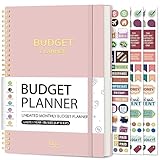
- Effective Budget Planning - Take control of your finances with the budget account book. This comprehensive planner allows you to plan and track your income, expenses, savings, and financial goals in one convenient place. With its intuitive layout and easy-to-use sections, you can stay organized and make informed decisions to achieve financial success.
- User-Friendly Layout - The budget planner features a user-friendly layout designed for easy navigation and organization. Each month, you'll find dedicated budget pages where you can set financial goals, track your income, and plan your expenses. Additional sections include debt trackers, savings goals, bill payment trackers, and more, making it simple to stay on top of your finances.
- Undated Monthly Calendar & Bonus Stickers - Featuring undated calendar each month, you'll have ample space to mark paydays, bills due, appointments, and important dates. Say goodbye to difficult writing spaces. Plus, we've included 3 cute sticker sheets that allow you to personalize your financial organizer and make budgeting more fun. Dates are not pre-printed and are completed by the user.
- Reliable and Convenient Design - Our monthly budget planner is designed for your convenience and built to last. The elastic band keeps everything securely in place, and the dual-sided pocket provides extra storage. Experience a budget planner that combines practicality and durability.
- Master Budgeting with Ease - Our financial planner includes a complete guidebook that provides valuable insights and instructions for optimal usage. From setting financial goals to tracking expenses, this guidebook offers step-by-step guidance and practical tips. Whether you're new to budgeting or an experienced user, this resource will help you make the most of your budget planner, empowering you to achieve financial success.
Category variance = actual spending − planned spending
A positive variance means the category exceeded its plan; a negative variance means it came in below plan.
Step 8: Check the result
Add all planned outflows and subtract them from take-home income:
Income − all planned outflows = budget balance
- Positive balance: Assign the surplus deliberately to emergency savings, extra debt repayment, a sinking fund, a goal, or a reasonable buffer. Unassigned surplus often disappears.
- Zero balance: The plan is fully assigned. Make sure it includes a realistic miscellaneous category and does not depend on impossible spending limits.
- Negative balance: The plan is not affordable as written. Reduce, delay, renegotiate, or replace expenses; consider additional income or assistance; and contact creditors before missing payments.
A negative budget is information about the gap between resources and obligations. It may require more than canceling small subscriptions. Housing, childcare, healthcare, transportation, or debt payments can create a structural deficit that needs a larger solution.
Step 9: Automate carefully and add safeguards
Once the plan works manually, consider automating:
- Minimum debt payments.
- Regular savings transfers.
- Sinking-fund transfers.
- Retirement contributions.
- Recurring fixed bills.
Before setting up an automatic transfer or payment, verify that:
- The account will contain enough money on the transfer date.
- The amount is fixed, or you have a process for monitoring variable amounts.
- The date lines up with your paycheck schedule.
- Low-balance and payment notifications are enabled.
- You know how to pause or change the payment if income changes.
Automatic payments can reduce missed payments, but they can also create overdrafts or continue after circumstances change. Review the CFPB’s guidance on automatic bank-account payments and monitor both pending and posted transactions.
Step 10: Review the budget on a predictable schedule
Weekly: spend about 10 minutes
- Check posted and pending transactions.
- Record cash purchases and categorize new charges.
- Compare actual spending with each flexible-category limit.
- Look seven to 14 days ahead for bills and appointments.
- Confirm that enough money is in the payment account.
Monthly: reset the plan
- Compare planned amounts with actual results.
- Investigate large variances rather than judging yourself for them.
- Update groceries, utilities, fuel, and medical estimates.
- Add any annual or seasonal expense you missed.
- Reallocate unused money according to your priorities.
- Adjust savings and extra debt payments if income or costs changed.
Quarterly: inspect the system
- Cancel or renegotiate subscriptions and recurring services you no longer use.
- Review insurance costs, debt balances, and interest charges.
- Check whether sinking-fund contributions still match upcoming bills.
- Review progress toward emergency savings and other goals.
Annually: rebuild the irregular-expense list
Look through the next 12 months of insurance renewals, registrations, memberships, holidays, school expenses, travel, taxes, medical costs, maintenance, and replacement needs. Update each reserve before the bill arrives.
How to reconcile a budget that does not match the bank account
If a spreadsheet says $500 remains but the account does not, do not abandon the budget. Find the difference. Check:
Free tools Windows power users keep installed
One-click scans. No signup required.
- Pending transactions that have not posted.
- Cash withdrawals whose uses were not recorded.
- Annual or seasonal bills.
- Credit-card purchases made after the last statement.
- Transfers incorrectly classified as income or spending.
- Duplicate entries.
- Automatic payments.
- Refunds or reimbursements not entered.
- Bank fees or other charges.
- An incorrect starting balance.
Transfers between your own checking and savings accounts are not income or spending. A refund should generally reduce the original spending category. An employer or insurance reimbursement that merely repays an expense should not be counted as new income. Consistency matters more than finding one perfect accounting convention.
How to handle credit cards without double-counting
Pick one accounting method and use it consistently.
- Purchase-date method: Record a purchase in its category when the card is used. When the later card payment leaves checking, record it as a transfer or debt payment rather than recording the purchase a second time.
- Cash-flow-date method: Record the card payment when it leaves checking, while separately tracking new card charges so spending does not become invisible. This is useful for checking-account timing but requires discipline.
Do not count both the purchase and the full card payment as new spending without an adjustment. That makes the budget look worse than reality and obscures how much you are actually buying. At the same time, do not use the payment-date method as a reason to keep charging after the category limit is gone.
Emergency savings: choose a staged target
There is no single emergency-fund number that fits every household. CFPB says the appropriate amount depends on the individual’s situation and that even a small amount can provide some security. The right target depends on job stability, dependents, health, insurance coverage, debt, income volatility, and how quickly expenses could be reduced.
Do these 3 things before closing this tab:
1Fix the driver behind crashes, sound loss and screen glitches2Repair Windows errors before they cause bigger problems3Scan for outdated or missing drivers - takes under a minuteA practical staged approach is:
- Begin with an attainable amount that can absorb a small urgent expense.
- Build toward a reserve that covers the household’s most important expenses for a longer period.
- Reassess the target after a job change, new dependent, major debt, move, health change, or income change.
FDIC notes that financial experts generally recommend at least six months of living expenses, but that is not an absolute requirement for every person or the only reasonable milestone. Keep emergency money accessible in an account with appropriate deposit insurance. Certificates of deposit may have early-withdrawal penalties, so consider access before placing emergency funds in one.
Independent reader supportYour contribution helps us test, update, and keep practical guides available for everyone.What to do when expenses exceed income
Use this triage sequence rather than making random cuts:
- Protect essentials and consequences first: housing, utilities, food, medicine, transportation needed for work, required insurance, and legally required obligations.
- Pause optional recurring charges: subscriptions, memberships, convenience services, and discretionary purchases.
- Review large fixed expenses: housing, transportation, insurance, childcare, and major contracts. Small cuts cannot solve every structural deficit.
- Reduce flexible categories deliberately: set a temporary limit for dining, shopping, entertainment, and other wants.
- Contact creditors before missing payments: determine what payment is realistically affordable, explain the hardship and expected duration, and ask about hardship programs or modified payment arrangements.
- Seek reputable nonprofit credit counseling if needed: a legitimate counselor should review your finances and disclose fees and services in writing.
- Consider income, benefits, and assistance options: a budget gap may require more income or help with essential costs, not just less spending.
CFPB recommends contacting a credit-card issuer promptly when you cannot make the minimum payment. Be cautious of debt-relief companies that guarantee they can eliminate debt, tell you to stop paying creditors, or demand upfront fees. FTC guidance says a reputable credit counselor should examine your finances and disclose fees in writing.
Debt settlement is not a budgeting method. It is a separate, potentially risky strategy that should be carefully screened. Do not take out payday loans simply to make a budget appear balanced; high costs can deepen the problem.
Examples for common situations
Steady salaried worker
Use take-home pay, a monthly plan, and a bill calendar. The 50/30/20 rule can serve as a quick diagnostic, while zero-based categories can control groceries and discretionary spending. Automate a modest savings transfer only after checking that the timing works.
Best Value

- 【ACHIEVE YOUR FINANCIAL GOALS】This budget financial planner provides a simple and efficient money management instruments that allows you to plan and track your income, expenses and savings in one convenient place. Take control of your money on a daily, monthly and yearly basis with the budget planner, enabling you to manage your personal finance and make decisions to achieve financial goals.
- 【TRACK SAVINGS, DEBT & BILLS PAYMENTS】Keeping track of savings, debt, and bill payments can help you understand your income and expenses, giving you a clearer picture of your financial situation. In addition, you can identify spending habits and appropriately reduce unnecessary spending.
- 【WELL-DESIGNED】The monthly budget planner is undated and covers 16 months. Every month features a calendar, a budget plan, and 4 pages expense tracker. At the end of the month, review your performance and consider how to improve. Additional sections include 4 savings, 6 debt trackers and more, making it simple to stay on top of your finances.
- 【EASY TO USE】The financial planner notebook cover is made by premium Faux Leather/ Fabric, High quality and durability. A5 size (5.7'' × 8'') is perfect for on-the-go. 100gsm paper has no bleed through. It also comes with an elastic pen loop and pocket. In addition, 2 bookmarks is useful to find any page you need easily.
- 【PERFECT GIFT】A Budget Planner makes for an incredibly thoughtful and practical gift, as it helps individual keep track of their finances, set savings goals, and manage their spending more effectively. Whether for a friend, family member, or colleague, this essential tool fosters financial literacy and encourages responsible budgeting habits.
Biweekly worker
Use the annualized average for the monthly overview, but plan with actual paycheck dates. Build recurring bills from the normal two-paycheck months, then direct the two extra annual checks toward sinking funds, emergency savings, debt, or a major goal.
Freelancer or seasonal worker
Separate taxes from household money, use a conservative low-income baseline for essentials, and maintain a cash-flow calendar. In high-income months, fund upcoming taxes and irregular bills before increasing regular spending.
Person paying down credit-card debt
Protect minimum payments first. Track purchases at the time they occur, then assign extra money to the chosen repayment goal. Keep a small emergency reserve so an ordinary surprise does not force new card borrowing.
Outdated Drivers Are Slowing You Down
One free scan finds every outdated or missing driver and matches the right update for your exact hardware.Free scan · exact hardware matchPC Slower Than It Used to Be?
A free scan shows the junk files, broken settings and background clutter dragging Windows down - then fixes them in one click.Free scan · Windows 10 & 11Person who overspends in a few categories
Use a zero-based monthly plan with envelopes for the specific problem categories. A visible dining, shopping, or entertainment limit can be more effective than tracking every household expense in detail.
Shared household
Agree on which expenses are joint, whether income is pooled, how reimbursements work, and how much personal spending each person receives. A hybrid approach can use one shared plan for housing, food, utilities, debt, savings, and goals, plus separate no-questions-asked allowances. Decide who reviews recurring charges, renewals, and the shared-account buffer.
Paper, spreadsheet, or budgeting app?
Choose the tool you will actually review. A simple system used every week is more useful than a sophisticated one that is abandoned.
| Tool | Advantages | Trade-offs |
|---|---|---|
| Paper | Low complexity, inexpensive, and strong privacy | Manual calculations and no automatic transaction import |
| Spreadsheet | Flexible categories, formulas, planned-versus-actual columns, and cash-flow tabs | Requires setup and careful entry |
| Bank-provided tracker | Convenient and often connected to existing accounts | Automatic categories can be wrong and may not handle cash or transfers well |
| Third-party app | Automation, dashboards, alerts, and account aggregation | Requires review of data-sharing, access, storage, and security practices |
CFPB warns that budgeting apps may access bank and card data through service providers and aggregators. Before linking an account, check what data is collected, who receives it, how long it is stored, whether the service can move money, and how access can be revoked. Deleting an app does not necessarily revoke authorization, so follow the provider’s account-disconnection process and check the financial institution’s connected-app settings.
The Tool Desk
Outbyte Driver Updater FREEScan for outdated or missing drivers - takes under a minuteDriver Scan →Outbyte PC Repair FREEClear out junk files and repair common Windows errorsFree Scan →If you use a digital envelope system, distinguish a budgeting feature from a place to hold money. Funds in a nonbank payment app may not have the same FDIC or NCUA insurance as an appropriately insured deposit account. Consider moving larger or emergency balances to an account with the protection and access you need.
Copyable monthly budget template
Copy this structure into a spreadsheet or notebook. Add a separate tab or page for the cash-flow calendar.
MONTH: ____________________

INCOME
Paycheck 1                         $________
Paycheck 2                         $________
Other reliable income              $________
Conservative variable income       $________
TOTAL TAKE-HOME INCOME             $________

FIXED EXPENSES AND OBLIGATIONS
Housing                             $________
Utilities and phone                 $________
Insurance                           $________
Debt minimums                       $________
Childcare or required support       $________
Other fixed obligations              $________

VARIABLE ESSENTIALS
Groceries                           $________
Transportation                      $________
Healthcare and medicine              $________
Household and personal basics       $________

SINKING FUNDS
Insurance or property tax           $________
Vehicle maintenance and registration $________
Medical or dental reserve            $________
Gifts and holidays                   $________
Home, pet, travel, or replacement    $________
Taxes, if self-employed              $________

SAVINGS AND GOALS
Emergency savings                   $________
Retirement not already withheld     $________
Other short-term goal               $________

DISCRETIONARY SPENDING
Dining and entertainment             $________
Shopping, hobbies, and personal      $________
Miscellaneous buffer                 $________

Extra debt repayment                $________
TOTAL PLANNED OUTFLOWS              $________
BUDGET BALANCE                      $________

CASH-FLOW CALENDAR
Date | Starting balance | Income | Bills | Flexible spending | Ending balance
____ | _________________ | ______ | _____ | __________________ | ______________
____ | _________________ | ______ | _____ | __________________ | ______________
For a spreadsheet, add columns for planned, actual, and difference. Reconcile the starting balance to the actual account balance, and record due dates and payment accounts for automatic bills.
Common budgeting mistakes to avoid
- Starting with gross pay: Use take-home income unless you also account for every tax and payroll deduction.
- Building a fantasy budget: Record actual spending first, then make a realistic change plan.
- Ignoring annual expenses: Divide known future costs into monthly sinking-fund contributions.
- Using only monthly totals: Add a paycheck-level view when bill timing causes shortfalls.
- Treating 50/30/20 as a rule you must pass: Adjust it for housing, childcare, medical costs, income, and goals.
- Leaving savings to chance: Make it a planned category or carefully monitored automatic transfer.
- Double-counting credit cards: Track purchases and payments using one consistent method.
- Calling every foreseeable cost an emergency: Use sinking funds for known costs and emergency savings for genuine surprises.
- Automating without safeguards: Check balances, dates, variable amounts, and alerts.
- Abandoning the budget after one bad month: Reconcile the difference, revise the plan, and continue.
A simple first-month action plan
- Gather several months of statements, bills, pay records, and receipts.
- Calculate dependable take-home income.
- List every recurring obligation and due date.
- Group actual spending into essential, discretionary, debt, savings, and sinking-fund categories.
- Convert annual costs into monthly reserves.
- Choose a monthly method and add a paycheck-level calendar if needed.
- Assign money to essentials, minimum payments, savings, irregular costs, wants, and a buffer.
- Check whether planned outflows are below, equal to, or above income.
- Automate only payments and transfers that the cash-flow plan can support.
- Review the plan weekly and revise it at the end of the month.
For official worksheets and additional cash-flow tools, see Consumer.gov’s budget worksheet and the CFPB’s budgeting, bill-calendar, spending-tracker, and debt tools. Student-loan payment and account information can change; check your current servicer statement and StudentAid.gov’s current guidance rather than relying on an old budget article.
What’s actually slowing this PC down?
Pick the symptom - the matching free tool is one click away.
Frequently Asked Questions
Is a zero-based budget the same as spending all of my money?
No. Zero-based budgeting means assigning every dollar a purpose. Some dollars can remain in checking, emergency savings, sinking funds, or a buffer; the account does not have to reach zero.
Should I use the 50/30/20 rule?
Use it as a flexible starting framework, not a universal requirement. It may be useful for a quick overview, but housing, childcare, healthcare, income, debt, and local costs can make different percentages more realistic.
How much should I save for emergencies?
There is no single target for everyone. Start with an attainable amount, then build a larger accessible reserve based on job stability, dependents, health, insurance, debt, and income volatility. CFPB says the right amount depends on the individual situation; FDIC notes that financial experts generally recommend at least six months of living expenses.
How do I budget when my income changes every month?
Use a conservative dependable-income baseline for essentials, separate taxes if you are self-employed, and use a cash-flow calendar with actual payment dates. Assign unusually strong months to taxes, sinking funds, emergency savings, debt, and goals before increasing recurring spending.
Quick wins for a faster PC:
Fix the driver behind crashes, sound loss and screen glitchesFind Drivers →Repair Windows errors before they cause bigger problemsFix Now →Scan for outdated or missing drivers - takes under a minuteDriver Scan →What should I do if my budget is negative?
Protect housing, utilities, food, medicine, transportation to work, insurance, and required payments first. Then reduce optional costs, review large fixed expenses, contact creditors before missing payments, and seek reputable nonprofit credit counseling if needed. Be wary of debt-relief companies that guarantee results, tell you to stop paying creditors, or demand upfront fees.
The Bottom Line
The best budget is not the most detailed one or the one that follows a perfect percentage. It is a forward-looking plan based on take-home income, complete expenses, sinking funds, and actual bill timing. Choose the simplest method that addresses your main problem, assign savings and debt payments intentionally, then compare the plan with your accounts every week and revise it when life changes.
Quick Recap
Product prices and availability are accurate as of the date/time indicated and are subject to change. Any price and availability information displayed on Amazon at the time of purchase will apply.




