Quick wins for a faster PC:
Scan for outdated or missing drivers - takes under a minuteDriver Scan →Clear out junk files and repair common Windows errorsFree Scan →Fix the driver behind crashes, sound loss and screen glitchesFind Drivers →Neither an electric heat pump nor a gas furnace is the cheaper or better choice for every home. Compare the full installed cost, estimated annual energy costs at your local utility rates, cold-weather performance and backup plan, and the condition of your home and ductwork. A heat pump can also provide cooling; a gas furnace needs separate cooling equipment.
Start with how each system works
An air-source heat pump moves heat from outdoor air into the home during heating season, rather than burning fuel to make heat. Many models can reverse operation to provide cooling. A gas furnace burns natural gas to produce heat; air conditioning is a separate system.
A third option is dual fuel: a heat pump handles milder weather, and a gas furnace takes over in colder conditions. Ask how the system decides when to switch and what temperatures trigger the furnace.
Compare the costs that affect your household budget
Estimate annual energy costs using your rates
There is no universal winner on monthly bills. Heat-pump costs depend on electricity rates, the unit’s performance across the local heating season, and how often electric resistance backup runs. Furnace costs depend on gas rates, furnace efficiency, and any applicable fixed utility charges. Ask contractors to estimate annual energy use and cost for your home using local rates, and ask them to show their assumptions.
What’s actually slowing this PC down?
Pick the symptom - the matching free tool is one click away.
#1 Best Overall
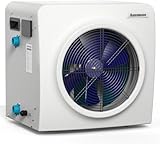
- All-Season Pool Comfort: Featuring innovative dual-mode temperature control, this heat pump precisely heats water between 41–104°F or cools it within 41–83°F. By maintaining consistent thermal regulation, it extends swimming seasons by up to 6 months while delivering year-round comfort for pool enjoyment.
- Professional Thermal Performance: Featuring a high-output heating module, this 4-season system is designed for above ground pools. The precision thermostat maintains ±2°F temperature accuracy by continuously monitoring ambient conditions, ensuring consistent comfort throughout the year.
- Energy Efficiency Redefined: With a high 5.5 COP, this ultra-efficient heat pump employs a powerful engine to ensure consistent energy savings. In comparison with conventional electric heating, it slashes energy consumption by 70% and provides 40% more savings than natural gas alternatives.
- Quiet Operation & Defrost: With ultra-quiet technology, the operating sound is maintained at 38 dB, which is quieter than a whisper. You can enjoy the comfort brought by the heat pump heating without being affected by any noise.Intelligent auto-defrost system that automatically removes ice buildup without manual intervention.
- Easy to Assemble: This heat pump comes with both 1.25" hose adapters and 1.5" conversion kits for easy installation, completed in under 10 minutes. The panel supports multi-mode smart control, complemented by a 3-year comprehensive warranty and lifetime technical support.
National and field-study results illustrate why a household-specific estimate matters. A 2024 U.S. Department of Energy analysis estimated that 13 million U.S. homes heated with natural gas could save by switching to a heat pump. In that analysis, the modeled heat pump was the best choice for homes in its Arizona example with average annual savings of $300; its Michigan example estimated average annual savings of $1,500 for homes using propane or electricity and a model designed for cold climates. These are scenario estimates, not forecasts for every home. DOE’s 2024 analysis explains the scenarios.
A 2022 DOE-hosted Northeast field study found a different result for its small sample of natural-gas customers: an estimated annual energy-cost penalty of $262 for the primary-with-backup group (five sites) and $153 for the whole-home group (10 sites). Its outcomes reflect those sites and local energy prices, not a universal comparison. The study measured a seasonal coefficient of performance of 2.34 across 43 sites; that is a field-study result, not a guaranteed rating for a new system. See the 2022 study.
Rank #2

- Energy-Saving Hybrid Water Heater – Advanced heat pump water heater technology extracts heat from the air to warm water efficiently, cutting electricity use by up to 70% compared to a standard electric water heater.
- High Efficiency Performance – With a 3.75 UEF rating and a 69-gallon First Hour Rating (FHR), this hybrid water heater delivers reliable hot water while significantly lowering energy bills.
- 50 Gallon Electric Water Heater Capacity – Perfect for medium to large households, providing consistent hot water for showers, laundry, and dishes without running out.
- Certified Heat Pump Water Heater – UL Certified, AHRI Certified, and ENERGY STAR rated, ensuring your electric water heater meets the highest standards of safety, efficiency, and performance.
- Long-Lasting Hybrid System – Backed by a 7-year parts warranty and 10-year compressor warranty, this hybrid heat pump water heater is built for durability, savings, and peace of mind.
Compare the complete installed project
Ask for itemized proposals that cover the equipment and all work needed to make it operate properly. Depending on the home, a heat-pump project may involve electrical upgrades, duct changes, or backup heat; a furnace replacement may also require changes or related work. Include removal or modification of old equipment and any cooling equipment needed with a furnace. DOE’s published lifecycle examples use specified federal-facility energy prices and assumed equipment lifespans, so they are not personal quotes or household forecasts. DOE’s furnace purchasing guidance and its heat-pump guidance describe those assumptions.
Check cold-weather performance and backup heat
Cold-weather capability depends on the particular model and installation, not simply on the fact that a system is a heat pump. DOE says cold climates require specially designed heat pumps that can operate at lower outdoor temperatures before switching to resistance heat. Ask for the proposed unit’s heating capacity and efficiency at the home’s local winter design temperature, rather than relying only on a general product rating or a headline minimum operating temperature. Confirm whether the backup is electric resistance heat, a gas furnace in a dual-fuel system, or another arrangement, and when it is expected to operate.
Rank #3

- Extend Your Swim Season: The pool heat pump features a dual-mode heating and cooling system that maintains optimal water temperatures year-round. Precision control ensures heating from 47–104℉ and cooling from 47–83℉, allowing you to enjoy extended swimming sessions through autumn’s crisp chill and spring’s cool mornings.
- Rapid Heating & APP Control: Engineered for speed and efficiency, it delivers warmth in hours, perfect for large pools, or chilly climates. Take full control via the app & control panel. Adjust temperatures remotely, track energy use, and program heating schedules to fit your lifestyle.
- Inverter Energy Saving: Intelligent heat pump system featuring full DC variable frequency technology delivers 15.8 COP for maximum heating output. Adaptive frequency conversion algorithm dynamically adjusts power in real-time, achieving 70% energy savings over traditional electric heating and 40% higher efficiency than gas systems.
- Ultra-Quiet & Auto-Defrost: Variable frequency technology reduces operational noise to just 48 dB, paired with an intelligent defrosting system featuring automatically initiated cycles every 40 minutes that complete the process in just 5 minutes, ensuring uninterrupted winter operation with continuous heating performance.
- Easy to Assemble: Our heat pump features 3 versatile connection options designed to integrate with all pools, (1.25" & 1.5" hose adapter, 1.5" adapter conversion kit, 1.5" PVC pipe converter), ensuring hassle-free installation and optimal performance. Enjoy peace of mind with our 3-year warranty. Dive into comfort and reliability.
DOE’s guidance notes that cold-climate heat pumps have improved, but the relevant question is whether the selected model can meet the home’s load at local winter conditions. DOE’s overview of air-source heat pumps discusses cold-climate systems.
Read efficiency ratings on their own terms
Heat-pump and furnace ratings use different measures, so do not compare their numbers as if they were on the same scale.
Rank #4
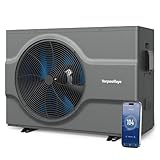
- Strong Heater: Our heat pump pool heater delivers 120000 BTU with a COP of 12.3. It is an energy-efficient heating system that works by extracting heat from the ambient air and transferring it to our pool water, achieving rapid and stable heating. Therefore it is more cost-effective than gas or traditional electric heaters
- Quiet and Versatile: Designed for both freshwater and saltwater, inground pool heater runs at just 47dB, ideal for peaceful swimming in any pool environment with our family
- Inverter Technology, Panel Upgrade: Our upgraded electric pool heater 220v features inverter mode for longer lifespan, lower energy use, and a Intelligent touch control panel with one-button fast heat function
- WiFi Remote: Remotely control your swimming pool heater pumps via app—adjust temperature, schedule run times, or switch modes from anywhere at your convenience
- Quick Setup: Our pool heater for above ground pool includes 1.5-inch connectors and a 118-inch cord, ready to heat pools up to 33000 gallons with minimal setup effort, also designed with water-electric separation for protecting us at home
- Heat pumps: HSPF2 measures seasonal heating efficiency, while SEER2 measures seasonal cooling efficiency under current DOE test nomenclature. Ask for cold-weather capacity as well as seasonal ratings when winter performance is important.
- Gas furnaces: AFUE expresses the share of fuel energy converted into heat over a heating season.
Use product labels, ENERGY STAR listings, and contractor estimates to understand equipment performance, then estimate household cost with your utility rates. A rating by itself does not determine the bill. DOE’s heat-pump purchasing guidance and its furnace guidance explain the metrics and their examples.
Independent reader supportYour contribution helps us test, update, and keep practical guides available for everyone.Assess the house before choosing equipment
Insulation, air leakage, and duct condition affect the heating load and comfort for either system. DOE recommends weatherizing homes, particularly older homes, before switching from gas to a heat pump. Ask for a heating-load assessment and properly sized proposals; choosing a system based only on the size of the old equipment can lead to oversizing or insufficient capacity.
Recommended Free Tools
Best Value

- High BTU Powerful Heating, Energy-Saving & Safe: A new star in pool heating with ETL certification, stylish design, and upgraded next-generation components for reliable performance. The Vidapool pool heat pump delivers up to 75,000 BTU and heats pools up to 21,000 GAL. Using advanced air-source technology to capture heat from the air, it provides high efficiency and can save up to 70% on energy costs compared to natural gas heaters.
- Advanced Technology, Efficient and Worry-Free: Equipped with multiple patented heat exchange technologies and intelligent inverter control, Vidapool pool heat pump automatically switches to low-power operation once the pool water reaches the set temperature.Unlike conventional heaters that shut off completely when target temperature is reached, Vidapool pool heater dynamically adjusts power output for greater energy savings, quieter performance and more consistent comfort.
- Smart Control, Quiet Operation: Smart technology brings convenience to your life. Operating noise is as low as 36dB, running quietly without disturbing daily life.APP remote control is supported, allowing you to adjust water temperature and set schedules via mobile phone, putting your pool temperature fully under your control
- Easy Installation, Year-Round Comfort: Features 3 flexible connection options for perfect compatibility with most pools on the market: 1.25" & 1.5" hose adapter, 1.5" adapter conversion kit, and 1.5" PVC pipe converter. Installation is simple and hassle-free.Easily switch between cooling and heating modes to maintain ideal pool water temperature in any season.
- Full Protection for Your Using Experience: To ensure your comfort and satisfaction during use, we recommend using a pool cover in extreme temperatures to maintain stable water temperature and efficient operation.Our professional after-sales team provides dedicated technical support. If you encounter any issues with your heat pump, please contact us anytime and we will offer professional assistance promptly.
- Ask whether air sealing or insulation work could reduce the home’s heating load.
- Have ducts checked for leakage and suitability for the proposed system.
- Confirm any electrical work and backup-heat requirements in the quote.
- Ask how the contractor determined equipment size and expected output at design conditions.
DOE warns that oversizing, improper refrigerant charging, and leaky ducts can reduce efficiency and comfort. Its heat-pump guidance covers maintenance and installation considerations.
Include cooling, controls, and ongoing service
If the home needs air conditioning, include that cost and capability in the comparison: a heat pump can provide heating and cooling in one system, while a gas furnace alone cannot cool the home. A furnace quote should identify the separate cooling system if one is part of the project.
Ask about maintenance, warranties, and availability of qualified service for the exact equipment. DOE says routine heat-pump care includes filter replacement and refrigerant charging by qualified service personnel. A thermostat designed for heat pumps can help avoid unnecessarily activating electric resistance heat; DOE’s purchasing guidance recommends a heat-pump-specific thermostat that ramps temperature gradually. Verify thermostat compatibility with the system and its backup heat. DOE’s purchasing guidance includes this recommendation.
Use a consistent checklist for contractor bids
- Request a home heating-load assessment and properly sized proposals.
- Ask each contractor for complete installed pricing, including electrical work, duct changes, backup heat, cooling equipment where needed, and old-equipment removal or modification.
- Request estimated annual energy use and cost based on your local electricity and gas rates, including fixed charges where relevant.
- For a heat pump, review HSPF2, SEER2, capacity and efficiency at local winter design conditions, and the expected backup-heat strategy. For a furnace, review AFUE and the associated cooling equipment separately.
- Compare the home’s weatherization needs, installation scope, warranties, maintenance requirements, and local service availability.
Tax credits, rebates, and utility incentives vary by place and date. Verify current eligibility with official program sources for your location before including an incentive in the project budget.
Quick Recap
Product prices and availability are accurate as of the date/time indicated and are subject to change. Any price and availability information displayed on Amazon at the time of purchase will apply.




