What’s actually slowing this PC down?
Pick the symptom - the matching free tool is one click away.
To compare analyst ratings for agricultural and materials companies, look past labels such as “buy” and “hold.” Check what each firm means by its rating, the report’s date and time horizon, its benchmark, the valuation assumptions and risks, and the analyst’s and firm’s disclosures. Then compare the analysis with company filings and your own goals; an analyst rating is one input, not a personal recommendation.
Why rating labels can mislead
Different firms may use the same words to mean different things. “Buy,” “hold,” “neutral,” “outperform” and “strong buy” are not a universal scale. The SEC’s investor guidance explains that rating terms can differ between firms, so consult each report’s definitions before comparing labels: SEC, “Analyzing Analyst Recommendations” (August 29, 2010).



As an Amazon Associate I earn from qualifying purchases.
A label also needs context: an analyst’s stated time horizon and any benchmark used. Without those, two reports that appear to disagree may be assessing different periods or standards—or two similar labels may not express the same view.
Recommended Free Tools
Build a like-for-like comparison
For each report, record the following items. If a report does not state one, mark it as unavailable rather than filling the gap by inference.
#1 Best Overall
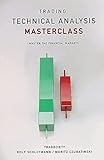
- Language: english
- Book - trading: technical analysis masterclass: master the financial markets
- It is made up of premium quality material.
| What to compare | What to record | Why it matters |
|---|---|---|
| Rating definition | The firm’s explanation of the rating label | Shows what the label means at that firm. |
| Horizon and benchmark | The expected period for the view and any stated benchmark | Helps distinguish different kinds of performance claims. |
| Report date | When the report was issued | Analyst views are time-bound; reports from different dates may reflect different information. |
| Valuation basis | The method and key assumptions behind any price objective | Reveals how the analyst arrived at the stated value. |
| Risks and target | The price objective, if provided, and the risks discussed | Shows what could undermine the analyst’s case; a target is not meaningful on its own. |
| Disclosures | Analyst and firm disclosures, plus the firm’s rating distribution and investment-banking-client share by category where disclosed | Provides context for potential conflicts and how the firm uses its ratings. |
| Company evidence | The relevant primary evidence in issuer filings | Lets you assess the analyst’s claims against company disclosures. |
Read the case behind any price objective
Do not treat a price objective as a stand-alone forecast. Identify the valuation method and assumptions behind it, then read the risks the report says could affect the outcome. SEC rulemaking materials discuss disclosures of rating meanings and valuation methods, and describe a price objective as needing a reasonable basis and a discussion of risks: SEC rulemaking record, SR-NYSE-2002-49. This is a historical source for general disclosure concepts, not a statement of current legal requirements.
Put conflicts in context
Review disclosures about the analyst and the firm, including the firm’s rating distribution and the share of investment-banking clients in each rating category when disclosed. These details matter when weighing a report, but a disclosed conflict is relevant context—not automatic proof that its analysis is wrong. The SEC’s investor guidance outlines these disclosures and cautions readers to consider them alongside the recommendation.
Rank #2

- As a day trader, you can live and work anywhere in the world. You can decide when to work and when not to work.
- You only answer to yourself. That is the life of the successful day trader. Many people aspire to it, but very few succeed. Day trading is not gambling or an online poker game.
- To be successful at day trading you need the right tools and you need to be motivated, to work hard, and to persevere.
Compare the companies on consistent evidence
When comparing businesses in agriculture and materials, use the same reporting period and comparable company evidence wherever possible. Explain any sector-specific factors you choose to weigh, and support them with current company filings or reports. There is no single set of operating metrics established here for every agricultural or materials company; the appropriate factors depend on the businesses being compared.
Use ratings as one input
Analyst opinions are not tailored to your financial circumstances. Check the underlying issuer filings, then weigh the analyst’s reasoning against your own objectives, time horizon and risk tolerance. The SEC explicitly warns investors not to rely solely on analyst recommendations.
Quick Recap
Best Value
Rank #4
Rank #3
Product prices and availability are accurate as of the date/time indicated and are subject to change. Any price and availability information displayed on Amazon at the time of purchase will apply.




