The Tool Desk
Outbyte PC Repair FREEClear out junk files and repair common Windows errorsFree Scan →Outbyte Driver Updater FREEScan for outdated or missing drivers - takes under a minuteDriver Scan →Yes—if you are registered under India’s GST system, you may claim input tax credit (ITC) on an online purchase when it is eligible for business use, supported by the required supplier tax document, reported as required, and claimed in line with GST rules. Buying through a marketplace does not by itself make a purchase eligible: check who supplied the item, whose GST registration issued the invoice, and whether any blocked-credit or apportionment rule applies.
What makes an online purchase eligible for ITC?
Under Section 16 of the Central Goods and Services Tax Act, 2017, a registered person may take credit for input tax charged on goods or services used or intended to be used in the course or furtherance of business, subject to conditions and restrictions. The purchase channel—marketplace, seller website, or otherwise—is not the test. The nature and use of the supply, the supporting document, supplier compliance, and your return compliance matter.

For a claim, check that you meet the statutory conditions, including possession of a tax invoice, debit note, or other prescribed tax-paying document; receipt of the goods or services; payment of tax to the government by the supplier as required; and filing the applicable return. See the CGST Act, Section 16 and the CGST Rules.
How to check and claim ITC on a marketplace purchase
- Confirm registration and business use. The claimant must be GST-registered, and the purchase must be used or intended for business. Identify any private or exempt-supply use before calculating the eligible amount.
- Obtain the supplier’s tax invoice or prescribed document. Do not rely only on an order confirmation or payment receipt. Check the supplier and recipient details, invoice number and date, item or service description, taxable value, GST rate and tax amount, and the recipient GSTIN where applicable. Refer to the CGST Rules and tax invoice rules.
- Identify the actual supplier. A marketplace may facilitate the transaction, but the seller or other supplier’s GST registration is generally the one to check on the invoice. Confirm that the document corresponds to the purchase and the correct buyer details.
- Reconcile the invoice with supplier-reported information. Compare the document with invoice information available to you through GST portal recipient-side records, commonly GSTR-2B. If a record is missing or incorrect, contact the seller to address the reporting or invoice error before claiming. An order confirmation does not substitute for the required tax document or supplier reporting.
- Apply eligibility and blocked-credit rules. Check whether Section 17 blocks credit or requires apportionment. Do not claim the full tax amount when the purchase is partly for personal use or relates to exempt supplies.
- Claim through the applicable GST return process and keep records. Report only eligible credit using the return process applicable to your filing circumstances. Preserve the invoice and accounting records showing input tax and ITC claimed. See the CGST Rules and record-keeping provisions. GST portal labels, return tables, and filing steps can change; consult current official portal guidance rather than relying on a generic click path.
- Track supplier payment and the claim deadline. If you do not pay the supplier the value of the supply plus tax within 180 days from the invoice date, the statutory rules generally require the availed credit to be added to output tax liability with interest; credit may be re-availed after payment. The general time limit for taking credit is tied to the due date for the September return following the relevant financial year or furnishing the annual return, whichever is earlier. Amendments and special provisions may affect the applicable period, so check the consolidated law for the financial year involved.
Purchases that may be restricted or require special treatment
Personal use, exempt supplies, or mixed use
Credit is not generally available for the portion attributable to non-business use or exempt supplies. If a purchase serves both eligible and ineligible purposes, apportion the credit under the applicable rules instead of claiming all the GST shown on the invoice. The CGST Act, Section 17 sets out restrictions and apportionment principles.
#1 Best Overall

- All-In-One Monthly Organizer: Keep all your important documents in one place with Sooez Accordion File Organizer. 13 pockets design works great for Monthly organizing and protecting all your important paperwork, bills, taxes, receipts, invoices and more. Perfect for letter size.
- Expandable Capacity: The accordion file folder can be stretched up to 12 inches. 13 pockets allow you to store more than 2000 sheets. No matter how many documents you need to store, this folder can accommodate your needs as it can be easily expanded according to your requirements.
- Efficient Organization & Easy Lookup: To enhance your file organization, we provide blank labels along with this folder. You can personalize them to suit your requirements, such as labeling sections by month for effortless file retrieval.
- Stable & Portable: Stand on its own on the desk and not easy to tip over. Designed with portability in mind, allowing you to effortlessly move it between your desk, cabinet, and any other preferred locations.
- Maximum Protection and Durability: Well made, made from durable wipe-clean polypropylene. Waterproof & sturdy. Tear-resistant plastic provides durable structure. Acid-free, PVC-free, and archival quality for safe storage. Adjustable snap closure helps keep contents secure. Use 2 additional front pockets for business cards, project title cards or notes.
Blocked-credit categories
Section 17(5) blocks credit in specified circumstances, subject to statutory exceptions. Examples include certain motor vehicles, food and beverages, club or fitness membership, some insurance and rent-a-cab services, travel benefits, and certain construction costs. The category and any exception depend on the facts; do not assume every purchase in one of these broad areas is automatically blocked or automatically eligible. Review the statutory blocked-credit provisions.
Purchases from a composition taxpayer
A composition taxable person cannot charge GST in the usual way, so CBIC says the buyer cannot claim ITC on such a purchase. Check the supplier’s status and the document provided. See the CBIC GST FAQs.
Rank #2

- 2026 2027 Yearly Tax Organizer: includes 2 spiral bound tax organizer designed to help you collect, sort, and store important tax records throughout the year, keeping receipts, income records, bills, and other paperwork in one easy to manage place
- Large Size for Everyday Documents: cover measures about 13 x 9.65 inches, with inside pages about 9.65 x 6.5 inches; The spacious pocket design provides room for receipts, statements, records, and tax-related papers without taking up too much desk or shelf space
- 12 Monthly Pockets for Easy Sorting: the tax record organizer features 12 pockets, making it simple to separate documents by month or category; Useful for organizing medical expenses, charitable donations, prescriptions, invoices, income folders, and monthly bill receipts
- Spiral Bound for Convenient Access: the secure spiral binding lets pages turn smoothly, so you can quickly add, remove, or review documents whenever needed; A practical design that helps simplify filing and reduce last-minute stress during tax season
- Widely Applied: this annual tax organizer is suitable for managing annual taxes, tracking receipts and preparing for audits all year round, making your tax preparation more systematic and manageable, and it is very suitable for annual tax returns, document storage and filing, professional tax services and tax agencies
Capital goods and income-tax depreciation
If you claim depreciation under income-tax law on the GST component of capital goods, Section 16 bars ITC on that same tax component. Do not claim both benefits on the same GST amount. See CGST Act, Section 16.
Imports and reverse-charge transactions
An overseas seller or a transaction subject to reverse charge may involve different documentation and payment rules from an ordinary domestic marketplace purchase. The general domestic workflow above is not a complete import or reverse-charge guide; have the transaction reviewed before claiming.
Crashes, No Sound, or Screen Glitches?
Random freezes, missing sound and display glitches usually trace back to one bad driver. Find and replace yours safely.Free scan · under a minuteWindows Errors? Fix Them Before They Spread
Repair common Windows errors and clear accumulated junk for a smoother, more stable PC - no reinstall needed.Free scan · no reinstallReturns, cancellations, and price adjustments
If goods are returned or the price or tax is adjusted, the supplier may issue a credit note. Account for the corresponding ITC adjustment under the rules applicable to that transaction. The tax invoice rules address credit notes; check current requirements before calculating an adjustment.
Independent reader supportYour contribution helps us test, update, and keep practical guides available for everyone.Records to retain
- The supplier-issued tax invoice, debit note, or other prescribed tax-paying document.
- Records that support receipt of the goods or services and their business purpose.
- Relevant supplier-reported invoice information and reconciliation details.
- Accounts showing input tax and ITC claimed, along with evidence of supplier payment where relevant.
For an unusual transaction, a high-value claim, mixed business and personal use, exempt supplies, imports, or reverse charge, consult a GST practitioner who can apply the current law to the facts.
Quick Recap
Best Value
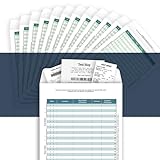
- [Multiple Purpose Business Organizer] Record business expenses on one ledger; Store receipts inside the envelope; Track auto mileage log on the back
- [Match Receipts to Expenses, Find Fast] Record an expense on a line (1-30); Mark the receipt with the line number; Find the receipt fast with the number
- [Receipts Organizer with Expense Ledger] Track your business expenses, prepare for an expense reimbursement or a tax deduction
- [Auto Mileage Log] Track business vehicle mileage; capture valuable business mileage deductions and save on your taxes
- [Perfect Size, Durable Paper Material] Heavy 100 lb paper, easy to write and no ink bleed. This business receipts organizer envelope measures 9.5×6.5 inches, large enough to comfortably fill out while being small enough to fit in a glove compartment, center console or work bag.
Rank #4

- HOLDS LARGE AMOUNT OF DOCUMENTS:Stores up to 2000 sheets of A4 or letter-size paper. Ideal for organizing tax records, medical documents, insurance papers, receipts, and household files in one place.
- STAND-UP DESIGN FOR EASY ACCESS:Rear locking hole allows the folder to stand upright on the desk. Makes it easier to sort, review, and access documents during daily organization.
- MONTHLY AND FLEXIBLE ORGANIZATION:Includes 12 monthly labels, 24 blank labels, and 12 dividers. Suitable for bills, invoices, school work, projects, and personal records.
- LARGE TABS FOR QUICK IDENTIFICATION:4.5 × 1.5 cm tabs provide extra writing space for clear labeling. Helps quickly locate documents without searching through folders.
- DAILY DOCUMENT PROTECTION:Made of lightweight water-resistant PP material. Elastic cord closure keeps documents secure during transport. Suitable for home, school, and office use.
Product prices and availability are accurate as of the date/time indicated and are subject to change. Any price and availability information displayed on Amazon at the time of purchase will apply.




