The Tool Desk
Outbyte Driver Updater FREEFix the driver behind crashes, sound loss and screen glitchesFind Drivers →Outbyte PC Repair FREERepair Windows errors before they cause bigger problemsFix Now →Choose based first on when you may need the money. A CD can fit a known holding period if its rate and early-withdrawal terms work for you; Treasury bills, notes, and bonds have different maturities and can lose market value if sold early; money market funds generally offer business-day redemptions but are mutual funds, not insured bank deposits. Compare net return over the same time horizon, access and exit costs, applicable protection, fund fees, and taxes—not headline yields alone.
Start by matching the product to your time horizon
“Treasury bonds” is often used loosely to mean any U.S. Treasury security, but the maturity matters. TreasuryDirect lists bills, notes, bonds, Treasury Inflation-Protected Securities (TIPS), and floating rate notes as marketable securities. Bills run from four weeks to 52 weeks; notes mature in 2, 3, 5, 7, or 10 years; and Treasury bonds are currently offered in 20- or 30-year terms. Notes and bonds pay interest every six months. TreasuryDirect’s overview of marketable securities describes the types and terms.
- Known date, fixed holding period: A CD or Treasury security with a maturity aligned to that date may be worth comparing. Check the actual rate or yield and what happens if you need to exit early.
- Short-term cash: Treasury bills have short maturities; CDs may also have terms suited to a planned date. A money market fund may offer business-day redemption, subject to its terms.
- Uncertain timing: Prioritize access and exit costs. A long-dated Treasury note or bond is not a cash equivalent simply because it is backed by the U.S. government.
How each option works
Treasury bills, notes, and bonds
Treasury bills are sold at a discount or at par and pay face value at maturity. TreasuryDirect says bills may be held to maturity or sold earlier. Interest is subject to federal tax and exempt from state and local taxes. See TreasuryDirect’s Treasury bills information.
Treasury notes and bonds pay a stated coupon every six months. Their market price may be above or below face value depending on the relationship between the coupon rate and yield to maturity. If you sell before maturity, you may receive more or less than face value; the federal backing does not prevent market-price changes. TreasuryDirect explains this relationship in its Treasury notes information.
#1 Best Overall

- Brand New in box; The product ships with all relevant accessories
- Dedicated keys allow easy access to common financial and statistics functions
- Easy-to-use design provides business, finance and statistical calculations fast
- Specially designed to meet the mathematical needs
Certificates of deposit
A CD is a bank time deposit with a term and institution-specific conditions. Its quoted APY does not tell the whole story: check the maturity date and any early-withdrawal penalty before committing money you may need sooner. Penalties and other terms vary by institution; there is no single standard term in the available materials. The SEC’s investor guidance discusses risks to consider when choosing investments, including liquidity and time horizon: Certificates of deposit.
Money market funds
A money market fund is a mutual fund investing in liquid, short-term debt, cash, and cash equivalents. Its yield generally reflects short-term rates, and its expenses reduce investor returns. Redemption is generally available on a business day at the fund’s net asset value (NAV), subject to fund terms and any applicable liquidity measures.
Rank #2

- Profitability calculations; cash flow function Calculates NPV and IRR for uneven cash flows
- Time-value-of-money and Amortization keys solve problems including: pension calculations, loans, mortgages, etc.
- Ideal calculator for students, managers and statisticians
- Built-in functionality : List-based one- and two-variable statistics with four regression options: linear, logarithmic, exponential and power
- The BA II Plus calculator is approved for use on the following professional exams: Chartered Financial Analyst exam. GARP Financial Risk Manager (FRM) exam. Certified Management Accountants exam
Most retail and government money market funds seek to maintain a stable $1-per-share NAV. Institutional prime and institutional tax-exempt funds have floating NAVs. A stable-NAV target is not a guarantee: shares are not FDIC insured, and investors can lose money. Depending on fund type and circumstances, liquidity fees may apply, and a fund may be permitted to suspend redemptions and liquidate. Review the current prospectus and shareholder report. The SEC’s Money Market Funds: Investor Bulletin (November 4, 2024) describes these features.
Compare protection without confusing similar names
A money market fund and a money market deposit account are different products. The fund is a mutual fund; a money market deposit account is a bank deposit that may qualify for FDIC insurance. The account name alone does not establish which one you hold. The FDIC explains deposit coverage at Deposit Insurance.
Outdated Drivers Are Slowing You Down
One free scan finds every outdated or missing driver and matches the right update for your exact hardware.Free scan · exact hardware matchPC Slower Than It Used to Be?
A free scan shows the junk files, broken settings and background clutter dragging Windows down - then fixes them in one click.Free scan · Windows 10 & 11Rank #3
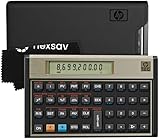
- HP 12C: INDUSTRY STANDARD SINCE 1981 – Trusted by professionals in real estate, banking, and finance for over 40 years. The HP 12C finance calculator remains the go-to tool for fast and accurate calculations in high-stakes business environments.
- 120+ FUNCTIONS FOR FINANCIAL ANALYSIS – Calculate loan amortization, bond pricing, mortgage payments, NPV, IRR, depreciation, and more with this large calculator. Built-in business and statistical functions allow you to perform complex calculations in just a few keystrokes.
- RPN ENTRY FOR FASTER WORKFLOWS – Reverse Polish Notation (RPN) allows for efficient data entry with fewer keystrokes and no formulas. This RPN calculator is perfect for a mortgage payment calculator, accounting calculator, business calculator, or real estate calculator for desktop.
- PROGRAMMABLE FOR REPEAT TASKS – The HP12C desk calculator stores custom keystroke sequences for repeated use. This large calculator supports up to 20 cash flows for IRR/NPV analysis, modeling investment scenarios, projecting returns, and automating routine calculations.
- INCLUDES CLEANING CLOTH, CASE & BATTERIES – Compact design fits easily on a desk or crowded table area. Includes a protective carrying case, cleaning cloth, and comes with pre-installed batteries so it's ready to use out of the box. A great choice for home finances, business professionals, and accountants.
Eligible CDs at FDIC-insured banks are covered up to the standard maximum of $250,000 per depositor, per insured bank, per ownership category. Balances in the same ownership category at the same bank are aggregated, including CDs, checking, savings, and money market deposit accounts; separate branches do not provide separate coverage. Confirm the institution is FDIC-insured and include your other deposits when checking the limit. See the FDIC’s deposit insurance overview.
Treasury bills, notes, and bonds are not FDIC-insured. FDIC consumer materials identify them as backed by the full faith and credit of the U.S. government, a different protection from deposit insurance. Money market fund shares are also not FDIC-insured and can lose value. The SEC’s November 4, 2024 bulletin states: “Money invested in a money market fund, like money invested in any mutual fund, is not guaranteed by the FDIC like bank accounts are.” The bulletin is investor education, not a Commission rule or regulation, and says it has no legal force or effect.
Rank #4
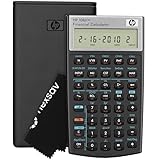
- HP 10BII+ FOR STUDENTS & PROFESSIONALS – This HP calculator is built for business, finance, accounting, and statistics courses. Perfect for learners and professionals who need to solve common financial problems quickly without memorizing formulas or relying on spreadsheets.
- 100+ FUNCTIONS FOR REAL WORLD MATH – Quickly solve time value of money, interest rates, loan payments, NPV, IRR, cash flows, and more. The 10bII+ also includes probability distributions for statistics courses—a feature not often found in financial calculators.
- ALGORITHMIC INPUT WITH DEDICATED KEYS – This high-school/college calculator uses algebraic and chain logic with minimal keystrokes. Layout appears the same as standard calculators for easy learning. Dedicated keys give quick access to commonly used financial and statistical functions
- APPROVED FOR MAJOR EXAMS – The HP 10bII+ algebra calculator is permitted for use on SAT, PSAT/NMSQT, and AP tests. An ideal statistics calculator and business calculator for school finance and accounting students preparing for class, coursework, or standardized exams.
- INCLUDES TRAVEL CASE, CLEANING CLOTH & BATTERIES– Slim, durable, and easy to keep on hand or store in a backpack or locker. Includes a protective case, cleaning cloth, and batteries so it’s ready out of the box. Large screen with clear contrast (non-backlit) is easy to read during exams or lectures.
Use a like-for-like comparison
There is no universal best yield among these choices. Rates and fund yields change, and the appropriate comparison depends on amount, term, location, fees, taxes, and when you need access. No current yield figures are included here because they are date-, maturity-, institution-, and fund-specific. At the time you choose, compare the following for the same holding period:
| What to compare | Treasury securities | CDs | Money market funds |
|---|---|---|---|
| Return structure | Bills are sold at a discount or par and pay face value at maturity; notes and bonds pay coupons every six months. Confirm the security’s actual terms and yield. | Check the institution’s offered APY for the selected term. Early-withdrawal penalties are institution-specific. | Yield generally reflects short-term rates and is reduced by fund expenses; check the current yield and expense information. |
| Access and exit | Bills can be held to maturity or sold early. Notes and bonds can be sold early, but their market price may be above or below face value. | Access before maturity may trigger an early-withdrawal penalty. Review the bank’s terms. | Generally redeemable on a business day at NAV, subject to fund terms and possible liquidity measures. |
| Protection | Not FDIC-insured; U.S. Treasury securities are backed by the full faith and credit of the U.S. government, according to FDIC materials. | Eligible deposits at FDIC-insured banks are insured within applicable limits. | Not FDIC-insured; the value of shares is not guaranteed. |
| Tax point established here | Treasury bill interest is federally taxable and exempt from state and local taxes. Check current rules for your security and circumstances. | Tax treatment depends on applicable rules and circumstances; verify for your situation. | Tax treatment depends on applicable rules and circumstances; verify for your situation. |
Decide what happens if your plans change
- Write down when you may need the cash. Use a range if the date is uncertain. Match a CD or Treasury maturity to the planned date where possible.
- Check the exit path before comparing yields. For a CD, read the early-withdrawal terms. For a Treasury note or bond, consider that a sale before maturity happens at the market price, which can be above or below face value. For a fund, check redemption timing, NAV, and any applicable liquidity measures.
- Compare return over the same period. Do not compare a long-term coupon or a CD APY for one term with a money market fund’s current yield as if they covered an identical period. Rates, yields, and terms can differ.
- Subtract costs and account for taxes. Include fund expenses, account fees, and any CD penalty relevant to your likely exit date. For Treasury bills, account for federal tax and their exemption from state and local tax; check current rules for your circumstances.
- Verify the protection and the actual product. Confirm that a purported money market option is a mutual fund or a bank deposit account, and check the bank, ownership category, and combined deposit balance when assessing FDIC coverage.
Which is better for short-term savings?
For a short, known holding period, compare a Treasury bill and a CD that mature near the date you need the money, including their current return and early-exit consequences. For cash that must remain flexible, compare a money market fund’s current yield, expenses, redemption terms, and lack of deposit insurance with an eligible insured bank deposit account. A long-term Treasury note or bond may be unsuitable for a near-term spending need if you might have to sell before maturity.
Quick Recap
Best Value

- PROFESSIONAL FINANCIAL CALCULATOR : Built-in TVM, IRR, NPV. Engineered for business analysts, real estate investors, accountants, and finance students.
- ADVANCED CASH FLOW & AMORTIZATION : Execute time value of money, break-even analysis, depreciation schedules, and bond pricing. Trusted for professional exam prep", MBA coursework, and banking certifications.
- CATIGA CF-300 : Flip-open hard case with a snap-close design for a secure fit. Compact and portable: designed for daily professional use in office, classroom, or on-site.
- ALL-IN-ONE FOR PROFESSIONALS : From NPV/IRR for real estate analysis to statistical calculations for business analysts. Handles probability, linear regression, and complex financial formulas.
- MORTGAGE, LOAN & INVESTMENT CALCULATOR : Covers bond pricing, loan amortization, investment analysis, and exam-level computations. Your go-to accounting calculator, business calculator, and real estate calculator in one device.
Product prices and availability are accurate as of the date/time indicated and are subject to change. Any price and availability information displayed on Amazon at the time of purchase will apply.




