Do these 3 things before closing this tab:
1Repair Windows errors before they cause bigger problems2Scan for outdated or missing drivers - takes under a minute3Clear out junk files and repair common Windows errorsChoose a payroll provider by first listing the work you need done, then verifying its legal role, tax responsibilities, security practices, operating fit, and contract terms. Outsourcing payroll does not automatically transfer your federal employment-tax obligations: for ordinary provider arrangements, the employer generally remains responsible for timely filing and payment. You should be able to verify tax deposits under your own employer identification number (EIN).
Define the payroll work you want to outsource
“We handle payroll” is too broad to use as a scope of work. Depending on the arrangement, a provider may prepare paychecks, prepare or file Forms 940 and 941, make federal tax deposits and payments, or prepare and furnish W-2s. The agreement may assign some or all of these tasks. Ask for a written breakdown showing what the provider does, what requires your approval, and what remains your responsibility. The IRS guide to payroll outsourcing and third-party payers describes these possible duties.
Also confirm which federal, state, and local jurisdictions the provider supports for your business locations and workforce. Get its assumptions about implementation, employee types, payroll schedules, and any work that will be billed separately in writing.
Verify the provider’s legal arrangement
Payroll service provider, reporting agent, section 3504 agent, and certified professional employer organization (CPEO) are not interchangeable labels. They can have different authority, authorization requirements, and liability arrangements. Ask the provider to identify its exact role and show which authorization or certification applies to your business. Check that the contract describes the same arrangement.
#1 Best Overall

- Complete Solution - Includes HN3000 AutoAlign time clock, 100 time cards, rack, ribbon, and keys for instant tracking.
- Precise Punching - AutoAlign technology ensures accurate alignment for error-free payroll records.
- Robust Warranty - Two-year warranty with unlimited customer support (Monday–Friday) guarantees reliable performance.
- Simple Setup - Plug-and-play design with clear instructions enables tracking in minutes.
- Clear Printing - High-quality uPunch ribbons deliver legible, consistent punch punches.
- Payroll service provider (PSP): A third party that can help administer payroll and employment-tax tasks. The specific work depends on the agreement and authorizations.
- Reporting agent: A type of PSP authorized through Form 8655 to perform designated duties and carry out specified IRS-facing functions.
- Section 3504 agent: An agent appointed through Form 2678. Its role differs from a PSP or reporting agent.
- CPEO: A certified organization with a separate customer-agreement framework that includes Form 8973.
These distinctions and related responsibilities are set out in the IRS chart of third-party arrangements. If a provider says its arrangement changes who is liable for taxes, ask which status and contract provisions support that claim; do not rely on a sales description alone.
Keep visibility over tax deposits and filings
For an ordinary PSP or reporting-agent relationship, assigning payroll tasks to a provider does not by itself relieve the employer of federal employment-tax duties. The IRS warns that a provider may fail to deposit taxes even after receiving the employer’s money. The employer can then face unpaid taxes, penalties, and interest. Some distinct arrangements allocate liability differently, so verify the specific status and terms before relying on a claimed transfer of responsibility.
Rank #2
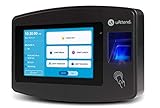
- Advanced Time Tracking: The uAttend JR2000 makes employee time tracking effortless and accurate, powered by a cloud-based system designed for business efficiency.
- Complete Payroll Tasks with Ease: With uAttend, we automate payroll with time and attendance data, handle tax filings, and make switching easy.
- Real-Time Data Access: View, track, and manage employee attendance in real-time from any device, providing flexibility and control no matter where you are.
- Easy Setup & User-Friendly Interface: Enjoy an intuitive interface and straightforward setup process, making it accessible for any team, from first-time users to tech-savvy managers.
- In-Depth Reporting Capabilities: Gain valuable insights into attendance trends, productivity, and labor costs with our comprehensive reporting tools.
The IRS advises employers to maintain their own address of record with the agency and use the Electronic Federal Tax Payment System (EFTPS) to check deposits under the employer’s EIN. The IRS’s guidance on outsourcing payroll duties states: “Remember, employers are ultimately responsible for the payment of income tax withheld and of both the employer and employee portions of social security and Medicare taxes.”
Assess security and contract protections
Payroll data is sensitive. Ask what evidence the provider can share about its security controls and how it handles access, retention, deletion, secure transfers, subcontractors, and incident response. Have the contract specify security obligations and what happens if a breach or service interruption occurs.
Rank #3

- Newly Upgraded— Instant Self-Service Attendance: Staff can view their timesheets on their phone—no approval needed. Verify fingerprint, select dates, scan the QR code, and access full work hours, breaks & overtime logs anytime. Eliminates delays, boosts transparency, and cuts admin hassle.
- Remote Access: Unlike Bluetooth rivals with limited range and data loss issues, our Cloud Time Clock lets you view, correct attendance, and set custom rules in real time via the TimeRalo mobile app—no web portal or desktop software needed. Manage attendance anywhere, check real-time/historical records and edit errors effortlessly.
- Easy Setup, No Professional Skills: This employee time clock has a simple 3-step setup—no technical expertise required. Get it running in 3 minutes, skip complexity, and start seamless attendance management.
- Smart Scheduling: Supports fixed, rotating, flexible and night shifts. It easily handles cross-day shifts, department transfers and temporary employee attendance, perfect for 24-hour teams and all business workflows.
- Smart Automatic Calculation: Built-in intelligence calculates working hours, OT1, OT2, weekly overtime, and auto-deducts lunch/break time. Customize 12h/24h format and minute/percentage display to fit payroll rules, ensuring accurate timesheets and time savings.
- Request available security audit reports and ask how frequently they are updated.
- Ask what insurance applies to cyber incidents and identity-theft losses.
- Check the deadline and method for notifying you of a security incident.
- Review any contract language that limits the provider’s responsibility for incidents, tax errors, or interruptions.
- Confirm how records will be returned or securely deleted when the relationship ends.
The Department of Labor’s service-provider cybersecurity guidance recommends examining audit reports, insurance, ongoing security commitments, and liability limits. That guidance is specifically framed for ERISA plan sponsors and fiduciaries; apply it in that context if the payroll relationship also involves retirement-plan data, rather than treating it as a general payroll-tax rule.
Independent reader supportYour contribution helps us test, update, and keep practical guides available for everyone.Compare how the service will work day to day
Look beyond the feature list. Compare the operational details that affect whether payroll runs accurately and on time:
Rank #4
![Pyramid Time Systems 2500 Auto-Aligning Time Clock Bundle [2500K1]](https://m.media-amazon.com/images/I/411v7QKnZiL._SL160_.jpg)
- AUTO-ALIGNING PUNCH CLOCK: Top-loading card feed automatically aligns each punch for clean, accurate time entries; no manual adjustments needed; reduces errors that slow down payroll
- RELIABLE TIME CARD MACHINE PERFORMANCE: Consistent printing keeps employee time records accurate pay period after pay period; automatic resets for Daylight Saving Time and short months mean less maintenance for busy managers
- VERSATILE TIMEKEEPING FOR ANY WORKPLACE: Records arrival, break, lunch, and departure times across 3 in/out punch cycles per day; double-sided time cards cover up to 31 days; choose 12-hour or 24-hour military time format
- COMPACT DESIGN, FLEXIBLE PLACEMENT: Small footprint fits on a desk or mounts on a wall to suit offices, retail, warehouses, and other workplaces; backlit LCDs show time, date, and day at a glance; tamper-proof security lock guards against time theft
- COMPLETE BUNDLE, READY TO USE: Includes 100 pyramid time cards, 2 ink ribbon cartridges, 2 security keys, and a 10-slot time card rack; everything a small business needs to start accurate employee time tracking without additional purchases
- Who enters or approves hours, changes, and payroll runs—and by what deadline?
- What support hours, service levels, and escalation routes are available?
- Who handles rejected or late filings, incorrect payments, agency notices, and corrections?
- What reports and records will let you reconcile payroll totals and deposits?
- How will service continue during an outage, and what transition assistance is included if you leave?
- Can you export the payroll and tax records you need, in usable formats, at termination?
Ask each provider for its total costs, including implementation, recurring charges, out-of-scope work, renewal terms, and termination fees. The IRS materials explain arrangements and employer responsibilities; they do not rank commercial providers or establish a standard price. Compare written proposals on the same scope rather than treating unlike quotes as equivalent.
Use these questions before signing
- Which payroll and tax tasks are included, and which require employer action or approval?
- Which jurisdictions and workforce types are covered for my business?
- What is your formal arrangement—PSP, reporting agent, section 3504 agent, or CPEO—and what authorization or certification can I verify?
- Who initiates deposits, how are they made, and what records let me reconcile them to my EIN?
- What is the process if a return or payment is late, incorrect, rejected, or disputed?
- What security evidence, insurance, incident-notification terms, and subcontractor controls can you document?
- What contract limits apply to tax penalties, errors, security incidents, and interruptions?
- What service levels, support hours, fees, exclusions, and transition provisions apply?
Monitor the provider after hiring
Keep your employer address of record with the IRS rather than substituting the provider’s address; the IRS warns that changing it may interfere with receiving tax notices. Enroll in EFTPS and periodically review payment history under your EIN. The IRS encourages employers to use EFTPS to check deposits made by their payroll provider, as stated in its May 11, 2022 Tax Tip.
Quick wins for a faster PC:
Scan for outdated or missing drivers - takes under a minuteDriver Scan →Repair Windows errors before they cause bigger problemsFix Now →If a deposit appears missing or late, escalate promptly with the provider, preserve payroll and deposit records, and respond to any IRS notice. Keep the agreement, authorizations, payroll reports, and payment records accessible to the people responsible for tax oversight.
Quick Recap
Product prices and availability are accurate as of the date/time indicated and are subject to change. Any price and availability information displayed on Amazon at the time of purchase will apply.




