To check whether your power supply can support a new graphics card, identify the exact card model, compare its manufacturer’s recommended system PSU rating with your PSU’s rated output, and confirm that the PSU can supply the specific power cables the card requires. There is no single wattage that works for every GPU: requirements can vary by card model, board partner and the rest of the PC.
Check the exact graphics card requirement
Start with the full model name of the card you plan to install, including the board partner and variant if applicable. A GPU family name alone may not be enough: NVIDIA notes that specifications can vary by add-in-card manufacturer and that power requirements can differ with system configuration on its GeForce RTX 5070 Family specifications.
As an Amazon Associate I earn from qualifying purchases.
Find the card maker’s current product specifications and installation guide. Look for its recommended or minimum system PSU wattage, stated assumptions, and required power connectors. Use the board partner’s documentation too when the exact model differs from the reference card.
Recommended Free Tools
Compare the recommendation with your PSU
Read the PSU’s make, model and rated-output label. If the label is unclear, check the PSU maker’s documentation for the unit’s rated output and 12 V capability. Compare the figures with the target card’s stated system PSU requirement; do not compare the GPU’s board power alone with the PSU’s wattage.
#1 Best Overall

- 80 PLUS GOLD CERTIFIED
- 10-year limited warranty, guaranteeing long term reliable operation
- Fully modular design
- ATX 3.1 & PCIE 5.1
Typical board power describes the graphics card, while the recommended system PSU rating accounts for a broader PC configuration. For example, AMD’s product specifications list these model-specific values:
| Graphics card | Typical board power | PSU recommendation | 12 V output condition | AMD reference system |
|---|---|---|---|---|
| Radeon RX 7600 | 165 W | At least 550 W | Above 40 A | Ryzen 9 5900X plus typical components |
| Radeon RX 7700 XT | 245 W | At least 700 W | Above 54 A | Ryzen 9 7950X plus typical components |
| Radeon RX 7900 XT | 315 W | At least 750 W | Above 62 A | Ryzen 9 5900X plus typical components |
These are recommendations for the named cards, not general rules for other GPUs. AMD says system requirements may differ; NVIDIA likewise warns that power needs depend on configuration. Your CPU and other components matter, so the card maker’s stated recommendation should be treated in the context of its assumptions.
Rank #2

- 80 PLUS GOLD CERTIFIED
- 10-year limited warranty, guaranteeing long term reliable operation
- Fully modular design
- ATX 3.1 & PCIE 5.1
Verify the power connectors and cables
A PSU can meet a wattage recommendation and still lack the connector arrangement the card requires. Check the exact card instructions for the required PCIe 6-pin or 8-pin plugs, or newer 16-pin connector, and confirm that your PSU has the specified cable or supported adapter arrangement. Do not assume an arbitrary adapter is acceptable.
The Tool Desk
Outbyte Driver Updater FREEScan for outdated or missing drivers - takes under a minuteDriver Scan →Outbyte PC Repair FREERepair Windows errors before they cause bigger problemsFix Now →For one model-specific example, NVIDIA’s GeForce RTX 5070 User Guide, revision 2 specifies a 650 W minimum system PSU and either at least two PCIe 8-pin cables used with the supplied adapter, or one PCIe Gen 5 16-pin cable rated for 360 W or more. This describes the RTX 5070 guide’s requirements, not a universal rule for other cards.
Rank #3
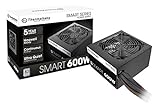
- Delivers 600W Continuous output at plus 40℃. Compliance with Intel ATX 12V 2. 31 and EPS 12V 2. 92 standards
- 80 PLUS Certified – 80% efficiency under typical load. Power good signal is 100-500 millisecond
- Supports (2) PCI-E 6 plus 2pin Connectors. Active (PFC) Power Factor Correction, MTBF: 100, 000 hours
- Industry Grade Protections: (OPP) Over Power Protection, (OVP) Over Voltage Protection, (SCP) Short Circuit Protection
- Hold up time is 16 millisecond minimum within 60 percent load. Input frequency range 50 - 60 in Hz
Use this compatibility check before buying
- Identify the exact GPU. Record its complete model and board partner, then locate that card’s current specifications and installation guide.
- Identify the PSU. Read its make, model and rated-output label; consult the PSU maker’s documentation if needed.
- Compare capacity. Check the PSU rating against the card maker’s recommended system PSU wattage and any stated 12 V output condition.
- Match the cables. Confirm that the PSU can provide the exact connector type, number of cables and documented adapter arrangement required by the card.
- Consider the full system. Check whether your CPU and other components differ materially from the configuration used for the recommendation.
- Resolve any mismatch before installation. If capacity or cabling falls short, select another card or a suitable replacement PSU only after checking the exact card and PSU documentation.
What to do if the PSU does not meet the requirement
If your PSU does not meet the target card’s documented system requirement, or cannot provide its specified cabling, treat it as unsuitable unless the card and PSU makers’ documentation confirms an acceptable arrangement. Your practical options are to choose a card whose documented requirements your current PSU meets, or replace the PSU with a unit confirmed to support the exact card and full system. Without the GPU model, PSU model, CPU and system configuration, a specific compatibility verdict or replacement wattage cannot be established.
Quick Recap
Best Value

- Delivers 500 Watt Continuous output at plus 40 degree. Compliance with Intel ATX 12 Volt 2.31 and EPS 12V 2.92 standards
- 80 PLUS Certified, 80 percentage efficiency under typical load
- Supports (2) PCI E 6plus2pin Connectors. Active (PFC) Power Factor Correction, MTBF: 100,000 hours
- Industry Grade Protections: (OPP) Over Power Protection, (OVP) Over Voltage Protection, (SCP) Short Circuit Protection
- High Quality Components
Rank #4
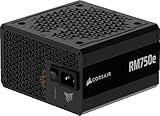
- Fully Modular PSU: Reliable and efficient, low-noise power supply with fully modular cabling, so you only have to connect the cables your system build needs.
- Intel ATX 3.1 Certified: Compliant with the ATX 3.1 power standard, supporting PCIe 5.1 platform withstands 2x transient power excursions from the GPU.
- Keeps Quiet: A 120mm rifle bearing fan with a specially calculated fan curve keeps fan noise down, even when operating at full load.
- 105°C-Rated Capacitors: Delivers steady, reliable power and dependable electrical performance.
- Modern Standby Compatible: Extremely fast wake-from-sleep times and better low-load efficiency.
Product prices and availability are accurate as of the date/time indicated and are subject to change. Any price and availability information displayed on Amazon at the time of purchase will apply.




