To check the tax on a gold or silver purchase, first identify the country and whether you are buying bullion, a coin, finished jewellery or a service. Then compare the invoice’s product description, taxable value, tax rate and tax amount, and recalculate the total. For consumer jewellery sales in India, the Central Board of Indirect Taxes and Customs (CBIC) says GST is 3% of the total transaction value, including making charges—even when those charges are shown separately. That treatment is not universal: tax rules differ by country and product.
Start with the country and the kind of transaction
A percentage on a bill is not enough to tell you whether a charge is correct. The applicable rule can depend on where the sale takes place and what is being supplied. A gold bar, a coin, a finished necklace and a refabrication service may not receive the same tax treatment.
As an Amazon Associate I earn from qualifying purchases.
Before checking the arithmetic, establish these details:
- Jurisdiction: Identify the country, and where relevant the state or territory, whose tax rules govern the sale.
- Product or service: Determine whether the invoice is for bullion, a coin, finished jewellery, repair or refabrication, or another service.
- Transaction structure: Note any separate workmanship charge, discount, exchange or trade-in. These may affect the taxable amount under the local rules.
Do not assume that a rule for finished jewellery applies to a bar or a service, or that a tax rate in one country applies elsewhere. For a real purchase, check the current official guidance for the place of sale and the purchase date.
#1 Best Overall

- ULTRA-COMPACT DESIGN- Measuring just 4" x 2.25" x 0.3" and weighing in at only 1.23 oz, the HS-8VA is one of our smallest calculators, perfect for pockets, bags, desks and math on-the-go.
- BIG DISPLAY & EASY INPUT- 8-Digit LCD Display. Clear and easy-to-read screen ideal for everyday calculations at home, school, or office.
- GENERAL PURPOSE CALCULATOR – Ideal for a wide range of applications, from basic math to business and personal use, with memory keys for quick storage and recall.percentage, and square root.
- MEMORY KEYS- Features M+, M-, Memory Clear, and +/- key for efficient multi-step calculations.
- SOLAR WITH BATTERY BACK-UP – Reliable power with energy-efficient Solar Plus technology and battery back-up to keep you working without interruption.
It helps to separate two questions: “Does the arithmetic match the invoice?” and “Was this the correct tax treatment for this transaction?” The first can often be checked with a percentage calculation. The second depends on the product classification, local rules and transaction details. A bill that adds up can still require clarification if, for example, it describes a service as jewellery or does not explain a separately collected amount.
How to check an itemised gold or silver bill
- Read the product description. Check that it identifies what you bought—such as jewellery, a coin or bullion—and that the stated weight and purity basis match the quote and transaction documents.
- Trace the amount before tax. Identify the metal value, making or workmanship charges, other fees, discounts, and any old metal or trade-in credit. Check how the seller arrived at the taxable value; separate invoice lines do not by themselves establish that each line has a different tax treatment.
- Find the tax rate and amount. The invoice should make clear which tax was charged and how much. Compare those details with the rules for the jurisdiction and transaction type, rather than relying on a label such as “GST” alone.
- Recalculate the tax. Multiply the applicable taxable value by the stated rate, then compare your result with the tax amount on the bill. If tax is divided into components, check that the components add up to the stated total tax.
- Recalculate the final payable amount. Add the taxable amount and tax, account for any discounts or trade-in credit as itemised, and compare the result with the amount the seller asks you to pay. Treat any separate collection as a distinct line to investigate, not automatically as part of GST.
- Check who issued the invoice. Look for the seller’s legal identity and the invoice details required in that jurisdiction. If a product description, taxable amount or calculation is unclear, ask the seller for an explanation or corrected itemisation and keep the quote, invoice, payment record and response.
A useful paper or spreadsheet checklist has one row for each amount: metal value, making or workmanship, other fees, discounts or trade-in credit, taxable value, tax rate, tax amount, any separate collection and final payable total. This makes it easier to see whether a difference between two quotes comes from the metal valuation, an added charge or the tax calculation. Use the seller’s stated units and basis consistently; do not compare a weight or purity figure from one quote with a differently described figure from another without asking what each represents.
For a simple arithmetic check, calculate taxable value × rate, then compare that result with the tax line. If the invoice uses a percentage, convert it to a decimal for multiplication—for example, 3% is 0.03. Add the tax components if the seller itemises them separately, and then check the complete invoice total. The method only verifies the numbers using the stated taxable base; it does not establish that the base or rate is legally correct.
A calculator can verify multiplication and addition. It cannot tell you whether the seller classified the item correctly, used the right tax base or was legally required to collect a separate charge.
India: GST on consumer jewellery and other listed precious-metal goods
For consumer jewellery, check the full transaction value
CBIC’s GST Sectoral FAQs answer a seller’s question about a gold chain weighing 10 grams, priced at ₹30,000, with ₹28,000 described as gold value and ₹2,000 as making charges. CBIC’s answer is that GST is 3% of the total transaction value of jewellery, whether making charges are shown separately or not.
Using the FAQ’s figures, 3% of ₹30,000 is ₹900. Charging 3% only on the ₹28,000 metal value would produce ₹840, but that is not the consumer-jewellery calculation given in the FAQ. The ₹30,000 example is an official illustration, not a market price or a separate rate for making work.
The practical implication is that the way a seller lays out the bill does not by itself change the consumer-jewellery calculation described in that FAQ. If the metal and making charges appear on separate lines, do not automatically calculate 3% on the metal line alone and treat the making line as outside the transaction value. In the example, the base is the full ₹30,000 transaction value, so the charge is ₹900. If a bill instead shows a different taxable value, ask the seller to explain the difference and identify the treatment being applied.
Rank #2

- COMPACT & PORTABLE DESIGN – Space-saving design that fits easily on any desk or in a briefcase, making it ideal for both home and office use.
- LARGE EIGHT-DIGIT DISPLAY – Clear and easy-to-read 8-digit display, perfect for everyday calculations, ensuring accurate results in home or office settings.
- GENERAL PURPOSE CALCULATOR – Ideal for a wide range of applications, from basic math to business and personal use.
- DUAL POWER SOURCE: Operates on solar power with battery backup to ensure reliable use in any lighting condition.
- DURABLE HARD COVER: Built-in protective case shields the calculator from scratches, drops, and everyday wear.
This also answers the common question, “Is GST charged on making charges for gold jewellery?” In the CBIC consumer-jewellery example, GST is calculated on the total transaction value whether or not making charges are separately displayed. It is not the same as charging a separate 5% consumer tax on making work. The 5% figure in the FAQ concerns a distinct registered job-worker arrangement, discussed below.
Check the product category, not just the word “gold”
CBIC’s rate schedule lists a 3% combined GST entry for specified categories that include precious-metal jewellery and coins, as well as certain unwrought or semi-manufactured gold and silver. The schedule presents the combined rate as 1.5% central tax plus 1.5% state or Union Territory tax in the listed entries. For an actual transaction, confirm the precise tariff classification and applicable notification; the product’s everyday name alone may not determine its treatment.
For a buyer checking a bill, this distinction matters because “gold” or “silver” alone is not a complete description of what was sold. A finished ornament, an investment bar, a coin and metal supplied for further work are not interchangeable descriptions. Match the invoice wording to the actual item and then look up the relevant current category and notification. If the invoice simply says “gold” or gives no clear indication of whether it is jewellery, bullion or a service, ask the seller to clarify the classification rather than assuming a rate from the metal alone.
Where the listed combined rate is split into central and state or Union Territory components, the invoice may show the components separately. Check that the displayed parts add to the stated combined tax. The 1.5% plus 1.5% figures are the entries in the cited schedule for the specified categories; they should not be treated as a general statement that every transaction involving precious metal has that classification or rate.
Outdated Drivers Are Slowing You Down
One free scan finds every outdated or missing driver and matches the right update for your exact hardware.Free scan · exact hardware matchPC Slower Than It Used to Be?
A free scan shows the junk files, broken settings and background clutter dragging Windows down - then fixes them in one click.Free scan · Windows 10 & 11The consumer jewellery answer should not be confused with a business-to-business job-work arrangement. CBIC’s Sectoral FAQs state that a registered job worker pays GST at 5% on job charges in the described case where gold is supplied as raw material and returned as finished goods. That is a specified job-work treatment, not the consumer rate on a finished jewellery purchase.
The distinction is about the transaction being supplied: a consumer buying finished jewellery is not automatically receiving the job worker’s service arrangement. If a bill is for work on metal supplied by another party, ask whether it is a job-work service and who owns or supplied the material. Do not use the 5% job-charge figure to recalculate a retail jewellery invoice.
Use invoice particulars as a cross-check
India’s GST Rule 46 includes invoice particulars such as the supplier’s name, address and GSTIN; a unique consecutive serial number and issue date; and taxable value and tax-rate and tax-amount information. Recipient details are required in circumstances set out in the rule. These are useful fields to inspect, but this is not a complete reproduction of Rule 46. Consult the current full rule and amendments for a compliance checklist.
Rank #3
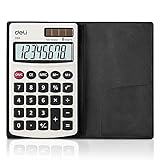
- Pocket calculator, mini size is suitable for you bussiness travel use
- 8 digits large LCD display and metal panel ensure long-lasting life
- Dual power, solar and battery (cell battery included), solar function works even in the dim light
- The soft rubber button design in line with the use of human habits, comfortable for touch
- Comes with PVC cover to protect keyboard and screen from scratching
As a buyer, use these particulars to make the document traceable and to connect the tax calculation to the seller who issued it. Compare the supplier identity on the invoice with the seller and the payment record, and check that the invoice has its own number and date. Then look for the taxable value and the rate and amount shown for the tax. Missing, inconsistent or unclear details are a reason to request an explanation or corrected invoice; this short list is not a legal determination that any particular document is invalid.
Quick wins for a faster PC:
Scan for outdated or missing drivers - takes under a minuteDriver Scan →Clear out junk files and repair common Windows errorsFree Scan →Fix the driver behind crashes, sound loss and screen glitchesFind Drivers →Other collections are not automatically GST
In India, section 206C(1D) of the Income Tax Act describes a 1% collection for certain cash consideration exceeding ₹200,000 for bullion or ₹500,000 for jewellery. This is a separate provision, not GST. Its application depends on the provision’s conditions and the buyer’s transaction; do not treat the thresholds as a rule that applies to every purchase or payment method. Check the live statutory text and current amendments before deciding that the collection is due.
Keep the name of this amount separate from the GST lines when comparing or checking a bill. The statutory description is tied to specified cash consideration and thresholds, so it should not be generalized to every payment or every precious-metal transaction. The fact that the amount appears on the same invoice as GST does not make it GST, and an arithmetic check of the GST percentage does not prove that a separate collection applies.
If an invoice includes an amount beyond the stated GST, ask the seller what it represents and what rule applies. Do not add a second percentage to the GST calculation without first identifying the charge and confirming its basis. If the seller describes it as a statutory collection, ask which provision and transaction details the seller is relying on; if the amount or applicability remains disputed, consult the relevant authority or a qualified local tax professional.
Singapore shows why country and product details matter
Singapore provides a contrast, not a substitute for checking the rules where you are buying. The Ministry of Finance lists the import and local supply of qualifying investment precious metals as GST-exempt. That is a category-specific exemption, not a general exemption for all gold or silver jewellery. Singapore’s general GST rate is 9% from 2024, but that general rate should not be applied to qualifying investment precious metals as though they were taxable at that rate.
What’s actually slowing this PC down?
Pick the symptom - the matching free tool is one click away.
The word “qualifying” is important: the listed exemption is for investment precious metals, not a blanket exemption based on an item containing gold or silver. A buyer should confirm that the product fits the official category instead of treating all bullion, coins or jewellery as exempt by assumption. The Singapore example also shows why a rate quoted without its product context can mislead: the general 9% rate and the specific exemption relate to different treatments.
Gold jewellery trade-ins have a conditional concession
IRAS says a gold-jewellery trade-in is generally treated as two supplies. A trader may choose an administrative concession to account for GST on the difference between the value of the new gold jewellery, including workmanship, and the trade-in value of the old gold jewellery. The concession applies to gold jewellery, not gold bars, and the trader is not required to use it.
Rank #4

- 【Multifunctional Calculator】This calculator desktop integrates a calculator and notebook with a stylus pen. No paper is needed, pursuing paperless. You can take notes while calculating, calling, and meetings to improve your study and work efficiency.
- 【Lightweight and Portable】This is a lightweight calculator with a writing pad and foldable design, and it weighs only 3.73 ounces. It is portable that you can carry it anywhere and it can be removed and used immediately when needed.
- 【Healthy and Eco-friendly】This calculator features a blue light-free LCD screen to protect your eyes, and you can use it as a notepad on your desk when you're not using the calculator. It is re-writable and can be rewritten over 100,000 times. Reduce paper consumption.
- 【Mute Design】The calculator is made of comfortable silicone, and soft touch keys, easier to rebound, quiet, and no noise. Bring you a more comfortable touch and quiet using experience. The Mute button does not disturb others, suitable for office, learning, and a variety of use scenarios.
- 【Multi-scenario use】This high-quality calculator is strong enough to handle calculations in a variety of environments such as business accounting, school, home, office, etc., and would also suitable for various occasions. Whether you are a student, a teacher, or a business person, it offers a fast, efficient experience!
From 1 January 2025, the concession applies only where the customer is not GST-registered at the time of supply. IRAS also distinguishes a refabrication service from a trade-in: if the customer retains ownership of the gold, the transaction is not a trade-in and GST is due on the refabrication service. A trade-in quote should therefore identify whether the old item is jewellery or a bar, whether ownership changes, and whether the customer meets the stated condition.
For a Singapore quote, look at how the seller describes both sides of the transaction: the new gold jewellery and the old gold item being handed over. A gold bar is not covered by this jewellery trade-in concession. If the customer retains ownership and asks for the gold to be refabricated, that is a service rather than a trade-in under IRAS’s guidance, so the service charge should not be checked as though the old gold were being sold to the trader. Even when the transaction is a qualifying jewellery trade-in, the trader may choose not to use the concession; do not assume every seller will calculate GST on the difference.
Free tools Windows power users keep installed
One-click scans. No signup required.
Compare competing quotes on the same basis
When two sellers quote different totals, compare like with like rather than looking only at the headline gold price. Record the details below for each quote; a difference may come from the product, charge, tax base or trade-in treatment rather than from a single rate.
- Country and applicable tax jurisdiction.
- Product or service classification, including whether the item is bullion, a coin, finished jewellery or refabrication.
- Purity and weight basis used to value the metal.
- Metal value and any making, workmanship or other fees.
- Discounts, old-metal credit or trade-in value, with the seller’s explanation of how each is treated.
- Taxable value, named tax, rate and amount.
- Invoice identity and required tax particulars.
- Final payable total and any separate collection outside GST.
For a Singapore gold-jewellery trade-in, also check whether the transaction meets the concession’s conditions, including the customer’s GST-registration status at the time of supply. Do not assume that a seller has to use the concession.
When comparing the same kind of purchase, write the figures side by side rather than comparing only the final totals. Confirm that both quotes use the same product form, purity and weight basis, and distinguish metal value from workmanship. Then compare how each seller treats discounts, an old-metal credit, the taxable amount and the tax rate. If one seller’s quote is itemised and another is not, ask for the second quote to be broken out before concluding that one is cheaper.
For example, in the CBIC illustration, the relevant consumer-jewellery transaction is ₹30,000, not just the ₹28,000 gold-value component. The 3% calculation gives ₹900 on the full transaction. That arithmetic provides a useful way to understand the stated base, but it is not a universal formula for every country, product or trade-in. Use the governing rule for the actual transaction.
What to do if a bill does not add up
- Ask for the calculation in writing. Request the taxable value, applicable rate, tax amount and explanation of each other collection or credit.
- Point to the specific mismatch. For example, identify a difference between the invoice’s stated taxable amount and the value used in your arithmetic, or ask why the product description differs from the item supplied.
- Request corrected itemisation when appropriate. Keep the original quote and invoice as well as any revised document; do not rely only on a verbal explanation.
- Preserve transaction records. Retain the payment record, product details, invoice and seller correspondence in case the issue needs to be reviewed.
- Escalate unusual or disputed treatment. Check with the relevant tax authority or a qualified local tax professional. A calculator can establish whether arithmetic matches the stated figures, but not resolve a classification or legal dispute.
When raising a question, make it specific: name the line that seems unclear, state the value and rate printed on the bill, and show the calculation you performed. Ask whether the seller can explain the product classification, taxable base or separate collection and provide a corrected itemisation if needed. Keep both the original and revised documents so you can see what changed.
Best Value

- Easy to read: portable small calculator with large 8-digit LCD display, clear and high visibility, allowing you to see the numbers at a glance
- Easy to carry: the size of the pocket calculator is only 4.7 x 2.7 inches, which is small and lightweight, easy to store in drawer or put it in the school bag, briefcase for carrying; Suitable for home, school, office use
- Quality and appearance: basic standard calculator is made of durable ABS to ensure normal daily use; The candy-colored design and reasonable button layout make it beautiful and practical
- Dual power supply: electric digital kids calculator has dual electric drive, light energy and button battery; It can switch the power mode according to the environment, which is more durable and more convenient
- Clear and large keys: portable calculator has high sensitivity and quick response to the keys, which improves your work efficiency; The numbers on the keys are not easy to wear and can be applied for a long time
Rates, thresholds, invoice requirements and exceptions can change. Official guidance should be checked for the relevant jurisdiction and purchase date, especially before relying on an older FAQ or applying a narrow exemption or collection rule.
Frequently Asked Questions
How do I check GST on a gold bill?
Identify the country and whether the item is bullion, a coin, finished jewellery or a service. Find the invoice’s taxable value, tax rate and tax amount, then calculate taxable value × rate and compare the result with the bill. Also check the product description, seller identity and any separate collection. Arithmetic alone cannot confirm that the classification or tax base is legally correct.
Is GST calculated on gold value or the total jewellery value in India?
For the consumer jewellery situation addressed in CBIC’s GST Sectoral FAQ, GST is 3% of the total transaction value, whether making charges are shown separately or not. CBIC’s illustration uses ₹30,000 total value—₹28,000 gold value and ₹2,000 making charges—for a GST amount of ₹900.
Do these 3 things before closing this tab:
1Fix the driver behind crashes, sound loss and screen glitches2Repair Windows errors before they cause bigger problems3Scan for outdated or missing drivers - takes under a minuteIs GST charged on making charges for gold jewellery?
In CBIC’s consumer-jewellery example, the 3% GST calculation uses the total transaction value even when making charges are itemised separately. The 5% GST figure in CBIC’s FAQ relates instead to job charges in a specified registered job-worker arrangement where gold is supplied as raw material and returned as finished goods; it is not the consumer rate for finished jewellery.
What should a gold or silver invoice show?
The exact requirements depend on local rules. India’s GST Rule 46 includes, among other particulars, the supplier’s name, address and GSTIN, a unique consecutive invoice number and issue date, and taxable-value and tax-rate/amount information. Check the current full rule for all requirements. As a practical check, look for a clear product description, value, tax lines and final total.
Are all gold and silver purchases taxed at the same rate?
No. Treatment depends on jurisdiction and transaction type. In India, CBIC’s schedule lists a 3% combined rate for specified jewellery, coins and certain unwrought or semi-manufactured gold and silver categories. Confirm the exact classification and current notification for a real purchase; do not infer treatment from the word “gold” or “silver” alone.
Is the 1% amount on some Indian bullion or jewellery purchases GST?
No. Section 206C(1D) of India’s Income Tax Act describes a separate 1% collection for certain cash consideration exceeding ₹200,000 for bullion or ₹500,000 for jewellery. It is not GST, and its application depends on the provision’s conditions and the transaction. Confirm the current text and applicability before treating it as due.
Recommended Free Tools
Are investment gold and gold jewellery both GST-exempt in Singapore?
No general exemption for all gold or silver jewellery is described. Singapore’s Ministry of Finance lists qualifying investment precious metals as GST-exempt; that is category-specific. Check whether the actual product meets the official investment-precious-metal category.
How is a gold jewellery trade-in treated in Singapore?
IRAS says a trade-in is generally treated as two supplies, but a trader may choose a concession to account for GST on the difference between the new gold jewellery’s value, including workmanship, and the old gold jewellery’s trade-in value. From 1 January 2025, it applies only where the customer is not GST-registered at the time of supply. It does not apply to gold bars, and traders are not required to use it.
The Bottom Line
Check the jurisdiction and product first, then verify the invoice’s taxable value, rate, tax amount and total. In India, CBIC’s consumer-jewellery FAQ applies 3% to the total transaction value, including separately shown making charges; other categories and countries may differ. Keep any separate collection distinct from GST, ask for unclear calculations in writing, and confirm current official rules for the transaction date.
Quick Recap
Product prices and availability are accurate as of the date/time indicated and are subject to change. Any price and availability information displayed on Amazon at the time of purchase will apply.
The Tool Desk
Outbyte Driver Updater FREEFix the driver behind crashes, sound loss and screen glitchesFind Drivers →Outbyte PC Repair FREERepair Windows errors before they cause bigger problemsFix Now →



