Calculate dividend yield by dividing a stock’s annual dividend per share by its current share price, then multiplying by 100. To estimate your own gross annual cash income, multiply the estimated annual dividend per share by the number of shares you own. The result is an estimate—not a promised payment—because a company can change or stop its dividend.
How do you calculate dividend yield?
Dividend yield (%) = (annual dividend per share ÷ current share price) × 100. The result is a percentage that relates a company’s annual dividend amount to the price of one share. Fidelity describes this formula and two ways to set the annual dividend input: dividends paid over the prior 12 months, or an annualized estimate based on the latest regular payment.
As an Amazon Associate I earn from qualifying purchases.
For example, if the annual dividend input is $2 per share and the share price is $40, the calculation is ($2 ÷ $40) × 100 = 5%. That percentage is meaningful only alongside the dividend basis and the date of the share price used.
Quick wins for a faster PC:
Fix the driver behind crashes, sound loss and screen glitchesFind Drivers →Clear out junk files and repair common Windows errorsFree Scan →Scan for outdated or missing drivers - takes under a minuteDriver Scan →Fidelity’s explanation of dividend yield covers the formula and the two common annual dividend inputs. The Nova Scotia Securities Commission’s explanation also notes that quoted yields can differ when providers use different payment or price inputs.
#1 Best Overall

- ULTRA-COMPACT DESIGN- Measuring just 4" x 2.25" x 0.3" and weighing in at only 1.23 oz, the HS-8VA is one of our smallest calculators, perfect for pockets, bags, desks and math on-the-go.
- BIG DISPLAY & EASY INPUT- 8-Digit LCD Display. Clear and easy-to-read screen ideal for everyday calculations at home, school, or office.
- GENERAL PURPOSE CALCULATOR – Ideal for a wide range of applications, from basic math to business and personal use, with memory keys for quick storage and recall.percentage, and square root.
- MEMORY KEYS- Features M+, M-, Memory Clear, and +/- key for efficient multi-step calculations.
- SOLAR WITH BATTERY BACK-UP – Reliable power with energy-efficient Solar Plus technology and battery back-up to keep you working without interruption.
Keep the units consistent: use an annual dividend amount per share and a price for one share. The dividend input is a dollar amount, and dividing it by the share price produces a decimal; multiplying by 100 converts that decimal to a percentage. For instance, $2 divided by $40 is 0.05, or 5%. Do not divide your total portfolio income by the price of a single share and call the result the stock’s yield. Your share count belongs in the separate income estimate.
The word “current” matters because the share price changes during trading. A yield calculated using one day’s price is not necessarily the yield displayed later by a brokerage or financial website. A quote can be useful as a quick reference, but it should be read with its calculation basis and the date or time of the price input in mind.
Which annual dividend figure should you use?
Before calculating, decide whether you want a backward-looking yield based on cash already paid or an indicated yield based on the current regular payment rate. They answer different questions, so label the basis instead of treating the figures as interchangeable.
Recommended Free Tools
| Dividend basis | Input to use | What it tells you |
|---|---|---|
| Trailing 12 months | Add the dividends per share actually paid during the previous 12 months. | A historical yield based on payments already made. |
| Indicated annual rate | Annualize the latest regular dividend payment per share using its payment frequency. | An estimate of the annual rate if the regular payment continues. |
A trailing figure can include a dividend rate that has since changed. An indicated figure can move ahead of the company’s payment history: it assumes the latest regular payment continues for a year. The two figures may diverge after a dividend increase or cut, or when a special dividend was paid. Check whether a quoted number includes special dividends before comparing it with another yield.
Use the trailing figure when the question is, “How much did the company actually pay per share over the last 12 months?” Add the per-share amounts paid in that period, then divide by the chosen share price. This does not say what the company will pay over the next year; it describes a past period.
Use the indicated figure when you want a simple estimate based on the latest regular payment rate. Annualize that regular payment according to its frequency, then use the annualized amount in the yield formula. This is forward-looking only in the limited sense that it assumes the current regular payment continues. It is not a company promise or a prediction that the payment will remain unchanged.
Special dividends deserve particular attention. If a provider’s trailing calculation includes a one-time special payment, that historical total may be higher than the amount implied by the current regular rate. Conversely, a recent increase in the regular payment may make the indicated annual rate higher than the cash paid over the previous 12 months. Neither figure is necessarily “wrong”; they answer different questions. The essential step is to identify the convention before comparing or using the number.
Do these 3 things before closing this tab:
1Repair Windows errors before they cause bigger problems2Scan for outdated or missing drivers - takes under a minute3Clear out junk files and repair common Windows errorsHow do you annualize a regular dividend?
For an indicated yield, multiply the latest regular dividend per share by the number of payments in a year. Use the payment frequency announced by the company; do not assume that every stock follows the same schedule.
- Quarterly: latest regular payment per share × 4.
- Monthly: latest regular payment per share × 12.
For instance, a regular quarterly payment of $0.50 per share gives an indicated annual dividend of $0.50 × 4 = $2 per share. Divide that annualized amount by the share price and multiply by 100 to calculate the indicated yield. This calculation is an estimate based on continuation of the regular payment, not confirmation that future payments will occur.
The frequency is part of the calculation, not a detail to overlook. First identify the regular amount paid for each period and how often it is paid; then multiply those values to get a per-share annual estimate. Do not multiply an annual total by four again, and do not confuse the number of payments with the number of shares you own. Annualization turns a periodic per-share payment into an annual per-share figure. Share count is used only afterward to estimate your own income.
If the company changes the regular payment, update the indicated calculation using the latest declared regular amount and the company’s payment frequency. An annualized figure based on the old rate may no longer represent the current indicated rate. If there has been a special dividend, do not treat that one-time payment as though it were another recurring quarterly or monthly payment unless the company has declared it as part of the regular schedule.
The Tool Desk
Outbyte Driver Updater FREEScan for outdated or missing drivers - takes under a minuteDriver Scan →Outbyte PC Repair FREEClear out junk files and repair common Windows errorsFree Scan →Rank #2

- 8-digit LCD provides sharp, brightly lit output for effortless viewing
- 6 functions including addition, subtraction, multiplication, division, percentage, square root, and more
- User-friendly buttons that are comfortable, durable, and well marked for easy use by all ages, including kids
- Designed to sit flat on a desk, countertop, or table for convenient access
A company may declare dividends on a fixed schedule, but the schedule does not make a payment unconditional. Investor.gov defines a dividend as a portion of a company’s profit paid to shareholders and notes that public companies that pay dividends usually follow a fixed schedule while remaining able to issue dividends at any time. See its dividend definition.
How much income will you get from your shares?
Estimate gross annual cash income by multiplying your share count by the annual dividend per share:
Estimated gross annual cash income = shares owned × estimated annual dividend per share.
Use the same dividend basis you selected for the yield calculation. A trailing 12-month dividend input estimates income at the past year’s payment level; an indicated annual rate estimates income if the latest regular payment continues. For payments at different frequencies, first convert each payment into an annual per-share amount using the frequency, then multiply by your eligible share count.
PC Slower Than It Used to Be?
A free scan shows the junk files, broken settings and background clutter dragging Windows down - then fixes them in one click.Free scan · Windows 10 & 11Outdated Drivers Are Slowing You Down
One free scan finds every outdated or missing driver and matches the right update for your exact hardware.Free scan · exact hardware matchWorked hypothetical example
Suppose a stock is priced at $40 and pays $0.50 per share each quarter. The indicated annual dividend is $0.50 × 4, or $2 per share. Its indicated yield is ($2 ÷ $40) × 100 = 5%. An investor holding 100 shares would estimate $2 × 100 = $200 in gross annual cash income if the company maintains that payment and the investor is eligible for all four quarterly payments.
This is a hypothetical calculation, not a quote or forecast for a particular company. The income estimate is gross: it is the dividend cash amount before any tax consequences that may apply to the investor. It does not include changes in the share price or other investment returns.
The percentage yield and the dollar income answer different questions. Yield expresses the annual dividend per share relative to the price of one share. The income estimate applies the annual per-share amount to your eligible share count. In the hypothetical example, the 5% yield does not mean every investor receives $200: the $200 estimate applies specifically to a 100-share holding under the stated payment assumption. A different share count produces a different estimated cash amount, while the stock’s quoted yield calculation remains the same at the same price and dividend input.
To estimate income from a holding, use the number of shares you expect to be eligible for the payments being counted. If you are estimating a full year from an indicated rate, state that you are assuming the payment continues and that you qualify for each payment. If you are using a trailing amount, describe the result as an estimate based on the prior year’s per-share payments, rather than a forecast of next year’s cash.
These calculations estimate gross cash from dividends. They do not account for possible tax consequences, do not establish what you will keep after taxes, and do not include gains or losses from changes in share price. A simple estimate is useful for planning, but it should not be mistaken for guaranteed spendable income.
Why can a stock’s yield change?
Yield depends on both the dividend input and the share price. Since price is the denominator, a falling share price raises the calculated yield if the dividend stays the same; a rising price lowers it if the dividend is unchanged. A company’s dividend increase or cut also changes the numerator. This is why a yield is a dated snapshot, not a fixed rate of return.
For example, if the annual dividend input remains $2 per share but the price used in the calculation changes, the result changes even though the dividend cash amount has not. A quoted yield can therefore rise because the share price fell, not because the company increased what it pays. A higher percentage by itself does not tell you why the yield changed or whether the dividend will continue.
Rank #3
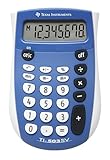
- Easy-to-read 8 digit display
- Large 7-millimeter display height
- Three key memory
- Switch key +/-
- Power saving LCD
The Nova Scotia Securities Commission notes that yields vary as prices or dividends change and that providers can arrive at different figures by using different input dates or payments. When comparing two quoted yields, align these details:
- The share-price date used for each calculation.
- Whether the dividend input is trailing 12-month payments or an indicated annualized regular rate.
- Whether a special dividend is included.
- The payment frequency and annualization method.
Even after aligning the inputs, a higher yield alone does not establish that a dividend is safe or affordable, or that the stock will deliver a higher total return. A lower share price can make the percentage look larger without increasing the cash dividend you receive per share.
When you see different yield figures for the same company, check the calculation inputs before assuming one source made an error. One provider may show actual dividends from the previous 12 months while another annualizes the latest regular payment. They may use share prices from different moments, or one figure may include a special payment. Compare like with like: same price date where possible, same dividend convention, and the same treatment of special dividends. Then interpret the resulting percentage as a comparison of those inputs, not as a complete assessment of the investment.
For comparing what two holdings might pay you, do a second calculation after comparing their yields: multiply each annual per-share dividend estimate by the number of eligible shares you hold or plan to hold. A percentage comparison does not tell you the personal cash amount without share count. Keep that gross cash estimate distinct from any judgment about investment safety, affordability, or total return.
When are you entitled to the next dividend?
Owning shares at some point during a payment quarter does not by itself guarantee the next payment. Eligibility depends on the company’s declared dates and your shareholding relative to those dates. In particular, an investor who buys on or after the ex-dividend date will not receive the next payment; the seller is entitled to it.
Free tools Windows power users keep installed
One-click scans. No signup required.
Check the issuer’s declared dividend dates before counting an upcoming payment in an income estimate. Investor.gov’s guide to ex-dividend dates and dividend eligibility explains how the ex-dividend and record dates determine who receives the next declared dividend.
This eligibility check matters when turning an annualized rate into an estimate of payments you expect to receive soon. A calculation that multiplies the annual amount by your share count assumes you qualify for the payments being counted. If you buy on or after the ex-dividend date, do not include the next declared payment in your own estimate; the seller is entitled to it. Look at the specific dates declared by the company rather than inferring entitlement from a general quarterly schedule.
What a dividend yield does—and does not—tell you
It relates an annual dividend amount to the share price
Yield is useful for expressing an annual dividend input as a percentage of the stock’s price. It can help compare dividend figures when the price date, dividend basis, special-payment treatment, and payment frequency are consistent.
It is a compact way to describe an input-based relationship, not a full income plan. If you need to estimate your own gross cash amount, use the annual per-share dividend and your share count. If you need to compare two quoted yields, first establish that the sources used comparable inputs. These are related but separate tasks.
It does not guarantee future cash income
Companies can decrease or stop dividends, so neither a trailing yield nor an indicated yield guarantees future payments. An indicated rate is especially dependent on its assumption that the latest regular payment continues. Treat the income calculation as a planning estimate and update it when a company changes its declared dividend.
A regular payment schedule is not the same thing as a guarantee that every expected payment will be made. A company that has paid on a schedule can still change its dividend. Even a trailing yield, which is based on actual past cash payments, records what happened in the prior 12 months rather than promising the same amount in the future. Labeling your estimate as trailing or indicated makes that difference visible.
Rank #4

- COMPACT & PORTABLE DESIGN – Space-saving design that fits easily on any desk or in a briefcase, making it ideal for both home and office use.
- LARGE EIGHT-DIGIT DISPLAY – Clear and easy-to-read 8-digit display, perfect for everyday calculations, ensuring accurate results in home or office settings.
- GENERAL PURPOSE CALCULATOR – Ideal for a wide range of applications, from basic math to business and personal use.
- DUAL POWER SOURCE: Operates on solar power with battery backup to ensure reliable use in any lighting condition.
- DURABLE HARD COVER: Built-in protective case shields the calculator from scratches, drops, and everyday wear.
It is not the same as total return
The percentage does not capture changes in the stock’s price or establish the investor’s overall return. It also does not establish the safety of the company or the sustainability of its dividend. Evaluate the income estimate separately from any decision about the investment.
A yield calculation focuses on the dividend input and share price at the calculation point. It does not include subsequent price changes or otherwise describe all investment results. A high percentage is therefore not, on its own, evidence of a better investment outcome. Do not treat a dividend yield as a promised rate of return.
Do not substitute a fund distribution yield without checking what it represents
A fund distribution can be made up of different components, including dividends, interest, capital gains, or return of capital; a distribution is not automatically a measure of investment performance. Those fund-specific distinctions should not be applied automatically to an individual company stock’s dividend. The SEC’s August 19, 2026, Investor Bulletin on fund distributions addresses funds, not a complete tax guide for individual stock dividends. For tax questions, consult current official guidance for your jurisdiction or a qualified tax professional.
Likewise, a fund’s distribution label should not be assumed to describe an individual company’s dividend in the same way. First identify whether you are looking at an individual stock dividend or a fund distribution, then read the applicable description. If you have a tax question, do not infer the treatment of an individual stock dividend from fund-specific information.
A practical calculation checklist
- Choose the dividend basis. Use either the actual per-share dividends paid in the prior 12 months or the latest regular payment annualized by frequency.
- Record the share price and its date. The yield changes as the price changes, so identify the price used rather than treating the result as timeless.
- Calculate the percentage. Divide annual dividend per share by share price, then multiply by 100.
- Estimate your cash income separately. Multiply annual dividend per share by your number of shares; call it an estimate and state whether it assumes the regular payment continues.
- Check payment eligibility. Confirm declared dates, including the ex-dividend date, before counting the next payment.
For example, if comparing two stocks, calculate both with the same dividend convention and price-date approach. Then calculate the estimated gross cash amount for your own share count independently. Keeping the percentage comparison separate from the personal cash estimate makes the assumptions visible and avoids treating a quoted yield as a promise.
A quick way to audit your arithmetic is to write down the inputs before calculating: the per-share amount, whether it is trailing or indicated, the payment frequency if annualizing, and the share price with its date. For the yield, divide the annual per-share dividend by the price and convert to a percentage. For income, multiply that annual per-share amount by your eligible share count. If the result is meant to describe future payments, state the assumptions about continuation of the regular payment and eligibility.
What’s actually slowing this PC down?
Pick the symptom - the matching free tool is one click away.
You do not need a specialized financial calculator to do these steps; the calculation is division, multiplication, and a percentage conversion. A calculator can be convenient, but it cannot resolve a mismatched dividend basis or an outdated price input. Check the inputs first, then calculate.
Independent reader supportYour contribution helps us test, update, and keep practical guides available for everyone.Frequently asked questions
How do I calculate dividend yield?
Divide the annual dividend per share by the current share price, then multiply by 100. Identify whether the dividend amount is the total actually paid over the prior 12 months or an indicated annual rate based on the latest regular payment. The two conventions can produce different figures.
How much income will I get from my shares?
Multiply your number of eligible shares by the estimated annual dividend per share. For a regular quarterly payment, multiply the per-share payment by four first; for a monthly payment, multiply it by twelve. The result is estimated gross annual cash income, not a guaranteed payment or an after-tax amount.
Is dividend yield guaranteed?
No. A company can decrease or stop its dividend. A trailing yield describes payments made in the past, while an indicated yield assumes the latest regular payment continues. Neither guarantees future cash income.
Quick wins for a faster PC:
Repair Windows errors before they cause bigger problemsFix Now →Fix the driver behind crashes, sound loss and screen glitchesFind Drivers →Why is the yield different from the one I saw earlier?
The share price may have changed, the company may have changed its dividend, or the sources may use different price dates and dividend conventions. One figure may use trailing payments and another an annualized regular payment; a special dividend may also affect a trailing amount. Compare the inputs and dates before comparing the percentages.
Best Value

- Mr. Pen 12-digit calculator is perfect for completing basic numerical calculations, making it ideal for office, primary school, market, or even home use. It features big, sensitive keys that are easy to press down and offer quick data entry.
- The mechanical switch buttons offer a responsive and satisfying click with each press, similar to a mechanical keyboard, improving the overall user experience and precision of data entry. Equipped with essential functions like memory recall, percentage calculation, and more, it meets a variety of computational needs.
- Mr. Pen calculator is portable and small in size at 6.2 x 4.4 inches, so it doesn't take up much desk space but is still comfortably sized for easy usage. It also has a large 12-digit display, increasing its visibility from any angle.
- Operating on just one AAA battery (not included), this calculator is designed with an automatic shutdown feature that activates after 10 minutes of inactivity, conserving battery life and ensuring longevity.
- Mr. Pen calculator is the perfect tool for quickly dealing with everyday calculation problems in various settings such as schools, offices, or even at home! It offers a fast, efficient, and user-friendly experience that makes it an ideal choice for anyone looking for a reliable calculator.
Does a high yield mean the stock is a better or safer choice?
No. Yield alone does not establish dividend safety, affordability, sustainability, or total return. A falling share price can increase the quoted yield even when the per-share dividend stays unchanged.
Will I receive the next dividend if I buy the stock?
Not necessarily. The company’s declared dates determine eligibility. Investor.gov explains that a buyer who purchases on or after the ex-dividend date will not receive the next payment; the seller is entitled to it. Check the issuer’s dates before counting a payment in your estimate.
Are stock dividends and fund distributions the same thing?
Do not assume so. Fund distributions may include dividends, interest, capital gains, or return of capital, and a distribution is not automatically a measure of investment performance. The SEC’s August 19, 2026, Investor Bulletin discusses fund distributions; its fund-specific details should not be applied automatically to an individual company stock’s dividend.
What’s actually slowing this PC down?
Pick the symptom - the matching free tool is one click away.
Is the income estimate before or after taxes?
The formula estimates gross dividend cash before any tax consequences that may apply. Tax treatment depends on the investor’s circumstances and jurisdiction; consult current official tax guidance for your location or a qualified tax professional for individual advice.
Frequently Asked Questions
How do I calculate dividend yield?
Divide the annual dividend per share by the current share price, then multiply by 100. Identify whether the annual dividend input is trailing 12-month payments or an indicated rate based on the latest regular payment.
How much income will I get from my shares?
Multiply your eligible share count by the estimated annual dividend per share. Annualize a regular quarterly payment by multiplying by four, or a monthly payment by twelve. The result is an estimate of gross cash income, not a guarantee.
Is dividend yield guaranteed?
No. A company can decrease or stop its dividend. A trailing yield describes past payments, while an indicated yield assumes the latest regular payment continues.
Why can dividend yield figures for the same stock differ?
Sources may use different share-price dates, trailing versus indicated dividend inputs, or different treatment of special dividends. Align those inputs before comparing the percentages.
Does a high dividend yield mean a stock is safer or a better investment?
No. Yield alone does not establish safety, affordability, sustainability, or total return. A falling share price can raise the quoted yield even if the dividend is unchanged.
Will I receive the next dividend if I buy the stock?
Not necessarily. Check the company’s declared dates. A buyer who purchases on or after the ex-dividend date will not receive the next payment; the seller is entitled to it.
Are stock dividends and fund distributions the same?
Do not assume they are. Fund distributions may include dividends, interest, capital gains, or return of capital. The SEC’s August 19, 2026, Investor Bulletin is about funds, and its fund-specific details should not automatically be applied to an individual company stock.
PC Slower Than It Used to Be?
A free scan shows the junk files, broken settings and background clutter dragging Windows down - then fixes them in one click.Free scan · Windows 10 & 11Outdated Drivers Are Slowing You Down
One free scan finds every outdated or missing driver and matches the right update for your exact hardware.Free scan · exact hardware matchIs the income estimate before or after taxes?
The calculation gives gross cash income before any tax consequences that may apply. Consult current official tax guidance for your jurisdiction or a qualified tax professional for individual advice.
The Bottom Line
To calculate a stock’s yield, divide an annual dividend per share by the current share price and multiply by 100. To estimate your gross annual cash income, multiply the annual per-share amount by your eligible share count. Label the input as trailing or indicated, check the price date and ex-dividend eligibility, and remember that a company can change or stop its dividend.
Quick Recap
Product prices and availability are accurate as of the date/time indicated and are subject to change. Any price and availability information displayed on Amazon at the time of purchase will apply.




