Recommended Free Tools
To calculate a shareholder’s basic ownership percentage, divide the shareholder’s shares by the total outstanding shares of the same class on the same date, then multiply by 100. For example, 250 shares out of 10,000 outstanding common shares equals 2.5% of that class on a share-count basis.
The basic ownership-percentage formula
Share-count ownership percentage = (shareholder’s shares ÷ total outstanding shares of the same class) × 100
For example, if a shareholder owns 250 common shares and 10,000 common shares are outstanding on the date being measured:
250 ÷ 10,000 × 100 = 2.5%
Label that result as 2.5% of the common-share class, rather than simply “2.5% of the company.” The calculation measures a share-count proportion; it does not automatically establish the holder’s voting power or share of the company’s economic value.
Do these 3 things before closing this tab:
1Repair Windows errors before they cause bigger problems2Fix the driver behind crashes, sound loss and screen glitches3Clear out junk files and repair common Windows errors#1 Best Overall

- Includes vinyl records binder with matching dust-proof slipcase; window on spine holds gold label printed with company name for quick identification; inside pockets hold CD, two business cards and loose papers; 3 large capacity 1.25" metal rings
- Company seal with zipper pouch for storage; transfer ledger; corporate records tickler
- 20 full-page numbered certificates and full-page stubs printed with entity name, state, signature titles and capitalization (one class)
- 50 pages of blank, archival quality, cotton content minute paper; for this kit with PDFs of corporation minutes and bylaws, order Blumberg's corporate kit model K81 Amazon ASIN B019NDLU3K; for minutes and bylaws printed on archival quality paper order K81PM Amazon ASIN B086CBQVBH; the kit on this page (model K71) does NOT come with corporation minutes and bylaws
- 11 index tabs: Certificate/Articles of Incorporation, Amendments, Qualifications, By-Laws, Minutes/Consents, Shareholder Agreements, State Filings Reports, Licenses Approvals/Permits, Miscellaneous, Certificates, Transfer Ledger
What counts in the calculation
Match the share class and the date
Use the shareholder’s shares in the class being measured and divide by the total outstanding shares of that same class, all as of the same date. A company may have multiple classes with different rights, so combining them into one denominator can produce a misleading result. The SEC defines issued shares as shares issued or sold to shareholders and describes issued and outstanding shares as those still owned by shareholders. SEC glossary
Exclude authorized but unissued shares
Authorized shares are the maximum number a company is permitted to issue under its governing documents; shares that have not been issued are not part of an outstanding-share denominator. Do not add them to a basic current ownership calculation.
Rank #2
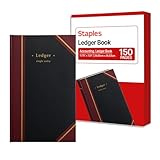
- 150 ruled sheets designed for structured accounting, recordkeeping, and data logs.
- Hardbound black cover offers durability and professional appearance.
- Ledger ruling supports clear entry alignment and consistent tracking.
- Premium paper reduces ink bleed for crisp, permanent records.
- Ideal for finance teams, education, business administration, and archival use.
Keep the numerator and denominator consistent
Do not compare one person’s common shares with a total that includes preferred shares or a different measurement date. If the company’s share count changed between two dates, calculate each date separately using the matching holder count and outstanding total.
Share-count ownership is not always voting or economic ownership
One share does not necessarily equal one vote or the same financial rights as another share. Common stock generally includes voting rights and dividends, while preferred stock often has different voting and dividend treatment and priority over common stock in liquidation. Investor.gov: Stocks
Rank #3

- Minutes and by-laws are pre-printed on cotton content paper
- Includes vinyl records binder with matching dust-proof slipcase; window on spine holds gold label printed with company name for quick identification; inside pockets hold CD, two business cards and loose papers; 3 large capacity 1.25" metal rings
- Company seal with zipper pouch for storage
- 11 index tabs: Certificate/Articles of Incorporation, Amendments, Qualifications, By-Laws, Minutes/Consents, Shareholder Agreements, State Filings Reports, Licenses Approvals/Permits, Miscellaneous, Certificates, Transfer Ledger
- 20 full-page numbered certificates printed with entity name, state, signature titles and capitalization (one class); bound in book; also full page stubs
- Share-count percentage: the holder’s shares divided by outstanding shares in the same class.
- Voting power: the holder’s votes or voting rights compared with the relevant total voting rights. Different classes may carry different voting rights.
- Economic interest: the holder’s share of value, distributions, or proceeds as defined by the security’s rights and company documents.
- Fully diluted or rule-specific ownership: a calculation that includes or treats options, convertible securities, or other interests in a specified way.
For example, a regulatory method under 16 CFR § 801.12 calculates voting securities using voting rights and class treatment for its specific purpose; it is not a universal replacement for the basic share-count formula. 16 CFR § 801.12
Options, convertibles, and diluted ownership
For a basic calculation of currently outstanding shares, do not silently add unexercised options or unconverted securities to either side of the formula. A fully diluted calculation may account for them, but the method and assumptions need to be stated, including which securities are included and whether they are treated as exercised or converted.
Rank #4
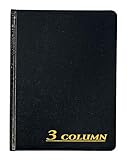
- Hard bound, permanent storage columnar account books are made with acid-free paper
- 3-columns
- High gloss cover with foil stamp title and spine
- Includes place marking ribbon
- White paper
Legal definitions can use their own methods. For example, 31 CFR § 1010.380 provides a rule-specific present-time calculation that treats options or similar interests as exercised and, for corporations, uses the greater of combined voting-power percentage or ownership-value percentage. That method applies to the rule’s context and should not be generalized to ordinary company ownership calculations or other legal regimes. 31 CFR § 1010.380
Independent reader supportYour contribution helps us test, update, and keep practical guides available for everyone.How new shares and repurchases change the percentage
A shareholder’s share count can stay the same while their percentage falls if the company issues new shares. The denominator grows, so the existing holder owns a smaller proportion. The SEC describes this effect as dilution: issuing new shares leaves existing stockholders with a smaller percentage ownership interest. SEC glossary
Best Value
- Textured navy covers with gold foil stamped title and spine
- 80 pages; 2 column format
- 7 x 9-1/4 inch page size
- Smyth Sewn binding
- Place marking ribbon
Share repurchases can also affect the denominator. In its Exchange Act beneficial-ownership interpretations, the SEC says issuer-repurchased shares do not count as outstanding for the cited reporting analysis, even if they have not been retired or accounted for as treasury stock. This treatment is specific to that reporting context; the SEC page was last updated September 2, 2026. SEC Exchange Act Sections 13(d) and 13(g) interpretations
Where to find shareholder and outstanding-share counts
Private companies
Use the company’s current capitalization table and supporting company records. A cap table typically identifies equity holders and records details such as security class, share or unit count, purchase price, and purchase or disposition dates. Because it reflects holdings as of a particular date, confirm that date and reconcile any subsequent issuances, transfers, conversions, or repurchases before calculating.
Public companies
Search the company’s filings through SEC EDGAR. Investor.gov explains that proxy statements disclose beneficial ownership for directors, officers, and certain large holders. Schedules 13D and 13G relate to beneficial ownership above five percent of a class of registered voting securities in particular circumstances, subject to eligibility and other rules; that threshold is not the ownership formula and does not mean every shareholder has the same filing obligation. Investor.gov: Beneficial Ownership
A practical calculation checklist
- Write down the company and the as-of date.
- Specify whether you need share-count ownership, voting power, economic value, or a diluted or rule-specific figure.
- Identify the relevant security class or classes and review their rights.
- Find the holder’s share count and the matching outstanding-share total from a current cap table or authoritative filing.
- Divide the holder’s amount by the corresponding total and multiply by 100.
- State the result with its class, date, and assumptions, such as whether options and convertible securities are excluded.
For a consequential legal, tax, financing, or disclosure decision, check the governing documents and applicable rules with qualified legal or accounting help. A basic share-count calculation alone does not determine the correct treatment for those purposes.
Quick Recap
Product prices and availability are accurate as of the date/time indicated and are subject to change. Any price and availability information displayed on Amazon at the time of purchase will apply.




