The Tool Desk
Outbyte Driver Updater FREEFix the driver behind crashes, sound loss and screen glitchesFind Drivers →Outbyte PC Repair FREERepair Windows errors before they cause bigger problemsFix Now →Start with the Social Security amount that actually reaches your bank account, then find out why it changed. A lower deposit can reflect an early-claiming benefit amount, earnings-test withholding, or a deduction such as Medicare Part B premiums; these have different effects on your budget and may not last the same length of time. Check your current Social Security notice or account before treating the change as permanent.
This U.S.-focused guide shows how to identify the change, build a monthly plan from real spending records, and adjust it when income or expenses shift. It is general financial education, not an individual benefit calculation.

As an Amazon Associate I earn from qualifying purchases.
Why is my Social Security check lower than expected?
First compare the amount in your latest Social Security notice or account with the amount deposited. A budget should use the dependable net amount you receive—not an estimate, a prior deposit, or a population average. Then check the notice for the benefit amount and any deductions or withholding. If the notice does not explain the difference, contact the relevant program administrator rather than assuming the reduction is permanent.
What’s actually slowing this PC down?
Pick the symptom - the matching free tool is one click away.
To make the comparison useful, write down the amount shown in your current record, the date of the notice, the deposit amount, and any listed deduction or withholding. Compare these with the previous notice or deposit if you have it. This helps distinguish a change in the stated benefit from a change in what is withheld before payment. If the figures still do not reconcile, keep the records together when contacting Social Security or the relevant administrator.
#1 Best Overall
Three common explanations have different budget implications:
| Possible cause | What to verify | How to treat it in the budget |
|---|---|---|
| Claiming before full retirement age | Check your award details and original estimates in your Social Security records. The benefit amount is tied to the age at which you claimed. | Use the current net deposit as income. Do not budget on the assumption that the lower amount will simply disappear when you revise your spending plan. |
| Earnings-test withholding | Check whether you are below full retirement age and have wages or net self-employment profit above the limit for the applicable year and age category. | Identify the withholding separately from your underlying benefit amount. The earnings test stops reducing benefits beginning with the month you reach full retirement age; Social Security recalculates benefits at full retirement age to account for months benefits were withheld. |
| Medicare or another deduction or offset | Compare the benefit notice with the actual deposit and the relevant premium or payment information. Social Security identifies the Medicare Part B premium as an example of an offset that can affect the amount received. | Budget from the net deposit and list the related premium or deduction with the appropriate expense or payment records. Avoid counting the same cost twice. |
These causes are not interchangeable. Early claiming concerns the benefit amount associated with your claiming age; earnings-test withholding is governed by work earnings and age; an offset can change the amount deposited after benefit calculations. If several changes happened at once, review each line on the notice and reconcile it with your deposit.
For the budget, distinguish the question “What is my benefit amount?” from “How much arrived in my account?” The second figure is the useful starting income line for household cash flow. The first can help explain why the deposit changed. Keep both if you are tracking the cause, but do not add them together as separate income.
Outdated Drivers Are Slowing You Down
One free scan finds every outdated or missing driver and matches the right update for your exact hardware.Free scan · exact hardware matchPC Slower Than It Used to Be?
A free scan shows the junk files, broken settings and background clutter dragging Windows down - then fixes them in one click.Free scan · Windows 10 & 11How the 2026 earnings test works
The Social Security Administration announced the following 2026 retirement earnings-test limits in 2025. They apply to covered work earnings—not to every kind of income—and the threshold depends on whether you reach full retirement age during the year.
| Your age category in 2026 | 2026 earnings limit | Withholding formula |
|---|---|---|
| Below full retirement age for all of 2026 | $24,480 for the year | $1 in benefits withheld for every $2 of earnings above the limit |
| Reaching full retirement age during 2026 | $65,160 for the year, counting earnings before the month you reach full retirement age | $1 in benefits withheld for every $3 of earnings above the limit |
| Beginning with the month you reach full retirement age | No earnings-test reduction based on how much you earn | Earnings no longer reduce retirement benefits under the test |
For the earnings test, Social Security counts wages and net profit from self-employment. It does not count pensions, annuities, investment income, interest, veterans benefits, or other government or military retirement benefits. Limits can change, so confirm the rule and amount for the year you are budgeting rather than carrying the 2026 figures forward.
The limits are annual, and the formula is based on earnings above the applicable limit—not a dollar-for-dollar reduction in benefits. If you are close to a threshold, or reach full retirement age during the year, use Social Security’s current rules for your age category rather than applying the under-full-retirement-age-all-year formula automatically. The figures above are specific to 2026 and are not a standing limit for future years.
How much should you budget if your Social Security goes down?
There is no useful universal budget amount for a reduced check. Start with your own dependable monthly income and actual expenses. The Consumer Financial Protection Bureau recommends comparing income and expenses to understand how a benefit change affects needs. Its practical advice is to “Be aware of how much money comes in and goes out each month.”
Rank #2

- Effective Budget Planning - Take control of your finances with the budget account book. This comprehensive planner allows you to plan and track your income, expenses, savings, and financial goals in one convenient place. With its intuitive layout and easy-to-use sections, you can stay organized and make informed decisions to achieve financial success.
- User-Friendly Layout - The budget planner features a user-friendly layout designed for easy navigation and organization. Each month, you'll find dedicated budget pages where you can set financial goals, track your income, and plan your expenses. Additional sections include debt trackers, savings goals, bill payment trackers, and more, making it simple to stay on top of your finances.
- Undated Monthly Calendar & Bonus Stickers - Featuring undated calendar each month, you'll have ample space to mark paydays, bills due, appointments, and important dates. Say goodbye to difficult writing spaces. Plus, we've included 3 cute sticker sheets that allow you to personalize your financial organizer and make budgeting more fun. Dates are not pre-printed and are completed by the user.
- Reliable and Convenient Design - Our monthly budget planner is designed for your convenience and built to last. The elastic band keeps everything securely in place, and the dual-sided pocket provides extra storage. Experience a budget planner that combines practicality and durability.
- Master Budgeting with Ease - Our financial planner includes a complete guidebook that provides valuable insights and instructions for optimal usage. From setting financial goals to tracking expenses, this guidebook offers step-by-step guidance and practical tips. Whether you're new to budgeting or an experienced user, this resource will help you make the most of your budget planner, empowering you to achieve financial success.
Make the first version of the plan in monthly amounts. If income or an expense is irregular, convert it to a monthly planning amount so it is visible. Keep the Social Security deposit and other dependable income on separate lines; do not count uncertain work income or a one-time payment as dependable monthly income unless you have a sound basis for doing so.
Use a consistent period for the comparison. If a bill is paid annually or seasonally, record its expected amount and set a monthly planning share by dividing that amount across the year. That does not change when the bill is due; it prevents a less frequent cost from disappearing from the monthly picture. If an amount is only an estimate, label it as one and replace it when you have a bill or statement.
Use a simple cash-flow calculation
- List dependable monthly income. Enter the current net Social Security deposit, then list any other dependable income separately.
- List planned monthly outflow. Include regular bills, everyday spending, debt payments, and a monthly share of less frequent costs.
- Calculate the difference. Subtract planned outflow from dependable income. A positive result is money left after the items listed; a negative result is the monthly shortfall that needs attention.
- Review the assumptions. Confirm that the income figure matches the current deposit and that irregular expenses, deductions, and payments have not been omitted or counted twice.
This calculation is a planning tool, not proof that every bill is covered. It is only as complete as the records and costs included in it.
One practical way to check the result is to compare the plan with a recent month of account activity. Look for spending that the list does not explain, such as cash withdrawals, small recurring charges, or a bill paid from a different account. Then compare the planned amounts with the bills themselves. The aim is not to make every month identical, but to avoid mistaking a missing expense for money available to spend.
Recommended Free Tools
Build the expense list from records
Review several months of bank and card activity rather than trying to reconstruct spending from memory. Look for recurring payments, cash withdrawals, seasonal bills, and expenses that happen only once or twice a year. The CFPB recommends checking several months of spending and accounting for less frequent expenses and miscellaneous costs.
Use categories as a checklist, not as required spending ratios. Your costs may not fit neatly into one category, so make the labels clear enough that you can see what each amount includes.
- Housing and utilities: housing payments, maintenance, utilities, and related recurring costs.
- Food: groceries and meals away from home.
- Transportation: vehicle costs, fuel, public transportation, and other regular travel expenses.
- Healthcare and prescriptions: premiums, out-of-pocket care, prescriptions, and other health-related costs.
- Insurance: policies and premiums not already counted under another category.
- Debt payments: required payments and any planned additional repayment.
- Family support: regular or occasional help you provide to relatives or others.
- Annual or seasonal costs: expenses that do not appear every month, recorded as a monthly share for planning.
- Miscellaneous: a line for unpredictable expenses that do not fit the other categories.
Keep a record of where each figure came from, such as a statement, bill, or spending log. That makes it easier to update the plan when a bill changes and to distinguish an actual expense from a rough estimate.
Rank #3

- Effective Budget Planning - Take control of your finances with the budget account book. This comprehensive planner allows you to plan and track your income, expenses, savings, and financial goals in one convenient place. With its intuitive layout and easy-to-use sections, you can stay organized and make informed decisions to achieve financial success.
- User-Friendly Layout - The budget planner features a user-friendly layout designed for easy navigation and organization. Each month, you'll find dedicated budget pages where you can set financial goals, track your income, and plan your expenses. Additional sections include debt trackers, savings goals, bill payment trackers, and more, making it simple to stay on top of your finances.
- Undated Monthly Calendar & Bonus Stickers - Featuring undated calendar each month, you'll have ample space to mark paydays, bills due, appointments, and important dates. Say goodbye to difficult writing spaces. Plus, we've included 3 cute sticker sheets that allow you to personalize your financial organizer and make budgeting more fun. Dates are not pre-printed and are completed by the user.
- Reliable and Convenient Design - Our monthly budget planner is designed for your convenience and built to last. The elastic band keeps everything securely in place, and the dual-sided pocket provides extra storage. Experience a budget planner that combines practicality and durability.
- Master Budgeting with Ease - Our financial planner includes a complete guidebook that provides valuable insights and instructions for optimal usage. From setting financial goals to tracking expenses, this guidebook offers step-by-step guidance and practical tips. Whether you're new to budgeting or an experienced user, this resource will help you make the most of your budget planner, empowering you to achieve financial success.
When one transaction could fit more than one category, choose one place for it and use that choice consistently. The goal is a complete total, not a perfect accounting system. For example, if you have already entered a premium as a healthcare expense, do not also include the same payment in an insurance total. A clear note beside an unusual or shared cost can prevent confusion when you revisit the plan.
Quick wins for a faster PC:
Fix the driver behind crashes, sound loss and screen glitchesFind Drivers →Clear out junk files and repair common Windows errorsFree Scan →Scan for outdated or missing drivers - takes under a minuteDriver Scan →Separate essential expenses from flexible spending
Once you have an expense list, mark which costs are essential to meet your needs and which categories have room to change. This is a decision aid, not a judgment about what you should value. A cost can be important even if it is adjustable, and an expense that looks discretionary may have consequences if reduced.
For each flexible item, note whether you can change its amount, timing, or frequency, and what the trade-off would be. Keep essential costs visible rather than burying them in one total. Then compare the categories against dependable income to see whether the plan balances and where a shortfall arises.
You can make this comparison more actionable by putting the essential total and flexible total beside the income figure. If the dependable income does not cover essential costs, that is a different planning problem from a gap caused by optional or adjustable spending. If essentials are covered but the overall plan is short, focus on which flexible costs could change and what those changes would mean in practice. Neither result dictates one solution; it helps clarify the decision in front of you.
If the plan shows a shortfall
A negative monthly difference is a signal to investigate, not a reason to make a rushed, irreversible decision. The CFPB notes that a retirement budget can help people identify expenses to reduce and debt to pay down before retirement. For a current shortfall, use the same logic carefully: identify the specific gap, then assess possible changes against your circumstances.
Do these 3 things before closing this tab:
1Fix the driver behind crashes, sound loss and screen glitches2Clear out junk files and repair common Windows errors3Scan for outdated or missing drivers - takes under a minute- Check whether a recorded expense is temporary, duplicated, or based on an outdated bill.
- Look for adjustable expenses and consider the practical effects of changing them.
- Review debt payments and the cost of paying debt down before changing payment plans.
- Consider whether income, savings, housing choices, or borrowing are relevant only after weighing suitability for your finances, health, household, and future needs.
Do not assume that selling a home, borrowing, or withdrawing savings is the right answer for everyone. Those choices depend on individual circumstances and can have consequences beyond the current month’s cash flow. If the figures do not balance after you have verified them, consider getting qualified, situation-specific financial guidance.
Before acting, check whether the apparent gap persists after using accurate numbers for the current deposit and all regular and irregular costs. A single unusually expensive month may not describe typical spending, while a bill that arrives only once a year can make an apparently balanced month misleading. Keeping the underlying records gives you a way to tell the difference without guessing.
Rank #4

- Effective Budget Plan Book – Take control of your finances with the SUNEE budget account book. This all-in-one budget planner allows you to plan and track your income, expenses, savings, and financial goals. Its intuitive layout and easy-to-use sections help you stay organized and make smart decisions to reach financial success. Our financial planner also included a comprehensive guidebook with valuable tips and instructions to help you get the most out of your budgeting planner.
- Full-Page Calendars – Each month’s full-page calendar provides plenty of space to track paydays, bills due dates, appointments, and important events. No more cramped boxes or tight writing areas, you can easily plan and organize your schedule at a glance.
- Colorful Pages Layout and Tabs – This vibrant budget planner features a user-friendly design for easy navigation and organization. Each month includes dedicated budget pages to set financial goals, track income, and plan expenses. Additional sections like debt trackers, savings goals, and bill payment trackers make managing your finances a breeze. The colorful backgrounds on each page offer clear, instant visibility.
- Bonus 4 Stickers and Convenient Design – This monthly budget planner is built for convenience and durability. Water-resistant cover protects against spills, while the elastic band keeps everything secure, and the dual-sided pocket offers extra storage. Plus, we’ve included 4 adorable sticker sheets to personalize your planner and make budgeting more enjoyable. Experience a budget planner that combines practicality with lasting quality.
- UNDATED DESIGN & 1 YEAR USE - Undated finance books start with 1 page-financial goals, 1 page-Mind Map, 1 page-Financial Strategy, 1 page-Tactics, 2 pages-Important Dates, 4 pages-Bill Tracker, 4 pages-Saving Tracker, 8 pages-Debt Tracker, followed by 12 Months(10 pages per month, 1 unique color for each month). 2 pages-Christmas Budgeting, 2 pages-Yearly Summary, 2 pages-Check Register and 12 pages-Notes(dotted). It is UNDATED, so you could start at any time, suitable for 1 year use.
Can you still work if you collect Social Security?
Work earnings can affect retirement benefits under the earnings test if you are below full retirement age and your covered earnings exceed the applicable annual limit. The two 2026 limits and withholding formulas are shown above. Beginning with the month you reach full retirement age, earnings no longer reduce retirement benefits under this test, regardless of how much you earn. Social Security also says it recalculates benefits at full retirement age to account for months in which benefits were withheld.
The earnings test is not a general limit on all income. It counts wages and net self-employment profit; pensions, annuities, investment income, interest, veterans benefits, and other government or military retirement benefits are not counted for this purpose. Because the thresholds and age categories matter, check the Social Security rule for the calendar year in question before estimating withholding. In a budget, distinguish work income from the Social Security deposit and update the plan if either changes.
If you are working, track your earnings separately from your monthly benefit and note the calendar year and your full-retirement-age category. This makes it easier to compare your situation with the right SSA threshold. Do not assume that every form of income is treated as earnings for this rule, and do not assume that a temporary withholding means the same thing as a permanently lower benefit amount.
Independent reader supportYour contribution helps us test, update, and keep practical guides available for everyone.Can Medicare premiums lower a Social Security check?
Yes. A Medicare Part B premium is an example of an offset that can affect the net Social Security payment. The deposit may therefore be lower even when the underlying benefit calculation has not changed in the same way. Compare the current Social Security notice with the deposit and your Medicare premium information to understand what is being deducted.
For budgeting, record the net deposit as income and the premium as an expense or payment in the appropriate place. If the premium is already deducted before the deposit reaches you, do not subtract it a second time from the net amount. If the notice and deposit do not reconcile, ask the relevant administrator about the discrepancy rather than estimating a deduction.
How should you update the budget when Social Security changes?
Refresh the plan when a notice or deposit changes, when a major bill changes, or when your work situation changes. Social Security announced a 2.8% cost-of-living adjustment for 2026. That percentage is applied to the primary insurance amount, but the deposit you receive need not rise by precisely 2.8%: early or delayed claiming and offsets such as Medicare Part B premiums affect the result. Verify your actual notice and deposit before changing the budget.
The Social Security Administration also estimated average monthly retired-worker benefits of $2,015 before and $2,071 after the 2026 adjustment. Those are population estimates, not a forecast for an individual household. Use your own current records rather than either average to plan your spending.
Best Value
- Confirm the new amount. Check the current notice or account and match it to the deposit.
- Identify what changed. Separate a benefit change from earnings-test withholding or a deduction, using the notice and relevant program information.
- Replace the old income figure. Update the Social Security line with the amount actually received, and revise other income only if it has changed too.
- Recheck expenses. Update bills and spending records, including irregular costs, rather than changing the income side alone.
- Recalculate the monthly difference. Determine whether the plan still covers the spending you have listed and whether a shortfall needs a new decision.
Give the revised plan a date and save the figures you used. When the next benefit notice arrives, you can compare it with the prior version instead of rebuilding the whole budget from memory. A regular review is especially useful when a change in work, a deduction, or a major bill has altered the monthly cash flow.
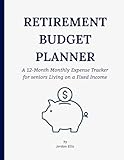
A worksheet, spreadsheet, monthly budget workbook, or review of bank records can all support this process. Choose a format you will actually revisit, and keep the notice or account information and expense records available so you can explain each figure. A paper retirement budget planner may be convenient if you prefer writing down income, recurring bills, and irregular costs in one place; it is optional, and a simple spreadsheet or existing account statements can serve the same purpose.
What to do when the numbers still do not make sense
If your deposit differs from the amount in your records or the reason for the change is unclear, do not try to solve it by changing the budget alone. Check the latest Social Security notice and account, compare the stated benefit and deductions with the deposit, and contact Social Security about a benefit or withholding question. For a Medicare premium discrepancy, contact the relevant program administrator. These general budgeting steps cannot determine an individual’s benefit, tax, Medicare deduction, or eligibility for assistance.
Free tools Windows power users keep installed
One-click scans. No signup required.
The budget can show how a lower payment affects your monthly plan, but it cannot explain every administrative change or calculate an individual’s entitlement. Keep the notice and related payment information handy when you ask about a discrepancy, and update the budget once you know which amount to rely on.
Frequently Asked Questions
Why is my Social Security check lower than expected?
Compare your latest Social Security notice or account with the deposit. A lower net payment may relate to claiming before full retirement age, earnings-test withholding if you are below full retirement age and have covered work earnings over the applicable limit, or a deduction or offset such as a Medicare Part B premium. Verify the specific reason in your records rather than assuming the change is permanent.
Can I still work if I collect Social Security?
The earnings test may withhold some retirement benefits when you are below full retirement age and covered wages or net self-employment profit exceed the limit for your year and age category. Starting with the month you reach full retirement age, earnings no longer reduce retirement benefits under this test. Check SSA’s current-year thresholds; pensions, annuities, investment income, interest, veterans benefits, and other government or military retirement benefits are not counted as earnings for the test.
Will my Social Security check rise by exactly 2.8% in 2026?
Not necessarily. The 2026 cost-of-living adjustment is 2.8%, but the deposit may not rise by precisely that amount because the adjustment applies to the primary insurance amount and the net payment can also reflect claiming factors and offsets such as Medicare Part B premiums. Use the actual notice and deposit in your budget.
Can Medicare premiums lower my Social Security check?
Yes. A Medicare Part B premium is one example of an offset that can affect the net payment. Compare your Social Security notice, deposit, and Medicare premium information. In your budget, avoid subtracting the premium twice if it was already deducted before the deposit reached you.
Should I use the average 2026 Social Security benefit to make my budget?
No. SSA estimated average monthly retired-worker benefits of $2,015 before and $2,071 after the 2026 adjustment, but those are population estimates, not an estimate of your own benefit. Budget from your current net deposit and your own expense records.
The Bottom Line
Build your retirement budget around the Social Security deposit you actually receive, then use your notice and account records to identify why it changed. Compare dependable income with expenses drawn from several months of records, include annual costs and a miscellaneous line, and separate essential from flexible spending. Recheck the plan when a deposit, work situation, or bill changes; if the numbers still do not reconcile, contact the relevant administrator rather than guessing.
Quick Recap
Product prices and availability are accurate as of the date/time indicated and are subject to change. Any price and availability information displayed on Amazon at the time of purchase will apply.




