Windows Errors? Fix Them Before They Spread
Repair common Windows errors and clear accumulated junk for a smoother, more stable PC - no reinstall needed.Free scan · no reinstallOutdated Drivers Are Slowing You Down
One free scan finds every outdated or missing driver and matches the right update for your exact hardware.Free scan · exact hardware matchIf you can’t pay your U.S. federal individual income tax in full by the original due date, file your return on time, pay as much as you can by that date, and address the remaining balance promptly. A filing extension gives you more time to file—not more time to pay—and interest generally continues to accrue on unpaid tax. An IRS payment plan can spread payments over time and may reduce the failure-to-pay penalty rate, but it does not stop interest or erase the balance.
What happens if you pay federal income tax late?
For an individual federal income-tax balance, the main costs of paying late are usually a failure-to-pay penalty and interest. These are different charges: the penalty is generally calculated as a percentage of unpaid tax for each month or part of a month, while interest accrues on the unpaid balance and compounds daily. The precise amount depends on your account, payment dates, tax type, and applicable interest rate.
As an Amazon Associate I earn from qualifying purchases.
The IRS’s general failure-to-pay penalty is 0.5% of unpaid tax for each month or part of a month, up to 25%. When an installment agreement is in effect, the general rate is 0.25% per month or part of a month. These are general rates in current IRS guidance accessed in 2026, not a personalized calculation. The IRS describes a higher 1% monthly rate after a specified final levy notice period; that circumstance is notice-specific, so use the rate and instructions relevant to your own account rather than assuming it applies to every late payment.
The monthly penalty can apply for a part of a month, so paying before a full month has passed does not necessarily mean no penalty applies. The 25% cap is a general limit on this failure-to-pay penalty, not a limit on every possible cost or on the interest that may accrue. Do not calculate your final amount from the general rates alone: the dates, balance, applicable IRS rate, and any notice-specific circumstances matter.
#1 Best Overall

- Yearly Tax Organizer: includes 2 spiral bound tax organizer designed to help you collect, sort, and store important tax records throughout the year, keeping receipts, income records, bills, and other paperwork in one easy to manage place
- Large Size for Everyday Documents: cover measures about 13 x 9.65 inches, with inside pages about 9.65 x 6.5 inches; The spacious pocket design provides room for receipts, statements, records, and tax-related papers without taking up too much desk or shelf space
- 12 Monthly Pockets for Easy Sorting: the tax record organizer features 12 pockets, making it simple to separate documents by month or category; Useful for organizing medical expenses, charitable donations, prescriptions, invoices, income folders, and monthly bill receipts
- Spiral Bound for Convenient Access: the secure spiral binding lets pages turn smoothly, so you can quickly add, remove, or review documents whenever needed; A practical design that helps simplify filing and reduce last-minute stress during tax season
- Widely Applied: this annual tax organizer is suitable for managing annual taxes, tracking receipts and preparing for audits all year round, making your tax preparation more systematic and manageable, and it is very suitable for annual tax returns, document storage and filing, professional tax services and tax agencies
Interest is separate from the penalty. The IRS states: “Interest accrues on the unpaid balance and compounds daily from the due date of the return (without regard to any extension of time to file) until you pay the balance in full.” This quotation is from the Internal Revenue Service’s Collection Procedural Questions 3. Because interest compounds, paying down the balance sooner generally limits how long charges can accumulate.
“Late fee” is often used informally, but for this federal individual-tax situation, the relevant terms to look for on an IRS account or notice are the failure-to-pay penalty and interest. Do not assume the same rules or rates apply to state, local, business, or non-U.S. taxes; those authorities set their own deadlines and procedures.
First steps when you can’t pay by the deadline
The practical sequence is to file by the original deadline, make a partial payment by that date if you can, and make a plan for the rest. Filing and paying are separate obligations. Missing the filing deadline can trigger a separate failure-to-file penalty, so inability to pay in full is not a reason to leave a return unfiled.
Do these 3 things before closing this tab:
1Scan for outdated or missing drivers - takes under a minute2Clear out junk files and repair common Windows errors3Fix the driver behind crashes, sound loss and screen glitches- Confirm the original due date and the amount due. Check the instructions for the applicable tax year and your return. Calendar adjustments or special relief can change a date. A filing extension does not change the payment deadline.
- File the return on time, even if you cannot pay in full. Report the balance accurately and follow the filing instructions. If you need more time to prepare the return, an extension may give you additional time to file; it does not defer payment of the tax.
- Pay what you can by the original payment deadline. A partial payment reduces the unpaid principal on which charges may accrue. Do not wait to have the entire amount if you can pay some of it now.
- Choose how to handle the remainder. If you need installments, review current IRS payment-plan options and eligibility. If funds will be available soon, paying the remaining balance as soon as possible can shorten the period in which interest and penalties accrue.
- Keep payment records and read any IRS notice. Save confirmations and note the dates and amounts paid. If a notice arrives, use its balance, penalty information, deadline, and response instructions to check what remains due.
In short, paying part of the bill is generally more useful than waiting while the full balance remains unpaid. A partial payment does not necessarily prevent a penalty or interest, but it reduces the unpaid amount; paying sooner also reduces the time charges can accrue.
If you cannot pay even a partial amount by the deadline, still file on time and contact the IRS through the current options it provides for handling a balance. Do not treat silence or an extension as an arrangement. An agreement is only in effect when the IRS has accepted the applicable arrangement, and the reduced 0.25% penalty rate described for installment agreements should not be assumed before then.
Does a tax extension give you more time to pay?
No. An extension is an extension to file, not an extension to pay. The original payment deadline still applies, even if you have extra time to submit the return. Interest on an unpaid balance generally starts from the return’s original due date and compounds daily until the balance is paid, regardless of a filing extension.
If you request or receive more time to file, estimate the amount due as accurately as you can and pay what you can by the original deadline. If your estimate is wrong, reconcile the balance when you file and follow the IRS instructions for paying the remainder. An extension can help you avoid rushing an incomplete return, but it does not pause the payment-related charges described above.
Rank #2
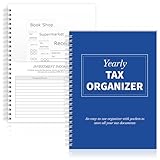
- Yearly Tax Organizer: includes 1 spiral bound tax organizer designed to help you collect, sort, and store important tax records throughout the year, keeping receipts, income records, bills, and other paperwork in one easy to manage place
- Spiral Binding: with spiral security binding, you can sort and access your monthly tax documents all year round; Help simplify tax time
- Durable: our tax document organizer is made of paper, which is very durable and convenient for you to use frequently in your daily work
- Large Capacity: this tax document organizer has 12 pockets, which makes it convenient for you to sort and file receipts and records and store them in a centralized manner; With this document organizer, you can organize various documents such as medical expenses, prescription drugs, charitable donations, etc. throughout the year, and face tax season confidently and efficiently
- Widely Applied: this annual tax organizer is suitable for managing annual taxes, tracking receipts and preparing for audits all year round, making your tax preparation more systematic and manageable, and it is very suitable for annual tax returns, document storage and filing, professional tax services and tax agencies
This distinction matters even when the final return is filed within the extended filing period: filing may be timely under the extension, while tax that remained unpaid from the original payment deadline can still generate interest and a failure-to-pay penalty. Check the applicable tax-year instructions and any special relief notice for your actual deadline.
Will an IRS payment plan stop interest?
No. An IRS payment plan is a way to pay over time, not a waiver of interest or a freeze on charges. The IRS says interest and some penalties continue until the balance is paid. An installment agreement generally lowers the failure-to-pay penalty rate to 0.25% per month or part of a month while the agreement is in effect, but interest still accrues.
There are two practical approaches if you cannot pay the whole balance immediately. Which costs less depends on how quickly you can reduce the principal, whether an installment agreement is in effect, and your ability to make the required payments.
| Approach | What it changes | What continues | Best fit |
|---|---|---|---|
| Pay as much as possible promptly, then pay the remainder as soon as funds are available | Reduces unpaid principal sooner, which can limit the balance on which charges accrue. | Any unpaid amount can still be subject to interest and the applicable penalty until paid. | You expect to have the remaining funds soon and can pay without an installment arrangement. |
| Pay what you can, then use an IRS installment agreement if eligible | Spreads the remaining payments over time. The general failure-to-pay penalty rate is 0.25% per month or part of a month while an installment agreement is in effect. | Interest and some penalties continue until the balance is paid. Missing required plan payments can create problems with the arrangement. | You need more time and can make payments under the current terms offered for your balance and circumstances. |
The table describes general federal individual-tax rules, not a promise that either option is available on identical terms to every taxpayer. The IRS payment-plan page was updated March 3, 2026. Check the current IRS terms for eligibility and the specific balance before choosing a plan; details such as the payment schedule depend on the taxpayer’s situation.
Quick wins for a faster PC:
Repair Windows errors before they cause bigger problemsFix Now →Scan for outdated or missing drivers - takes under a minuteDriver Scan →Choosing between installments and a faster payoff
- Compare the amount you can pay now with the amount you can reliably pay later. The sooner principal is reduced, the less time charges can accrue on that portion.
- If a plan is needed, make sure the scheduled payments are realistic. A plan only helps if you can keep up with its terms.
- Do not mistake the lower installment-agreement penalty rate for a full waiver. Interest continues, and other penalty charges may continue until the balance is paid.
- Use the IRS’s current account and notice information to confirm the balance and available arrangement rather than relying on a general rate to predict your total cost.
Think of the choice as a comparison between reducing the balance quickly and making a sustainable schedule—not as a choice between charges and no charges. A faster payoff generally reduces the time interest and penalties can accrue. An installment agreement may lower the applicable failure-to-pay penalty rate while it is in effect, but the balance remains subject to interest and some penalties. Avoid agreeing to payments you cannot maintain; check current IRS terms and your notice for the requirements that apply to your account.
How to prevent an estimated-tax penalty next year
Federal individual income tax is generally a pay-as-you-go system: tax is paid as income is received, through withholding, estimated tax payments, or a combination of the two. A large bill at filing time can signal that payments during the year were too low, although the estimated-tax penalty has exceptions and specific calculation rules.
The IRS lists common ways to avoid the individual estimated-tax penalty: after withholding and refundable credits, owe less than $1,000, or pay at least 90% of the current-year tax or 100% of the prior-year tax, whichever is less. A special 110% of prior-year tax condition applies at certain adjusted-gross-income levels; check the IRS instructions for the relevant tax year to confirm the threshold and how the rule applies. Other exceptions and calculation methods, including annualized income, can affect the result.
Rank #3

- Great way to organize and store vital tax records
- Instruction sheet/checklist and preprinted labels included
- 12 pockets plus one large pocket in back provides ample storage
- Protective flap and elastic cord closure
- Contains 10% recycled content, 10% post-consumer material
These are alternative tests, not a requirement to satisfy all of them. Compare your payments with the current-year and prior-year rules using the correct tax-year instructions. The 110% condition is tied to an adjusted-gross-income threshold that can depend on the tax year, so do not carry a threshold from an old return or an earlier year into a new calculation without checking the current instructions.
| Payment method | Usually useful when | What to do |
|---|---|---|
| Adjust withholding | You receive wages or other income subject to withholding, and the amount taken out is no longer keeping pace with your tax. | Review your withholding when income or circumstances change. Employees can use a new Form W-4 to adjust federal income-tax withholding. A change made later in the year does not retroactively prevent a penalty for earlier underpayments. |
| Make estimated payments | You have income not covered by withholding, such as income for which you need to pay tax directly, or withholding alone is insufficient. | Use the IRS Form 1040-ES guidance for the relevant tax year to calculate payments and follow that year’s instructions. |
The choice between withholding and estimated payments depends partly on the type and predictability of your income. Withholding is relevant when income is subject to it; estimated payments are a way to pay directly on income not covered by withholding or when withholding is insufficient. If circumstances change, review whether the payment method and amount still fit rather than waiting until you file.
The usual quarterly estimated-payment dates are April 15, June 15, September 15, and January 15 of the following year. Calendar adjustments and special relief can change a due date, so confirm the dates for the tax year in question rather than treating these as unchanging calendar deadlines.
A simple prevention check
- Review how much tax has been withheld or paid so far, especially after a change in income, work, or other circumstances.
- Use the applicable IRS Form 1040-ES instructions to estimate tax on income not covered by withholding.
- Compare payments with the IRS rules for avoiding an estimated-tax penalty, including the balance-under-$1,000 and payment-percentage tests.
- Adjust withholding or make estimated payments as appropriate, using current tax-year instructions and due dates.
Do this check during the year when income or withholding changes, not only after a balance appears on the return. A withholding adjustment made later can affect later payments, but it does not retroactively prevent a penalty for an earlier underpayment. For uneven income, the annualized-income method may affect the calculation; use the IRS instructions to see whether that method or another exception fits your circumstances.
Estimated-tax penalties are not always removed under the same standards as other penalties. The IRS identifies specific exceptions and adjustments in certain casualty, disaster, unusual-circumstance, retirement, disability, and uneven-income situations. If one may apply, check the IRS rules for your circumstances rather than assuming that a general request for reasonable-cause relief covers an estimated-tax penalty.
What’s actually slowing this PC down?
Pick the symptom - the matching free tool is one click away.
Can the IRS remove a late-payment penalty?
Sometimes, but relief depends on the penalty and the facts. The IRS says some penalties may be removed or reduced when a taxpayer acted in good faith and can show reasonable cause. That is not an automatic waiver, and it does not mean every charge—including every estimated-tax penalty—qualifies. Interest generally cannot be removed unless the related penalty is removed or reduced.
If you believe a penalty or balance is wrong, use the notice as the starting point. Identify which penalty the IRS assessed, check the stated period and amount against your return and payment records, and follow the notice’s deadline and response instructions. Provide facts and supporting records relevant to the reason for the charge or the payment date. Do not ignore a notice while waiting to decide whether you may qualify for relief.
Rank #4

- All-In-One Monthly Organizer: Keep all your important documents in one place with Sooez Accordion File Organizer. 13 pockets design works great for Monthly organizing and protecting all your important paperwork, bills, taxes, receipts, invoices and more. Perfect for letter size.
- Expandable Capacity: The accordion file folder can be stretched up to 12 inches. 13 pockets allow you to store more than 2000 sheets. No matter how many documents you need to store, this folder can accommodate your needs as it can be easily expanded according to your requirements.
- Efficient Organization & Easy Lookup: To enhance your file organization, we provide blank labels along with this folder. You can personalize them to suit your requirements, such as labeling sections by month for effortless file retrieval.
- Stable & Portable: Stand on its own on the desk and not easy to tip over. Designed with portability in mind, allowing you to effortlessly move it between your desk, cabinet, and any other preferred locations.
- Maximum Protection and Durability: Well made, made from durable wipe-clean polypropylene. Waterproof & sturdy. Tear-resistant plastic provides durable structure. Acid-free, PVC-free, and archival quality for safe storage. Adjustable snap closure helps keep contents secure. Use 2 additional front pockets for business cards, project title cards or notes.
- Read the whole notice. Note what the IRS says you owe, which tax year and penalty are involved, and the date by which it asks you to respond or pay.
- Check your records. Compare the notice with the filed return, payment confirmations, extension or relief information, and any prior IRS correspondence.
- Identify the relief standard that fits the penalty. Reasonable-cause relief may apply to some penalties; estimated-tax penalties have narrower exceptions and calculation rules.
- Respond as directed and keep a copy. Explain the relevant circumstances, include supporting records, and retain proof of what you sent and when.
A payment date, filing date, and penalty period can all affect whether an assessment is correct, so gather the records that establish what happened and when. If you received a final levy notice or another notice with a special rate or deadline, follow the instructions on that notice rather than applying a general rule to it. The IRS’s notice-specific instructions are especially important when the account shows a rate or charge different from the general figures above.
Relief and account corrections are fact-specific. A request for penalty relief does not itself establish that the underlying tax is paid, and the IRS’s general guidance does not determine the outcome for an individual account.
Which rules this guide covers
This guide covers U.S. federal individual income taxes. State and local income taxes can have separate due dates, payment plans, interest rates, penalties, and relief procedures. Business taxes and non-U.S. tax systems may also follow different rules. Check the relevant tax authority’s current instructions for those obligations.
Federal deadlines, rates, payment-plan eligibility, and relief can vary with tax year, taxpayer type, notice, and individual circumstances. The IRS payment-plan page was updated March 3, 2026, and the missed-deadline IRS Tax Tip is a 2026 item. For a charge on your account, use the current IRS guidance together with the instructions on your own notice.
Frequently Asked Questions
What if I can’t pay my federal taxes by the deadline?
File your return on time, pay as much as you can by the original payment deadline, and address the remaining balance promptly. If you need more time, review current IRS payment-plan options and eligibility. A partial payment reduces the unpaid principal, but interest and applicable penalties may continue on any balance left unpaid.
Does a tax extension give me more time to pay?
No. A filing extension gives you more time to submit your return, not more time to pay the tax. The original payment deadline still matters, and interest generally accrues daily on unpaid tax from the return’s original due date until it is paid.
Will an IRS payment plan stop interest?
No. Interest and some penalties continue until the balance is paid. While an installment agreement is in effect, the general failure-to-pay penalty rate is 0.25% per month or part of a month, but that is a reduced rate, not a waiver of interest or the remaining balance.
Can the IRS remove a late-payment penalty?
Sometimes. The IRS may remove or reduce some penalties when a taxpayer acted in good faith and can show reasonable cause, but relief depends on the penalty and circumstances. Estimated-tax penalties have narrower exceptions. Read the notice, follow its response instructions and deadline, and provide relevant supporting facts or records.
The Bottom Line
To limit the cost of a delayed federal individual-tax payment, file on time, pay what you can by the original deadline, and promptly choose a realistic way to pay the rest. An extension does not extend the time to pay, and an IRS installment agreement does not stop interest. Check your notice and current IRS instructions for the rules that apply to your account.
Quick Recap
Product prices and availability are accurate as of the date/time indicated and are subject to change. Any price and availability information displayed on Amazon at the time of purchase will apply.
The Tool Desk
Outbyte Driver Updater FREEFix the driver behind crashes, sound loss and screen glitchesFind Drivers →Outbyte PC Repair FREERepair Windows errors before they cause bigger problemsFix Now →



