Do these 3 things before closing this tab:
1Repair Windows errors before they cause bigger problems2Fix the driver behind crashes, sound loss and screen glitches3Clear out junk files and repair common Windows errorsSome Seattle startup participants say the city’s perceived social reserve and a “celebration of pessimism” make it harder to find useful connections, get clear answers from investors and encourage the risk-taking needed to build new companies. Those are attributed experiences, not proof that the Seattle Freeze causes weaker startup outcomes: the reporting does not measure how common the behavior is or quantify its effect.
What the Seattle Freeze means in the startup conversation
“Seattle Freeze” is a colloquial label for a perceived difficulty connecting with people, particularly for newcomers. In Taylor Soper’s September 24, 2024, GeekWire report, it describes a reputation and some people’s experience of a passive-aggressive social atmosphere—not a formal measure of Seattle residents’ behavior.


The discussion arose at FullConTech, a Washington Technology Industry Association event at Seattle’s Pacific Science Center. The report placed the Freeze alongside other familiar concerns about Seattle’s startup ecosystem: a shortage of angel investors, the “golden handcuffs” of large employers such as Microsoft and Amazon, and a shortage of experienced operators. These are distinct potential sources of friction; the article did not establish that one causes another.
How founders and startup leaders describe the friction
Finding people who will help
Longtime Seattle entrepreneur and startup mentor Dave Cotter described difficulty identifying people who would offer meaningful support. “It’s hard to punch through,” he said. He also put the problem more specifically: “It’s hard to figure out who is really going to help.” These comments describe his experience, not a measured estimate of how difficult it is for Seattle founders to build networks.
#1 Best Overall
Getting a clear answer from investors
Cotter also said founders can struggle to get a definitive response from investors: “Sometimes you can’t get a fucking ‘no’ from investors.” The point is about clarity and the time founders may spend interpreting a response—not evidence that Seattle investors generally behave this way or invest less often.
Making room for ambitious risk-taking
Yifan Zhang, managing director of the Ai2 Incubator, characterized the relevant attitude as a “celebration of pessimism.” She described a culture in which “it’s cool to be pessimistic, it’s cool to not try too hard,” and argued, “That is not good when you’re trying to create things that never existed before.” In her view, founders need an environment that treats trying something uncertain as worthy of respect rather than as a reason for embarrassment.
Rank #2

- If you want to build a better future, you must believe in secrets.
- The great secret of our time is that there are still uncharted frontiers to explore and new inventions to create. In Zero to One, legendary entrepreneur and investor Peter Thiel shows how we can find singular ways to create those new things.
Zhang contrasted that experience with San Francisco, saying, “There’s nothing cooler in San Francisco than being a founder.” She urged Seattle to give more visibility and recognition to people taking entrepreneurial risks: “The more that we can surface and reward the people that are creating and taking those risks, the better.” These are her comparisons and recommendations, not a measured ranking of the two cities’ cultures.
What the reporting does—and does not—show
The 2024 article records named participants’ observations at a panel. It does not provide a representative survey of the Seattle Freeze, comparable measurements of founder networking in different cities, or a causal study linking social reserve to startup formation, funding or company performance. It therefore supports saying that some participants perceive social and cultural friction; it does not support saying the Freeze has been shown to produce fewer startups or worse results.
The Tool Desk
Outbyte PC Repair FREEClear out junk files and repair common Windows errorsFree Scan →Outbyte Driver Updater FREEScan for outdated or missing drivers - takes under a minuteDriver Scan →The framing was contested. In a 2024 follow-up, GeekWire documented a chilly response to the discussion, including frustration with recurring comparisons between Seattle and San Francisco. The label should not be treated as a consensus among founders or residents.
A later GeekWire roundup published in 2025 interviewed more than 20 investors and founders about Seattle’s potential in the AI era and reported that optimism was nearly universal among those interviewed. That is a snapshot of a selected group, not a representative poll, but it complicates any blanket description of Seattle’s startup culture as pessimistic. The roundup also relayed a return-on-invested-capital ranking without identifying the underlying data publisher or methodology; it should not be treated as a verified statistic.
Independent reader supportYour contribution helps us test, update, and keep practical guides available for everyone.How to assess Seattle’s startup climate without reducing it to a label
For founders evaluating the ecosystem, “culture” is too broad to explain every obstacle. The concerns raised in the reporting point to separate questions worth examining directly:
- Access to investors: Can founders reach relevant investors, and do those investors provide timely, unambiguous feedback?
- Capital and experience: Are angel investors and experienced operators available for the company’s stage and sector?
- Founder connections: How easy is it to meet peers, mentors and potential collaborators, especially as a newcomer?
- Attitudes toward risk: Do local communities make it easier to discuss uncertain ideas, learn from setbacks and recognize people who try?
- Founders’ own accounts: Do people building companies describe the same barriers, or do their experiences differ by network, industry and stage?
The cited reporting raises these dimensions but does not provide comparable city-by-city measurements. Treat anecdotes as useful prompts for conversation, not as a head-to-head ranking of Seattle and San Francisco.
Quick wins for a faster PC:
Clear out junk files and repair common Windows errorsFree Scan →Scan for outdated or missing drivers - takes under a minuteDriver Scan →Repair Windows errors before they cause bigger problemsFix Now →Quick Recap
Best Value
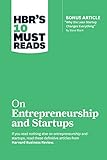
- HBR's 10 Must Reads on Entrepreneurship and Startups
- Harvard Business Review Press
- ABIS BOOK
Product prices and availability are accurate as of the date/time indicated and are subject to change. Any price and availability information displayed on Amazon at the time of purchase will apply.




