Microchip Technology—not Micrel—reported the post-acquisition sales and earnings records. Microchip said Micrel contributed to analog growth and market-share gains in fiscal 2016, and its annual report attributed the year’s sales increase primarily to the acquisition. That is management’s explanation, not a quantified estimate of how much Micrel alone caused.
What happened in the Micrel deal?
Microchip announced a definitive agreement to acquire Micrel on May 7, 2015, offering $14 per Micrel share. The announcement estimated an equity value of about $839 million and an enterprise value of about $744 million after excluding Micrel’s cash and investments. The companies completed the acquisition on August 3, 2015; 98.95% of Micrel shares voted were in favor of the merger.
Microchip described the portfolios as complementary, pointing to linear and power management, LAN, timing and communications. It expected synergies and cross-selling. CEO Steve Sanghi said on May 7, 2015: “We believe that combining Micrel’s business with Microchip’s business will enable significant synergies and cross selling opportunities.” This was the buyer’s expectation at announcement, not a measured report of realized savings.
Under the merger terms described in Microchip’s SEC filing, each Micrel share converted into the right to elect cash consideration valued at $14 or stock consideration, subject to proration.
Do these 3 things before closing this tab:
1Repair Windows errors before they cause bigger problems2Scan for outdated or missing drivers - takes under a minute3Clear out junk files and repair common Windows errors#1 Best Overall

- CURIOSITY DEV BOARD, 32BIT, PIC32 MCUThis listing is for Each
What did Micrel bring to Microchip?
Microchip’s current overview of the Micrel portfolio lists mixed-signal, analog and power semiconductors; LAN, timing and communications products; MEMS-based clock oscillators; crystal-less clock generators; Ethernet switches; and physical-layer transceiver ICs. It identifies markets including enterprise, consumer, industrial, mobile, telecom, automotive and computing. This company-provided portfolio summary helps explain the strategic fit, but does not quantify the deal’s financial synergies.
How did Microchip’s results change after the acquisition?
Microchip’s fiscal years end March 31. Its fiscal 2015 results are an important timing check: before the Micrel acquisition closed, Microchip had already reported record net sales and record non-GAAP diluted earnings per share (EPS).
Rank #2

- Supports 8-, 14-, 20-pin 8-bit PIC Microcontrollers with low voltage programming capability
- Integrated Programmer/Debugger with USB
- Interface Integrates seamlessly with MPLAB X IDE and Code Configurator
- Various user interface options - mTouch button, analog potentiometer, and physical switches
- Mikrobus support with over 100 MikroElectronika Click add-on boards available
| Fiscal year | Sales reported | Non-GAAP diluted EPS | Acquisition context |
|---|---|---|---|
| FY2015, ended March 31, 2015 | $2.147 billion GAAP; $2.161 billion non-GAAP | $2.66, a record | Reported before the Micrel acquisition closed |
| FY2016, ended March 31, 2016 | $2.173 billion GAAP; $2.214 billion non-GAAP, both reported as records | $2.68, a record | Microchip said Micrel contributed to analog growth and market-share gains |
| FY2017, ended March 31, 2017 | $3.408 billion GAAP; $3.502 billion non-GAAP, both reported as records | $3.99, a record from continuing operations | Microchip attributed the sales increase primarily to Atmel and also to growth in its historical business |
GAAP and non-GAAP figures are separate measures and should not be conflated. The figures above are from Microchip’s annual results releases; the FY2016 annual report provides the company’s year-over-year sales attribution.
Did Micrel cause Microchip’s record earnings?
The available company statements support a narrower conclusion than “Micrel caused the records.” Microchip reported record GAAP and non-GAAP sales and record non-GAAP diluted EPS in FY2016. In the same results release, it said analog growth and market-share gains reflected both organic efforts and the Micrel acquisition.
Rank #3

- 2.4GHz Dual Mode WiFi + Bluetooth Development Board
- Ultra-Low power consumption, works perfectly with the Arduino IDE
- Support LWIP protocol, Freertos
- SupportThree Modes: AP, STA, and AP+STA
- ESP32 is a safe, reliable, and scalable to a variety of applications
In its FY2016 Form 10-K, Microchip said: “The increase in net sales in fiscal 2016 compared to fiscal 2015 was due primarily to our acquisition of Micrel, offset in part by weaker general economic and semiconductor industry conditions.” This is the company’s attribution of the change in sales, not a counterfactual showing what sales or earnings would have been without Micrel. The cited materials do not isolate a dollar value for Micrel’s contribution to consolidated earnings or quantify total realized synergies.
Independent reader supportYour contribution helps us test, update, and keep practical guides available for everyone.Why FY2017 records need a separate explanation
Microchip reported further records in FY2017, but those results should not be credited to Micrel alone. The company said the increase in FY2017 sales over FY2016 was primarily due to the Atmel acquisition and also to growth in its historical business. The chronology matters: Micrel was acquired in 2015, while the later sales increase reflected another acquisition as well as existing-business growth.
Quick Recap
Best Value
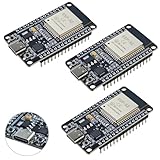
- High-performance dual-core processor – ESP32S is equipped with a powerful dual-core 32-bit CPU with a main frequency of up to 240MHz, providing smooth and efficient computing power for IoT and embedded applications.
- Wi-Fi & Bluetooth dual-mode support – Integrated 2.4GHz Wi-Fi and low-power Bluetooth, supporting wireless data transmission, remote control and smart device connection.
- Rich interfaces and functions – Provides GPIO, UART, SPI, I2C and other interfaces, supports touch sensing, infrared remote control, DAC and other functions, suitable for a variety of electronic projects.
- Low-power design – With multiple power saving modes, supports deep sleep and ultra-low power operation, suitable for battery-powered Internet of Things (IoT) devices and remote monitoring systems.
- Compatible with multiple development environments – Supports for Arduino IDE, for ESP-IDF, for MicroPython and for PlatformIO, easy to develop, suitable for beginners and advanced developers to quickly build smart applications.
Rank #4

- ❥❥❥ The PIC16F877A Microcontroller Development Board features an onboard 4M crystal oscillator, allowing easy replacement of the socket crystal frequency for various applications.
- ❥❥❥ Equipped with a 4-bit independent keyboard connected to RB0, RB1, RB2, and RB3, this board enhances interactivity and supports various input methods for your projects.
- ❥❥❥ The board includes eight LEDs connected to the RD port, operable through the J3 connector, providing visual feedback for output operations and simplifying debugging.
- ❥❥❥ With a standard RS232 communication interface, the microcontroller board facilitates seamless communication with computers, making data transfer and programming straightforward.
- ❥❥❥ The board supports external 5V DC power supply via USB, an ICSP programming simulation interface for various tools, and easy extension of all IO ports using pin headers for flexible project development.
Product prices and availability are accurate as of the date/time indicated and are subject to change. Any price and availability information displayed on Amazon at the time of purchase will apply.




