The Lockheed Model 10 Electra did not begin as a private aircraft: it was designed to compete in the mid-1930s airline market. But its modern twin-engine transport capabilities also served private owners, companies, government officials and local air services. The evidence supports calling it a contributor to the development of business aviation—not a single aircraft that created or transformed the industry.
Why Lockheed built the Model 10
The Model 10 emerged as airlines sought faster, more capable passenger aircraft. The Museum of Flight places it in direct competition with the Boeing 247 and Douglas DC-2, among a new generation of modern all-metal transports. Lockheed also sought customers beyond airlines, including military buyers and private-plane enthusiasts, according to Lockheed Martin’s company history.
That wider ambition matters, but it does not change the aircraft’s central design purpose: the Model 10 was an airliner first, not a purpose-built business jet. No available source establishes how many private owners bought Model 10s or measures its effect on the private-aircraft market.
What made the Electra a modern transport
The Model 10 combined an all-metal airframe with retractable landing gear, flaps and variable-pitch propellers. The Science Museum Group describes these features as part of the shift toward modern airliners, which helped make airline travel safer and more regular. Its account gives cruising speeds of around 150 mph for the generation as a whole; that is not a verified Model 10 specification.
Recommended Free Tools
#1 Best Overall

- Handcrafted, detailed, and painted for a lasting finish
- A true fusion of art and museum quality
- Sculpted from premium quality mahogany wood for exceptional durability using blueprints and drawings
- Ready to ship with protective foam layers to provide excellent cushioning
- The perfect gift for any aviation enthusiast, history buff or collector
The aircraft’s twin-fin and rudder arrangement addressed stability and control concerns. The Museum of Flight credits engineer Clarence “Kelly” Johnson with recommending the layout after wind-tunnel testing, while the Royal Aviation Museum of Western Canada likewise describes the twin tail as a response to lateral instability. The design was one element of the aircraft’s development, not proof that the tail alone drove its wider adoption.
How the Model 10 reached beyond airline service
Records of individual aircraft show how a fast, enclosed twin-engine transport could move between commercial and non-commercial work. The National Air and Space Museum describes the Model 10-E as a ten-passenger airliner that was also popular as a high-performance private aircraft.
Rank #2

- Handcrafted, detailed, and painted for a lasting finish
- A true fusion of art and museum quality
- Sculpted from premium quality mahogany wood for exceptional durability using blueprints and drawings
- Ready to ship with protective foam layers to provide excellent cushioning
- The perfect gift for any aviation enthusiast, history buff or collector
- Local air service: A Science Museum Group aircraft passed from Eastern Airlines to Boston Maine Airways and then to a local air-service operator, which flew it regularly to major cities. A Model 10-A had been delivered to Eastern Airlines on 24 September 1935, according to the museum’s collection record.
- Airline, military and private use: The Museum of Flight’s Model 10-E example served Northwest Airlines, the US Army Air Forces, Brazilian airline VARIG and the Brazilian Air Force before later passing to private owners.
- Official transport: The Naval History and Heritage Command records Model 10A/B aircraft used as personal transports for senior government officials. These were government aircraft, not privately owned planes, but their role illustrates the Electra’s use for executive-style travel.
Together, these cases show the Model 10’s contribution: it brought modern twin-engine transport into settings beyond scheduled airlines, including private, company, official and local-service flying.
Why the Model 12’s executive role is a separate story
The Model 12 Electra Junior was a smaller, faster derivative—not another name for the Model 10. Lockheed developed it as a feeder airliner, but the Military Aviation Museum says airlines mostly rejected it and that it found greater popularity as an executive transport. That clearer business-travel association belongs to the Model 12 and should not be used as evidence of the Model 10’s own market history.
Rank #3
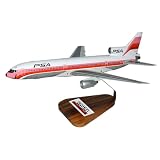
- Handcrafted, detailed, and painted for a lasting finish
- A true fusion of art and museum quality
- Sculpted from premium quality mahogany wood for exceptional durability using blueprints and drawings
- Ready to ship with protective foam layers to provide excellent cushioning
- The perfect gift for any aviation enthusiast, history buff or collector
Amelia Earhart’s Electra in context
Amelia Earhart’s specially modified Model 10-E is central to the Electra’s public legacy, but it represents only one part of the type’s history. Model 10s also served airlines, military and government users, local air services and, in some cases, later private owners. The broader record is what supports the aircraft’s connection to business and private aviation.
Independent reader supportYour contribution helps us test, update, and keep practical guides available for everyone.What “changed private aviation” can—and cannot—mean
The Model 10 helped demonstrate that a modern enclosed twin-engine transport could serve several kinds of travel beyond scheduled airline routes. That is a meaningful contribution to the growing business-aviation ecosystem. The sources do not show that it alone caused private aviation to grow, or provide a market-share series, private-owner count or direct estimate of its impact.
Rank #4

- Realistic Diecast A-10 Warthog Model: Built with a durable diecast metal body and ABS plastic accents, this highly detailed A-10 Thunderbolt II replica measures 11 x 10 x 3.3 inches, delivering an authentic military aircraft experience for collectors and kids alike.
- Interactive Lights & Sound With Rotating Engine Fans: Press the top button to activate realistic jet sounds and lights. The twin engine fans spin with glowing red illumination, while the openable cockpit also lights up for an immersive, action-packed display.
- Launchable Missiles & Foldable Landing Gear: Press the side buttons to launch missiles right off the wings! The retractable landing gear folds in and out just like the real aircraft, adding an extra layer of realistic play and display versatility.
- Dual Display Modes – Roll Or Stand: The aircraft rolls smoothly on its wheels for runway play, or can be mounted on the included A-10 display stand (4.3 x 5.9 x 7 inches) for a stunning shelf or desk showcase. Stand installation is simple — just align and lock.
- Perfect Gift For Aviation Fans Ages 8+: This feature-packed diecast jet makes an ideal gift for kids, hobbyists, and military aircraft enthusiasts. A thrilling combination of collectible detail and hands-on interactive fun.
Production figures also vary slightly by institution: the Museum of Flight lists 149 Model 10s across variants, while the Royal Aviation Museum of Western Canada says 150 were produced. “About 150” reflects both accounts without implying that the discrepancy has been resolved.
Quick Recap
Best Value
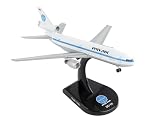
- Official Pan Am DC-10 Replica – Celebrate aviation history with this 1/400 scale model of the iconic Pan Am DC-10, featuring the airline’s classic white livery and signature blue globe logo.
- Perfect for Collectors and Enthusiasts – A detailed tribute to Pan Am’s legacy, ideal for collectors, display setups, or aviation-themed décor. Not intended for play use.
- Compact Display Size – Model measures approximately 5 1/2 inches long with a 5-inch wingspan, making it perfect for desktops, shelves, or display cases.
- High-Quality Die-Cast Construction – Built from durable die-cast metal with plastic parts and a sturdy display stand, this model ensures long-lasting presentation value.
- Legacy of Aviation Excellence – Part of the Postage Stamp Collection by Daron, this piece honors the golden era of air travel with a focus on detail, quality, and historical significance. For ages 14+.
Product prices and availability are accurate as of the date/time indicated and are subject to change. Any price and availability information displayed on Amazon at the time of purchase will apply.




