What’s actually slowing this PC down?
Pick the symptom - the matching free tool is one click away.
Ray William Johnson grew a huge YouTube audience by making viral clips the raw material for a repeatable comedy show. In Equals Three, the clips changed from episode to episode; Johnson’s commentary and the show’s familiar structure gave viewers a reason to come back. That formula helped make his channel YouTube’s most-subscribed and the first to reach five million subscribers in 2011.
How did Ray William Johnson get famous?
Equals Three paired short viral videos with Johnson’s humorous commentary in a consistent, twice-weekly episode format. The show was not simply a collection of clips: its recurring structure made the changing videos feel like parts of a program viewers knew how to watch.
| # | Preview | Product | Price | |
|---|---|---|---|---|
| 1 |
|
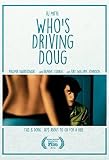
Who's Driving Doug? | $18.22 | Buy on Amazon |
| 2 |
![Today You Die [DVD]](https://m.media-amazon.com/images/I/51t-2kWa1wL._SL160_.jpg)
|
Today You Die [DVD] | $16.99 | Buy on Amazon |
| 3 |
![Cats (2019) [DVD]](https://m.media-amazon.com/images/I/51ZDBFddVUL._SL160_.jpg)
|
Cats (2019) [DVD] | $7.19 | Buy on Amazon |
| 4 |

|
Brian Johnson: Love Came Down - CD/DVD Combo | $10.51 | Buy on Amazon |
| 5 |

|
Play Johnson: Learn to Play the Robert Johnson Way With Ray Milligan | $12.35 | Buy on Amazon |
In a 2011 Forbes interview, Johnson described the concept this way: “The idea behind ‘Equals Three’ was to combine video blogging and viral videos and place them within a rigid format, so that only the actual blogging and viral videos would change each episode.” His role as host supplied the voice and point of view; the viral videos supplied an ever-changing subject.
The format also fit the platform’s habits at the time: viewers could watch a new installment regularly without needing to follow a continuous story. Johnson said he uploaded twice a week. That combination—recognizable structure, fresh source material and a reliable cadence—helped turn a reaction-and-commentary premise into a returning show rather than a one-off viral hit. He was an early successful practitioner of the format, not necessarily its inventor.
#1 Best Overall
How large did his channel become?
A biographical account reports that the channel became YouTube’s most-subscribed channel for 564 days, from June 2011 to January 2013, and was the first to reach five million subscribers in 2011. The same account says it passed 10 million subscribers and two billion views in 2013.
| Milestone | Reported figure | Qualification |
|---|---|---|
| 2011 | 5 million subscribers | Reported as the first YouTube channel to reach the milestone by the biographical account. |
| 2013 | More than 10 million subscribers and 2 billion views | Milestones reported by the same secondary account. |
| September 3, 2026 | 18.6 million subscribers and 14.9 billion views | Snapshot figures labeled with this update date by the biographical account; they are secondary-source figures, not a live channel count. |
The scale matters, but the more useful explanation is how the audience was built: a repeatable show made discovery of one episode a path to watching another. The subscriber and view totals are milestones, not evidence by themselves of Johnson’s earnings or the channel’s present-day reach on other platforms.
Rank #2
Why did Johnson leave Equals Three?
Johnson’s departure from the business arrangement and his departure as host were separate events. The biographical account says he left Maker Studios in 2012 amid a reported contract dispute and then operated through his own studio. Reported accounts of the dispute included claims about the deal’s terms; those claims should be understood as reporting, not as adjudicated findings.
In March 2014, Johnson stopped hosting Equals Three. The series did not end at that point: it continued with other hosts. The distinction is important because the show’s format could outlast the person who had made it famous, while Johnson was free to pursue work outside the role viewers associated with him.
Rank #3
What did he do after Equals Three?
Johnson’s later career was a series of experiments across formats rather than a simple, uninterrupted rise from one hit to another. Accounts of his work describe comedy and scripted series, Your Favorite Martian, an animated music project, and short-form true-crime storytelling. These projects differed in subject and format from the viral-video commentary that had built his initial audience.
A later overview from Podcastle discusses this broader evolution, while the biographical account supplies much of the career chronology. The available accounts establish the range of projects, but they do not establish one definitive reason for each change in direction. It is more accurate to describe the shifts as career experiments than to assign them a single motive.
Rank #4
- Songs from Brian and Jenn Johnson
What made the formula work—and what it did not guarantee
Equals Three combined ingredients that reinforced one another: viral clips gave each episode new material, Johnson’s commentary made the material his, and a rigid recurring structure made the show familiar. Regular uploads gave viewers a dependable reason to return. None of those elements guarantees a hit, but together they help explain how the channel could grow beyond the life of any one clip.
Johnson also described entertainment as more valuable to him than product placement. In the same 2011 Forbes interview, he said: “What is most valuable to me is the notion that I have the privilege of entertaining millions of people at a time. Most product placements detract from that entertainment experience.” That is his stated view in that interview, not proof of his overall business strategy or earnings.
Quick Recap
Best Value
- Factory sealed DVD
Product prices and availability are accurate as of the date/time indicated and are subject to change. Any price and availability information displayed on Amazon at the time of purchase will apply.




