What’s actually slowing this PC down?
Pick the symptom - the matching free tool is one click away.
Lockheed briefly outsold Boeing in one clear, limited comparison: U.S. deliveries of large civil transport aircraft in 1959. The U.S. International Trade Commission (USITC) reported Lockheed with 57.8% of those deliveries and Boeing with 30.1%. That snapshot is not an all-time or worldwide popularity ranking. A year earlier, Lockheed held 14.6% of U.S. deliveries, and as commercial aviation shifted toward jets, Boeing’s share grew.
Did Lockheed ever outsell Boeing?
Yes—by delivery share in the U.S. large civil transport market in 1959. The comparison is meaningful for that year and market, but it does not establish that Lockheed was more popular overall. The figures below are U.S. delivery shares reported by the USITC in its 1993 industry report, not global shares or a count of orders.
| Year | Lockheed share | Boeing share | Other reported context |
|---|---|---|---|
| 1958 | 14.6% (USITC, 1993) | No percentage stated here (USITC, 1993) | Douglas held 59.8% (USITC, 1993). |
| 1959 | 57.8% (USITC, 1993) | 30.1% (USITC, 1993) | Douglas held 10.8% (USITC, 1993). |
The sharp change from 1958 to 1959 shows why a single-year result should not be mistaken for a durable ranking. It also answers the narrower question “Did Lockheed ever outsell Boeing?” with a qualified yes: the available evidence supports it for U.S. deliveries in 1959, not for all commercial aircraft sales across every period and country.
Why did Boeing gain as commercial aviation moved into the jet era?
Boeing had no large-civil-aircraft shipments in 1955–57, according to the USITC. Its commercial jet entrant was the 707. The USITC says Boeing’s U.S. delivery share increased during 1959–64, attributing the rise primarily to Boeing’s early investment in new engine technology. This is the report’s explanation for the trend, rather than proof that one factor alone determined airline choices.
#1 Best Overall

- IFF antenna array in front of the cockpit distinguishes this CCIP-equipped model from other F-16s.
- Curved form of the F-16 accurately reproduced with trademark Tamiya precision.
- Moveable horizontal stabilizers. "Flaperons" can be modelled in the up or down positions.
- Full ordnance load including AGM-88 HARM, AIM-120C AMRAAM, AIM-9M/X Sidewinder, ECM pod, and fuel tanks included.
- Centerline and inner wing pylons as well as tail assembly feature polycaps to allow easy detachment for storage.
Lockheed’s Electra, by contrast, was a turboprop rather than a jet, and the USITC says its production stopped in 1962. The contrast captures a change in the market’s technology and product mix: comparing manufacturers across those years means comparing aircraft serving an industry in transition, not an unchanged contest between equivalent products.
How should Lockheed’s L-1011 be compared with Boeing’s aircraft?
For the L-1011 TriStar, the closest comparison in the USITC’s account is Douglas’s DC-10. The report says the two widebodies were initially delivered in 1971–72 and had similar ranges and capacities of about 250–300 passengers. It describes them as direct competitors, while noting that the market niche both targeted failed to develop.
Rank #2

- HIGHLY DETAILED: Finely engineered plastic model kit with detailed parts and fully illustrated instruction manual
- A release of the Super Constellation, used by Lufthansa from 1955, to celebrate 100 years of the airline.
- The tooling unique to Revell meaning it’s the only mainstream 1:144 Super Constellation. Lufthansa have restored a ‘Starliner’ for the anniversary
- This impressive model can be used in many ways, be it as a exhibit, for exciting game scenarios or as a valuable collector's item.
The Boeing 747 belongs in a different part of the comparison. The USITC describes it as designed for a larger market niche and says it did not compete directly with the L-1011 and DC-10. Treating all three as interchangeable rivals would obscure differences in aircraft capacity and intended market.
The same report discusses financial stress and a Rolls-Royce engine-supply crisis as complications for L-1011 sales. Those factors belong in the history, but the report does not make them a complete explanation for the aircraft’s commercial performance.
The Tool Desk
Outbyte PC Repair FREEClear out junk files and repair common Windows errorsFree Scan →Outbyte Driver Updater FREEScan for outdated or missing drivers - takes under a minuteDriver Scan →Rank #3

- This is a plastic model kit. Assembly and painting is required.
- Paint and glue is not included.
- Contains parts to build one model.
What does the L-1011 production record show?
Lockheed Martin’s corporate history page reports that 250 TriStars were produced. The exact production end year is disputed in the available accounts: the USITC says production stopped in 1985, while Lockheed Martin says it continued until 1983. Because those dates conflict, neither should be presented as settled without resolving the discrepancy. Production totals also measure aircraft built, not popularity by themselves; they do not substitute for a defined comparison of deliveries, orders, geography, and time period.
Independent reader supportYour contribution helps us test, update, and keep practical guides available for everyone.Why is there no single all-time popularity score?
“Popular” can mean different things: aircraft delivered, market share, orders, or total production. Each measure can produce a different comparison, and the answer also depends on whether the scope is U.S. or global, which years are included, and whether aircraft in different capacity and technology segments are being compared.
Rank #4

- AUTHENTIC DETAIL: Features a multi-part hull with recessed panel lines, a detailed cockpit, and a seated pilot figure with Helmet-Mounted Display.
- VERSATILE ARMAMENT: Includes three ordnance patterns — stealth, air-to-air, and beast mode — plus optional open or closed weapons bay covers and canopy.
- THREE MARKING OPTIONS: Includes Alabama ANG 187th Fighter Wing, RAF Lakenheath 495th Fighter Squadron 'Valkyries', and special 2024 unveiling tail markings.
- SCALE & SIZE: 1:72 scale model with a 5.875-in wingspan
- 143-PIECE KIT: Skill level 4 build recommended for ages 12 and up, offering an engaging and rewarding modeling experience for aviation enthusiasts.
- Era: Lockheed’s turboprop-era position and Boeing’s growing jet-era position are not directly equivalent snapshots.
- Geography: The 1958–59 figures cited here concern U.S. deliveries; they are not worldwide totals.
- Measure: Delivery share is not the same as orders, lifetime production, or a general measure of public recognition.
- Aircraft segment: The USITC treats the L-1011 and DC-10 as direct competitors, but places the 747 in a larger niche.
For those reasons, the defensible conclusion is specific rather than universal: Lockheed led Boeing in U.S. large civil transport delivery share in 1959, while Boeing gained share through 1964 as jets reshaped the market. Those facts describe a transition over particular years, not a lifetime popularity verdict.
Quick Recap
Best Value
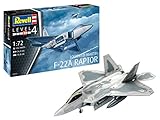
- Highly detailed surfaces
- Detailed cockpit
- Authentic decal set
- Illustrated instructions
Product prices and availability are accurate as of the date/time indicated and are subject to change. Any price and availability information displayed on Amazon at the time of purchase will apply.
Free tools Windows power users keep installed
One-click scans. No signup required.




