Olive Young’s reported rise from more than 2 million monthly active app users to nearly 9 million by March 2025 was not presented by COO Jinhee Lee as the result of one feature. In a June 2025 CIO interview, Lee described a broader change: treating technology, merchandising, stores, supply chain and customer data as parts of one commercial operating model. The figures are Lee’s reported metrics, not independently audited results in the interview. The important lesson is the operating model behind them—not a claim that a particular app or AI feature caused fivefold growth.
What Olive Young reported—and what the figures mean
Lee said the app had more than 2 million monthly active users about four years before the interview and nearly 9 million in March 2025. He also reported that online sales averaged roughly 30% of revenue, rose above 40% during major promotional periods, and that omnichannel customers made up about 40% of the customer base. These are interview claims; the source does not provide an audit, detailed metric definitions or an attribution analysis.

| Reported measure | What the interview says | Qualification |
|---|---|---|
| App monthly active users | More than 2 million about four years earlier; nearly 9 million in March 2025 | Lee-reported; the interview does not define the MAU method, geography or retention period. |
| Online share of revenue | About 30% on average | Lee-reported; the source does not specify the accounting measure or reporting period behind the average. |
| Online share during major promotions | More than 40% | Lee-reported promotional-period figure, not the average mix. |
| Omnichannel customers | About 40% of customers | Lee-reported; the source does not define the qualifying behavior or measurement window. |
The interview is evidence of what Lee said Olive Young changed and how he interpreted the results. It does not establish that omnichannel integration alone caused the increase. The contribution of promotions, acquisition, tourism, retention, or other factors is not quantified there.
Why Lee brought technology closer to the business
When Lee joined Olive Young’s digital business division in 2021, he said much of the company’s development work was outsourced. His priority was to build internal technical and product capabilities. His reasoning was operational: a vendor working to a fixed scope and timeline may be less adaptable when business requirements, customer behavior or merchandising priorities change quickly.
#1 Best Overall
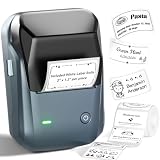
- 【Easy Bluetooth Connectivity & User-Friendly】The NIIMBOT B1 Portable label printer works seamlessly with both iOS and Android devices. Simply:① Download the "NIIMBOT" APP②Select "B1" as your printer model③Connect via Bluetooth in seconds. For PC use: Connect via USB cable (driver available on Niimbot's official website)
- 【Smart Label Printer App】The app auto-detects label size, eliminating manual setup. Effortless with 30+ stylish fonts and multilingual support. Add flair with 100+ borders and 1500+ symbols for standout labels.Easily customize text size, style, and formatting for the perfect look. Save templates for one-tap reprinting! Quick, high-quality printing makes organizing home, office, or business supplies a breeze
- 【Inkless Label Maker】 No Ink, No Mess! Print Smart, Save More!Thermal printing technology just load and print! Smart Built-in rechargeable battery with auto-shutoff after 15 minutes of inactivity saves energy.Perfect for precision tasks like marking medicine bottles, organizing wires, tracking expiration dates, or highlighting important reminders with crisp clarity
- 【Compact & Durable Label Maker】Made of high-quality ABS with a sleek design. Includes 2 x 1.18" white label rolls for clear, professional printing. Perfect for small businesses, offices, schools, retail stores, jewelry tags, and home organization. Easy to use & highly versatile
- 【Compatibility Note】Charge immediately before turning on for testing. And it not compatible with tablets (Pad). For troubleshooting or repair assistance if your Bluetooth label maker is unresponsive, please contact us for support
This is not proof that all outsourcing ended, nor that every retailer should build every system itself. It is a distinction between outsourcing defined execution and retaining enough product and engineering ownership to decide what to change, why it matters, and how quickly to test it. For a retailer whose customer experience depends on frequent experiments across app, stores and assortment, that ownership can matter as much as the software.
The organizational change was also commercial
Lee described Olive Young’s platform-business structure as bringing retail, digital, supply chain, platform engineering, AI and data specialists, and operational functions into a more unified organization. The company created a head-of-platform-business role in 2023 and brought online and offline merchandising teams together by product category, according to the interview.
That matters because channel integration is not just an API problem. If online and store teams have separate product decisions, targets and customer views, a technically connected system can still produce a fragmented experience. Category-based merchandising and shared operating responsibility make it more plausible for digital demand signals, store feedback and inventory decisions to inform each other.
Lee also described repeating strategy across a large organization, combining corporate stability with startup-style autonomy, using squad-and-tribe structures, and recruiting people with entrepreneurial experience. He said engineers should be able to explain technical work in plain language and that frontline expertise should inform process changes. Those practices address a common failure mode: designing tools centrally without understanding how store and operational work actually happens.
Quick wins for a faster PC:
Scan for outdated or missing drivers - takes under a minuteDriver Scan →Clear out junk files and repair common Windows errorsFree Scan →Rank #2

- Small Office Phone with Link2Cell: Enjoy the clarity of corded landline calls with the flexibility of using a cordless handset anywhere in the home or office; Pair up to two smart phones to make and receive cellphone calls on your landline cordless or corded handset
- Advanced Call Blocking: Automated Call Block pre-blocks robocalls; Telemarketing Call Block lets you to block announced callers; block 1K more with 1-touch Call Block Button on the handset
- Record Your Calls: 2-Way Recording ensures you never miss an important detail in your business conversations, to confirm what was said and avoid mistakes; Recording Start button makes it easy, and deters nuisance calls
- Hands-Free Phone Functions that Simplify Your Life: Hear caller announcements in English or Spanish with Taking Caller ID; Full duplex speakerphone lets you use your handset hands-free and even answer calls by voice command
- Large Phone Base with Easy-to-Use Features; Large tiltable 3.4-inch LCD display gives a clear reading of who's calling, with one-touch dial buttons for frequently dialed numbers; a big red call block button makes it easy to block nuisance calls
How the online-and-store journey can work
Omnichannel is more than having an app and physical stores. In a connected model, a customer can discover a product online, check local availability, try it or ask for advice in a store, buy through a suitable channel, and continue the relationship through membership and future digital engagement. The following is an illustrative journey, not a claim about one specific customer or a complete description of Olive Young’s systems:
- Discover: A shopper finds a product through search, reviews, recommendations or a promotion in the app.
- Check: The shopper checks product details and, where supported by accurate inventory data, nearby availability.
- Experience: The shopper visits a store to test texture, shade or scent, or get help choosing among products.
- Complete the purchase: The customer buys in store or online and uses a suitable delivery or pickup option.
- Continue the relationship: Membership, purchase history and later engagement can support relevant service or replenishment.
- Feed learning back: Aggregate browsing, sales and store signals can inform recommendations, merchandising and inventory planning.
Olive Young has built some online-to-store services over time. CJ says it launched Today’s Dream to connect stores and online orders in 2018 and introduced store pickup in 2021. The company’s account is available in CJ Newsroom’s Skin Scan article. The operational details still matter: pickup promises depend on stock accuracy, reservation rules, staff capacity, substitutions and a clear recovery path when an item is unavailable.
What stores add beyond transactions
In this model, stores can serve as places to discover and try products, receive guidance, collect orders and observe customer needs. Their value is not limited to the sale made at the till. For beauty in particular, physical experience can reduce uncertainty: customers may want to test texture, shade or scent, while a knowledgeable associate can explain differences across a large assortment.
Olive Young’s Skin Scan service is one example of a digitally connected in-store experience. CJ describes it as AI-based skin analysis connected to the mobile app, with routines, product recommendations and ingredient information following an in-store assessment. CJ reported more than 1 million cumulative uses by December 29, 2025, and approximately 60 major stores operating the service at that time, with expansion planned to more than 100. These are company-reported figures, not an independent evaluation of the tool’s accuracy or commercial impact. The service should be described as an AI-assisted assessment, not a medical diagnosis. See CJ’s description of Skin Scan and its April 2025 announcement of planned expansion.
What’s actually slowing this PC down?
Pick the symptom - the matching free tool is one click away.
Rank #3

- Package includes 3 black mesh business card holders.
- Mr. Pen business card holder is made of premium quality stainless steel with well-painted surface, which is sturdy and great for long-term use.
- Our business card holders, which are stylish and functional, make a great first impression on your clients and associates and help to promote your business by keeping your business cards organized and within reach all the time.
- Mr. Pen mesh business card holder has extensive use and is ideal for clinics, offices, travel agencies, stores, and more.
- You can use it as an everyday business card holder, smartphone holder, small size holder, or sticky note holder.
Personalized recommendations also raise practical questions. Skin profiles, behavioral histories and location signals can be sensitive. Retailers need clear consent, preference controls, sensible limits on retention and access, and language that does not overstate what an assessment can establish.
How data can connect discovery, merchandising and inventory
Lee said Olive Young brought purchase histories, behavioral patterns and product interactions into a unified dataset. He also said seasonal-sale data could reveal longer-term trends, potentially one to two years ahead. That describes an intended business use, not a published forecast-accuracy result.
A retailer seeking similar decisions would generally need reliable information across several layers:
- Customer identity and membership, with consent and preference records.
- Product catalog data, including attributes that support useful search and comparison.
- Store-level inventory, reservations, replenishment and out-of-stock status.
- Online browsing, search, wish lists, reviews and engagement.
- Purchases, returns, promotions, coupons and customer-service interactions.
- Pickup, delivery, cancellation and substitution events.
- Store-visit or location signals only where permitted and appropriately disclosed.
The CIO interview does not disclose Olive Young’s data architecture, vendors, identity-resolution method, cloud provider, algorithms or governance model. It would therefore be inaccurate to attribute a specific customer-data platform or technical stack to the company. The transferable point is the information flow: customer signals can shape product and inventory decisions, while outcomes can inform the next customer interaction.
Merchandising as a test-and-scale loop
Lee described online demand as one input to store merchandising: a product can be tested digitally, and successful products considered for physical-store rollout. He also described inventory and display decisions informed by foot traffic and sales potential. This suggests a test-and-scale loop rather than a simple transfer of the entire online assortment into every store:
- Spot emerging interest through digital engagement and sales.
- Assess whether interest translates into purchases, not just clicks.
- Test the product commercially and consider its category role.
- Allocate store space and stock according to local demand and store capacity.
- Use in-store exposure and staff feedback to learn about trial and customer questions.
- Use sales and engagement outcomes to refine online discovery and future assortment decisions.
This approach can help respond to fast-moving trends, but it has trade-offs. Popularity signals may favor already-visible products over niche or new brands; promotion-driven spikes may not persist; and a store display can create demand that online signals alone would miss. Good decisions require combining digital behavior with sales, availability, returns and frontline context.
Independent reader supportYour contribution helps us test, update, and keep practical guides available for everyone.Why beauty is a favorable setting—and why the model may not travel unchanged
Beauty offers several reasons for joining digital and physical retail: shoppers may want to test a product, seek advice, compare a broad assortment, follow trends and replenish favorites. Reviews and social discovery can surface demand, while stores can provide trial and confidence. These are reasons the model may be useful in this category; they are not measured explanations for Olive Young’s MAU growth.
Transferability depends on context. Olive Young has a concentrated Korean store network, a curated range, established supplier relationships, strong K-beauty interest and substantial tourist traffic. CJ reported 9.42 million purchases by global tourists across 1,264 Olive Young stores in 2024; purchases are not the same as unique customers. A retailer with fewer stores, lower density, less reliable loyalty data or products that benefit less from physical trial may need a narrower version of the strategy.
Best Value
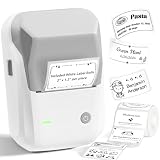
- 【Easy TO Use】It is incompatible with iPad. B1 Bluetooth label printer supports iOS & Android and PC. The app included more than support 30+ fonts/Languages, 100+ borders, and 1500+ symbols. Just need to download the free app, choosing and connecting printer model B1 from NIIMBOT APP, Then Enjoy Printing
- 【Portable & Smaller】B1 Portable label maker comes with 1500 mAh lithium battery for Convenient & Fast printing. 5 hours lasts working after one charge, So don't need to buy batteries.The label printer will shutdown auto when paused for 15 minutes to save power
- 【Inkless Label Maker】Thermal printing technology, NIIMBOT B1 label maker machine with tape, 2x1.18 inch (50x30 mm). B1 label printer support label width 0.8''-2''. mini label maker size: 5.2*3.6*2.4 inch(13*9*6 cm). Weight: 0.7lb
- 【B1 Portable Label Maker】It is made of high quality ABS, with fashion look which can be widely used in supermarket, stores,clothing, jewellery, small business owners, office & home organization. It's ideal for Valentines day, Halloween, Thanksgiving day, Christmas and holiday present to your family and friends
- 【Free Replacement Service】If your bluetooth label maker won't start or being too faulty to fix, NIIMBOT Label Printer support a free replacement service up to 12 months. Not compatible with Pad, not recommended for use with Pad. It compatible with PC, need to download the driver from the NIIMBOT official web
What the fivefold MAU figure does—and does not—show
The reported increase is a meaningful management signal, but it is not by itself proof of durable customer value or a causal case study. The interview does not answer whether MAU is app-only or includes mobile web, whether the measure is domestic or global, how users are counted, what retention looked like after acquisition, or how much growth came from promotions, tourists or paid marketing. It also does not define the customer behavior behind the 40% omnichannel figure.
- App installs are not the same as active, retained customers.
- Promotional activity can raise activity temporarily without proving lasting habit.
- Channel activity needs a defined window and a clear rule for who qualifies as omnichannel.
- Sales mix figures need a consistent revenue definition and period before they can be compared.
- Inventory errors, cancellations and returns can undermine a convenient digital promise even when the app experience is polished.
For an executive evaluating the results, the next questions are retention, repeat purchase, contribution margin, fulfillment cost, store-level availability and customer satisfaction—not MAU alone.
The U.S. expansion is the next test, not proof of transferability
The 2025 interview described a first U.S. store as a future plan. Olive Young opened its first U.S. physical store in Pasadena on May 29, 2026, alongside a U.S.-exclusive online store. CJ says the 8,647-square-foot location launched with about 400 brands and 5,000 SKUs, with skin scans, scalp analysis, loyalty benefits and online/offline integration. The opening demonstrates that the company has taken the model into a new market; it does not yet establish long-term U.S. retention, profitability or repeat-purchase economics. Details are in CJ’s Pasadena announcement.
International reach figures also depend on what is being counted. Olive Young’s global site says its mall ships from Korea and serves more than 60 countries, while a February 2025 CJ announcement described the global mall as available in 150 countries. Those statements come from different dates and may use different definitions; they should not be combined into one current shipping figure. See the global mall’s shipping information and CJ’s U.S. subsidiary announcement.
Do these 3 things before closing this tab:
1Fix the driver behind crashes, sound loss and screen glitches2Clear out junk files and repair common Windows errors3Scan for outdated or missing drivers - takes under a minuteA practical sequence for retailers considering the approach
Retailers do not need to reproduce Olive Young’s entire organization or build every system internally. A lower-risk approach is to establish the operational foundations first, then expand based on evidence:
- Connect identities and permissions. Define how online accounts, loyalty records, store purchases and service interactions can be linked, and let customers understand and control data use.
- Make inventory trustworthy. Improve store stock accuracy, reservation logic, replenishment and out-of-stock recovery before promising local availability or pickup.
- Give teams shared outcomes. Align digital, store, merchandising, supply chain and data teams around measures customers experience, rather than channel targets that conflict.
- Pilot one useful journey. Test a category, region or store cluster with a concrete service such as stock visibility or pickup; measure completion, cancellation, labor and repeat behavior.
- Build CRM and loyalty on reliable data. Use relevant, permissioned communications before adding more elaborate personalization.
- Add advanced services selectively. Consider AI-assisted advice or experiential tools only when product data, privacy controls, staff support and customer value are clear.
Internal engineering can improve control and iteration, but it brings hiring, security, management and maintenance costs. Vendors can accelerate defined capabilities, but integration and ownership still matter. The right boundary is a strategic choice: retain ownership of the customer journey and the decisions that differentiate the business, while buying or partnering for capabilities that are standardized or uneconomic to build.
Quick Recap
Product prices and availability are accurate as of the date/time indicated and are subject to change. Any price and availability information displayed on Amazon at the time of purchase will apply.




