Do these 3 things before closing this tab:
1Clear out junk files and repair common Windows errors2Scan for outdated or missing drivers - takes under a minute3Repair Windows errors before they cause bigger problemsThere is no one savings target that works for every home purchase. In the U.S., estimate your down payment from the likely home price and loan, add a separate early estimate for closing costs, then set aside money for emergencies, moving, and expenses after you get the keys. The Consumer Financial Protection Bureau (CFPB) says closing costs typically run 2% to 5% of the purchase price, excluding the down payment. Treat that as a planning range—not a quote—and use lender estimates and your final Closing Disclosure to pin down the amount you will need.
Start with the right savings target
The amount to save depends on the purchase price, the loan you qualify for, the home’s location, lender charges, contract terms, and any assistance or credits that apply. A buyer should not treat the down payment as the whole target: closing charges are additional, and spending every available dollar at closing can leave too little for an emergency or the first expenses of homeownership.
As an Amazon Associate I earn from qualifying purchases.
In U.S. mortgage discussions, the upfront contribution toward the purchase is usually called the down payment. Some people use “deposit” more broadly, but it can also mean earnest money paid earlier in the transaction. This article uses “down payment” for the contribution to the purchase price and explains separately how an earlier deposit affects the final amount due.
The Tool Desk
Outbyte PC Repair FREEClear out junk files and repair common Windows errorsFree Scan →Outbyte Driver Updater FREEScan for outdated or missing drivers - takes under a minuteDriver Scan →Use this as a working budget, not as a substitute for the lender’s transaction-specific calculation:
#1 Best Overall

- SPEAKS YOUR LANGUAGE: Keys clearly labeled in residential mortgage finance terms like Loan AMT, Int, Term, PMT. This industry-standard calculator is super easy to use on all realty financing matters from finding a loan that works for your client to considering trust deeds investments, or finding remaining balances or balloon payments and much more
- CONFIDENTLY AND EASILY SOLVES: All your clients' financial questions whether they are buyers, sellers, investors or renters. Increase your perceived professionalism as a new agent, experienced broker or seasoned loan officer. Close more home sales and impress your clients with fast, accurate answers to all their real estate finance questions
- DEDICATED BUYER QUALIFYING KEYS: Enter client's income, debt and expenses to pre-qualify them to only show properties they can afford. Include tax, insurance and mortgage insurance then compare loan options and payment solutions to give your client choices before they make an offer to buy
- FIGURE OUT THE RIGHT LOAN: At the press of a button for jumbo, conventional, FHA/VA, or even 80:10:10 or 80:15:5 combo loans; check to see if ARMs or bi-weekly loans, quarterly payments or if interest-only payments are the answer; giving your client more choices; easily perform what if loan or tvm calculations Find loan amount, term, interest or PITI or PI payments
- BECOME AN INVALUABLE RESOURCE: Reduce your clients' confusion and uncertainty; ensuring they are able to make a purchase offer; knowing they can afford the down payment; and determining which is the right loan for them. Date-math for listings and contracts too. Comes with a protective slide cover, quick reference guide, pocket User's Guide, and long-life batteries
Funds to plan for = down payment + estimated closing costs + retained emergency and near-term reserves − deposits and valid credits applied to the transaction.
The formula helps set a savings goal. It does not determine your mortgage eligibility or guarantee how much the lender will require at closing.
Estimate the down payment and closing costs separately
Choose a realistic price and loan scenario
Start with a plausible range of home prices, rather than a single optimistic figure, and consider loan types you may qualify for. Work through a separate calculation for each plausible scenario: changing the price or down-payment percentage changes the loan amount, while changing the loan or location can also affect closing charges.
Recommended Free Tools
Do not assume that every buyer must put 20% down. HUD says eligible FHA loans may allow a down payment as low as 3.5%; eligibility and loan terms apply. Some other programs may allow lower or no down payment, but availability and requirements vary. A smaller down payment can change mortgage insurance, loan costs, and the monthly payment, so compare the complete financing picture rather than choosing a percentage in isolation.
Apply the CFPB’s early closing-cost range
The CFPB’s current guidance, accessed in 2026, gives a typical range of 2% to 5% of the purchase price for closing costs, not including the down payment. This is an early planning benchmark; it is not a quote, an average for every buyer, or a promise that your costs will fall within the range. The actual total depends on factors including the home price, down payment, lender costs, loan type, home type, and location.
Rank #2

- LARGE 12-DIGIT DISPLAY – Extra-large screen clearly displays up to 12 characters for easy, error-free viewing during fast-paced calculations.
- FAST 2-COLOR PRINTING – Prints up to 2.4 lines per second in black and red to distinguish positive and negative values, helping reduce costly reading errors.
- 150-STEP CHECK & CORRECT – Review and edit up to 150 steps with reprint and after-print functions to ensure accuracy in every calculation.
- BUSINESS FUNCTIONS BUILT IN – Includes cost/sell/margin, tax calculation, currency exchange, and adding machine functions for retail and office use.
- CLOCK & CALENDAR PRINTING – Built-in time and date function prints right on your receipts—ideal for organized recordkeeping in accounting or retail environments.
Worked example: a hypothetical $300,000 home
The table applies the CFPB’s 2%–5% planning range to a hypothetical $300,000 purchase, then adds several illustrative down-payment amounts. These arithmetic examples are not loan offers: the table does not establish eligibility, mortgage insurance, prepaid amounts, credits, or a transaction-specific cash-to-close figure.
| Illustrative down payment | Down payment amount | Estimated closing costs at 2%–5% | Down payment plus estimated closing costs |
|---|---|---|---|
| 3.5% | $10,500 | $6,000–$15,000 | $16,500–$25,500 |
| 5% | $15,000 | $6,000–$15,000 | $21,000–$30,000 |
| 10% | $30,000 | $6,000–$15,000 | $36,000–$45,000 |
| 20% | $60,000 | $6,000–$15,000 | $66,000–$75,000 |
These totals are before subtracting deposits or applicable credits and before adding any emergency, moving, or early-home expense reserves. The 3.5% row is only an illustration of the minimum HUD describes for eligible FHA loans; it does not show that a particular buyer or property qualifies. For your own estimate, replace the example price and percentages with figures tied to the home and loan you are considering.
Outdated Drivers Are Slowing You Down
One free scan finds every outdated or missing driver and matches the right update for your exact hardware.Free scan · exact hardware matchWindows Errors? Fix Them Before They Spread
Repair common Windows errors and clear accumulated junk for a smoother, more stable PC - no reinstall needed.Free scan · no reinstallKeep reserves outside the money for closing
Money earmarked for the transaction is not the only cash a new homeowner may need. Set separate amounts in your budget for moving, furnishings, renovations, repairs, utility setup, and other early expenses. Which of these apply, and how much they cost, depends on your plans and the home; do not assume that the CFPB’s closing-cost range covers them.
The CFPB gives three to six months of expenses as a general rule of thumb for an emergency cushion when considering how much money is available for closing. That is not a universal requirement or individualized advice. Decide how much of your savings should remain accessible after the purchase, rather than counting the entire account balance as money available for the down payment.
Know what the closing-cost estimate includes
Closing costs are upfront charges connected with the mortgage and transfer of the property. Depending on the loan, contract, and location, examples can include appraisal fees, title insurance, government taxes, lender origination charges, prepaid homeowners insurance, property taxes, interest through the end of the closing month, and initial escrow funding. The categories and which party ultimately pays them vary, so a general list cannot tell you what your own transaction will cost.
Rank #3

- WORKS IN UNITS THAT WORK FOR YOU -- enter dimensions directly in feet, inches, fractions, yards and meters including square and cubic formats and then instantly convert to any standard building unit you prefer for consistent solutions that makes sense to you
- SET A PROJECT’S MATERIAL REQUIREMENTS to define and use stored values for estimating, including custom tile size, grout gaps, board widths, fence post spacing, paint coverage and more so you can quickly determine your material requirements and costs
- BUILT-IN FUNCTION KEYS help you easily find the number of boards or posts based on standard board lengths and stored measurements, so you get the fencing or decking material quantities you need to finish the job without costly overages or underages
- FIGURE OUT FLOORING REQUIREMENTS with built-in standard carpet roll lengths, linoleum square and roll sizes, custom tile sizes with various grout widths to quickly calculate coverage area and square yards you need based on an entered or calculated floor area
- Works directly in yards, feet, inches, fractions and meters – including square and cubic formats. No need to convert to decimals.
Closing costs and cash to close are not interchangeable. Closing costs describe charges for the transaction and loan, excluding the down payment. Cash to close is the amount actually due at closing after the down payment, closing costs, earlier deposits, credits, and adjustments are accounted for. A cost estimate helps you plan; the amount due reflects the full transaction calculation.
Refine the estimate with lender documents
Use Loan Estimates to make the budget more specific
Ask lenders for Loan Estimates and review the projected costs against your budget. Compare offers using the same home price, down-payment amount, loan type, and term; otherwise, differences in assumptions can make a cheaper-looking offer misleading. If a figure is different from what you expected, ask the lender to explain what it includes and whether it is an estimate or a term of the offer.
When comparing, look beyond the down payment and a single headline rate. Review the estimated cash to close, resulting loan amount, interest rate, points, origination charges, other lender fees, mortgage insurance, and total monthly payment. Include taxes and insurance in the monthly figure where those costs are escrowed. Consider seller or lender credits as part of the full offer, not as free money detached from the purchase or loan terms.
Check the Closing Disclosure for the final amount
The Closing Disclosure provides the final cash-to-close figure. Read it against the earlier estimate and check how the down payment, charges, deposits already paid, credits, and adjustments combine. If you cannot account for a difference or a figure does not match what you understood, contact the lender and ask for an explanation before relying on the amount in your budget.
If you paid an earnest-money or other deposit earlier, account for it only as it is applied in the transaction. Do not simply subtract every amount you have paid from your savings goal without confirming how it is reflected in the lender’s figures. Credits and adjustments also depend on the transaction; include only those that actually apply.
Rank #4
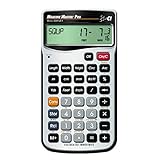
- EASILY CONVERT between dimensional formats including U.S. Imperial and metric to help you work with material and plans from Global suppliers regardless of the measuring units used; with a push of a button The calculator can change them into the measurement types you prefer to work in
- HELPS YOU CALCULATE jobsite solutions in Metric and Imperial units using linear, Area and volume measurements; Measure Master Pro makes these calculations even easier because you enter the numbers just as you say them; simply Factor in your waste allowances and you’ll have just what you need to build
- BUILT-IN CIRCULAR MATH gives you formula-free circles, areas, circumference, radius and arcs to layout a circular driveway, get requirements for a curved deck or determine measurements for a gazebo arch; with this information you can build according to plan
- SOLVE UNIT COST AND PRICING by finding total material requirements then solve for total cost by entering unit cost; great for estimating. And the built-in paperless tape lets you double-check Your entries for accuracy – without having to re-enter values
- YOUR DAILY PROBLEM-SOLVER TOOL lets you handle anything that comes your way, dimensional Math, unit conversions, board feet material estimating and more. And it comes with a protective hard slide cover, easy-to-follow pocket reference guides in English and Spanish, long-life batteries and a 1-year warranty
Compare “no closing cost” offers by total cost
An offer described as “no closing cost” does not necessarily mean the charges disappear. Costs may be incorporated into a higher loan balance or a higher interest rate. Compare the resulting loan, monthly payment, and overall borrowing cost as well as the cash needed on closing day. A lower upfront bill may trade off against costs paid over time, so the right comparison depends on your priorities and the actual loan terms.
For a useful side-by-side comparison, put each lender’s offer against the same assumptions and note what any credit changes. Ask whether a seller or lender credit affects the purchase price, interest rate, or total borrowing cost. The label alone is not enough to determine which offer is less expensive.
Check assistance programs before setting a final target
HUD says state and local governments offer homebuyer programs that may help with down payments. Programs and eligibility depend on location, and availability can change. Check the relevant state or local housing agency and ask a lender whether a program works with the loan you are considering. Do not count assistance in your savings plan until you have confirmed that the program is available to you and how it will be applied.
HUD and the CFPB also direct prospective buyers to HUD-approved housing counselors for guidance. A counselor can help you understand options and questions to raise; neither a program listing nor counseling should be treated as a promise that you will qualify or that funds are currently available.
A practical sequence for setting your savings goal
- Set a price range. Choose plausible purchase prices and identify loan types to explore, rather than assuming one down-payment rule applies to everyone.
- Calculate down-payment scenarios. Multiply each target price by the down-payment percentage you are considering. Check loan eligibility and account for how each option may affect mortgage insurance, loan costs, and monthly payment.
- Estimate closing costs separately. For an initial U.S. budget, apply 2%–5% of the purchase price as the CFPB’s typical early planning range, excluding the down payment. Replace it with lender-specific estimates as they become available.
- Protect reserves. Budget separately for an emergency cushion, moving, and likely early-home expenses. The CFPB’s three-to-six-month emergency-cushion guidance is a general rule of thumb, not a required balance.
- Subtract only transaction amounts that apply. Account for deposits, credits, and adjustments after confirming how they appear in the transaction figures.
- Compare lender estimates on equal terms. Review cash to close, loan amount, rate, lender charges, mortgage insurance, and monthly costs using the same scenario for each offer.
- Verify the final number. Use the Closing Disclosure’s cash-to-close amount to confirm what is due, and ask the lender to explain any unexpected changes.
This guidance is specific to U.S. homebuying terminology and the cited U.S. agency guidance. Taxes, transaction charges, terminology, and mortgage rules differ in other countries.
Quick Recap
Product prices and availability are accurate as of the date/time indicated and are subject to change. Any price and availability information displayed on Amazon at the time of purchase will apply.




