Windows Errors? Fix Them Before They Spread
Repair common Windows errors and clear accumulated junk for a smoother, more stable PC - no reinstall needed.Free scan · no reinstallOutdated Drivers Are Slowing You Down
One free scan finds every outdated or missing driver and matches the right update for your exact hardware.Free scan · exact hardware matchIn the United States, mortgage lenders generally must determine that a borrower can repay a covered mortgage according to its terms. They evaluate the financial information they rely on—such as income, assets, debts, credit history, and the proposed housing payment—and verify it with reasonably reliable records. There is no single federal debt-to-income ratio or credit-score cutoff that determines approval for every mortgage; lender standards and loan-program rules also matter.
What mortgage underwriting is designed to establish
For covered transactions, the federal ability-to-repay rule requires a creditor to make a reasonable, good-faith determination that the borrower can repay the loan. The creditor must consider and verify relevant information rather than rely only on the borrower’s assurance. The Consumer Financial Protection Bureau (CFPB) describes the factors in its Regulation Z ability-to-repay rule and official interpretation and its consumer overview of Qualified Mortgages.
As an Amazon Associate I earn from qualifying purchases.
This is a repayment-capacity review, not merely a comparison of salary with the requested loan amount. The lender considers the proposed mortgage payment and related obligations alongside other debts, income or assets it relies on, and—where relevant—employment and credit history. Which information must be considered and verified depends on the circumstances and on what the creditor uses in its assessment.
Free tools Windows power users keep installed
One-click scans. No signup required.
That distinction matters because federal ability-to-repay rules set out considerations and verification requirements, but do not supply a complete underwriting formula for every lender. As the CFPB’s official interpretation puts it, “The rule and commentary describe certain requirements for making the ability-to-repay determination, but do not provide comprehensive underwriting standards to which creditors must adhere.” Individual lenders and loan programs may apply additional standards. A review of one factor in isolation—such as income, a score, or a DTI percentage—therefore cannot predict the whole decision.
#1 Best Overall

- Size: 13 x 10 x 0.7 inches. Fits A4 and letter-size paper, standard documents and filing needs.
- User-Friendly Features: Included sticker labels allow you to easily distinguish between different categories of files, maintaining neatness and enhancing productivity!
- Sleek and Portable: Designed to slip seamlessly into backpacks, laptop bags, or file cabinets, our lightweight folder keeps your documents tidy and accessible wherever you go.
- Built to Last: Crafted from polypropylene, our folders resist tears and deformation while remaining flexible. The secure snap closure offers easy access while keeping your papers securely in place.
- Versatile Utility: This folder isn't limited to organizing course papers for college students; it's perfect for storing business tax documents, recipes, important receipts, and more!
How lenders assess income
A creditor may consider current or reasonably expected income from employment or other sources. CFPB’s official interpretation of Regulation Z gives examples including wages, self-employment income, bonuses, commissions, interest and dividends, retirement income, rental income, and certain support payments. These are examples of possible income sources, not a guarantee that every lender will count every source in the same way.
The lender needs to verify income on which it relies to assess repayment ability. If it uses expected future income, the expectation must be reasonable and supported by reliable third-party records. That makes documentation important: a statement that income is likely to rise, without supporting evidence, does not by itself establish that expectation for underwriting purposes.
Income may be evaluated with assets, debts, and the proposed housing costs rather than in isolation. A borrower whose income varies, comes from several sources, or is expected to change should be prepared to explain the relevant circumstances and provide the records the lender requests.
The framework is not limited to a paycheck or a single salary figure. A creditor may rely on one or more income sources, or on non-property assets, as evidence relevant to repayment. But permitted examples should not be mistaken for automatic acceptance: the creditor considers the information on which it relies, and any expected income must have a reasonable basis. The practical question is not simply “What income do I have?” but “Which income will the lender use, and what records support it?”
How lenders measure debts and monthly payment burden
Underwriters consider current debt obligations as well as the proposed mortgage payment and related housing obligations, such as taxes or insurance. Two useful ways to examine the monthly burden are debt-to-income ratio (DTI) and residual income. They describe affordability from different angles:
Rank #2

- High-Quality Materials: Protect your files with ENGPOW fireproof accordion file organizer.It is made of 3-layered non-itchy silicone-coated fiberglass which withstand the temperature up to 2200℉.It has passed the UL94 -V0/5VA flame retardant test.Fireproof File Folder is fireproof&Water-resistant,which can effectively protect your important documents in a fire,flood,and wet weather. They will further keep your files intact.Giving you time to save your important documents when disaster strikes
- Accordion File Organizer: A Safe Enough Folder to Keep Your Files. Say goodbye to cluttered files and disorganization with ENGPOW's file organizer folders. Compared with other folders,our fireproof folders is allows you to neatly store and classify letter/A4 files, receipts, cards, USB drives, pen, passports and more in a safe and orderly way. Perfect for daily file filing and storage.The Non-dusty material can prevent dust from sticking to the outside of our folder,always keep it neat and tidy.
- Large Capacity: 14.2" x 10.4" x 2", Compared with other folders, our Accordian File Organizer adopts a multi-layer design that can meet all your storage needs.These include 13 accordion Pockets with labels(each expanding to 1.2 inches),1 zipper pocket,2 pen slot,6 card slots,4 small mesh bags,4 medium mesh bags,and 1 main pocket. You can securely store all your important documents and other items in this fireproof expanding file folder while effectively classifying and finding your files.
- Innovative Humanized Design: Design with a strong grab handle for carrying everything you needed easily. Featuring a double zipper for convenient opening and closing,you won't have to worry about losing any important documents. The included colorful labels make categorizing your files effortless. The fireproof file folder is suitable for business, travel, office, school, home storage, you can be 100% sure that your important documents are in a safe place.
- Trusted after sales service: In the event of an emergency, our fireproof accordion file organizer folders are lighter, easier to carry than fireproof safes and quick to grab and go. We only wish to present the best to customers,to protect your valuables.If there any quality problem, please feel free to let us know.We promise to arrange a REPLACEMENT or 100% REFUND immediately. Ready to respond within a 24 hour time,your suggestion has a great impact on the upgrade of our products.
| Measure | What it expresses | What it helps show |
|---|---|---|
| DTI | Total monthly debt obligations, including the proposed mortgage, as a share of monthly income. | How much of the borrower’s income is committed to monthly debts and housing obligations. |
| Residual income | The amount remaining after relevant monthly obligations are paid. | How many dollars remain for living expenses after debt and housing costs. |
DTI is a proportion: it relates the monthly obligations to income. Residual income focuses on the dollars left after those obligations. The two approaches can illuminate different parts of a household’s budget; neither, on its own, is a universal measure of approval. The relevant obligations include the proposed mortgage and related housing costs, not just debts the borrower already pays.
Federal ability-to-repay rules do not set one DTI limit that applies to every mortgage. Creditors can establish their own thresholds and, where applicable, consider exceptions based on compensating factors. The rule’s discussion of DTI and residual income is part of a broader repayment assessment, not a universal pass/fail formula.
For specified Qualified Mortgage underwriting, the rule addresses consideration of DTI or residual income. That does not mean the federal framework sets one threshold that all creditors must use. A borrower can ask a lender how it evaluates monthly obligations and which housing costs it includes, but the answer will depend on the lender and product.
Why the 43% DTI figure is not a universal cutoff
The 43% figure is associated with the CFPB’s description of the General Qualified Mortgage (General QM) definition. It is not a rule that every borrower above 43% must be denied, nor does it mean everyone below that level will be approved. Other Qualified Mortgage categories and loan-specific underwriting requirements exist. The CFPB’s Qualified Mortgage explanation describes a defined category, not a synonym for every mortgage.
Qualified Mortgage (QM) status is a regulatory category with specific features and protections. The CFPB’s official interpretation cautions that the ability-to-repay rule does not provide comprehensive underwriting standards to which all creditors must adhere. A lender may apply additional criteria, and a particular loan program may impose its own requirements. For that reason, a DTI number alone cannot establish whether an application will qualify.
Rank #3
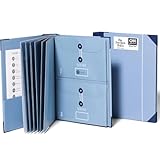
- Keep important documents safe: A document organizer designed to protect papers from getting lost. Store birth certificates, social security cards, wills, tax forms, insurance policies, titles & more in one secure place.
- Easy to organize and find: Folders with pockets and a table of contents help track where documents live, while 33 hand-illustrated labels show what to save. Acid-free materials protect your papers for years to come.
- Fits documents of various sizes: This document binder includes 3 vertical and 3 horizontal envelopes for 8.5 x 11 inch papers, plus 4 half-size envelopes for smaller keepsakes and important details.
- Practical and easy to use: An important document folder organizer with a front pouch that provides a quick landing space for papers before filing, making it easy to stay organized as documents come in.
- Premium quality, timeless style: Made with custom-dyed cloth, reinforced edges, and acid-free paper for long-term durability. An elegant file organizer designed to beautifully complement your office or living room décor.
Keep the category attached to the number: 43% is a threshold for the General QM definition described by the CFPB, not a statistic about all mortgage approvals or a universal borrower limit. A mortgage that is not in that category is not automatically an unlawful or impossible loan; other QM categories and applicable rules may be relevant. Applicants should ask about the criteria for the specific mortgage they are considering rather than assume one figure governs all products.
How credit scores and credit reports affect a mortgage
Credit can affect both whether a borrower obtains a mortgage and the rate offered. A score is a numerical indicator calculated from credit-report information; the report gives lenders a broader view of accounts and payment history. A lender may also consider its own prior credit history with the applicant, current debt, savings, assets, and income. The CFPB explains these factors in its guide to credit scores and mortgage eligibility and rates.
The CFPB consumer guidance says most mortgage lenders use FICO scores and may review information from Equifax, Experian, and TransUnion; some may use a middle score for a rate decision. That is consumer guidance, not a guarantee that every lender or loan program uses the same scoring method. The federal ability-to-repay standard itself does not prescribe a universal minimum score or require one consolidated score, although lender and program criteria can still apply.
This is why a score and a credit report should not be treated as interchangeable. The score is a numerical summary, while the report contains broader account and payment history that may inform the lender’s review. A score alone does not reveal every factor considered, and there is no federal minimum score set by the general ability-to-repay rule. This does not prevent a lender or a program from applying its own credit criteria.
Before applying, check your credit reports and dispute errors. An error can affect how lenders assess the information in a report, but correcting one does not guarantee a particular score, approval, or rate. The CFPB’s consumer guidance provides more on credit reports and mortgage decisions.
Recommended Free Tools
Rank #4

- Eye-Catching Colors: Designed to stand out, this folder combines fresh, vibrant hues with sleek patterns, making organization not just functional but stylish. Perfect for adding a touch of charm and energy to your workspace
- Upgraded Spine for Larger Capacity: Our accordion file organizer with expandable spine design is more stretchy to fit over 250 sheets without bulking up too much. Unlike regular spines that can easily get dented, our spine is made for quality and not easy to deform in transit
- Easy Organization: This expanding file folder makes sorting and organizing your papers a breeze. Featuring 8 pockets with tabs and colorful labels for quick sorting and retrieval
- Made to Last: Reinforced plastic document folders resists tearing and creasing, with a secure snap closure to keep papers in place
- Portable & Lightweight: 13 x 9.5 inches. Fit A4/letter size documents. Compact and lightweight for easy carrying. Easily take your paperwork to a meeting or school
How assets can support the repayment assessment
A creditor may consider non-property assets as resources relevant to repayment. Examples in the CFPB’s Regulation Z interpretation include money in savings or checking accounts, vested amounts in retirement accounts, stocks, bonds, certificates of deposit, and accessible funds held in trust. The creditor need consider and verify only the assets on which it relies.
The value of the home securing the mortgage is excluded from the non-property assets used for this ability-to-repay determination. Other assets may help demonstrate financial capacity or support a transaction, but a particular account balance does not guarantee approval; the lender’s assessment and applicable underwriting rules still govern.
Asset-based evidence and income-based evidence are related but distinct. Income describes current or reasonably expected resources coming in; assets are non-property resources already available or held, subject to the lender’s assessment of what it relies on. A creditor may consider income, assets, or both. Having savings does not itself establish that the borrower can meet the loan’s payments, just as an income source does not eliminate the need to assess debts and housing obligations.
Independent reader supportYour contribution helps us test, update, and keep practical guides available for everyone.What documents a lender may ask you to provide
Lenders verify relevant financial information using reasonably reliable third-party records. The federal rule specifically addresses verification of income or assets relied on, current debt obligations, alimony, and child support. Examples of records identified in CFPB guidance include tax-return transcripts, pay stubs, and W-2 forms. They are examples, not a universal checklist for every borrower or loan program. CFPB’s document-submission guidance for mortgage applicants explains that lenders check the financial information borrowers provide.
Quick wins for a faster PC:
Clear out junk files and repair common Windows errorsFree Scan →Scan for outdated or missing drivers - takes under a minuteDriver Scan →Repair Windows errors before they cause bigger problemsFix Now →Follow the lender’s current request list, since the records needed depend on the income, assets, and obligations being evaluated. Keeping digital or paper copies organized can make it easier to respond, but no special organizer or purchased product is required by the cited federal guidance.
Best Value

- FIREPROOF & WATERPROOF DOCUMENT PROTECTION: Fully protect your files and keep them organized with Andyer fireproof accordion file organizer. It features 3 layers of silicone-coated fiberglass which withstand the temperature up to 2500℉ - Has passed global flammability standards and vertical burning tests(SGS UL94 V-1). With a waterproof silicone outer, to stop sprinklers, rain, and water damage
- SECURE COMBINATION LOCK FOR PRIVACY: This important document folder features a resettable 3-digit lock, The locked file organizer prevents unauthorized access to ID, sensitive contracts and financial documents. Our file folder organizer securely stores and organizes your important documents including letters/A4 documents, receipts, bills, USB drives, passports, invoices and more
- LARGE CAPACITY ALL-IN-ONE ORGANIZER: Efficiently organize and easily lookup all your papers in one place with our accordion folders. Featuring a multi-pocket, multi-layer design, you can flexibly organize everything and your papers won't wrinkle. Meets all your storage needs! Includes 13 folded pockets with labels, 1 zipper pocket, 2 pen slots, 6 card slots, 4 USB slots, 4 Passport-sized pockets and 1 main pocket
- INNOVATIVE HUMANIZED DESIGN: Compared with other document organizers, our fireproof expanding file folder comes with an extra front pockets (14.2 x 7.7 inches), which is perfect for storing cash, passports, letters, and other frequently used small items for easy access at any time! No need to open the whole bag to find your urgent needs
- PORTABLE & DURABLE FOR ALL OCCASIONS: Brightly colored tabs are included to make filing and retrieving documents simple. Designed with double zippers and sturdy handles, it's easy to carry and organize your important documents anytime and anywhere. Compared with safes, our important document organizers are lighter, more portable and quicker to grab and go. Perfect for business, travel, office, school, home storage
In practical terms, be ready to substantiate the figures relevant to your application rather than assuming a single standard packet will fit every case. If a lender relies on income or assets, it must verify those resources; the rule also addresses verification of current debts, alimony, and child support. A tax-return transcript, pay stubs, and W-2s are examples from CFPB materials, not a complete list. Ask the lender which records it needs for your circumstances and whether the request covers a particular income source or obligation.
Verification is about information the creditor uses in its repayment assessment, not a requirement to produce every imaginable financial record. The precise records and methods can vary with the application, the sources of income or assets, and the loan program. Providing clear, consistent records can help the lender evaluate the relevant information, but documentation itself does not guarantee an approval decision.
Common misunderstandings to avoid
- “There is one required credit score for every mortgage.” Regulation Z’s general ability-to-repay standard does not prescribe a minimum score or require a consolidated score. A lender or loan program may still set its own criteria.
- “A DTI above 43% always means denial.” The 43% figure applies to the General QM definition described by CFPB, not to every mortgage application.
- “The lender checks only salary and score.” The repayment assessment can include debts, proposed housing costs, credit history, relevant employment, and income or assets the creditor relies on.
- “A Qualified Mortgage means any mortgage.” QM is a defined regulatory category; not every mortgage is a QM.
- “The house itself counts as the borrower’s asset in this calculation.” The home securing the loan is excluded from the non-property assets considered for the ability-to-repay determination.
Frequently Asked Questions
Does my credit score affect my ability to get a mortgage or the rate I pay?
It can affect both eligibility and the rate offered, but the score is only one part of the review. Lenders may also look at the broader credit report and payment history, their own credit history with you, current debt, savings, assets, and income. The general federal ability-to-repay standard does not set a universal minimum score; lender and program criteria may apply.
What does a mortgage lender verify?
For a covered loan, the creditor must verify the income or non-property assets it relies on to assess repayment ability, as well as current debt obligations, alimony, and child support. CFPB examples of records include tax-return transcripts, pay stubs, and W-2s. These are examples rather than a universal checklist, so follow the lender’s current requests.
Is 43% the maximum DTI for getting a mortgage?
No. The 43% figure applies to the General Qualified Mortgage definition described by the CFPB, not to every mortgage. Federal ability-to-repay rules do not set one DTI cutoff for all loans, and other QM categories and loan-specific standards exist. A DTI number alone does not determine approval.
What is the difference between DTI and residual income?
DTI measures monthly debt obligations, including the proposed mortgage, as a share of monthly income. Residual income measures the amount left after relevant monthly obligations are paid. DTI shows the proportion of income committed; residual income shows the dollars remaining for living expenses.
Does the home I am buying count as an asset in the ability-to-repay review?
The value of the dwelling securing the mortgage is excluded from the non-property assets considered for this repayment-capacity determination. A lender may consider other assets, such as account funds or vested retirement amounts, if it relies on them, but an asset balance does not guarantee approval.
What’s actually slowing this PC down?
Pick the symptom - the matching free tool is one click away.
The Bottom Line
Mortgage underwriting is a broader repayment-capacity review: lenders generally consider and verify relevant income or assets, debts, proposed housing costs, and credit information. DTI, a credit score, or the 43% General QM figure cannot be used alone to predict approval. The specific standards and records depend on the lender, loan category, and application.
Quick Recap
Product prices and availability are accurate as of the date/time indicated and are subject to change. Any price and availability information displayed on Amazon at the time of purchase will apply.




