Free tools Windows power users keep installed
One-click scans. No signup required.
A higher mortgage rate raises principal-and-interest payments when the loan amount and term stay the same. If you instead hold your monthly budget steady, the higher rate means a smaller loan—and usually a lower home-price range. To estimate what you can afford, start with your total monthly housing budget, account for costs beyond the mortgage, and calculate the loan amount at a realistic rate for your situation.
How do mortgage rates affect affordability?
A mortgage rate determines how much interest you pay to borrow money. For a fixed-rate loan, the amount borrowed, interest rate and repayment term together determine the monthly principal-and-interest payment. Change the rate while keeping the loan amount and term constant, and the payment changes. Keep the payment constant instead, and a higher rate supports a smaller loan.
As an Amazon Associate I earn from qualifying purchases.
Those are two different comparisons, and it helps to be clear which one you mean:
Outdated Drivers Are Slowing You Down
One free scan finds every outdated or missing driver and matches the right update for your exact hardware.Free scan · exact hardware matchWindows Errors? Fix Them Before They Spread
Repair common Windows errors and clear accumulated junk for a smoother, more stable PC - no reinstall needed.Free scan · no reinstall- Same loan, different rate: Compare the monthly principal-and-interest payments on the same loan amount and term to see the payment effect.
- Same payment budget, different rate: Calculate the loan amount that fits the same principal-and-interest limit at each rate to see the effect on borrowing power.
Neither comparison alone tells you the full home price you can afford. Your price range also depends on your down payment, property taxes, homeowners insurance, mortgage insurance, HOA dues, other debts, available savings and the cash you need to close.
#1 Best Overall

- EFFECTIVELY MANAGE YOUR MONEY - Our budget planner helps you take control of your finances by providing sections for financial goals, savings, debts, daily expenses, monthly budget, monthly budget review. This finance planner is a good finance book and will help you manage your money effectively.
- PREMIUM QUALITY - Our budget planner is made with high-quality 100gsm paper that reduces ink leakage, fraying, and shade issues. The sturdy and flexible cover,, helps protect the pages. The metal lay-flat twin-wire binding ensures durability and longevity.
- ORGANIZED MONTHLY GOALS & BUDGETS - Our 12-month budget planner helps you set monthly goals, budgets, reviews, and develop good monetary habits, strategies, and action plans. Write down monthly financial goals, put reminders of bills and payments on the calendar, plan your monthly budget in each category, track daily expenses, and review the monthly budget at the end of the month.
- FLEXIBLE USAGE - Our undated finance planner allows you to start at any time and place, making it convenient to use. It has a perfect size of 8.6x5.9 inches and fits in every bag, so it's always at hand.
- CREATE FINANCIAL FREEDOM - Our budget planner is your chance to develop monthly habits, monetary strategies, and action plans to start your journey to long-term financial freedom. It allows you to track monetary flow and review each area for improvements. With this 1-Years budget book, you can take the first step towards financial freedom.
An illustrative rate comparison
For illustration, consider a $300,000 fully amortizing, 30-year fixed-rate mortgage, with monthly payments and no extra payments. Using the standard fixed-mortgage payment formula, principal and interest are approximately $1,896 a month at 6.5% and $2,098 at 7.5%—about $202 more per month at the higher rate. These are calculations for the stated hypothetical loan, not a current rate quote, total housing cost or estimate of what a lender will offer.
Now hold principal and interest to $2,000 a month instead. At 6.5%, that payment supports about $316,000 in borrowing; at 7.5%, it supports about $286,000, using the same 30-year fixed-term assumptions. The difference is roughly $30,000 in loan amount. Add a planned down payment to either loan estimate for a rough home-price range, then account for purchase costs and ongoing expenses. The example isolates the rate effect: your actual result will depend on the rate, loan type, term and costs that apply to you.
This is why a rate increase does not translate into one universal dollar amount for every buyer. The effect depends on the starting and new rates, the principal, the repayment term and whether you are comparing principal and interest alone or the whole monthly housing cost. A $202 change in this illustration is not a forecast for a different loan balance or a household with different housing expenses.
Quick wins for a faster PC:
Clear out junk files and repair common Windows errorsFree Scan →Fix the driver behind crashes, sound loss and screen glitchesFind Drivers →How lenders calculate a monthly mortgage payment
For a standard amortizing fixed-rate loan, each scheduled principal-and-interest payment covers interest due for that month and pays down some principal. Early payments generally devote a larger share to interest; as the balance falls, the interest portion declines and more of each payment goes toward principal. The payment calculation uses:
- the principal, or amount borrowed;
- the periodic interest rate, derived from the annual rate; and
- the total number of scheduled payments in the loan term.
For example, the Consumer Financial Protection Bureau (CFPB) gives a payment of $477 per month for principal and interest on a $100,000, 30-year loan at 4%. The CFPB page presenting that example was last reviewed December 11, 2024. It is an illustration of the calculation, not a current offer, not a total housing payment and not a prediction of your own payment.
Rank #2
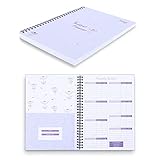
- Customize & Get Budgeted - With blank free of pre-filled categories and months budgeting pages, Soligt undated budget planner gives you complete control of your finances on a daily monthly and annual basis and enable you to manage your personal finance, cash money payment, and budgeting effective without any restrictions.
- Keep you on Track & Organized - The budget book journal provides 12 cute pockets for effortless bill, receipt, envelopes storage, along with a spacious layout perfect for recording and tracking incomes, expenses, savings, debt payoff, bills calendar and paying with ease.
- Achieve Financial Goals - This bill organizer provides a simple yet comprehensive budgeting system that is perfect for home household or small business beginners and encourages celebrating successes while identifying opportunities for improvement, both visually appealing and user-friendly.
- Your perfect companion - The Spiral bound budgeting notebook is the perfect small size, measuring at 9.25 x 6.81" and featuring a durable hardcover and 100 gsm paper. Lightweight and portable, It is easy to take with you wherever you go and built to last throughout the year.
- Bonus Month Tabs - The paycheck Budget Planner Financial Organizer boasts colored sticker labels to aid in simple navigation through your budget pages, ensuring added convenience and ease of use to help locate important information quickly and efficiently.
Mortgage calculators typically ask for a loan amount, rate and term to estimate principal and interest. A result based on those inputs does not automatically include property taxes, insurance, mortgage insurance or HOA fees. Check the calculator’s assumptions before using its result to set a budget.
Some calculators let you work backward from a monthly principal-and-interest limit to an estimated loan amount. If yours does not, adjust the loan amount until the payment matches the limit you set. For a fair comparison, keep the term and payment scope the same while changing only the rate. If you change the term, down payment or loan structure at the same time, the result no longer isolates the rate’s effect.
Principal and interest are only part of the monthly housing cost
A loan payment shown as “principal and interest” is not necessarily what you will need to pay each month to own and live in the home. Build a separate estimate of your full housing cost using the expenses that apply to the property and loan.
- Property taxes: Estimate taxes using information relevant to the property and location. The amount may change over time.
- Homeowners insurance: Get an estimate for the home and location. Flood or other supplementary coverage may be needed in some cases.
- Mortgage insurance: Include it if it applies to the loan. Its amount and duration depend on the loan and borrower’s circumstances.
- HOA dues: Add any homeowners association fees for the property.
- Maintenance and repairs: Leave room in the household budget for routine upkeep and unexpected work; these expenses are not part of the mortgage payment.
- Other debts and expenses: Preserve room for debt payments, recurring household costs, savings and emergency reserves.
Some lenders collect taxes and insurance along with the mortgage payment through an escrow account. If they are not escrowed, you may pay them separately, but they still belong in your monthly affordability calculation. Do not treat a lower principal-and-interest figure as a lower total cost if it leaves out expenses you will pay elsewhere.
For a useful estimate, distinguish between expenses included in a lender’s projected monthly payment and expenses you will pay on your own. For example, taxes and insurance may appear in an escrow estimate or may be billed separately. Either way, include them in your household budget; otherwise, you could mistake an incomplete payment figure for the full amount needed each month.
Rank #3

- Helps you budget and track personal spending
- Offers weekly and monthly tracking in a ledger-style format
- Includes yearly summary
How to estimate a home-buying budget at a higher rate
Work from the amount your household can sustain, not from a maximum home price suggested by a calculator. The estimate will become more useful as you replace early assumptions with property-specific costs and lender information.
- Set a total monthly housing limit. Review income, other debts, recurring expenses, savings goals and the emergency cushion you want to preserve. Choose a payment level that fits those priorities rather than assuming you should spend the maximum a lender might approve.
- Estimate costs outside principal and interest. Add expected property taxes, homeowners and any supplementary insurance, mortgage insurance if applicable, and HOA dues. Subtract those monthly costs from your total housing limit to find the amount left for principal and interest.
- Choose the loan assumptions to test. Use the loan type and term you are considering, a planned down payment, and rate information relevant to your borrower profile. Rates and lender offers change; a general rate or calculator result is not a guarantee of the rate you will receive.
- Calculate the loan that fits the remaining payment. Use a calculator that accepts a monthly principal-and-interest limit, or vary the loan amount until the estimated principal-and-interest payment fits. Recalculate at a higher rate to see how much borrowing capacity changes.
- Estimate a price range and check the cash required. Add the planned down payment to the estimated loan amount for a rough home price. Then account for closing costs and other cash needed to buy, while keeping money available for reserves and other priorities.
- Stress-test the estimate. Check whether the budget still works if the rate or non-mortgage costs are higher than expected. If you are considering an adjustable-rate mortgage (ARM), include possible future payment adjustments. Keep a cushion rather than treating early calculator results as exact.
Do not stop at the first number a calculator returns. Early estimates use assumptions, and property-specific taxes, insurance, HOA fees and loan terms may not be known yet. Revisit the calculation when you have better information, including lender estimates and costs for a home you are actually considering. A cushion helps account for estimates that prove low or expenses that change.
The CFPB’s answer to “How can I figure out if I can afford to buy a home and take out a mortgage?”, last reviewed June 27, 2024, puts the distinction plainly: “Focus on a mortgage that is affordable for you given your other priorities, not how much you qualify for.” A lender’s approval limit answers whether a proposed loan meets its lending criteria; it does not determine what is comfortable for your household after other spending and savings needs.
The CFPB offers free calculators and a worksheet that can help organize a budget and estimates. A paid budget planner is optional, not a requirement. If you use a worksheet or calculator, make sure it includes the costs you need and that you understand which figures are estimates rather than lender terms.
What changes your price range besides the rate?
A rate is important, but it does not act alone. Two buyers with the same income can reach different estimates because they have different debts, down payments, loan terms, credit profiles, housing costs or savings priorities. The practical question is not “How much home can someone with my income buy?” but “What loan and total housing cost fit my actual circumstances?”
Rank #4

- Comprehensive Income & Expense Planner: This 108-page financial planner helps you take complete control of your money. It includes dedicated sections for tracking every source of income and every expense, no matter how small. Whether you need to monitor daily spending, plan a monthly budget, or prepare for tax season, this planner gives you a clear, organized system.
- Clear Layout & Easy to Write: Each page features a clean, well-organized design with clearly labeled columns for income sources, expense categories, revenues, profits, and other relevant information. The organized sections simplify tracking and help you stay consistent with your bookkeeping routine.
- Enough Writing Space: This planner offers generous writing space for each entry, so you can record detailed descriptions, multiple transactions, or notes about upcoming bills. Each page gives you room to be thorough, perfect for tracking everything from grocery receipts to monthly rent, freelance income to utility bills.
- Portable and Convenient: This compact book measures 9.5” x 6.7” with a sturdy spiral binding, which is easy to carry in your bag, backpack, or keep on your desk. This portable planner makes it easy to stay on top of your money anytime, anywhere. Perfect for use at home, in the office, or on the go.
- Wide Usages: It is suitable for personal budgeting, family household expenses, small business bookkeeping, freelance income tracking, or even rental property management. It's also great for college students learning to manage money, couples saving for a big purchase, or anyone working toward debt freedom or savings goals
- Down payment: A larger down payment can reduce the amount you need to borrow, but using more cash upfront may leave less for closing costs and reserves. A rough price estimate from loan amount plus down payment is not a substitute for checking the cash required to complete the purchase.
- Loan term: A shorter term typically means a higher monthly payment and less interest over the life of the loan. Compare terms only in light of the payment your budget can support and your longer-term goals.
- Debt and recurring expenses: Existing debt payments and household costs reduce what is available for housing, even when they do not appear in a mortgage calculator’s payment output.
- Location and property: Taxes, insurance, supplementary coverage and association dues can differ substantially by home and location. A price range based on one property’s estimated costs may not fit another.
- Mortgage structure: A fixed rate and an ARM carry different risks. The first has stable principal and interest under the loan terms; the second can have a lower initial payment but may adjust later.
When you add a down payment to an estimated affordable loan amount, you get only a rough home-price range. The calculation does not establish that you have enough cash for closing costs, or that you should use all available savings toward the purchase. Consider the cash needed at closing and the money you want to keep for emergencies and other goals before settling on a price limit.
Fixed-rate mortgages and adjustable-rate mortgages
With a fixed-rate mortgage, the interest rate and scheduled principal-and-interest payment stay stable under the loan’s terms. That makes it easier to plan for this part of the payment, although taxes, insurance, HOA dues and maintenance can still change.
An ARM typically begins with an introductory period in which the rate is fixed, then may adjust according to the loan’s terms. The initial payment is not a like-for-like comparison with a fixed-rate payment unless you also account for what could happen after the introductory period. Before choosing an ARM, review when adjustments can begin, how often they can occur, the rate and payment caps, and the payment implications of the adjustment terms. Test whether your budget can tolerate a higher payment rather than assuming you will refinance or sell before a reset.
A shorter fixed-rate term and an ARM are different kinds of comparisons. A shorter term typically costs more per month but less interest over the life of the loan. An ARM may start with a lower payment, but the rate can adjust later. Compare each option using the same total-budget perspective and the risks you are willing and able to take, rather than choosing solely by the lowest initial monthly figure.
What’s actually slowing this PC down?
Pick the symptom - the matching free tool is one click away.
How to compare mortgage offers fairly
When you have more than one offer, compare the documents and assumptions—not just the headline rate. Loan Estimates can help you review the terms, payments and costs associated with offers. Because rates change daily, note when each estimate was prepared and whether it assumes the same rate-lock period.
Best Value

- Customize & Get Budgeted - With blank free of pre-filled categories and months budgeting pages, Soligt undated budget planner gives you complete control of your finances on a daily monthly and annual basis and enable you to manage your personal finance, cash money payment, and budgeting effective without any restrictions.
- Keep you on Track & Organized - The budget book journal provides 12 cute pockets for effortless bill, receipt, envelopes storage, along with a spacious layout perfect for recording and tracking incomes, expenses, savings, debt payoff, bills calendar and paying with ease.
- Achieve Financial Goals - This bill organizer provides a simple yet comprehensive budgeting system that is perfect for home household or small business beginners and encourages celebrating successes while identifying opportunities for improvement, both visually appealing and user-friendly.
- Your perfect companion - The Spiral bound budgeting notebook is the perfect small size, measuring at 9.25 x 6.81" and featuring a durable hardcover and 100 gsm paper. Lightweight and portable, It is easy to take with you wherever you go and built to last throughout the year.
- Bonus Month Tabs - The paycheck Budget Planner Financial Organizer boasts colored sticker labels to aid in simple navigation through your budget pages, ensuring added convenience and ease of use to help locate important information quickly and efficiently.
- Match the basic loan terms. Compare the loan amount, term and fixed- or adjustable-rate structure. A difference in those terms can explain a difference in payment.
- Check the rate and lock details. Note the quoted rate, the date, and the length or status of the rate lock, if any. Offers prepared at different times may reflect different market conditions.
- Compare payment components. Separate principal and interest from mortgage insurance and any taxes or insurance included in an estimated total monthly payment. Check whether the estimates use comparable assumptions for escrowed expenses.
- Review points, fees and cash to close. Compare points, lender fees, other closing costs and the cash needed to close. A lower rate may involve higher upfront costs; a lower fee in one part of an estimate may be offset elsewhere.
- For an ARM, examine reset terms. Compare the adjustment schedule, caps and potential payment at a higher rate—not only the introductory payment.
If an offer is not competitive, ask the lender whether it can improve the terms and check the revised estimate for changes elsewhere. A useful comparison holds the important assumptions as close as possible; if they differ, identify those differences before deciding which loan better fits your budget.
In particular, do not compare a low-rate offer with substantial points against a no-points offer by rate alone. Points, lender fees and other closing costs affect the cash needed upfront, while the interest rate affects the scheduled payment. The better fit depends on the full terms and your own priorities; compare the costs and payment together instead of treating one headline figure as the whole offer.
Common budgeting mistakes to avoid
- Comparing rates without holding loan amount and term constant. A payment difference cannot be attributed to the rate alone if the amount borrowed or repayment period also changed.
- Treating principal and interest as the entire housing payment. Taxes, insurance, mortgage insurance and HOA dues can add meaningful monthly costs, whether paid through escrow or separately.
- Using a rate as though it were a personal quote. The rate you can obtain depends on the offer and borrower profile; a market average or illustrative calculation is not a guaranteed rate.
- Setting a home price from income alone. Debts, costs, down payment, location and savings priorities all affect what fits a household budget.
- Using an introductory ARM payment as a long-term affordability test. Consider the adjustment terms and whether a higher payment would remain manageable.
- Assuming an early calculator result is exact. Replace estimates with better information as it becomes available, then keep a margin for costs that may exceed the initial assumptions.
- Forgetting upfront cash and reserves. A loan amount plus down payment gives a rough price estimate, not a full cash-to-close calculation. Account for closing costs and retain the savings cushion you need.
- Comparing offers from different dates without checking the lock. Mortgage rates change over time. A rate difference may reflect the date or lock assumptions, as well as the offer’s other terms.
Frequently Asked Questions
How do mortgage rates affect affordability?
For the same loan amount and term, a higher fixed rate increases the principal-and-interest payment. If you keep the payment budget fixed instead, the higher rate reduces the loan amount that fits. Your full price range also depends on your down payment, taxes, insurance, mortgage insurance, HOA dues, debts, savings and cash needed to close.
Do these 3 things before closing this tab:
1Scan for outdated or missing drivers - takes under a minute2Clear out junk files and repair common Windows errors3Fix the driver behind crashes, sound loss and screen glitchesHow do mortgage lenders calculate monthly payments?
For a standard amortizing fixed-rate loan, principal and interest are calculated from the amount borrowed, the periodic interest rate and the number of payments in the term. That figure does not necessarily include taxes, homeowners insurance, mortgage insurance, HOA dues or maintenance.
How can I figure out if I can afford to buy a home and take out a mortgage?
Start with a total monthly housing amount that fits your debts, regular expenses, savings goals and emergency cushion. Estimate taxes, insurance, mortgage insurance and HOA dues, subtract them to find the principal-and-interest amount available, then calculate a loan amount at a realistic rate and term. Check closing costs and stress-test higher rates or costs before treating the estimate as a budget.
How much home can I afford?
There is no reliable price based on income alone. Estimate the loan amount your monthly budget can support after other housing costs, then add your planned down payment for a rough price range. Check that the purchase also leaves enough cash for closing costs, reserves and other priorities.
Does a lower mortgage rate always mean the better offer?
Not necessarily. Compare the rate alongside the loan amount, term, rate-lock date, payment components, points, lender fees, closing costs and cash to close. A lower rate may come with higher upfront costs, so review the whole offer.
The Tool Desk
Outbyte Driver Updater FREEScan for outdated or missing drivers - takes under a minuteDriver Scan →Outbyte PC Repair FREERepair Windows errors before they cause bigger problemsFix Now →The Bottom Line
A higher mortgage rate means a larger principal-and-interest payment for the same fixed-rate loan, or less borrowing power for the same payment limit. Build your budget around the total cost of housing—not just principal and interest—and compare loan offers by their full terms, fees and payment risks. The right home price is the one that leaves room for your other obligations, savings and a cushion.
Quick Recap
Product prices and availability are accurate as of the date/time indicated and are subject to change. Any price and availability information displayed on Amazon at the time of purchase will apply.




