International tax accountant Alan Cole reportedly made $470,300 after taking the other side of a Kalshi market tied to federal spending and DOGE’s efforts to cut it. The wager was not simply a bet on whether DOGE would succeed: a secondary account of Wall Street Journal reporting says the contract asked whether annual federal spending would fall by more than $50 billion. Reports say spending instead rose in 2025 compared with 2024.
What Cole reportedly bet on
The market concerned federal spending during a period when the Department of Government Efficiency (DOGE) was pursuing reductions. The Fiscal Times, summarizing Wall Street Journal reporter Richard Rubin’s account, says the contract’s threshold was a decline of more than $50 billion in annual federal spending. On that description, Cole’s position was against the market resolving in favor of such a decline—not a bet on DOGE as an organization in every respect.


Kalshi’s federal-budget market page confirms that the platform offers markets related to federal spending and budget policy. It does not establish the exact wording or settlement rules of Cole’s historical contract.
How much he reportedly staked and received
Published figures distinguish the amount Cole put at risk from the amount he received and the profit attributed to the trade.
What’s actually slowing this PC down?
Pick the symptom - the matching free tool is one click away.
| Figure | What the report says |
|---|---|
| Stake | TechCrunch reported more than $342,000; The Fiscal Times, summarizing Wall Street Journal reporting, gave the more precise figure of $342,195.63. |
| Market size and position | TechCrunch reported that the market had grown to $12 million and that Cole’s position represented about 3% of it. |
| Amount received | TechCrunch and Inc. reported that Cole received or collected $470,300. |
| Profit | The Fiscal Times reported profit of a little more than $128,000. |
These are figures reported by the publications, not independently verified transaction records. The amount received is not the same as net profit: the reported profit is the amount remaining after accounting for the stake. The reports do not provide enough independently verified contract-level information here to reconstruct settlement mechanics or calculate a return beyond the figures they attribute.
Why Cole thought spending would be hard to cut quickly
TechCrunch reported that Cole reasoned federal spending could not be reduced quickly because substantial obligations would remain even if some contracts were canceled and workers laid off. That is his reported rationale for the position, not an independently established finding about the effect of DOGE’s actions.
Rank #2
DOGE’s live website currently claims that “Current year non-defense federal obligations are down 20.5% as compared to 2024” and says, “Cash outlays will follow as obligations come due.” Obligations and cash outlays are different measures: a claimed drop in current-year non-defense obligations does not, on its own, show that total federal cash spending fell.
Independent reader supportYour contribution helps us test, update, and keep practical guides available for everyone.What the reported result does—and does not—show
TechCrunch says the 2025 year-end figures showed federal spending above 2024. Inc. separately reported, attributing the detail to Wall Street Journal coverage, that the lowest-spending quarter in 2025 was $66 billion above the market’s target level. Those comparisons help explain the reported outcome, but they should not be treated as interchangeable: one is a year-over-year account, while the other is a quarterly comparison against a target.
Rank #3
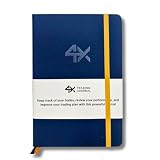
- BUILT FOR YOUR MARKET, FUTURES, STOCKS, FOREX, OPTIONS & CRYPTO: 4X is a mindset and process journal, not a strategy tool tied to one instrument. The plan, the trade log, the deep dive and the weekly review work the same whether you trade ES, EURUSD, SPY or BTC. Traders use it across all five markets every day.
- THE 2026 EDITION, REBUILT FROM TRADER FEEDBACK: Same trusted system, better in every way. An extra daily page for more room to log the session. Weekly reviews now grouped with each week's trades, so no more flipping back and forth. Crisp, darker print that's easy on the eyes after hours on a screen. A Quick-Start QR that scans straight to step-by-step instructions.
- NOT A NOTEBOOK, A COMPLETE 12-WEEK SYSTEM: Start with a one-time 9-part Trading Plan (your market, setups, risk rules and discipline checklist). Then twelve identical weeks: five Daily Logs, five Deep Dive trade pages, and a two-page Weekly Review. 189 guided pages, roughly 80 trades. Guided prompts walk you through every step. You never stare at a blank page.
- RATE YOUR EXECUTION, NOT YOUR RESULT: Your platform tracks the P&L. Nothing tracks the why. Log energy, sleep and mindset before the open; grade every trade A to F on whether you followed your plan, not on whether it won; then face the pattern every weekend with START / STOP / IMPROVE / CONTINUE. That review habit is the edge. You're 42% more likely to hit a goal you've written down.
- BUILT TO LAST, ARRIVES GIFT-READY: Vegan-leather hardcover, 100gsm bleed-resistant paper, two ribbon markers and an elastic closure band. Bound to lay flat so you're not fighting the spine while you write. 189 pages, 5.75" x 8.5", carries in a bag. Ships in a premium gift box: the gift every trader in your life actually wants.
The reports consulted do not directly reproduce the Treasury table or establish the historical contract’s complete settlement rules. The threshold, stake, market size, payout, and profit should therefore be understood as reported details, rather than as figures verified here against primary records. And one successful position does not establish that prediction markets generally outperform other ways of forecasting government spending.
Quick Recap
Product prices and availability are accurate as of the date/time indicated and are subject to change. Any price and availability information displayed on Amazon at the time of purchase will apply.




