Do these 3 things before closing this tab:
1Fix the driver behind crashes, sound loss and screen glitches2Repair Windows errors before they cause bigger problems3Scan for outdated or missing drivers - takes under a minuteAerial transport aircraft help relief teams reach people and move essential supplies when roads are damaged or impassable, security risks limit travel, or ordinary commercial flights do not serve the area. They carry aid workers and light cargo, support larger cargo airlifts, evacuate people for medical or security reasons, and—in specialized, last-resort cases—deliver supplies by airdrop. Aircraft are one link in a wider logistics chain, not a substitute for storage, coordination and onward distribution.
How do aircraft help in disaster relief?
Aircraft provide access when ground routes or normal air services cannot reliably reach a crisis area. That access can help humanitarian organizations move personnel and relief cargo, conduct medical evacuations, relocate people for security reasons, and connect isolated communities to operational hubs.

The World Food Programme (WFP) manages the United Nations Humanitarian Air Service (UNHAS), a shared passenger and light-cargo service for the wider humanitarian community. It serves crisis areas where safe surface transport or viable commercial aviation may be unavailable. WFP says that in 2025 UNHAS carried over 240,000 passengers and 2,500 metric tons of light humanitarian cargo to almost 362 remote and hard-to-reach destinations. WFP’s UNHAS overview describes the service and its access role.
These figures describe UNHAS in 2025; they should not be added to or substituted for the service’s separately reported 2024 totals. In its 2024 reporting, WFP said UNHAS transported more than 355,000 aid workers and nearly 5,000 metric tons of relief cargo to 394 hard-to-reach locations for 612 organizations. The reported services included passenger and light-cargo transport, medical evacuations and security relocations. WFP’s 2025 Annual Review page reports those 2024 operating figures.
Recommended Free Tools
#1 Best Overall

- Complete Daily Nutrition Each HDR (Humanitarian Daily Ration) is designed to provide 2,200–2,500 calories per day, meant to feed one person for an entire day in crisis or disaster relief settings.
- 4-Pack Bundle – Multi-Day Supply Includes 4 full HDR kits, sealed, shelf-stable, and ready for storage. Perfect for emergency stockpiles, preparedness kits, camping, or humanitarian use.
- Shelf-Stable & Ready to Eat No heating required. Meals are fully pre-cooked, individually packaged, and provide long-lasting storage life. Great for natural disaster readiness or off-grid situations.
- Balanced Nutrition Each HDR includes a variety of ready-to-eat items such as grain products, spreads, and fortified components to maintain energy and hydration.
- Lightweight, Portable & Durable Packaging HDRs are packed in tough, sealed pouches designed for rough conditions—easy to transport, store, and distribute in bulk.
What types of aircraft are used for humanitarian aid?
Humanitarian aviation can draw on fixed-wing aircraft, rotary-wing aircraft such as helicopters, and unmanned aircraft services. Some aircraft carry passengers, some cargo, and some can serve both roles. UN procurement materials cover these categories, but the available evidence does not establish one aircraft type as universally best for a particular disaster mission. Selection depends on the operation’s access, task and safety requirements.
- Fixed-wing aircraft: used for passenger and cargo services, including airlifts that land to unload.
- Rotary-wing aircraft: included in passenger and cargo aviation services and can be part of a mixed response fleet.
- Unmanned aircraft: included as a procurement service category; the cited material does not establish a universal humanitarian payload or use case.
The UN’s aviation procurement information sets out service categories, while its aviation safety standards were amended in August 2025, including crew qualification and experience provisions and updated guidance related to unmanned aircraft. These sources do not supply comparable aircraft cost, range, payload or runway figures, so they do not support a general technical ranking.
Rank #2

- COMPLETE DAILY NUTRITION (2,200+ CALORIES PER RATION) Each Humanitarian Daily Ration (HDR) provides approximately 2,200 calories per day, designed to sustain energy and nutritional needs in emergency or survival situations.
- Fully cooked and packaged for immediate consumption. Perfect for emergency kits, disaster preparedness, camping, hiking, and survival situations.
- Each ration includes a selection of entrees, sides, snacks, spreads, and beverages. Contents may vary, providing menu diversity while maintaining consistent caloric intake.
- Designed for extended storage with durable, weather-resistant packaging. Ideal for long-term emergency food storage.
- Perfect for preppers, first responders, humanitarian aid, natural disaster readiness, camping trips, and outdoor adventures.
What is the difference between an airlift and an airdrop?
An airlift brings cargo to a landing site, where it is unloaded. An airdrop releases cargo from an aircraft in flight instead of landing to unload. The distinction matters because an airdrop is not simply a faster or routine version of an airlift: WFP aviation policy describes airdrops as a last-resort food-delivery option.
A South Sudan operation illustrates both methods. Seasonal rains made roads impassable, and WFP used airlifts and airdrops in an operation involving 20 contracted fixed-wing and rotary-wing aircraft. The UN’s report on the 2014 operation explains that airlifted food was unloaded after landing, while airdropped food bags were released in flight. WFP’s aviation policy frames airdrops as a last resort, rather than an ordinary substitute for landed delivery and distribution on the ground.
What’s actually slowing this PC down?
Pick the symptom - the matching free tool is one click away.
Rank #3
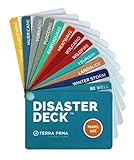
- KNOW EXACTLY WHAT TO DO — When a wildfire, earthquake, or hurricane hits, the brain freezes — even for prepared people. The Disaster Deck gives you clear, calm, step-by-step actions for 12 real disasters so you and your family move with confidence, not panic. No searching, no guessing. Just open it and go.
- 12 DISASTERS, ONE POCKET-SIZED DECK — Covers wildfire, earthquake, hurricane, flooding, tornado, tsunami, power outage, extreme heat, volcano, lightning, landslide, and emotional wellness — because staying mentally grounded is part of surviving any emergency. Color-coded guides make the right action instantly obvious, even under stress.
- READY WHEREVER LIFE TAKES YOU — Lightweight and waterproof — built for real conditions, not a bookshelf. Slips into a bug out bag, glove box, backpack, purse, or emergency kit without taking up space. Perfect for families, campers, hikers, travelers, and anyone who wants to feel genuinely prepared without being overwhelmed by it.
- EXPERT-BACKED, REAL-WORLD TESTED — Developed with emergency preparedness professionals and trauma-informed experts — not generic internet checklists. Includes proven mental wellness steps to reduce panic and help your whole family stay focused when it matters most. This is disaster resilience, not just disaster information.
- MADE IN THE USA BY A WOMEN-OWNED SMALL BUSINESS — Terra Frma is built on one belief: preparedness should feel like relief, not fear. Every guide is made in the USA with high-quality, durable materials designed to last through real emergencies — and real life. A thoughtful gift for parents, new homeowners, college students, or anyone you want to feel safe.
A separate UN report records 8,345 metric tons of food airdropped by WFP Aviation in 2024. That figure refers to WFP Aviation’s airdrop activity; it is not a total for UNHAS light cargo. UN report E/2026/14 provides the figure and its reporting context.
Why aircraft are only one part of relief delivery
Reaching an airfield or dropping cargo into an area does not by itself get assistance to each person who needs it. Relief operations also need coordination, staging, storage, cargo handling and onward transport. Aircraft can move supplies into an area, but local distribution still depends on access and logistics on the ground.
Rank #4

- COMPLETE 4-PERSON DISASTER SUPPLY KIT: Built to support four people for up to 72 hours with emergency food, drinking water, first aid, shelter, lighting, hygiene and survival gear packed together in one portable backpack for fast access at home or work.
- FOOD & WATER FOR 3-DAY PREPAREDNESS: Includes four 2,400-calorie emergency food bars and four 1-liter Aqua Literz cartons, plus survival blankets, ponchos and lightsticks to help support your household during outages, evacuations and major disasters.
- FIRST AID & SAFETY ESSENTIALS: Includes a 107-piece first aid kit, safety goggles, nitrile gloves, leather work gloves, biohazard bags, hygiene supplies and an emergency whistle to help support personal protection and comfort when conditions turn chaotic.
- POWER, LIGHTING & SURVIVAL TOOLS: Hand-crank emergency power station combines flashlight, AM/FM radio, siren and cell phone charging, while a multi-function tool, duct tape and emergency lightsticks add practical support for blackouts and evacuations.
- BUILT FOR HOME, WORK & EVACUATION: Grab-and-go 4-person emergency backpack is ideal for earthquake kits, hurricane supplies, wildfire evacuation, blackout preparedness, offices, vehicles and family disaster planning when critical supplies must move fast.
The response planning after Haiti’s 2010 earthquake included passenger aircraft, cargo aircraft and helicopters alongside staging, storage, coordination and surface-transport needs. It shows how aviation fits into a broader logistics response rather than replacing it. The UN Haiti response document describes that mixed approach. WFP’s 2024 Annual Performance Report also provides supply-chain and partner context.
Independent reader supportYour contribution helps us test, update, and keep practical guides available for everyone.How are humanitarian flights coordinated and kept safe?
Humanitarian aviation is organized around operational needs and safety requirements, not simply the availability of an aircraft. UN procurement covers fixed-wing and rotary-wing passenger and cargo services as well as unmanned aircraft services. UN aviation standards provide the relevant framework, with amendments in August 2025 addressing crew qualification and experience and guidance related to unmanned aircraft. Specific requirements depend on the applicable standards and operation.
Shared services such as UNHAS help multiple humanitarian organizations access air transport in crisis areas. WFP’s UNHAS Chief Air Transport Officer Armando Puoti described the service as one WFP puts in place “where there are no other options,” in a WFP story published April 2, 2025. The principle is constrained access: aircraft are used to address a gap, while the wider response coordinates priorities and links air movement to the rest of the supply chain.
When is aircraft transport the right tool?
There is no evidence here for a universal claim that aircraft are always faster, cheaper or more effective than surface transport. Their role is clearest when the usual routes or services cannot reliably meet an operation’s access needs. Teams must match the mission to available aircraft and conditions, and account for what happens to passengers or cargo once the aircraft reaches its destination.
Quick Recap
- Passenger movement: move aid workers to locations that are difficult or unsafe to reach by surface transport.
- Light-cargo service: carry relief items to remote destinations through a shared service such as UNHAS.
- Cargo airlift: land and unload cargo where an appropriate landing site and ground handling are available.
- Medical or security evacuation: move people when the operation requires evacuation support.
- Airdrop: consider only as a specialized last-resort delivery method, with the wider operation prepared to manage what follows.
Product prices and availability are accurate as of the date/time indicated and are subject to change. Any price and availability information displayed on Amazon at the time of purchase will apply.




