You can claim the home office tax deduction on your federal return if a specific part of your home is used exclusively and regularly for a business you run, and that space meets one of the IRS’s qualifying routes. The amount is then calculated one of two ways: a simplified method at a prescribed rate of $5 per square foot, or the actual-expense method, which allocates real home costs to the business share of the house. Eligibility comes first. Only after a space qualifies does the arithmetic matter.
The figures below come from IRS guidance for tax year 2025, including IRS Publication 587 (2025). Rules and forms change by tax year, so confirm the limits and worksheets in the instructions for the year you are filing. This article covers federal rules only; state treatment is not addressed.
Step one: confirm the space qualifies
The general test has two parts. The space must be used exclusively for business, meaning no personal use of that area, and regularly for business. Then the use must fit one of the IRS’s qualifying routes. A desk in a shared living room or a spare-room office that doubles as a guest bedroom generally fails the exclusive-use part, however much work happens there.
Principal place of business
A home office can qualify as your principal place of business. This is not simply the location where you spend the most hours. The IRS looks at the relative importance of the activities performed at each business location and the time spent at each. A home office can qualify when it is used exclusively and regularly for administrative or management activities and there is no other fixed location where you conduct substantial administrative or management work. Publication 587 contains worked examples, and you should read them rather than reducing the test to a single time-based rule.
#1 Best Overall

- All-in-One Yearly Tax Organizer System: This organizer features 【12 separate, non-adjacent】 envelopes, each with a blank front for labeling and a rear pocket for storing monthly receipts and documents. The spiral-bound design keeps them spaced for easy flipping and access, helping you stay organized and ready for tax season.
- Letter Size Compatible with Large Capacity Pockets: Perfectly fitting letter size papers, receipts, and forms with enough room to store multiple documents without folding. The large capacity pockets provide ample storage space to hold all your tax-related paperwork, keeping everything neat and secure throughout the year.
- 12 Color Index Tabs for Easy Sorting: The color-coded index tabs allow for quick identification of each month or tax category. This makes it easier than ever to locate documents when you need them, whether for tax filing, auditing, or general record-keeping. Stay organized and efficient with minimal effort.
- Ideal for Home and Small Business Use: Perfect for freelancers, households, and small business owners to manage yearly taxes, track receipts, and stay audit-ready all year long. This tax organizer system is versatile and works well for both personal and business-related tax documentation, simplifying the process for entrepreneurs and busy households.
- Durable & Professional Design: With its high-quality spiral binding and sturdy envelopes, this tax organizer book is built to last, even with regular use. The professional design offers both style and functionality, making it perfect for those looking to maintain an efficient, long-lasting filing system for tax documents, receipts, and other important paperwork.
Meeting clients, patients, or customers
A space also qualifies if you regularly meet or deal with clients, patients, or customers there in the normal course of your business. The IRS expects physical meetings on the premises and use that is substantial and integral to the business. Occasional meetings or calls alone do not satisfy this route.
A separate structure
A separate, unattached structure, such as a detached studio or garage workshop, can qualify when it is used exclusively and regularly in connection with the business. It does not have to be your principal place of business or a client-meeting site.
Rank #2
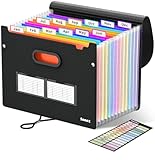
- Superior Durability: Featuring strong 100C thickened cover and reinforced edges, surpassing competitors in durability. Made from PVC-free, acid-free materials, ensuring secure organization of bills and documents while delivering unparalleled durability and reliability
- Deeper Pockets & Unobstructed Tabs: In response to a common issue in accordion folders where papers cover index labels, we've increased pocket height by 0.8 inches (2 cm). This unique enhancement ensures your labels remain visible—a feature unmatched by competitors
- Ample Capacity Monthly Bills Organizer: Our expandable monthly bill organizer can extend up to 14 inches, accommodating over 1500 sheets files while standing stable. With 12 pockets, it's perfect for storing tax records, bills, receipts, invoices and important family files for over a year
- Sticky Labels & 3 Loops Bungee Closure: Colorful monthly tabs and labels help you locate the target object at a glance and manage monthly tasks with ease. The elastic band closure with three loops expands generously to accommodate all your storage needs
- Unlock Versatile Organization: Whether at home, in the office, or on the go, it offers flexible organization for invoices, medical finance records, and identification documents, ensuring efficiency wherever you need it
Special cases
Certain daycare facilities and storage of inventory or product samples follow their own provisions when their specific requirements are met. If your situation involves either, read those provisions in Publication 587 before applying the general test.
Employees and remote work
If you are an employee, you generally cannot claim the home office deduction on your personal federal return. IRS guidance states that this limitation applies to tax years beginning after 2017. Working from home at an employer’s request does not change that result. The deduction is a self-employment question, and it depends on the business-use rules above.
What’s actually slowing this PC down?
Pick the symptom - the matching free tool is one click away.
Rank #3

- 26-POCKET MONTHLY FILE ORGANIZER: ABC life 26-pocket accordion file organizer is the perfect solution for filing taxes and sorting monthly family documents. Measuring 13" x 9.4" x 28", it is designed to store a massive volume of Letter/A4 size files for both home and office use.
- UNIQUE 2-IN-1 LIDDED & LID-FREE DESIGN: The smart lock-hole design lets you use this expandable file folder with the lid closed for covered storage or without the lid for quick access to your files. Expanding up to 28 inches and holding up to 4,500 sheets, it also features a sturdy self-standing structure that stays upright on your desk, even when fully loaded.
- EASY COLOR-CODED FILE ORGANIZATION: Designed with colorful inner pockets and large A-Z tabs, this accordion file organizer makes it easy to sort and identify documents at a glance. The clear alphabetical layout helps you quickly locate tax papers, bills, receipts, invoices, school records, and other important files in seconds.
- UPGRADED POCKET HEIGHT FOR CLEARER LABELS: The improved pocket design keeps papers from covering the index tabs, so labels stay visible and easy to read. This expandable file folder fits Letter and A4 size documents and helps organize tax records, bills, receipts, invoices, medical files, and other important paperwork more efficiently.
- SPACE-SAVING HOME FILE STORAGE: This accordion file organizer expands to hold a large volume of documents while collapsing down for compact storage when not in use. Ideal for home office organization, it helps keep paperwork neatly contained, reduce clutter, and make everyday filing easier and less stressful.
Two calculation methods compared
Once a space qualifies, you choose between the simplified method and the actual-expense method. The table summarizes the differences that matter most in practice.
| Feature | Simplified method | Actual-expense method |
|---|---|---|
| Core calculation | Qualifying area × $5 per square foot, with a 300-square-foot maximum, then the business-income limit | Business-use percentage applied to eligible home expenses, then the business-income limit |
| Maximum before the income limit | $1,500 (300 sq ft × $5), tax year 2025 | No prescribed cap; the amount depends on your actual costs and business-use share |
| Records needed | Measurement of the qualifying area; no tracking of actual home bills | Records of actual housing costs and an allocation of direct and indirect expenses |
| Home depreciation | No home depreciation deduction for years the method is used, and no later depreciation recapture for those years | Business portion may include depreciation, which affects basis and the tax consequences when the home is sold |
| Excess over the income limit | Cannot be carried over | Qualifying excess may be carried forward, subject to the rules |
| Where it is reported | Simplified-method worksheet in the IRS instructions for the tax year | Form 8829 for many Schedule C filers |
How to calculate the simplified method
The simplified method is the easier route because it uses a prescribed rate rather than your utility bills and mortgage or rent records. It is still subject to the income limit.
Rank #4

- HOME OFFICE FILE ORGANIZER: ThinkTex Portable 12-Pocket Accordion File Organizer – Top & Bottom Expandable! Available in 11 stunning colors to match your unique style and decor, it includes vibrant removable tabs (pre-printed monthly tabs + blank tabs customizable for projects, documents, classes, etc.). Keeps tax files, monthly bills, and receipts neatly organized, so you can locate what you need in seconds. Features an elastic strap closure (far more convenient). Two front pockets are designed for storing business cards, notes, and extra tabs.
- LARGE CAPACITY, FLEXIBLE STORAGE 12-pocket expanding file folder expands to 14” (holds 3000+ sheets) – perfect for LETTER/A4 size paper! Flexibly fits more or fewer files – goes from slim to thick in seconds. Closed bottom keeps papers in place (even when tilted) – meets all your filing needs! Ideal for home, office, and school.
- 2-IN-1 DESK & ON-THE-GO FOLDER: Lid-free mode (stable & upright) – lock the cover to the back so it stands upright steadily on desks. Grab files with one hand, eliminating flipping interference entirely! Snap it closed for secure storage and portability to keep documents safe while you’re out. Effortlessly switch between desk, cabinet, and on-the-go use. ThinkTex – every upgrade is engineered for your convenience.
- MORE DURABLE & SAFE – VIRGIN PP:ThinkTex folders are made of more durable, resilient, and safe Virgin PP (no recycled plastic) – Waterproof, tear-resistant, built to last. Acid-free & PVC-free (archival-grade) – safeguards your important docs. (Note: Recycled plastic from unknown sources may contain harmful residues.) ThinkTex protects your files + your safety — durability & peace of mind.
- YOUR ALL-IN-ONE ORGANIZER: It holds every document you need! From daily essentials (monthly bills, receipts, tax documents, and invoices) to household/office files (insurance policies, warranties, and financial statements) and personal items (medical records, legal documents, certificates, children's documents, recipes, photos, and tickets)—this file folder has you covered. Say goodbye to clutter with easy organization for homes, offices, schools, and DIY projects!
- Measure the qualifying area. Include only the square footage used exclusively and regularly for business.
- Cap the area at 300 square feet. Anything above 300 square feet is disregarded for this method.
- Multiply by $5. For tax year 2025 this produces the unadjusted amount.
- Apply the business-income limit. The deduction cannot exceed your gross income from the business less the business expenses that are not home-office costs. Any excess is not carried forward under this method.
Two examples show the arithmetic. A qualifying 120-square-foot office gives 120 × $5 = $600 before the income limit. A qualifying 350-square-foot office is capped at 300 square feet, so the unadjusted amount is $1,500. Both figures remain subject to the income limit, and neither is a prediction of what any individual will be allowed.
Independent reader supportYour contribution helps us test, update, and keep practical guides available for everyone.How to calculate the actual-expense method
The actual-expense method allocates real costs between business and personal use. Expect more records and more work, but a larger deduction is possible when your housing costs are high relative to the office’s size.
Quick wins for a faster PC:
Repair Windows errors before they cause bigger problemsFix Now →Scan for outdated or missing drivers - takes under a minuteDriver Scan →Clear out junk files and repair common Windows errorsFree Scan →Best Value

- Yearly Tax Organizer: includes 2 spiral bound tax organizer designed to help you collect, sort, and store important tax records throughout the year, keeping receipts, income records, bills, and other paperwork in one easy to manage place
- Large Size for Everyday Documents: cover measures about 13 x 9.65 inches, with inside pages about 9.65 x 6.5 inches; The spacious pocket design provides room for receipts, statements, records, and tax-related papers without taking up too much desk or shelf space
- 12 Monthly Pockets for Easy Sorting: the tax record organizer features 12 pockets, making it simple to separate documents by month or category; Useful for organizing medical expenses, charitable donations, prescriptions, invoices, income folders, and monthly bill receipts
- Spiral Bound for Convenient Access: the secure spiral binding lets pages turn smoothly, so you can quickly add, remove, or review documents whenever needed; A practical design that helps simplify filing and reduce last-minute stress during tax season
- Widely Applied: this annual tax organizer is suitable for managing annual taxes, tracking receipts and preparing for audits all year round, making your tax preparation more systematic and manageable, and it is very suitable for annual tax returns, document storage and filing, professional tax services and tax agencies
- Direct expenses apply only to the business space, such as painting or repairs confined to that room. Assign them in full to the business share.
- Indirect expenses apply to the whole home, such as utilities, insurance, general repairs, and depreciation on the building. Multiply these by the business-use percentage.
- Business-use percentage is the qualifying area divided by the total area of the home, and the IRS worksheets set out how to measure it.
- Income limit applies after allocation, so the allowable amount cannot exceed the business income limit. Excess qualifying expenses may be carried forward on Form 8829 subject to the rules.
Publication 587 and the Form 8829 instructions for the applicable year contain the detailed worksheets and classification rules. Keep the records that support each allocation.
Forms and reporting
Many self-employed taxpayers who file Schedule C use Form 8829 to calculate allowable actual expenses and any carryover. The simplified method uses the IRS’s simplified-method worksheet instead. Partners and farmers may use different worksheets or reporting steps, so follow the form and instructions for your business type and tax year rather than assuming Form 8829 applies to everyone.
Choosing a method and changing it later
You choose the method for each tax year on your timely filed original return. Generally you cannot switch methods for that same year after filing. You may use the simplified method in one year and the actual-expense method in a later year. When you switch, the depreciation rules in Publication 587 determine the consequences, so check those rules before changing.
Quick Recap
Practical checklist before you claim
- The space is used exclusively for business, not shared with personal use.
- The space is used regularly and fits a qualifying route: principal place of business, client or customer meetings, a separate structure, or a listed special case.
- You are self-employed or otherwise operate a business, not an employee claiming remote work.
- You have the square footage measured, or the records needed for the actual-expense allocation.
- You know your gross business income and business expenses so the income limit can be applied.
- You have checked the IRS instructions for the tax year you are filing.
Product prices and availability are accurate as of the date/time indicated and are subject to change. Any price and availability information displayed on Amazon at the time of purchase will apply.
Do these 3 things before closing this tab:
1Clear out junk files and repair common Windows errors2Scan for outdated or missing drivers - takes under a minute3Repair Windows errors before they cause bigger problems



