A microchip in a cheese label sounds like a futuristic fix for food fraud. In 2022, the Parmigiano Reggiano Protection Consortium announced a test of tiny p-Chip microtransponders integrated into casein marks on bulk cheese wheels. The chips were intended to link each wheel to a digital identity—not to be mixed into the edible cheese.
The often-repeated “$2 billion” figure needs context: in an October 2025 statement, the Consortium estimated that false Parmesan sold outside the European Union represents more than €2 billion and about 200,000 tonnes. That is the Consortium’s estimate, not an independently audited market census. And although the 2022 announcement specified a 100,000-wheel test, current Consortium consumer guidance does not establish that chips are now used on every wheel.
As an Amazon Associate I earn from qualifying purchases.
What the microchip was designed to do
The Consortium’s March 30, 2022 announcement described a partnership with p-Chip Corporation and Kaasmerk Matec to integrate a microtransponder into a casein cheese mark. Casein is a milk-protein material already used to identify cheese. The announced test was planned for 100,000 bulk wheels in the second quarter of 2022, as a large-scale test before any decision on broader adoption. Consortium announcement
Quick wins for a faster PC:
Scan for outdated or missing drivers - takes under a minuteDriver Scan →Clear out junk files and repair common Windows errorsFree Scan →Fix the driver behind crashes, sound loss and screen glitchesFind Drivers →The mark carries the physical identifier; associated codes and digital records are meant to connect that identifier to information about the wheel as it moves through the supply chain. The potential uses include item-level traceability, authentication support, inventory control, and helping identify unauthorized substitution or diversion. Kaasmerk Matec says its conventional casein marks are applied early in production and are designed to withstand cheesemaking and maturation conditions. Kaasmerk Matec
#1 Best Overall

- 20-Pack Animal ID ISO Compliant Transponder RFID Microchip Tag
According to p-Chip, its device is a tiny, light-activated microtransponder with a unique identity. It is not a GPS tracker: the device does not independently send location data like a cellular tracker. Its usefulness depends on how the identifier is read and connected to reliable records. p-Chip p-Chip food and ingredient tracking
How the chip differs from the marks already on a wheel
Parmigiano Reggiano already has a formal identification system. The Consortium’s current consumer guidance describes rind lettering, a dairy identification number, production month and year, a casein plate bearing a unique progressive alphanumeric code, and a selection mark applied after inspection. The applicable product specification also sets identification and production requirements. The microtransponder was presented as an additional physical-digital layer, not as the first way to identify a wheel. Consortium guide to seals and marks Consortium FAQ 2025 product specification
The distinction between traceability and authentication matters. Traceability records which item is being handled and where it moves. Authentication asks whether the product is genuinely compliant. A unique identifier can help with both, but hardware alone cannot guarantee either: the records, inspection, and controls linking the mark to the wheel are just as important.
Outdated Drivers Are Slowing You Down
One free scan finds every outdated or missing driver and matches the right update for your exact hardware.Free scan · exact hardware matchWindows Errors? Fix Them Before They Spread
Repair common Windows errors and clear accumulated junk for a smoother, more stable PC - no reinstall needed.Free scan · no reinstallRank #2

- 【Support Multipe Microchip Formats】Universal microchip scanner supports EMID / ISO11784 / ISO11785 / FDX-B(15 digit microchips). Please note, the microchip reader CAN NOT read Avid chips, and the 9-digit ID can not be recognized. Only the 15-digit international standard protocol can be recognized. Please check the format of the microchip before purchasing.
- 【Easy To Operate & Fast Scan】Our pet microchip scanner is easy to operate, one button to read. Our microchip scanner adopt advanced RFID technology, responsive and fast scanning, it can better improve the efficiency of work. Please note, if no label is scanned, the device will automatically turn off after 180 seconds, or you can press and hold the button for 3 seconds to turn off the device.
- 【 Large Data Storage】Our pet microchip scanner can save 128 animal chips. It can be transferred to a computer or mobile phone via a USB cable connection. Our pet chip scanner also features a data-erase function, refer to the user manual for instructions.
- 【Rechargeable Battery】Our pet chip scanner supports USB charging, eliminating the need for frequent battery replacements, it can last for more than one year after being fully charged.
- 【Easy To Carry】Our scanners are lightweight and compact, making them easy to carry and ideal for both indoor and outdoor use. The package includes one scanner, a USB cable, and a user manual.
What the €2 billion estimate covers—and what it does not
In an October 2025 statement about enforcement activity at Anuga, the Consortium said counterfeit “Parmesan” outside the EU was a business worth more than €2 billion, involving approximately 200,000 tonnes—around three times the volume of Parmigiano Reggiano exports. This is an estimate from the Consortium, which represents the protected product; the source does not present it as an independently audited global market measurement. Consortium statement on Anuga and counterfeit products
The estimate concerns false Parmesan sales outside the EU, not necessarily counterfeit wheels made to mimic every aspect of Parmigiano Reggiano. It should not be read as the verified value of a single, precisely measured market. Nor does it mean that every cheese sold as “parmesan” is illegal: rules depend on the jurisdiction, label, and whether a product falsely claims or evokes the protected designation.
Parmigiano Reggiano is a protected designation of origin product, tied to specified production geography and rules. The Consortium says that within the EU, “Parmesan” is an evocation of the protected name and may be used only for compliant Parmigiano Reggiano. Outside the EU, labeling rules and enforcement differ. Consortium estimate Consortium FAQ Consortium guidelines
Rank #3
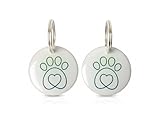
- Dimensions: Diameter 1 inch, 25mm
- EXCLUSIVE ENTRY – Keeping curious and unwanted animals from entering your home, the Microchip Key Fob unlocks the Microchip Cat Flap so it is ready to be pushed open by your Cats only.
- Compatible with the SureFlap Microchip Pet Door, Cat Door, DualScan Cat Door, SureFeed Microchip Pet Feeder
- Package contains: 2x SureFlap and Surefeed compatible RFID tags
- Each collar tag has a unique code and weighs just 0.09 oz 2.8 grams
Fraud risks also extend beyond a forged whole wheel. They can involve unauthorized use of protected names or evocative branding, repackaging or substitution in distribution, and misleading claims on grated or packaged products. The legal status of a look-alike depends on what it claims and where it is sold.
Recommended Free Tools
Why the chip is not an automatic authenticity test
A microtransponder can help bind a physical mark to a digital identity, but it cannot by itself establish what is inside the wheel or prove that every production rule was followed. It is not a chemical or DNA test, an age test, or a substitute for inspection. Nor does a chip automatically show that a wheel was not opened, diverted, or substituted after its identity was recorded.
- Copied identifiers: A visible code can be copied. The system’s resistance to reuse depends on whether chip and code are checked together and whether records can flag duplicates or implausible movements.
- Downstream handling: Authenticating a whole wheel does not automatically authenticate every wedge cut from it, or each later grated or repackaged product.
- Data quality: A digital record is only as trustworthy as the information entered and the controls that protect it.
- Access: The announcement and current consumer guidance do not establish that shoppers can read the chip with an ordinary smartphone or access the complete underlying records.
The original public materials do not fully specify the reader or authentication workflow, the database controls, or how duplicate codes would be detected. Those details determine whether the system is principally an operational supply-chain tool or a consumer-facing check.
Rank #4
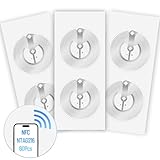
- 【SMALL NFC TAGS】The package includes of clear Tag216 NFC tag stickers, each measuring 25mm. These self-adhesive, ultra-thin stickers can be easily hidden, making them ideal for enabling NFC on most items. Note: They cannot be used on metal surfaces or in strong magnetic fields
- 【WATERPROOF MATERIAL】Made of clear PET material, these NFC tags feature a waterproof and smooth surface that is wear-resistant and shiny. With a size of 25mm and a thickness of only 0.15 mm, they are ultra-thin and come with a strong adhesive, perfect for applying between surfaces or on the backside of printed matter
- 【TAG216 CHIP】Embedded with Tag216 chips,operate at a working frequency of 13.56 MHz with 888 bytes of memory. They offer high scanning intensity with a working distance of 0-10 cm, depending on reader configuration. The chips support read and write locking functions, allowing for repeated edits or setting to read-only mode
- 【FEATURES】Tag216 chip have read write locking functions, which can be repeatedly edited or only read. Set to be edited or reset after reading only labels. You can use them to quickly share your social information, music, connecting wifi, establishing smart homes, business information sharing and more
- 【WIDE APPLICATIONS】Compatible with NFC-enabled smartphones and devices, these NFC tags can be quickly programmed to share social media, music, business cards, connect to Wi-Fi, create a smart home, and more. Ideal for check-in, product information query, games, access control, posters, book borrowing, etc. Note: Some Phone models can only passively read NFC tag data and cannot actively write data
Did the 2022 test become a universal rollout?
The Consortium announced a 100,000-wheel test in 2022 and described broader adoption as a possible next step. A 2023 report discussed an ambition to extend the technology to roughly four million wheels annually. But current Consortium guidance describes the ordinary casein plate and Datamatrix or alphanumeric identification system without confirming that p-Chips are now fitted to all or most wheels. The available official material therefore supports calling this a launched test or anti-counterfeiting initiative, not a verified universal feature of Parmigiano Reggiano sold today. 2022 announcement Current Consortium FAQ Current seals and marks guide
The public information cited here does not establish how many wheels ultimately received chips, whether the test was completed, whether the system remains in use, what results it produced, or which dairies participate. It also does not confirm whether consumers can verify a chip directly. Without those details, claims that every wheel is microchipped or that the technology has demonstrably reduced counterfeiting would go beyond the available evidence.
How to check Parmigiano Reggiano without looking for a chip
For consumers, the Consortium’s visible marks and lookup information are more practical than trying to detect a microtransponder. On a whole wheel, look for the rind and casein-plate identifiers; for packaged portions, use the product’s PDO and authorized packaging marks. Consortium guide to seals and marks Consortium FAQ
Best Value

- Dimensions: 3x2 mm. 0.1x0.1 inch. Incredibly tiny.
- For use with non-microchipped pets
- Each collar tag has a unique code and weighs just 2g
- Compatible with the SureFlap Microchip Pet Door, Cat Door, DualScan Cat Door, SureFeed Microchip Pet Feeder (*serial numbers higher than 1152201 on the Cat Door)
- Look for the dotted rind lettering. Whole wheels carry “Parmigiano Reggiano” markings around the rind.
- Check the dairy and production details. The rind markings include the dairy identification number and production month and year.
- Find the casein plate. It carries a unique alphanumeric traceability code. Use the Consortium’s official lookup where a wheel code is available: find a dairy or check identification information.
- For a packaged piece, inspect its marks. Look for the Parmigiano Reggiano PDO symbol and the Consortium-authorized packaging markings.
A cut wedge may not show the usual side-rind lettering if it was taken from the flat top or bottom of a wheel, so that absence alone does not prove fraud. And authenticating the original wheel is not the same as verifying freshness, storage, authorized cutting and packaging, or the absence of adulteration after the wheel entered the supply chain.
What will show whether the technology works at scale
The meaningful test is not simply whether a tiny device survives in a casein label. A useful system must work across dairies, maturation, warehouses, distributors, and packers—and its records must make tampering or substitution detectable. Key evidence would include the number of treated wheels, test results, current participation, the reading workflow, anti-duplication controls, and demonstrated effects on diversion, counterfeiting, or recalls.
For food producers, this is a broader lesson in physical-digital identity: a mark can make an item easier to follow, but trust comes from the chain of custody and the verification process behind it. The Parmigiano Reggiano case is a documented experiment in adding that layer to an established origin-marking system; the available evidence does not yet show a universal, consumer-accessible solution.
Quick Recap
Product prices and availability are accurate as of the date/time indicated and are subject to change. Any price and availability information displayed on Amazon at the time of purchase will apply.




